In this case
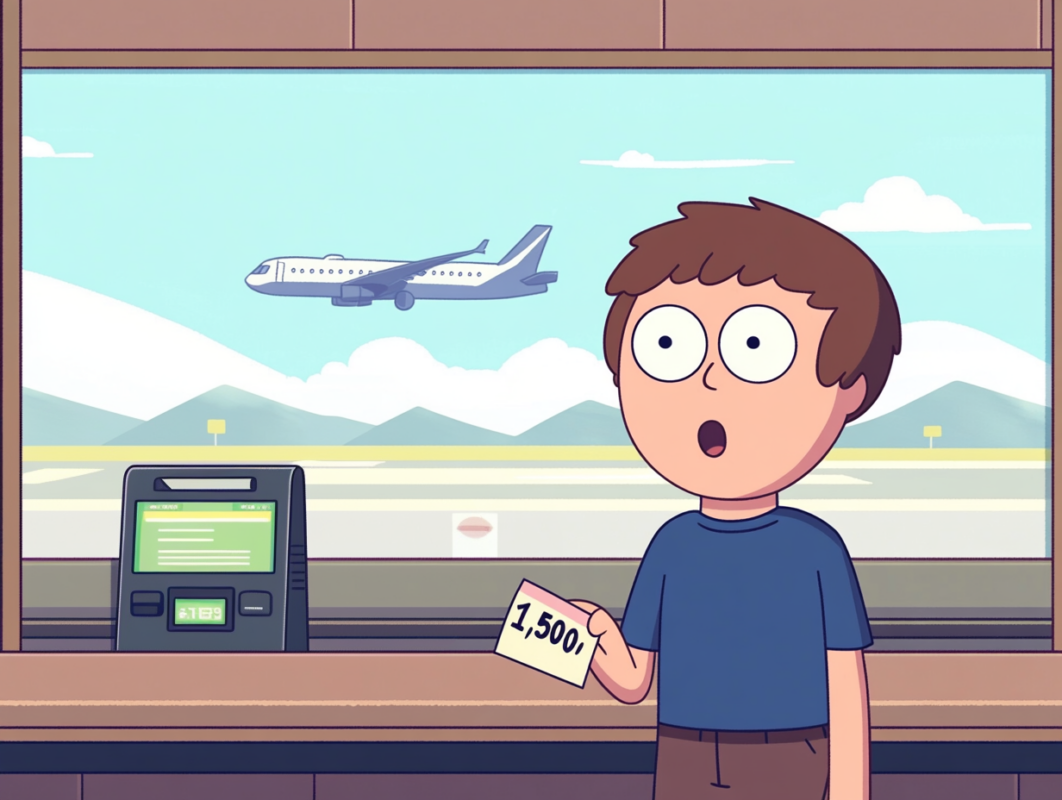
- A Delta passenger volunteers to give up his seat after a flight attendant announces a $15,000 compensation offer.
- After he deplanes, Delta reduces the offer to $1,500 and accuses him of lying about the original promise.
- The airline later admits the $15,000 offer was announced but calls it a “miscommunication” and refuses to honor it.
When Daniel Christiansen boarded a recent Delta Air Lines flight from Salt Lake City to Palm Springs with his wife and infant daughter, he thought he’d hit the jackpot.
“Delta is looking for one volunteer to give up their seat in exchange for $15,000,” an attendant announced.
The flight attendant’s offer wouldn’t just upend his recent trip — it also would test his loyalty to the airline.
Christiansen, a Gold Medallion-level flyer, didn’t hesitate. He rang the call button and confirmed the amount twice with the crew. Then he disembarked, leaving his family onboard.
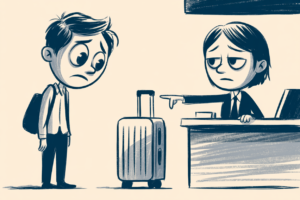
But by the time the plane taxied away, Delta’s offer had shrunk to $1,500. Gate agents accused him of lying about the $15,000 promise.
“They treated me like I’d invented the number out of thin air,” Christiansen says. “But the flight attendant, the captain, and even Delta’s own emails later admitted the $15,000 offer was real.”
His case raises three critical questions for travelers:
- Are airlines legally required to honor compensation promises made during flights?
- What can you do if an airline refuses to keep its word?
- How can passengers protect themselves from bait-and-switch tactics?
Let’s start with a few details of what happened to Christiansen.
Your voice matters
Daniel Christiansen gave up his seat after a $15,000 promise was made over the intercom. After Delta reduced the offer to $1,500 and accused him of lying, readers are weighing in on trust, accountability, and whether airlines can walk away from their own words.
- Should airlines be legally required to honor compensation offers announced onboard, even if they later claim it was a mistake?
- Would you ever volunteer to give up your seat without written confirmation of the compensation?
- Does calling a confirmed promise a “miscommunication” undermine passenger trust in airlines?
“They called me a liar”
Christiansen’s ordeal began with a routine overbooking scenario. Delta, like most airlines, regularly oversells flights, banking on no-shows. When too many passengers arrive, carriers solicit volunteers to give up seats in exchange for compensation — usually vouchers or miles.
But $15,000? That’s considerably more than the Department of Transportation’s maximum required payout for involuntary denied boarding ($1,550 to $3,800, depending on delay length).
Yet multiple witnesses corroborate the offer.
Christiansen’s wife, still seated on the plane, heard the flight attendant double-check the amount with the gate agent. A Delta customer service representative admitted in emails that the $15,000 figure was “unintentionally” shared — in other words, that Delta had goofed.
But after Christiansen deplaned, Delta backtracked. A gate agent and supervisor dismissed the $15,000 as a mistake, offering a $1,500 flight credit instead.
A $15,000 offer of involuntary boarding compensation looks a lot like a fat finger fare. Or perhaps the attendant… announced it incorrectly as “$15,000” when $1,500 was the intended offer all along.
But it’s rude and violated the spirit of good customer service for Delta’s agents to accuse Christiansen of “lying” about the $15,000. Delta should not be making any offers it doesn’t intend to honor. That’s a violation of its customers’ trust and good faith.
Read more insightful reader feedback. See all comments.
When Christiansen protested, they suggested he “file a complaint” and for him to contact customer service.
“I felt humiliated,” he says. “I’d just abandoned my wife and baby based on Delta’s word. Now they were gaslighting me.”
Delta’s customer service initially gave him hope. A customer service agent noted that onboard announcements are recorded and promised a resolution. But weeks later, Delta closed the case with a final offer: $1,500 plus 20,000 SkyMiles (worth roughly $200).
“We kindly ask that you accept our decision and refrain from further requests,” Delta said in an email. “Please be advised our answer will remain the same and continued requests will not yield a different outcome.”
Christiansen didn’t accept the offer. Instead, he contacted us.
Are airlines legally required to honor compensation promises made during flights?
The short answer: It’s complicated.
When a flight crew offers compensation verbally, it’s generally considered a unilateral contract — a promise in exchange for an action (in this case, surrendering a seat). If you fulfill your end, the airline should fulfill its end. But airlines aren’t banks. They’ll argue that “inadvertent” errors void the agreement, especially if the offer seems implausible.
Delta admitted the $15,000 announcement happened but called it a “miscommunication.” That’s corporate-speak for, “We messed up, but we won’t fix it.”
The Department of Transportation (DOT) requires airlines to honor written denied boarding compensation agreements.
Verbal promises? Those hinge on state contract laws. Utah, where Christiansen took the deal, enforces oral contracts if there’s clear evidence of an offer, acceptance, and “detrimental reliance” — like giving up a seat.
But suing an airline over $15,000 isn’t practical for most travelers. And the airline industry’s federal preemption means the airline could argue that state laws don’t apply to this situation. Christiansen would spend more on legal fees than he’d recover. That’s why airlines gamble on you walking away.
Bottom line: Verbal promises are binding in theory but fragile in practice. Get it in writing.
What can you do if an airline refuses to keep its word?
Start with the paper trail. Christiansen emailed Delta immediately, citing witnesses and demanding the $15,000.
Delta’s executives have been responsive to our readers in the past. Here are the names, numbers and email addresses of the key managers at Delta. A brief, polite email to one of them might have prompted a review of the in-flight announcements, the emails and the unsatisfactory resolution.
Is there a legal approach? Possibly. An appeal to the Utah Division of Consumer Protection might have prodded Delta into doing what it originally promised. A letter or email threatening to sue the airline, however, would have just been referred to Delta’s legal department, where it would have languished until Christiansen filed an actual lawsuit.
There’s also the social media route, better known as public shaming. Airlines hate bad publicity. A viral TikTok video or post on X could have nudged Delta to fix this problem. But it turns out Christiansen had one more card to play.
How can passengers protect themselves from bait-and-switch tactics?
Christiansen’s mistake was trusting a verbal offer. Don’t leave your seat until you know for certain that you’re going to get what the airline promised you.
Always:
- Get it in writing. If possible, ask for something in writing before you give up your seat and exit the plane. Don’t leave the plane without it.
- Record the offer. Utah allows one-party consent for audio recordings. A quick voice memo could’ve strengthened his case.
- Know your rights. DOT rules cap cash compensation, but airlines can offer more in vouchers. $15,000 is rare but not illegal.
Had Christiansen demanded written confirmation, he might have either received the promised $15,000, or he could have flown to Palm Springs with his wife and baby. Although $15,000 seems like a lot, Delta has a history of generous denied boarding compensation offers, lending Christiansen’s claims some credibility.
The ending Delta doesn’t want you to see
I contacted Delta on Christiansen’s behalf, hoping it would review his case one more time. True, a $15,000 offer to give up your seat is generous, but it’s not unprecedented.
The response?
“Our Care team shared that they’ve resolved this with the customer,” a representative said.
I checked with Christiansen, who said Delta hadn’t been in contact with him. So I circled back to Delta and asked for details.
“Our Customer Care team reached out to this customer and handled their submission. We’ve provided 20,000 SkyMiles as a tangible apology in conjunction with the $1,500 voucher,” the Delta rep told me. ”This customer’s entry has been acknowledged, and they have been compensated. We thank the customer for trusting Delta for their travels.”
So that’s it. No $15,000. No apology. Just $1,500 and a shrug.
For Christiansen, this isn’t about money, but trust. As a loyal Delta customer, how can he trust Delta, knowing that it dangled a $15,000 carrot and then snatched it back?
And maybe that’s the point. Maybe you can’t trust an airline to do what it says.
Always, always get a promise in writing.
When airlines walk back compensation promises
How to protect yourself when a seat offer suddenly shrinks
Before you leave your seat
When the offer changes
The hard truth
Executive Contacts
If Delta Air Lines disputes a compensation promise made onboard, you can try contacting these executives responsible for customer care and corporate decisions. These contacts come directly from our Delta company contacts page. :contentReference[oaicite:1]{index=1}

What you’re saying
While top commenter JenniferFinger suspects a “fat tongue” error, readers are divided on whether a mistake justifies breaking a promise. The debate centers on corporate gaslighting and the death of the “social contract” between airlines and loyal customers.
-
The Disrespect Factor
The Brown Crusader argues this isn’t about money but trust; calling a customer a “liar” breaks the social contract of air travel. Mr. Smith finds the treatment of a Gold Medallion member “shocking,” suggesting Delta effectively gaslit a passenger who was trying to help them.
-
The Verbal Loophole
Miles Will Save Us All suggests the DOT should step in to make recorded cabin announcements binding. Tim and JAASON both regret that verbal promises “aren’t worth the paper they are written on,” advising travelers to record every interaction on their phones.
-
Obvious Errors vs. Liability
737MAXPilot and Berkinet take the airline’s side to an extent, noting that $15,000 for a domestic seat is an obvious slip of the tongue. However, Berkinet notes that because the passenger suffered “practical damage” by leaving his family, Delta should have met him in the middle with a higher offer.
Read more




Have a question about this story? Tell us what happened — we read every comment.
Join the conversation