
in this commentary
- The MV Hondius limped into Tenerife after a hantavirus outbreak killed three people. The Caribbean Princess returned to Port Canaveral with 102 passengers and 13 crew sick from norovirus, the fourth gastrointestinal outbreak this year.
- Federal agents at the Port of San Diego boarded eight cruise ships and detained 28 crew members, with 27 allegedly involved in receipt, possession, or distribution of child sexual abuse material.
- Most ships sail under flags of convenience like Bermuda, Panama, the Bahamas, and Liberia. The CDC Vessel Sanitation Program lost its full-time civilian staff a year ago, and its chief retired last week during the hantavirus outbreak.
If you needed a sign that the universe wants you to skip a cruise this summer, here it is.
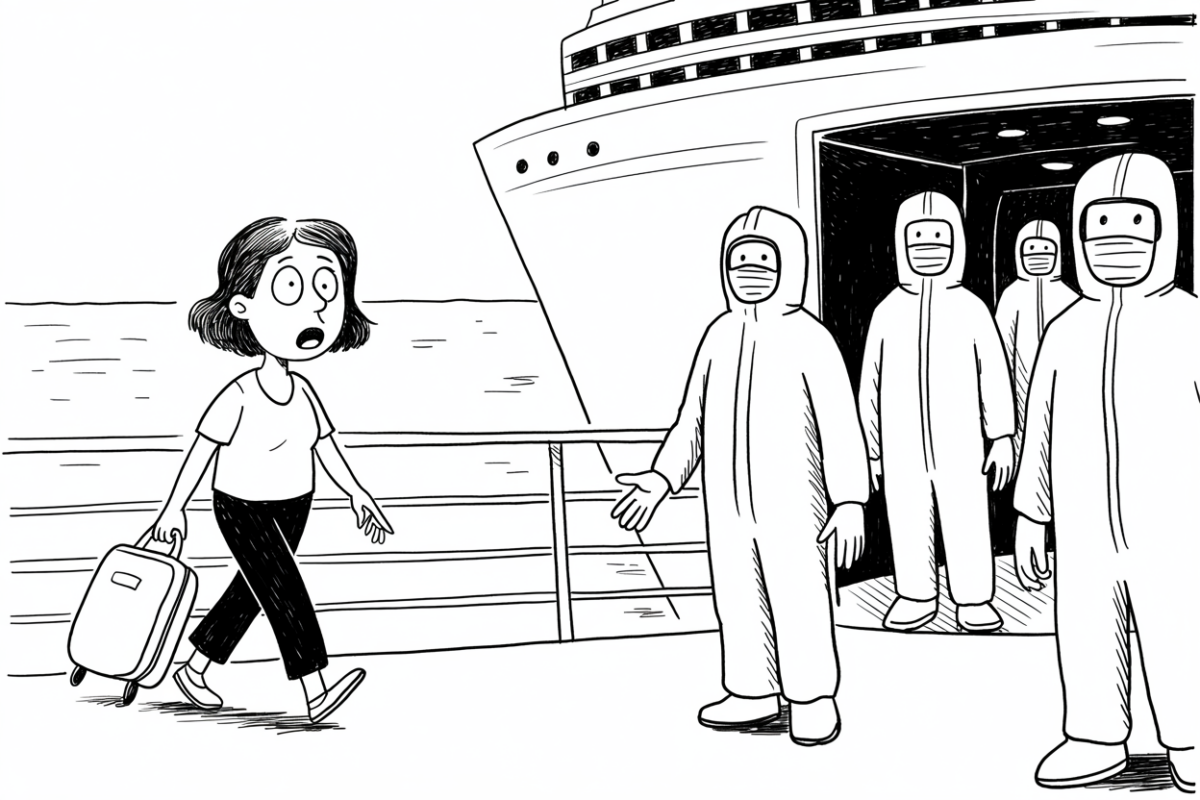
There’s the MV Hondius, the Dutch expedition ship that limped into Tenerife last week after a hantavirus outbreak killed three people and infected at least eight more. The Andes virus strain responsible is the only hantavirus known to spread person to person.
There’s the Caribbean Princess, which arrived in Port Canaveral, Fla., carrying a different souvenir: norovirus. The CDC reports that 102 passengers and 13 crew members fell ill on the 13-day Caribbean voyage out of Fort Lauderdale. It’s the fourth gastrointestinal outbreak on a cruise ship this year.
U.S. Customs and Border Protection (CBP) confirmed last week that federal agents had boarded eight cruise ships at the Port of San Diego and detained 28 crew members. CBP said 27 of them were involved in the receipt, possession, transportation, distribution, or viewing of child sexual abuse material.
Even if you survive the viruses and scandals, you might still run out of luck. This week, an 88-year-old passenger reportedly died after losing control of her mobility scooter on the pier at Carnival’s private island, Celebration Key in the Bahamas, and plunging into the water. (Related: The cruise ship virus is back. Why did we fire the health inspectors, again?)
Zoom out, and the picture gets even worse.
The problems plaguing the cruise industry, from viral outbreaks and accidents to scandals, are compounded by ships sailing under flags of convenience, which ensure minimal regulation and maximum profit through a fine-tuned system designed to siphon more money from your wallet.
A regulated industry, mostly in theory
These ships do not, in any meaningful sense, sail under U.S. law. The Caribbean Princess flies the flag of Bermuda. Most of the Carnival fleet flies Panama or the Bahamas. Royal Caribbean prefers the Bahamas and Liberia. They’re called flags of convenience, and the convenience belongs to the operator, not to you. It means a company headquartered in Miami can pay crew wages set by Honduran labor norms, follow safety standards written in Nassau, and route disputes through courts outside the United States.
The one U.S. agency with real authority over sanitation on ships that call at American ports is the CDC’s Vessel Sanitation Program. One year ago, the administration laid off the program’s full-time civilian staff, including the epidemiologist who led the outbreak response on cruise ships (12 U.S. Public Health Service officers remained). The program chief announced his retirement last week, in the middle of the hantavirus outbreak.
More scare tactics about cruises. Most of the issues Chris mentioned have been a part of cruising for many years—nothing new except for the dismantling of the CDC’s Vessel Sanitation Program which is a problem.
However, norovirus on cruise ships is unfortunately nothing new and the percentage of passengers on the Caribbean Princess that were sickened was 3% and the percentage of crew sickened was 1%. Upselling has been around since cruising became popular and passengers just need to remember that “No” is a complete sentence.
And while the death of the 88-year-old woman who lost control of her scooter and went off a pier is tragic, I don’t think that can be attributed to negligence on Carnival’s part.
Read more insightful reader feedback. See all comments.
What it looks like when something goes wrong
The headlines describe outbreaks and arrests, but most cruises fall short in smaller ways.
Shari Lunsford, a receptionist from Livingston, Tenn., paid $1,500 for a Carnival cruise last month from New Orleans to Cozumel. Nothing in her cabin worked. She says the sinks and showers would not drain. She stood in two inches of water every time she bathed. Her toilet stopped working twice, sending her in search of a public restroom several decks up. Her stateroom thermostat would not go below 73 degrees, which the ship’s cabin crew told her is within company policy. Her room steward eventually brought a fan. She slept on an ice pack.
Lunsford complained at guest services on board, which sent her a cheap bottle of champagne and a cheese plate. Off the ship, she escalated her complaint. A representative from the cruise line’s office of the president called her, listened to her story, and offered the final compensation: a future cruise credit of $99 per person, plus a $150 onboard credit, both redeemable within a year.
That’s right, the remedy for a $1,500 trip Lunsford describes as a nightmare is a small discount on a second trip with the same company.
What are you getting when you cruise?
Suppose you decide none of that bothers you, and you just like being on a ship.
Here’s what you need to know: In addition to being loosely regulated and sometimes dangerous, a cruise ship is a carefully calibrated machine designed to extract more money from your wallet.
Cruises are filled with annoying and not always avoidable upsells and fees. There’s the upsell from the buffet to the specialty restaurant. There’s the push for the drink package at the bar. And, of course, there’s the overpriced shore excursion.
Gratuities that used to be discretionary are now line items added to your folio “for your convenience.” Passengers rarely question them because they feel guilty about the substandard wages the crew receives.
The art auction, the photo package, the casino, the spa upsell, the Wi-Fi, it all adds to your bill.
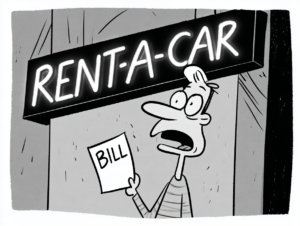
So in addition to the danger, you also get dinged for extras. If you want to know how that feels, just grab a coffee on the last day of a cruise and sit at the reception desk, where passengers are trying to settle their bill. Yes, there’s a reason those security guys are standing there, too. Get ready for fireworks.
Don’t take a cruise this summer
There’s only one sane conclusion: This isn’t the summer for a cruise. A vacation at sea is a dangerous, deregulated disaster-in-the-making designed to drain money from your bank account. You can’t forecast the next viral outbreak, but the cruise experience itself is predictable.
Cruise lines, for the most part, care more about monetizing passengers than serving them. They care more about upselling them than keeping them safe.
Stay on land this summer. It’s a vacation you might actually survive.
Your voice matters
Hantavirus deaths, norovirus outbreaks, federal arrests, and a passenger drowning at a private island. The CDC’s Vessel Sanitation Program lost its civilian staff during the outbreaks. Cruise lines use flags of convenience to escape U.S. labor, safety, and legal standards.
- Should ships departing from U.S. ports be legally required to fly the U.S. flag and comply with U.S. labor, safety, and consumer protection laws?
- Should the CDC Vessel Sanitation Program be permanently funded with full civilian staffing as a condition of cruise ships docking at U.S. ports?
- Should cruise lines be required to publish viral outbreak histories and federal arrest records of crew on every booking page before passengers pay?
What you need to know about cruise industry risks in summer 2026
Quick answers to the most common questions about recent cruise outbreaks, flags of convenience, the weakened CDC Vessel Sanitation Program, and what protections you actually have when something goes wrong at sea.
Hantavirus is a serious viral infection typically spread by rodents through contaminated air, food, or surfaces. The Andes virus strain responsible for the MV Hondius outbreak is the only hantavirus known to spread person to person. The Dutch expedition ship limped into Tenerife with three deaths and at least eight infected. Person-to-person transmission makes the Andes strain particularly dangerous in the confined environment of a cruise ship.
Flags of convenience refer to the practice of registering ships in countries with minimal regulation to avoid stricter labor, safety, and tax requirements. The Caribbean Princess flies Bermuda. Most Carnival ships fly Panama or the Bahamas. Royal Caribbean prefers the Bahamas and Liberia. These flags mean a Miami-headquartered company can pay crew wages set by Honduran labor norms, follow Nassau safety standards, and route disputes through foreign courts.
The CDC Vessel Sanitation Program is the one U.S. agency with real authority over sanitation on ships that call at American ports. The program conducts unannounced inspections, investigates outbreaks, and publishes scores. One year ago, the administration laid off the program’s full-time civilian staff including the epidemiologist who led cruise ship outbreak responses. The program chief announced his retirement during the hantavirus outbreak.
Norovirus outbreaks on cruise ships happen multiple times per year. The Caribbean Princess outbreak with 102 passengers and 13 crew sick was the fourth gastrointestinal outbreak on a cruise ship this year alone. Norovirus spreads rapidly in the confined environment of a cruise ship through contaminated surfaces, food, and person-to-person contact. The CDC reports outbreaks affecting more than 3 percent of passengers or crew at cdc.gov/nceh/vsp.
Cruise lines typically offer minimal compensation for defective cabins, often a future cruise credit between $99 and $250 plus a small onboard credit. Onboard guest services may offer token gestures like a champagne bottle or cheese plate. Document every issue with timestamped photos and videos. Escalate to the office of the president after the cruise. See Elliott Advocacy’s guide to how consumer complaints work.
Most cruise ticket contracts force disputes to specific courts outside your home state, typically Miami federal court for U.S. operations or the flag country for international matters. These forum selection clauses are usually enforceable. Many contracts also require arbitration rather than litigation. Read the full contract before paying any deposit. Consider travel insurance with strong dispute coverage. See Elliott Advocacy’s travel insurance guide.
Cruise lines depend heavily on upsells and fees that can nearly double your advertised price. Expect aggressive pressure for specialty restaurants beyond the buffet, drink packages at the bar, and overpriced shore excursions. Gratuities that used to be discretionary are now automatic line items added to your folio for your convenience. The art auction, photo package, casino, spa, and Wi-Fi all add to your bill. Budget accordingly before booking.
What is hantavirus and how did it spread on the MV Hondius?
What is a flag of convenience and how does it affect cruise passengers?
What does the CDC Vessel Sanitation Program do?
How common are norovirus outbreaks on cruise ships?
What compensation should you expect for a defective cruise cabin?
Can you sue a cruise line in U.S. court?
What hidden fees should you expect on a cruise?

Have a question about this story? Tell us what happened — we read every comment.
Join the conversation