Fear of travel is at a high, but the data tells a different story. Here's why your summer vacation is still a safe bet, from peace rankings to airline risk.

No, your summer vacation isn’t going to kill you

Fear of travel is running high this summer. A reader named Cindy Smith nearly canceled a Danube river cruise and a week in Croatia after reading headlines about a cruise hantavirus outbreak and crew arrests. She is not alone. In a recent Global Rescue survey, less than 1 percent of respondents said their concerns about personal safety abroad had eased since last year, while 56 percent said they felt more concerned. Travelers cite three recurring fears: airlines collapsing mid-trip, dangerous conditions abroad, and anti-American sentiment. Yet the major U.S. carriers such as Delta, United, American, and Southwest remain profitable, and a conflict on one side of a continent does not make the other side unsafe.
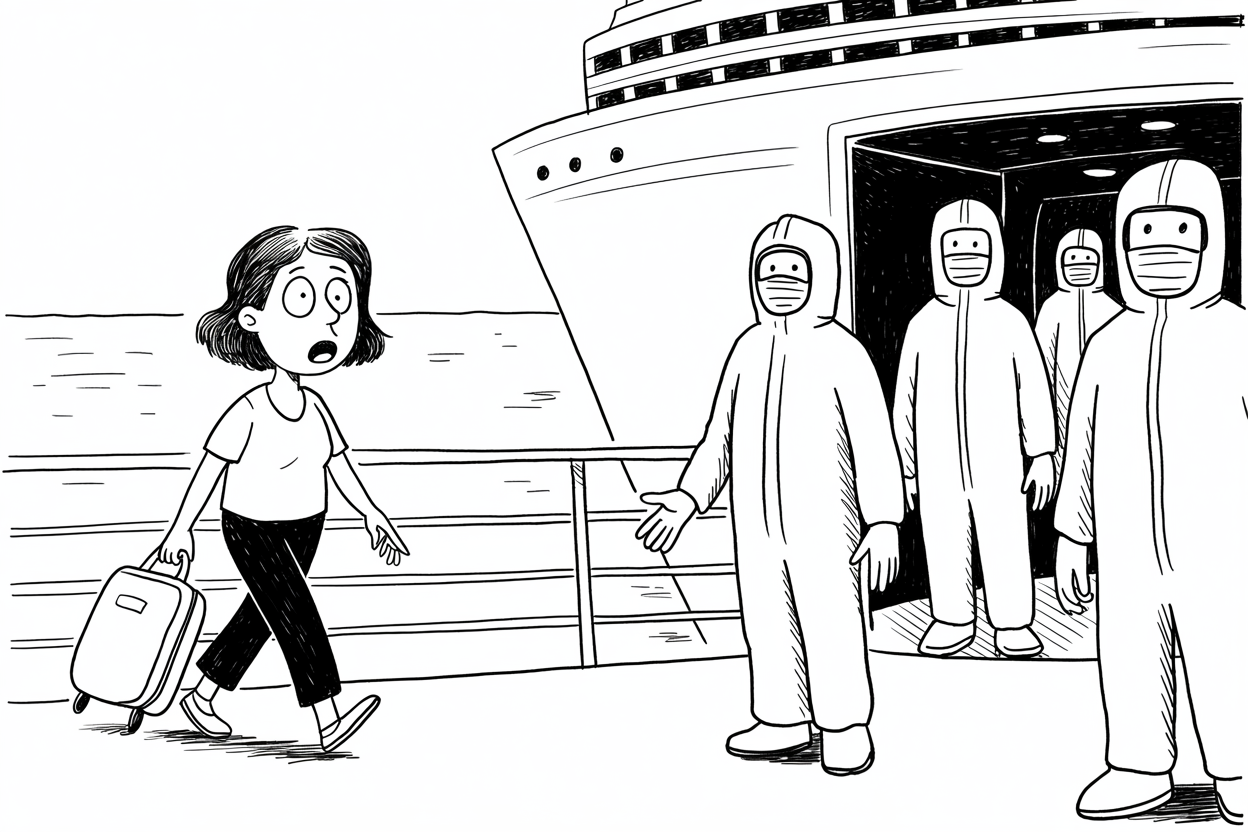
Black and white editorial cartoon showing a worried woman with short hair pulling a small rolling suitcase down a pier with her mouth open in alarm, while four masked workers in white hazmat suits stand in front of a large white cruise ship's open dark hold preparing to board, illustrating the cruise industry's mounting safety crisis of viral outbreaks, deaths, and federal scandals during summer 2026

This isn’t the summer for a cruise

A hantavirus outbreak on the Dutch MV Hondius killed three people and infected at least eight more, caused by the Andes virus strain, the only hantavirus known to spread person to person. The Caribbean Princess arrived in Port Canaveral with 102 passengers and 13 crew members sick from norovirus, the fourth gastrointestinal outbreak on a cruise ship this year. U.S. Customs and Border Protection detained 28 crew members at the Port of San Diego, with 27 allegedly involved in child sexual abuse material. The CDC Vessel Sanitation Program lost its full-time civilian staff a year ago, and its chief retired during the hantavirus outbreak. Most cruise ships sail under flags of convenience like Bermuda, Panama, the Bahamas, and Liberia, escaping U.S. labor, safety, and consumer protection laws.