
Cartoon of a scowling woman holding an oversized fork beside a giant bare foot.

Should cruise lines ban more passengers?

A video from a Carnival cruise made the rounds this month: a passenger seated in the ship’s dining area, scratching a bare foot, then going back to eating with the same hand. The comments wrote themselves. But underneath the reaction sits a question the cruise industry has never really answered. Look at what actually gets people banned from cruise ships. Violence and threats. Illegal drugs. Vandalism, harassment, theft, ignoring safety orders. Every category on the list has the same thing in common: malice, criminality, an intent to harm. A passenger who creates a public-health problem in a shared dining room fits almost none of it. And yet a cruise ship is a closed environment where norovirus and other illnesses move fast, so it is at least arguable that someone exposing hundreds of people to infection is a bigger problem than one guest throwing a punch in a lounge. The puncher gets a lifetime ban. So should the list be wider, or is the real question who gets to decide?
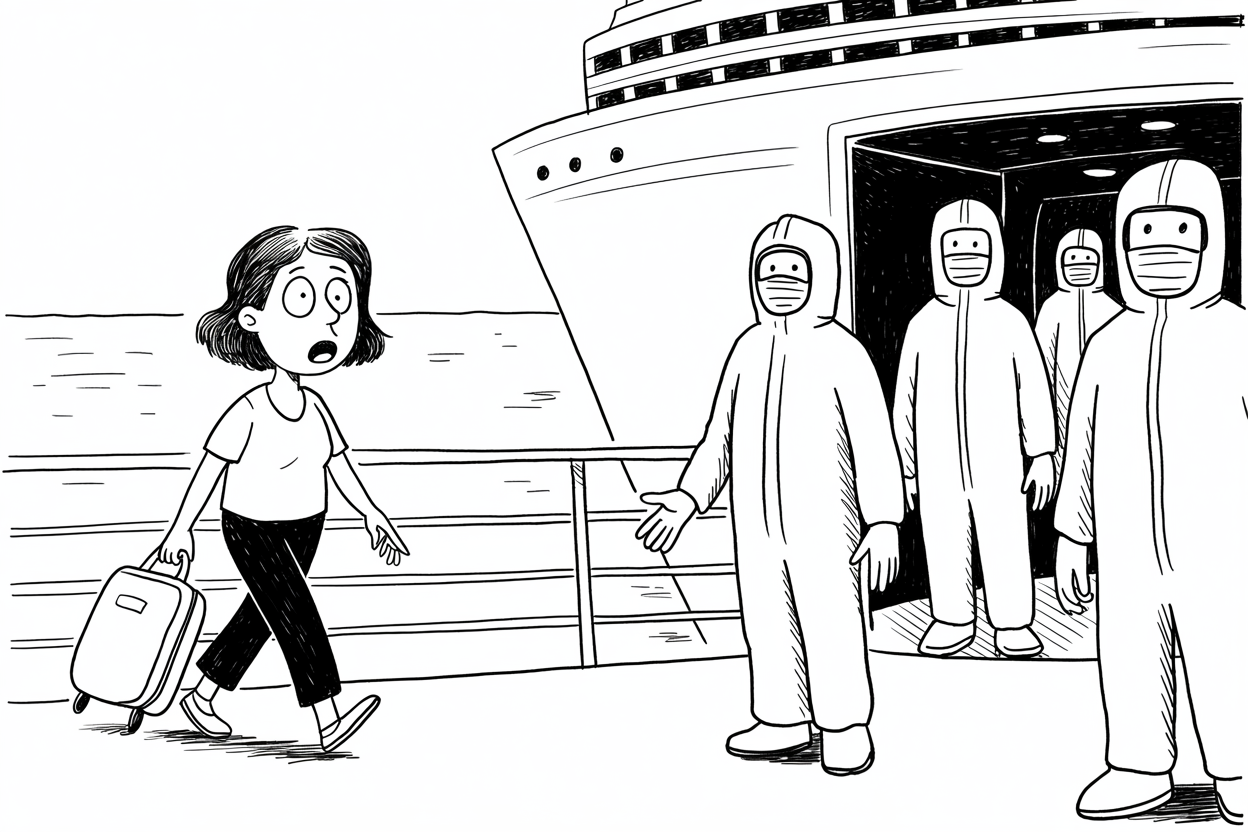

Black and white editorial cartoon showing a worried woman with short hair pulling a small rolling suitcase down a pier with her mouth open in alarm, while four masked workers in white hazmat suits stand in front of a large white cruise ship's open dark hold preparing to board, illustrating the cruise industry's mounting safety crisis of viral outbreaks, deaths, and federal scandals during summer 2026

This isn’t the summer for a cruise

A hantavirus outbreak on the Dutch MV Hondius killed three people and infected at least eight more, caused by the Andes virus strain, the only hantavirus known to spread person to person. The Caribbean Princess arrived in Port Canaveral with 102 passengers and 13 crew members sick from norovirus, the fourth gastrointestinal outbreak on a cruise ship this year. U.S. Customs and Border Protection detained 28 crew members at the Port of San Diego, with 27 allegedly involved in child sexual abuse material. The CDC Vessel Sanitation Program lost its full-time civilian staff a year ago, and its chief retired during the hantavirus outbreak. Most cruise ships sail under flags of convenience like Bermuda, Panama, the Bahamas, and Liberia, escaping U.S. labor, safety, and consumer protection laws.