In this case
- A delayed domestic flight causes a traveler to miss an international connection, stranding her for more than a full day.
- She files a modest travel insurance claim for hotel, meal, and transportation expenses during the delay.
- After months of document requests and contradictory explanations, the insurer disputes the basic facts of the delay.
When Christine Porter’s flight delay strands her for 25 hours, her travel insurer balks at paying a $270 claim. After five months of bureaucratic warfare, she’s no closer to a resolution.
Question
Last August, my dream trip to India imploded before takeoff. A delayed flight from Orlando to Atlanta caused me to miss my connection to Paris. Delta Air Lines rebooked me 25 hours later through London, costing me $270 for hotels, meals, and taxis. I’d wisely bought Trawick International travel insurance, which covers a trip disruption.
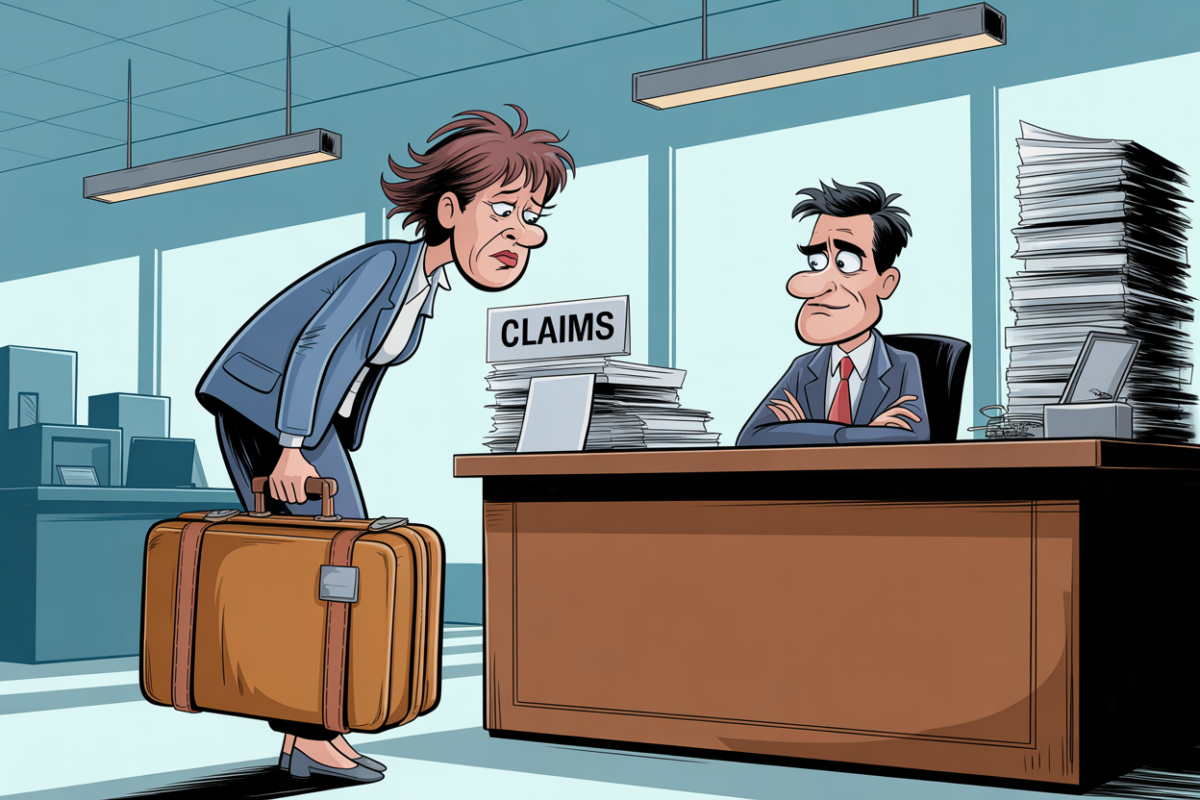
But SureGo Claims, their administrator, became a nightmare. They demanded endless documents, assured me everything was received, then denied my claim with a lie: “Your delay was only 3 hours.”
SureGo falsely claimed my Atlanta-to-Paris flight was delayed (it wasn’t – I’d missed it entirely!). The Delta documentation I provided clearly showed a 25-hour disruption.
When I appealed, SureGo demanded another 40 to 60 days, after already torturing me for five months.
I know $270 is a small amount, but that’s how they trap you: too little to sue, enough to make you quit. This feels like a scam where they bank on the customer’s exhaustion. I’ve spent hours on calls, resending paperwork, and being ghosted. How can a company fabricate facts to avoid paying such a modest, valid claim? — Christine Porter, Apopka, Fla.
Answer
Trawick International should have honored your claim immediately. Your policy’s trip delay coverage, which is standard in most travel insurance plans, typically kicks in after 6 to 12 hours. Your 25-hour disruption wasn’t borderline — it was excessive.
I’m not sure how SureGo Claims investigated your case, but it certainly seems to have misread the basic facts of your claim. In doing so, it violated fundamental insurance principles of good faith and fair dealing. Florida statutes explicitly prohibit insurers from failing to adopt and implement standards for the proper investigation of claims or misrepresenting pertinent facts. (Related: My ticket change request is lost in translation. Can I get my $4,352 back from Austrian Airlines?)
You did right by keeping records of your calls, but you might have fixed this faster with a more thorough paper trail. If you have to call an insurance company, always ask for an email confirmation. Otherwise, it’s your word against theirs.
I’ve had a similar experience. I planned a trip for me and my husband to Australia, and as soon as the airline tickets and accommodations were booked, I bought comprehensive travel insurance, including cancel-for-any-reason coverage.
A few weeks before departure, my job was eliminated and I became unemployed. We canceled the trip, and the nightmare began. Endless requests for the same documents, over and over. In the end, I started cc’ing the state insurance commissioner on every email and left a detailed one-star review when asked. Suddenly, things moved fast, and I finally got reimbursed.
This feels like typical behavior for third-party services handling insurance claims today.
Read more insightful reader feedback. See all comments.
The escalations were problematic and not at all what we’re accustomed to seeing with Trawick, which has an otherwise good reputation for fast claims. You could have appealed your case to one of Trawick’s executives. I publish their names, numbers and emails on my consumer advocacy site, Elliott.org.
I’m puzzled by this case. Most claims like this are automatic and processed quickly. If you give your travel insurance company your flight itinerary — you can usually do that online — it will track your flight and pay your claim within hours if something goes wrong.
I contacted Starr Companies, Trawick’s underwriter. A few weeks after our inquiry, Trawick approved a claim for $300 per person, which is more than you claimed, calling it trip delay coverage. I should note that you also continued fighting for Trawick to honor the claim, and it was likely pressure from all sides that finally led to this successful resolution.
Trip delay coverage sounds simple, but claims can turn into paperwork marathons, especially when the insurer disputes the basic timeline of a disruption. This case raises a bigger question: how much proof should travelers have to provide when airlines already track every delay and rebooking?
Your voice matters
When travel insurance won’t pay
How a flight delay claim can unravel
What triggers trip delay coverage
Where claims break down
A smarter way to protect yourself
Trawick International contacts
Trawick International provides travel insurance covering trip cancellations, delays, medical emergencies, and related travel risks. If a claim stalls or facts are disputed, knowing where to escalate matters.
Customer service
- Phone: (877) 233-4591
- Email: info@trawickinternational.com
- Website: trawickinternational.com
Executive escalation
-
Lupe Zepeda, Vice President of Customer Service
Lupe.Zepeda@trawickinternational.com -
Laurie Roberts, Chief Operating Officer
Laurie.Roberts@trawickinternational.com -
Daryl Trawick, Chief Executive Officer
Daryl.Trawick@trawickinternational.com
What you’re saying
Readers largely agreed on one uncomfortable truth. Travel insurance often pays only after persistence, escalation, and outside pressure. Many described the same pattern of delays, repeated document requests, and reversals that ended only when the stakes were raised.
-
Claims often move only after escalation
BKMatthew described how months of stalled communication ended only after involving a state insurance commissioner and leaving a detailed public review. Others shared similar stories where pressure, not policy language, unlocked payment.
-
Delay and fatigue appear to be part of the process
Dangerous Ideas, Dave, and Steeler in TX all pointed to repeated requests for the same documents and long response gaps, creating a sense that insurers rely on exhaustion to reduce payouts.
-
Travelers are questioning the value of coverage
OnePersonOrAnother and LonnieC questioned whether travel insurance is worth the cost at all, especially for older travelers, unless consumers are prepared to fight for benefits they believed were guaranteed.



Have a question about this story? Tell us what happened — we read every comment.
Join the conversation