
in this commentary
- The 100 deadliest days for drivers fall between Memorial Day and Labor Day. Late August is one of the most common times for vehicle failures because cooling systems, batteries, tires, and belts have been stressed all season.
- Pavement temperatures can exceed 150 degrees Fahrenheit, hot enough to warp metal and disintegrate tires. Travel trailer blowouts are common because many towable RVs use bargain-bin tires rated only for 65 mph.
- Standard auto insurance does not cover mechanical breakdowns. 85 percent of drivers have roadside assistance, but only 18 percent actually use that coverage when they break down. Towing mileage caps as low as 15 miles can cost thousands.
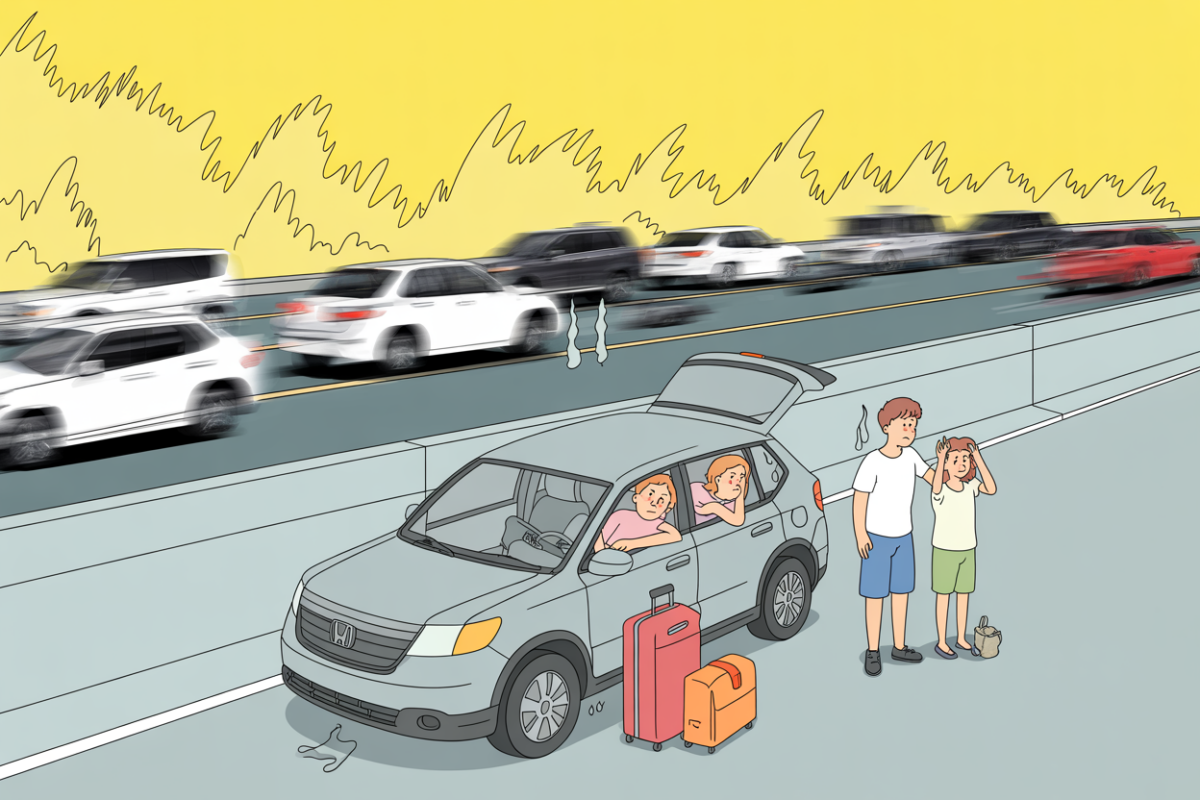
My family’s summer road trip was less than an hour old when an unfamiliar orange exclamation point illuminated the dashboard of our Honda Pilot. We were merging onto I-95, a stretch of asphalt that exhausts even the most patient driver, and I panicked.
I pictured us stranded on the shoulder in the sweltering Florida heat, luggage spilling out of the trunk, waiting for a tow truck that might never arrive.
Drivers face their 100 deadliest days between Memorial Day and Labor Day. That may sound like the title of a low-budget horror movie, but it is a statistical reality for American motorists.
Most travelers obsess over their flight details but barely glance at their tires. They toss a few bags in the trunk, fire up a Spotify playlist, and assume their luck will hold. The only question they expect from the back seat is, “Are we there yet?”
But they fail to pose the safety questions that actually matter.
I know because I hear from these travelers every year. They’re the ones who took a late-summer road trip and paid the price for poor preparation. It turns out there are three questions you should be asking before you pull out of the driveway this August, and the answers might save your vacation.
When I was a kid, my parents would take the car to a mechanic to ensure it was ready for the upcoming road trip. I do the same thing if I think the car is not ready.
When filling up your car with gas, walk around the car and look down at the tires. If their edges are flat and not bowed out from the wheels, they probably are at the right PSI. And remember, if you have to fill up the tires, use the PSI guide on the label inside the driver’s door (usually on the frame), not what it says on the tires.
And while this article is focused on summer travel, remember that batteries do not do so well in cold temperatures either.
Read more insightful reader feedback. See all comments.
Is my car ready for the heat?
You might think your car is fine because it survived June and July. Not necessarily.
“Late August is one of the most common times for vehicle failures related to heat,” says Shawn Miller, the founder of Modified Rides, an auto website.
By the time late summer rolls around, your cooling systems, batteries, tires, and belts have already been stressed all season. Extreme heat accelerates wear. Those small issues that started earlier, such as a weak battery or marginal coolant levels, often finally fail during long, hot drives.
“Ignoring temperature warnings or minor leaks is usually what turns a cheap fix into a breakdown,” Miller says.
There’s more. Ron Harper, who manages OTD Ticket Defenders Legal Service, points out that pavement temperatures can exceed 150 degrees Fahrenheit at this time of year. That’s hot enough to warp metal and disintegrate tires.
“Heat reduces the life expectancy of a battery,” Harper says.
Duane Watson, a technical trainer at Bosch Mobility Aftermarket, agrees. He notes that when components are constantly stressed, the impact compounds over time. He says oil changes and tire replacements are the most delayed maintenance activities. But you shouldn’t ignore the engine air filter, either.
“Not changing your engine air filter within the recommended timeframe can further stress your car engine and potentially lead to breakdowns,” Watson says.
What happens if I’m towing something?
If you think car tires are vulnerable, you should see what people put on their campers.
Tony Barthel, a veteran of the RV industry who runs the site StressLess Camping, sees it all the time. He says tire blowouts are “extremely common” on travel trailers and fifth wheels.
“Many towable RVs use cheap tires for which there is a derogatory term I’d rather not share,” Barthel says.
Many of these bargain-bin tires have a speed rating of 65 mph. But drivers eager to get to the campground often tow much faster than that. Combine excessive speed with 150-degree pavement and a heavy load, and you have all the makings of a summer disaster.
Barthel knows people who have had to wait two to three days on the side of the road before a proper tow rig could be dispatched.
Does my insurance cover a mechanical breakdown?
This is the big one. It’s the question that costs people thousands of dollars.
“The biggest insurance coverage gap people miss is assuming mechanical breakdowns are covered under standard auto insurance,” says Miller.
They aren’t. Most policies only cover accidents, not failures caused by wear, overheating, or neglected maintenance.
Jon Greene, a vice president at Agero, a roadside assistance company, says there is a massive gap in awareness.
“While 85 percent of drivers have a roadside assistance program, only 18 percent actually use that coverage during a breakdown event,” Greene says.
But even if you use it, be careful. Miller warns that while they may tow the vehicle, they won’t cover the actual repair costs or secondary damage caused by overheating. And Harper points out another “gotcha” hidden in the fine print: mileage limits.
“Common examples of towing mileage limitations include 15 miles,” Harper says. If you are crossing the desert and your radiator explodes 50 miles from civilization, you’ll pay for those extra 35 miles out of pocket.
Just ask car expert Lauren Fix. She traveled to Charlotte, N.C., for an event and ended up with a flat tire on the way down and a blown engine on the way back. She says AAA wouldn’t haul her car back to Buffalo, where she could get it repaired.
“We finally had to pay for a flatbed truck to get the vehicle home,” Fix recalls. “Many hundreds of dollars in cash later.”
How to road-trip safely this summer
So, how do you make it home safely?
- Do a pre-trip inspection. This is not just a glance at the treads. Miller suggests a basic seasonal inspection: pressure-test the cooling system, and inspect hoses and belts for cracking. Watson adds that you should top off all fluids—oil, coolant, brake, and transmission—and replace your wipers if they are streaking.
- Check your coverage. Harper advises looking for “trip interruption reimbursement.” This is generally separate from standard towing and covers lodging and food if you are stranded. Usually, it’s capped at around $100 per day for three days, but that’s better than nothing. (Related: Your summer road trip just got 30 percent more expensive. Here’s how to fight back.)
- Consider travel insurance. Lauren McCormick of Squaremouth notes that many people only consider travel insurance for flights or cruises. But travel insurance can offer significant benefits even if you’re driving.
“Just because you’re not boarding a plane or leaving the country, travel insurance is still a must,” says Daniel Durazo, a spokesman for Allianz Partners. He points out that as long as your destination is 100 miles or more from your home, many plans cover you. That includes emergency medical and transportation, vital benefits if you’re stranded in a rural area.
And if you rent a car? Durazo says you can save money by skipping the expensive counter insurance. “For only $13 per day, you can get benefits including primary coverage for covered collision, loss and damage,” he says.
Did I make it to Washington, D.C.?
I opened our Honda’s owner’s manual. Fortunately, the orange light was just a tire pressure problem. I found a service station, filled it, and the light was extinguished. We made Washington without a scratch, but the panic on the shoulder of I-95 stayed with me.
It could have been much worse. A blowout at highway speeds could have been catastrophic. And truthfully, I should have done a full check-up before leaving the driveway.
Don’t wait for the dashboard lights to scream at you. Before backing out of the driveway, check the hoses, the belts, and the tires. It is far less exciting than the drive itself, but it beats standing on the shoulder of I-95, praying for a tow truck.
Your voice matters
Standard auto insurance does not cover mechanical breakdowns. Roadside assistance plans often cap towing at 15 miles. Travel trailer tires are rated only for 65 mph yet drivers tow much faster. The fine print costs travelers thousands of dollars every summer.
- Should roadside assistance providers be legally required to display towing mileage caps prominently rather than burying them in policy fine print?
- Should travel trailer manufacturers be required to install tires rated for at least 75 mph to match standard highway towing speeds?
- Should standard auto insurance policies be required to disclose at sale that mechanical breakdowns are excluded from coverage?
What you need to know about summer road trip safety
Quick answers to the most common questions about preparing your vehicle for hot-weather driving, understanding the gaps in your insurance and roadside assistance coverage, and protecting yourself during the 100 deadliest days for U.S. drivers.
Drivers face their 100 deadliest days between Memorial Day and Labor Day according to AAA data. Late August is one of the most common times for vehicle failures because cooling systems, batteries, tires, and belts have already been stressed all season. Pavement temperatures can exceed 150 degrees Fahrenheit, which is hot enough to warp metal and disintegrate tires. Heat reduces battery life expectancy and accelerates wear on small issues that started earlier in the summer.
Standard auto insurance does not cover mechanical breakdowns. Most policies only cover accidents, not failures caused by wear, overheating, or neglected maintenance. The biggest insurance coverage gap people miss is assuming mechanical breakdowns are included under standard auto insurance. Mechanical breakdown insurance is a separate product that you must specifically purchase, typically available through your insurer or your vehicle manufacturer’s extended warranty program.
Common roadside assistance towing mileage limits include caps as low as 15 miles. If your radiator fails 50 miles from civilization, you pay for those extra 35 miles out of pocket. 85 percent of drivers have roadside assistance, but only 18 percent actually use that coverage during a breakdown. Review your specific plan’s mileage cap before any long trip. See Elliott Advocacy’s guide to how consumer complaints work if your roadside provider refuses to honor coverage.
Many travel insurance plans cover driving trips as long as your destination is 100 miles or more from your home. Coverage includes emergency medical and transportation benefits that matter when you are stranded in a rural area. Some policies include trip interruption reimbursement that covers lodging and food if you are stranded, typically capped at around 100 dollars per day for three days. See Elliott Advocacy’s guide to travel insurance.
Travel trailer tire blowouts are extremely common because many towable RVs and fifth wheels use bargain-bin tires with speed ratings of just 65 mph. Drivers eager to reach the campground often tow much faster than that rating. Combine excessive speed with 150-degree pavement temperatures and a heavy load, and you have all the makings of a summer disaster. Always check the speed rating stamped on the sidewall of every trailer tire before towing.
A proper seasonal inspection includes pressure-testing the cooling system, inspecting hoses and belts for cracking, topping off all fluids including oil, coolant, brake fluid, and transmission fluid, and replacing wipers if they are streaking. Check your engine air filter and replace it if past the recommended timeframe. Ignoring small temperature warnings or minor leaks is usually what turns a cheap fix into a roadside breakdown.
You can save money by skipping expensive rental counter insurance. Stand-alone rental car coverage from independent travel insurance providers offers primary coverage for collision, loss, and damage for around 13 dollars per day. Counter insurance often duplicates coverage you already have through your credit card or auto insurance. Verify your existing coverage first, then purchase a stand-alone policy only for the specific gaps you actually need.
Why are summer road trips more dangerous than other times of year?
Does standard auto insurance cover mechanical breakdowns?
What are common roadside assistance towing mileage limits?
Do you need travel insurance for a road trip?
Why do travel trailer tires blow out so often?
What should you check in a pre-trip vehicle inspection?
Should you buy rental car insurance at the counter?

Have a question about this story? Tell us what happened — we read every comment.
Join the conversation