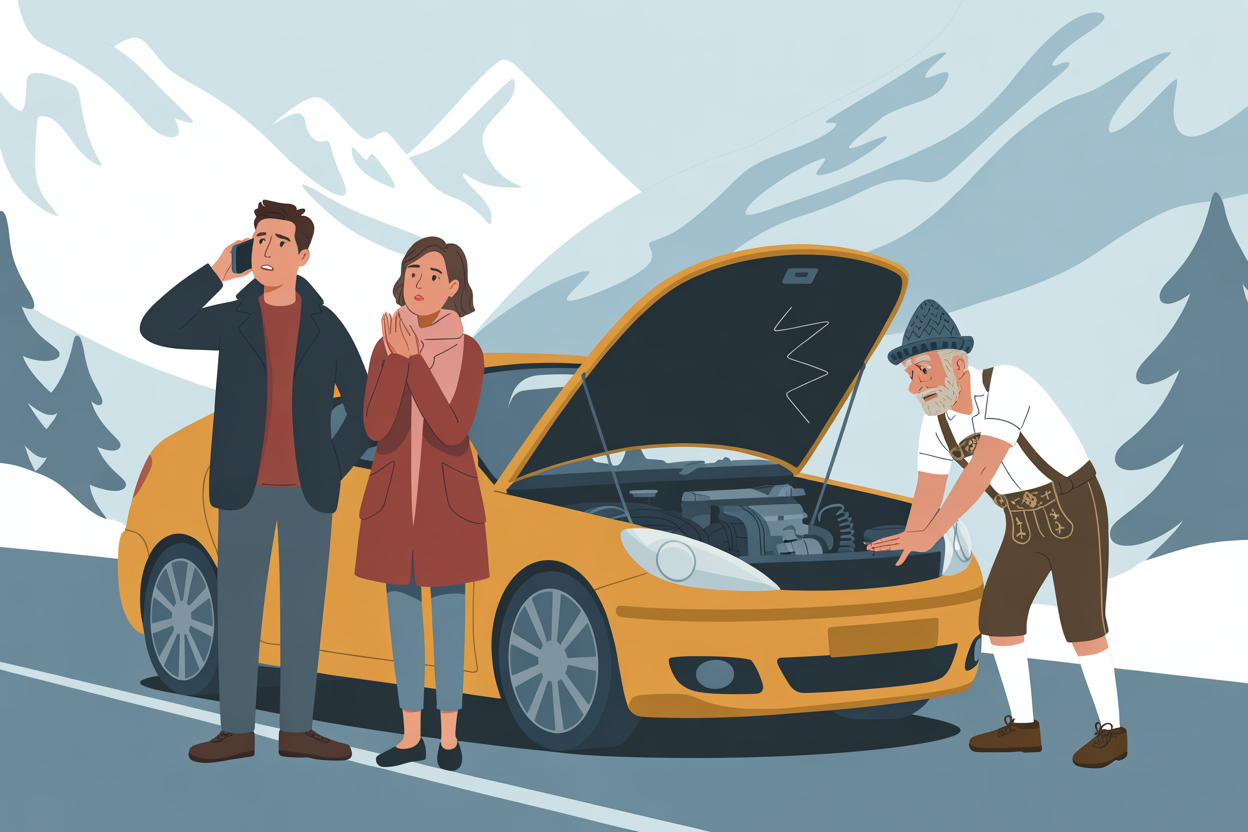
Illustration of a worried couple beside a yellow rental car with its hood up on a snowy Alpine road, the man on his phone for roadside help as a man in lederhosen inspects the dead engine.

Help! Alamo charged me $1,000 after my car battery died in the Swiss Alps

Kjell-Erik Berggren rented a car from Alamo at Geneva Airport for a six-day trip through Switzerland, and it worked perfectly until the last morning. Staying in a mountain village at 1,500 meters, he and his group woke to a cold, frosty morning and a car that was completely dead: no lights, no starter, nothing. Roadside assistance told them to leave the vehicle and find another way to the airport, which they did at considerable expense. Then, two months later, Alamo charged more than $1,000 to his credit card with no prior agreement or warning, on two invoices showing different totals that did not even match what was charged. The company pointed to a roadside protection product he had declined and an insurance deductible he had chosen. But there is a principle worth knowing before you accept a charge like this: rental companies are typically responsible for mechanical and electrical breakdowns that are not caused by customer negligence or misuse, and a battery that dies on a cold morning after five days of normal use points to a defect in the vehicle, not a mistake by the driver.
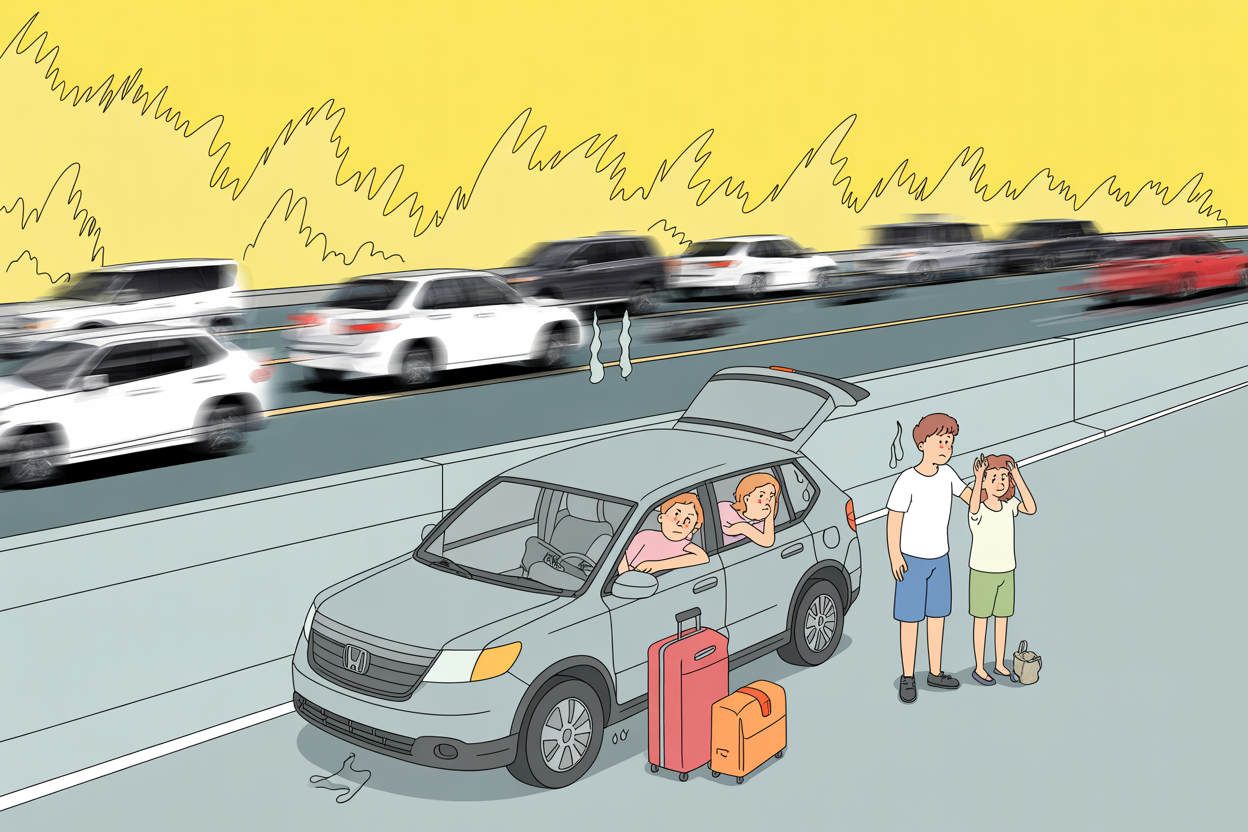
Editorial cartoon showing a stranded family of four standing next to a broken-down silver Honda SUV with steam rising from the hood and two orange suitcases by the open trunk, while traffic blurs past on a yellow-tinted highway under a sweltering yellow sky, illustrating the common summer road trip breakdown scenario between Memorial Day and Labor Day when heat stresses vehicle cooling systems, batteries, and tires

Summer road trip questions you never ask (but should)

Drivers face their 100 deadliest days between Memorial Day and Labor Day. Late August is one of the most common times for vehicle failures because cooling systems, batteries, tires, and belts have been stressed all season. Pavement temperatures can exceed 150 degrees Fahrenheit, hot enough to warp metal and disintegrate tires. Travel trailer blowouts are extremely common because many towable RVs use cheap tires with speed ratings of just 65 mph. 85 percent of drivers have roadside assistance, but only 18 percent actually use that coverage during a breakdown. Standard auto insurance does not cover mechanical breakdowns, and common towing mileage limits are as low as 15 miles before passengers pay out of pocket.