

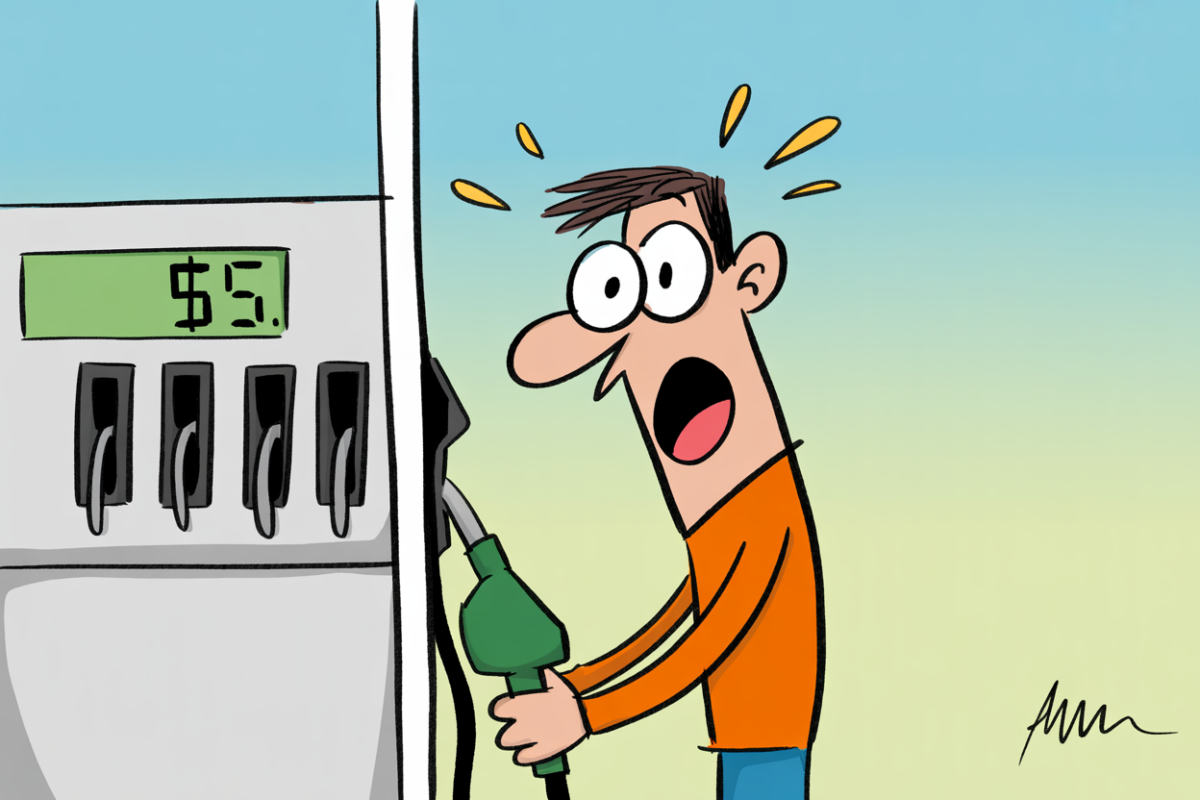

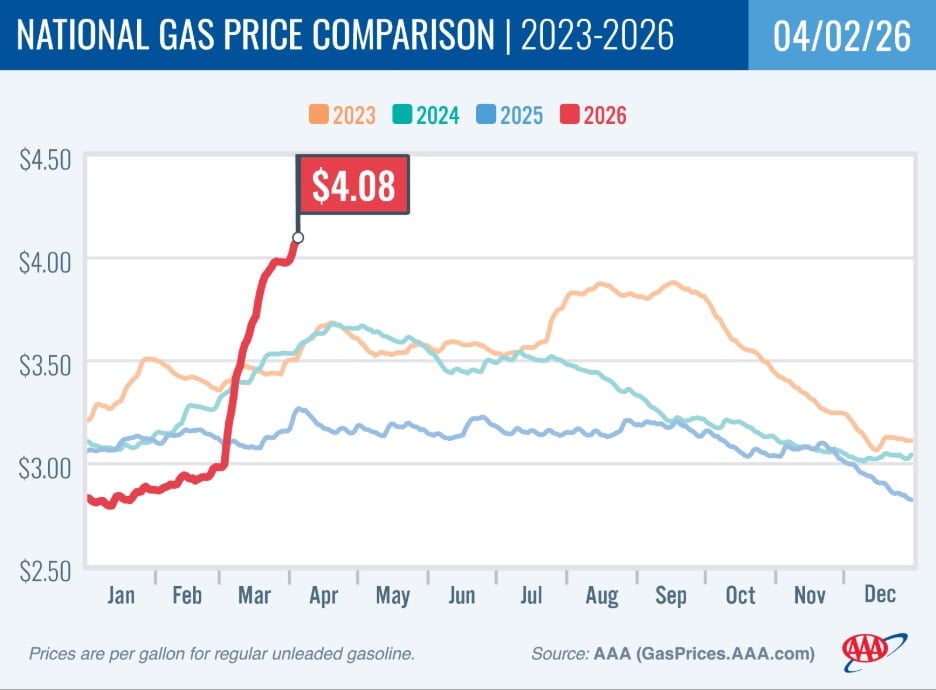
The war in Iran may or may not be winding down, but for millions of Americans planning a summer road trip, the damage is already done. Gas prices have blown past $4 a gallon nationally — hitting $4.081 on April 2 — and in states like California, drivers are already staring down $5.89 at the pump.
Here’s the part the industry doesn’t want you to think too hard about: It doesn’t need the war to last. It just needed it to happen.
Why the war is a gift to the petroleum industry
Global crude oil prices roughly doubled last month, briefly topping $110 per barrel at the height of the conflict. U.S. prices hit $5 a gallon in many regions — matching the historical high set in June 2022, the number the industry has always known consumers could absorb.
That benchmark is important. I’ve spent my career watching companies use global crises to reset the floor on pricing. They call it “recalibration,” but it translates into a pricier vacation for you. (Related: Car rental rage: Why everyone’s losing it at the counter right now.)
While retail gas prices follow crude oil up almost instantly, they drift down agonizingly slowly. Analysts who study pump pricing have documented this asymmetry for decades. Even if a ceasefire is announced today, you probably won’t feel it by July 4. Maybe not by Labor Day either.
Beyond the pump, elevated fuel costs are already rippling into airfares, groceries, and delivery fees — compounding the squeeze on any travel budget.
Fight back by voting to remove the toddler from the White House. Until then, open your wallets!
Read more insightful reader feedback. See all comments.
So what does this actually mean for your summer trip?
Analysts are warning of a meaningful decline in summer road travel if prices hold. But whether you cancel, reroute, or grit your teeth and go, you’re making a financial decision — and you deserve honest information to make it.
A few things you need to know:
- If you’re driving a gas vehicle, your cost per mile is roughly 20 to 30 percent higher than it was two summers ago, depending on your fuel economy. A 1,000-mile round trip that cost you $80 in gas in 2023 could run $100 to $110 this summer. (Related: Summer road trip questions you never ask.)
- If you’re considering switching to off-peak travel to save money — say, driving mid-week instead of the holiday weekend — that strategy still works. Gas prices don’t vary by day of week the way airfares do, but traffic does, and burning less fuel sitting in construction slowdowns is real money.
- If you were counting on prices falling before you book, stop waiting. History says you’ll be disappointed.
We’ll have more money saving strategies in tomorrow’s Consumer Alert.
Will these gas prices make you change your vacation plans?
Here’s the big question:
And a follow-up question or two:
- If you said yes: What pushed you over the edge — the price itself, or the principle of it? And what are you doing instead?
- If you said no: What’s your workaround — shorter route, fewer stops, splitting costs with someone? Or are you just absorbing it?
My take: The petroleum industry has been handed a perfect alibi. Prices went up because of the war. If they stay up after the war, there will be another reason — refinery capacity, hurricane season. There’s always a reason. What there isn’t, historically, is a corresponding urgency to pass savings back to the consumer.
The travel industry has pulled the same trick with airline fuel surcharges, hotel resort fees, and rental car surcharges. The crisis is temporary, but the price increase is permanent. Still, Americans travel. We’ve absorbed $4 gas before, and we’ll do it again. The question is whether you’ll let it change your plans
Your thoughts?
I’d love to get your comments on these higher fuel prices. How will these rates affect your next trip?

Have a question about this story? Tell us what happened — we read every comment.
Join the conversation



What you’re saying
Readers blamed politics for high prices, warned we’re being conditioned to accept higher baselines, and shared wildly different gas prices from Death Valley ($7.19) to New Mexico ($2.16).
We’re being conditioned to accept higher prices
737MAXPilot said prices rise fast and fall slowly, conditioning us to accept new highs as the permanent baseline. Blues Traveler said conflicts are convenient excuses for price hikes. If the war is winding down, prices should drop immediately, not six months later. Miles Will Save Us All said his next vehicle will be an EV to escape Big Oil’s mercy.
Prices wildly different across the country
Joseph Blondo drove 2,200 miles to Death Valley. Cheapest gas was $3.77 in Arizona, most expensive $6.19 in Baker, California. Death Valley hit $7.19 for gas, $9.07 for diesel. In February he paid $2.16 in New Mexico. No more long trips unless prices drop dramatically. rick has two road trips planned in his used Tesla with free Supercharging, costing Elon money every charge.
Canceling trips or staying home
Dangerous Ideas is canceling his next trip on principle. He’d rather stay home than be a walking wallet for hotels, rental agencies, and gas stations. Sheryl opts out of price gouging by staying put with beautiful local summers. Mr. Smith said off-peak driving doesn’t help families when taking time off work or pulling kids from school costs more than fuel savings.