


in this commentary
- The government just dropped a proposed rule to compensate you for delays. This story explains why that was just the beginning.
- Learn about the airline industry’s wish list, which includes ending automatic cash refunds for canceled flights and getting rid of rules that require them to show you the full price of a ticket upfront.
- Find out why flying could soon feel like a trip back to the early 2000s, with hidden fees, expiring vouchers instead of refunds, and families being split up to generate extra revenue.
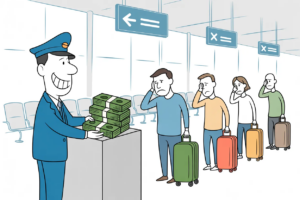
Imagine this: Your flight’s been delayed over and over. But when you ask a lone worker staffing the customer service counter for help, he just shrugs. There’s no meal voucher, no compensation — not even an apology. Just an indifferent employee telling you to deal with it.
Or how about this: You click on an airline website to buy a ticket and it lists a too-good-to-be-true round-trip fare of $29. But as you go through the booking process, the airline adds checked luggage charges, carry-on luggage fees, convenience charges, taxes, airport fees and fuel surcharges. Suddenly $29 is more like $290.
Sound far-fetched? It could be your reality sooner than you think.
The U.S. government just jettisoned a proposed rule that would have required airlines to pay passengers up to $775 for lengthy delays. Now, the airline industry wants to go further — much further. In a sweeping letter to the Department of Transportation, airline lobbyists have outlined their deregulatory wish list.
It reads like a passenger’s nightmare.
The airlines aren’t just asking for minor tweaks. They want to roll back mandatory refunds for canceled flights, a rule requiring “all-in” pricing and a requirement that families be seated together at no extra charge. If they get their way, flying could become a one-sided game where airlines hold all the cards.
The U.S. airline industry’s great deregulation push
Before you get too excited, keep this in mind: The Department of Transportation (DOT), which regulates airlines, has promised to enforce all congressional consumer protection laws. (In Washington, Congress usually passes a law and then the DOT creates a rule, which it enforces.)
“The Department of Transportation rules that the airline lobbyists oppose include common-sense protections such as refund requirements, restrictions on junk fees, and guaranteed family seating,” says Tomasz Pawliszyn, CEO of AirHelp. “Fortunately for travelers, these protections are already firmly established, as the Department of Transportation rules closely align with the refund standards Congress passed in 2024.”
Your voice matters
The airline industry wants to get rid of some of your most basic consumer protections, including your right to an automatic refund. Should the government let them?
- Have you ever had to fight an airline for a refund it should have issued automatically?
- Do you believe that less regulation would lead to a better flying experience, as the airlines claim?
- Which of the proposed rollbacks — ending automatic refunds, fee transparency, or family seating rules — worries you the most?
But Congress could easily get behind the airline industry’s extreme agenda. The political winds have shifted — and consumer protections could get blown away.
Currently, U.S. passengers have far fewer rights than their European counterparts. While EU travelers can claim up to $650 for delays over three hours, Americans get nothing for domestic delays, even when airlines are at fault.
The protections U.S. air travelers have are modest:
- Automatic refunds for canceled flights or significant changes (if you choose not to travel).
- Basic full-fare advertising requirements (airlines must include taxes and fees upfront).
- Bare-bones accessibility (protections for disabled passengers).
- Family seating guarantees (though implementation remains murky).
But even these minimal safeguards are under assault.
Read more insightful reader feedback. See all comments.
What airlines really want
Airline lobbyists have outlined their agenda in detail. It’s not just about the compensation rule — that was just the opening salvo.
Here’s the airline industry’s battle plan:
☑ Eliminate automatic refund requirements for flight changes and cancellations.
☑ Scrap fee transparency rules that force disclosure of baggage and seat fees upfront.
☑ Remove some accessibility protections for passengers with disabilities.
☑ End enforcement of family seating requirements.
Airlines also want to weaken the regulatory framework by terminating a cooperation agreement with state attorneys general on airline passenger rights and imposing a two-year statute of limitations on DOT enforcement actions.
What will they replace it with? Nothing. Airlines want to decide where and when to compensate their passengers, if they do at all. But consumer advocates say that’s a bad idea.
“Carriers can’t be allowed to decide for themselves who and when to compensate,” warns Daria Volochniuk, chief operating officer at FlightRefunder. “Clear, universal rules are needed.”
Airlines claim flying will be a better experience when it’s deregulated. The question is, better for whom?
What about Europe?
New research suggests American passengers are already getting shortchanged because of lax regulation. U.S. flights were almost three times more likely to have long delays compared to European departures in 2024, according to a recent study by AirHelp. Same-day cancellations were also more common in the States.
Pawliszyn, AirHelp’s CEO, says strong consumer regulations in Europe have directly led to a 5 percent reduction in delays. The cost of those protections? Between 60 cents and $1.20 cents per passenger. (Related: Don’t let your airline rights fly away. Here’s how to protect them.)
Yes, one dollar.
U.S. airlines claim European-style compensation would raise fares and hurt competition. But Europe’s airline market remains fiercely competitive, with budget carriers thriving under the current compensation system.
What’s really at stake
If the airlines succeed, they could turn back the clock to the early 2000s. Remember when you needed a calculator to figure out how much your airline ticket would cost? Remember when you had to fight for a refund when your airline canceled your flight — the airline always wanted to give you an expiring voucher? Remember when airlines intentionally separated passengers so they would pay extra to sit together, even if it was a family with young children?
“If regulations are removed, consumers will face many more surprise charges on travel purchases such as list prices for checked bags and seat assignments, and less protection against refundable purchases,” warns attorney Christopher Migliaccio, who frequently handles airline disputes for his clients.
Now what?
What will actually happen? The U.S. government has shown it’s willing to roll back regulations across multiple industries.
My prediction: The airlines will get some of what they want, but not everything. The automatic refund rule will likely survive — it’s popular and has bipartisan support. But fee transparency requirements could disappear, and the European-style compensation rule is dead on arrival.
The bigger danger is Congress. If lawmakers embrace the industry’s deregulatory agenda wholesale, passenger rights could vanish faster than chicken entrees on a transcontinental flight.
The ultimate question isn’t whether airlines will roll back some protections — they will. It’s how far they’ll push before public outrage stops them.
“The airline industry is pulling off a heist in broad daylight,” says Andy Abramson, a frequent flier and communications consultant from Las Vegas. “We gave these airlines $54 billion in bailouts, and this is how they thank us?”
What will airlines think of next? Is it possible they will someday soon be allowed to quote a “zero” fare, then add luggage fees, taxes, fuel surcharges, seat assignments, and “convenience fees”? Or even take your money without operating a flight?
Don’t laugh. The industry’s 93-page wish list suggests they’re willing to test just how much passengers will tolerate. As I’ve learned in my decades of consumer advocacy, when it comes to exploiting passengers, you should never underestimate the airline industry’s creativity.
Their dream is our nightmare, and it’s boarding now at a gate near you.
Next week: How to protect your vanishing airline rights — and fight back when airlines try to take advantage of weaker rules.
Your passenger rights are under attack
Airlines are pushing to eliminate some of your most basic protections. Here’s a look at what you could lose
Your current rights
-
Automatic cash refunds for canceled flights or significant delays if you choose not to travel.
-
Upfront “all-in” pricing that must include taxes and mandatory fees in the advertised fare.
-
Family seating guarantees that ensure children under 13 can sit next to an adult at no extra charge.
The airlines’ wish list
-
Eliminate automatic refunds and replace them with expiring vouchers, forcing you to fight for your cash.
-
Scrap fee transparency to advertise “$29 fares” that become $290 after adding hidden fees at checkout.
-
End family seating enforcement, allowing them to separate families to collect extra seat assignment fees.


Have a question about this story? Tell us what happened — we read every comment.
Join the conversation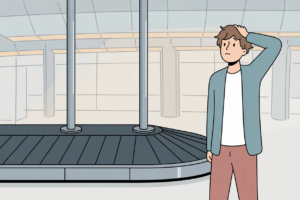

What you’re saying
The news of dwindling consumer protections for air travelers ignited a firestorm of comments. The discussion quickly escalated beyond the new rules into a larger debate about politics, economics, and the power imbalance between airlines and passengers.
A vicious cycle of our own making
Top commenter JenniferFinger identified what she called a “vicious cycle”: as long as travelers demand rock-bottom fares and elect politicians who oppose regulation, airlines will continue to provide a product with no guarantees. It’s a systemic problem with no easy exit.
It’s politics, plain and simple
Many of you, including Simon and michael anthony, believe the problem is political. You argued that we have an anti-consumer administration and that a powerful airline lobby ensures that profits come before people. The only solution, you suggest, is to make passenger rights a voting issue.
A clash of economic philosophies
The debate exposed a deep ideological divide. Readers like 737MAXPilot and Dangerous Ideas defended the airlines, arguing that they operate on razor-thin margins and that free-market competition is a better regulator than bureaucracy. On the other side, Blues Traveler and The Brown Crusader described an unfair power shift, where corporations exploit working families in a system “rigged” against the average consumer.