

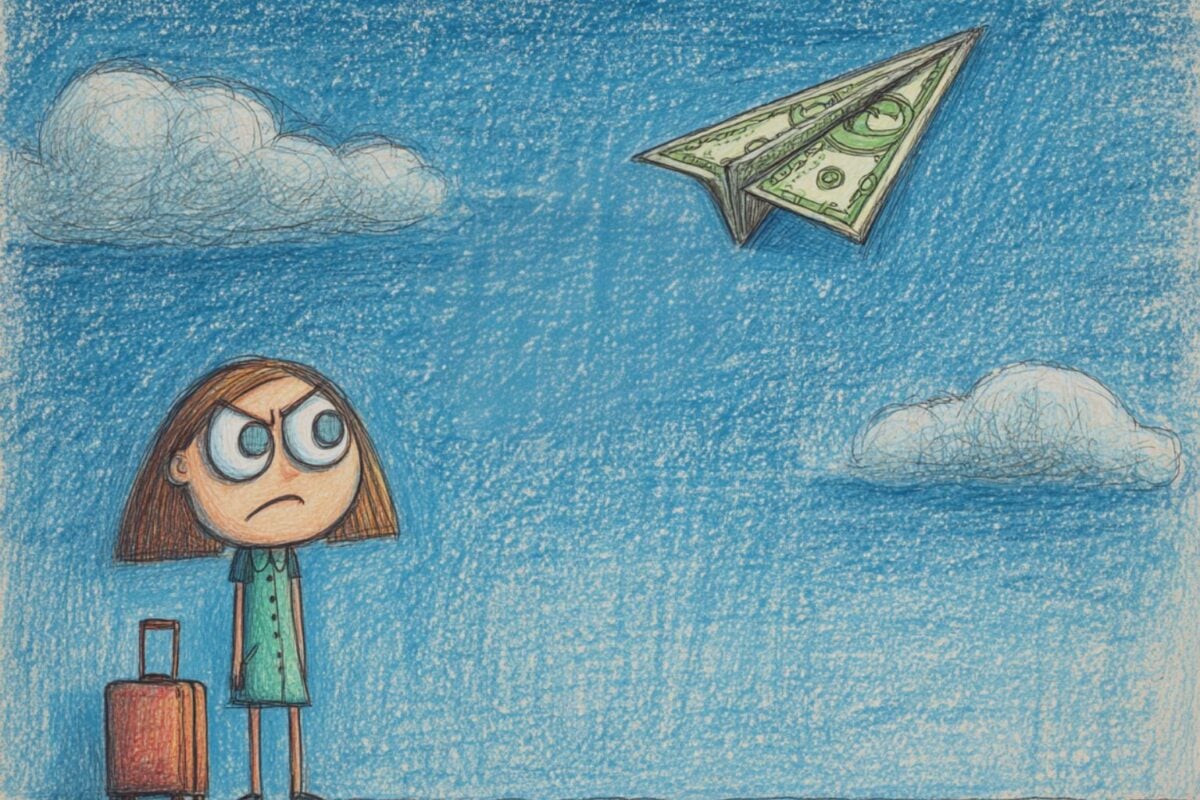
A federal court just handed the airline industry a massive win, and it’s one that could affect your next flight.
The 5th U.S. Circuit Court of Appeals vacated a Biden-era Department of Transportation (DOT) rule that would have forced airlines to show you a full fare up front. That included the cost of a checked bag, a carry-on, and changing your flight. Airlines usually reveal these costs—but just before you click that “book” button.
An expensive lack of disclosure
The DOT argued these hidden costs make travelers overpay by more than $500 million every year. But the airlines weren’t having it. They sued, claiming the government didn’t follow the right procedures and doesn’t have the power to tell them how to display their prices.
Now, thanks to this ruling, the industry can keep displaying a partial airfare until the end of your booking process. In other words, it’s back to booking your ticket with a calculator.
What the rule would have done
The Enhancing Transparency of Airline Ancillary Service Fees rule was designed to stop the bait-and-switch of airfare pricing. Here’s what it would have required:
- Up-front disclosure. Airlines and ticket agents had to show fees for first and second checked bags, carry-ons, and change/cancellation costs the very first time they quoted a fare.
- No hyperlinks. They couldn’t hide these costs behind a link; the actual dollar amount had to be right there next to the ticket price.
- Accurate discounts. Any promotional discount had to apply to the full fare, including mandatory fees, so a “50 percent off” sale actually meant 50 percent off the total.
- Third-party data. Airlines were required to share this fee data with travel sites like Expedia and Kayak so you could compare the true cost across different carriers.
The rule wasn’t perfect. Most notably, it would have allowed airlines and third-party sites to continue concealing the taxes until the final screen, a key omission.
Yes, passengers absolutely deserve to know the full fare upfront. Airlines love to advertise a low headline price, but by the time you add a carry-on, a checked bag, and seat selection, the ticket looks nothing like what was promised.
If every airline had to show the real total cost from the start, competition would actually be fair. Right now, the system rewards whoever hides fees the longest.
Read more insightful reader feedback. See all comments.
Why airlines hated this proposed rule—and why advocates loved it
So, why did the airlines fight this so hard? In their lawsuit, trade groups like Airlines for America argued the rule was “regulatory overreach.” They claimed it would upend the way airlines interact with their customers and that showing all those fees at once would actually confuse passengers.
“U.S. airlines are committed to providing the highest quality of service, which includes clarity regarding prices, fees and ticket terms,” the trade group said in a statement. (Related: Should you cancel your spring break trip to this popular destination?)
Of course, it’s more likely they’re worried that if you saw a $400 ticket was actually $550 after fees, you might just stay home.
Consumer groups loved the new rule because it prevented confusion among air travelers. Knowing exactly how much an airline ticket costs means fewer complaints and happier passengers. It’s also another nail in the coffin of a business model that tries to trick travelers into booking a more expensive airfare.
What do you think?
And a few follow-up questions:
- If you say yes, should the government mandate it, or should we let the free market sort it out?
- If you say no, do you really believe that hiding fees until the end of the booking process is better for consumers? If so, how? Do you think seeing the “all-in” price would change how often you choose to fly?
My take: The airlines’ argument that transparency is “confusing” is insulting to their customers. We aren’t confused by honest prices; we’re confused by dishonest ones. This ruling is a green light for carriers to continue unbundling every single part of the flight experience until the base fare covers nothing but a standing-room spot in the galley. If a fee is critical to your travel, it should be disclosed up front.
Your turn
What do you think? Is this court victory a win for business freedom, or is it just another way for airlines to squeeze a few more dollars out of unsuspecting travelers?

Have a question about this story? Tell us what happened — we read every comment.
Join the conversation

What you’re saying
Readers debated the fine line between transparency and government overreach. While savvy travelers preferred a simpler view, most agreed that the airlines’ claim that honesty “confuses” passengers is an insult to their intelligence.
The fairness argument
The Brown Crusader and Jennifer argued that the current system rewards companies that hide fees the longest. They noted that clicking through five screens only to see the price double is far more confusing than seeing the real cost upfront.
The frequent flyer defense
KanExplore and BMG pushed back against mandatory all-in pricing. Since they rarely pay for bags due to status or packing habits, they don’t want to see inflated prices that don’t apply to them.
Market solutions vs. mandates
Tim suggested that consumers should punish non-transparent airlines with their wallets rather than relying on new laws. Eric Stone countered that waiting for the market to fix bad behavior doesn’t help customers right now.