in this commentary
- The Department of Transportation proposes trading its “ticket book” for warning letters, signaling a major shift from enforcing consumer rights to coaching airlines on compliance.
- For passengers, this policy change means the cost of violating your rights drops to zero, potentially bringing back bait-and-switch pricing and indefinite refund delays.
- Experts warn that without the threat of steep fines, airlines will treat customer money like interest-free loans and deprioritize critical services for travelers with disabilities.
Picture this: You’re driving 85 in a 65-mph zone, and a state trooper pulls you over. But instead of a $200 ticket, he hands you a warning and a pamphlet on the importance of speed limits.
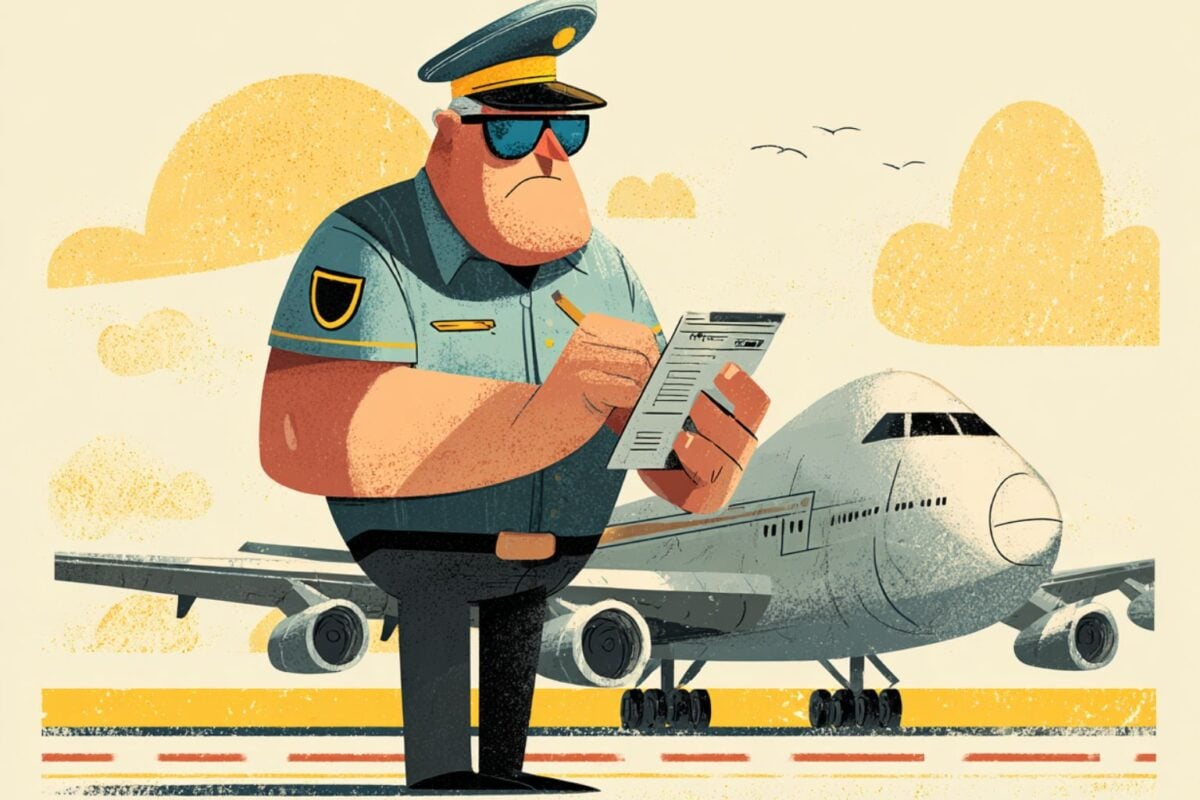
That may not be a “what if” scenario for airlines. Under a proposed new Department of Transportation (DOT) policy, the agency charged with enforcing consumer protection regulations for airline passengers would trade its ticket book for a stack of warning letters.
The DOT is trying to add the rule quietly. It posted the revised policy and invited public feedback in early January and, as of early this week, had received only a few comments (one, from the International Air Transport Association, “strongly” supported the proposed rule, of course). But airline passengers are unlikely to find much to cheer about once they learn the details.
The government goes from cop to coach
The DOT’s Office of Aviation Consumer Protection has long been the cop on the beat for the airline industry, empowered to fine carriers for everything from stranding passengers to refusing legally mandated refunds.
But the new rule is part of a fundamental shift under the current administration. The agency explicitly wants to shift its focus to ensuring compliance “rather than finding and penalizing entities for violations.” If the DOT finds a violation, its first step will now be a warning letter to resolve the issues before pursuing enforcement action. Formal fines and civil penalties are to be reserved only for “widespread, systemic, egregious, or intentional violations,” according to the government. (Related: Your airline might be spying on you — and it should be illegal.)
In plain English, the DOT is moving away from an enforcement model for consumer violations. For the average passenger, this means your rights—to a refund, to compensation, to accessible service—are now protected by a system that prioritizes teamwork with an airline over punishment.
The system has stopped working
The proposed rule is unnecessary, since the DOT has stopped most enforcement.
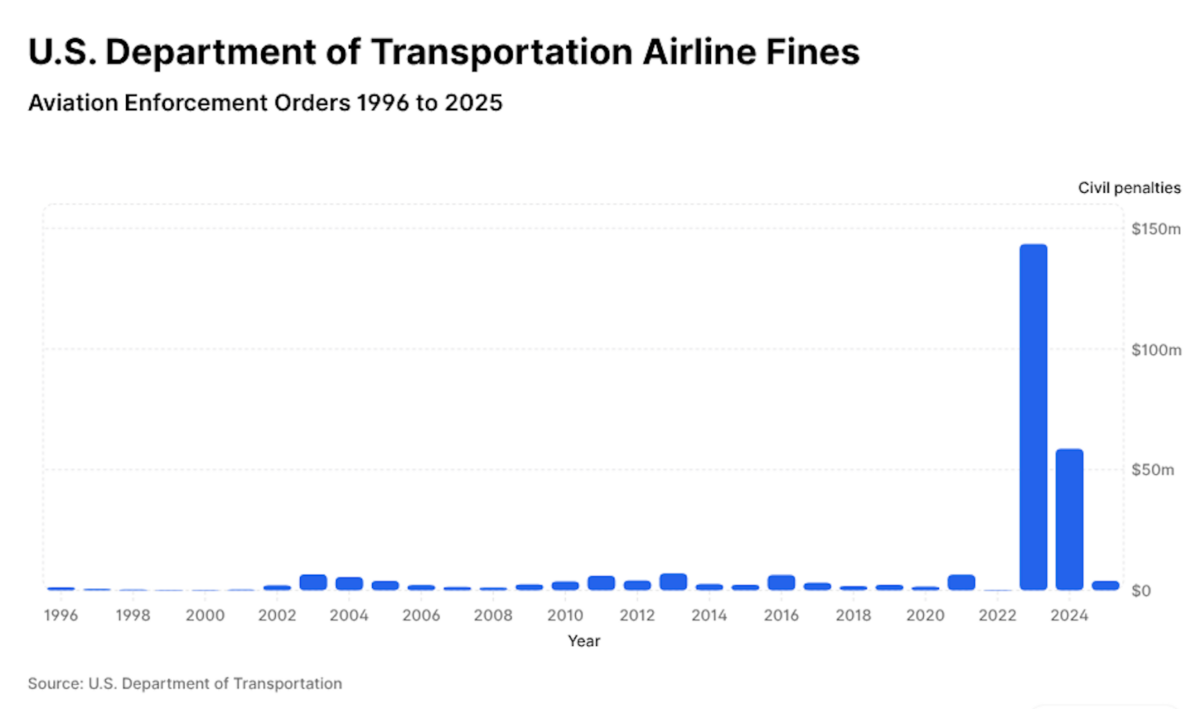
During the first Trump administration, the DOT adopted a similar constrained approach to enforcement. The result was a staggering 88 percent drop in the total dollar amount of fines levied against major airlines compared to the end of the Obama era. In 2018, total penalties plummeted to just $560,000, down from $4.7 million only two years before.
I’ve seen this behavior before. There is no attempt by the government to study in advance whether this way of approaching the problem works, and certainly there will be no after rule change review to see whether the incidence of violations changes.
And there is little pressure from the voting public. Folks are more concerned with the price of eggs than whether the eggs are safe.
Read more insightful reader feedback. See all comments.
During the Biden administration, DOT stepped up its enforcement efforts, issuing a record $64 million in penalties—more than ten times the entire four-year total of the previous administration. By early 2025, the agency had issued over $225 million in total penalties since 2021, compared to just $70 million issued collectively between 1996 and 2020. (Related: The government wants to know everything about your last trip.)
The second Trump administration quickly began dismantling this aggressive stance. In addition to the proposed “warning letter” rule, it has paused the implementation of new refund requirements until mid-2026 and withdrawn rules designed to protect passengers from junk fees.
The question is, which enforcement policy is better for passengers?
The danger of the free pass
The logic behind the culture of compliance is that it’s more efficient. But does it actually work?
Research into traffic violations offers a sobering answer. A 2023 study found that while written warnings might work for low-risk, one-time traffic offenders, they have virtually no effect on high-risk, repeat violators—the exact category that multibillion-dollar airlines fall into when they systematically delay refunds to preserve cash flow. In New Zealand, police this year abandoned a policy of issuing verbal warnings in favor of strict and often automatic fines. (And yes, I realize a car is not a commercial aircraft, but a fine is a fine.)
Even the DOT’s own Inspector General warned in a September 2025 report that the agency was already failing to hold airlines accountable by relying on airlines’ self-certification of refund data. The Inspector General noted that without verifying this data and applying consistent penalties, the DOT risks not deterring airlines from violating consumer protection regulations.
What does this mean to you?
For an airline, a $100,000 fine is a line item, but a warning letter is a souvenir. By officially adopting a policy of leniency, the DOT is effectively telling the airlines that the cost of violating your rights is now zero.
Specifically, here’s what could happen:
Return of bait-and-switch pricing. The erosion of price-display enforcement is a permission slip for drip pricing, where the initial fare looks low but mandatory junk fees for baggage, seats, and service are added only at the final checkout screen after the passenger has invested time in the booking.
Evasion of flight delay compensation. Airlines frequently mislabel controllable delays (like staffing or maintenance) as “weather-related” to avoid paying for hotels or meals; without DOT audits, passengers have no way to verify the airline’s excuse and lose their leverage for compensation.
Refunds become interest-free loans. Without the threat of immediate fines, airlines can intentionally slow-walk refund processing to keep cash on their own balance sheets, effectively treating passenger money as an interest-free loan for months at a time. That happened during the pandemic, when passengers waited months—and in some cases, years—for their refunds.
Deterioration of disability services. Aggressive fines have been the primary driver for improvements in wheelchair handling and cabin accessibility; switching to “warning letters” signals that expensive equipment upgrades and specialized training are now lower-priority expenses.
If this policy change goes through, it’s hard to imagine things improving for passengers, according to Paul Hudson, president of FlyersRights.
He notes that the DOT receives over 40,000 formal airline passenger complaints a year, but investigates perhaps 10 percent, and issues only a handful of fines.
“All are negotiated with the violator with half the fine usually forgiven,” he said in an official comment made on the Regulations.gov site. “Passengers who are harmed usually receive nothing. And decisions declining to fine violators—so-called ‘no action’ letters—are not published so the true extent of non-enforcement is concealed.”
In other words, the situation will go from bad to worse.
So the next time you’re stuck on a tarmac or fighting for a refund, remember the Highway Patrol. A culture of compliance may be great for the people in the driver’s seat. But for the passengers in the back, it’ll be a long, expensive road ahead.
Your voice matters
The government wants to swap fines for warning letters, betting that a “culture of compliance” will fix airline behavior. Critics argue it just gives carriers a free pass to ignore the rules.
- Do you believe multi-billion dollar airlines will follow consumer protection laws if the penalty for breaking them is just a warning letter?
- Should the DOT act like a “cop” handing out tickets, or a “coach” encouraging better behavior?
- If an airline delayed your refund for months, would you feel satisfied knowing the government sent them a sternly worded note?
What you’re saying
Readers engaged in a sharp political debate over the DOT’s proposed shift. Some argued that voters chose a pro-business administration and must accept the consequences, while others lamented the dismantling of consumer protections without any data to support the change.
-
Policy without proof
George Schulman criticized the lack of data behind the decision. He noted the government isn’t studying whether warning letters actually work before implementing them, nor does it plan to review the results later.
-
Elections have consequences
Ben argued that Americans voted for a “pro-business” administration and shouldn’t be surprised when it sides with airlines. AJPeabody countered that this administration systematically guts anything with “protection” in its name, from environmental to consumer rights.
-
The logic of penalties
Jennifer agreed with the article’s traffic analogy. She reasoned that just like speeding drivers, repeat offenders in the airline industry won’t change their behavior unless the penalties escalate beyond a simple warning.

Have a question about this story? Tell us what happened — we read every comment.
Join the conversation