in this case
- Walter Gluzkin returns a rattling rental car after just 30 minutes, where an attendant admits the vehicle has a known mechanical defect.
- Months later, National’s damage recovery unit ignores that conversation and demands $2,000 for repairs, refusing to provide photos or proof.
- Facing a baseless claim and a wall of silence from executives, he fights to protect his insurance rates from a bill he shouldn’t owe.
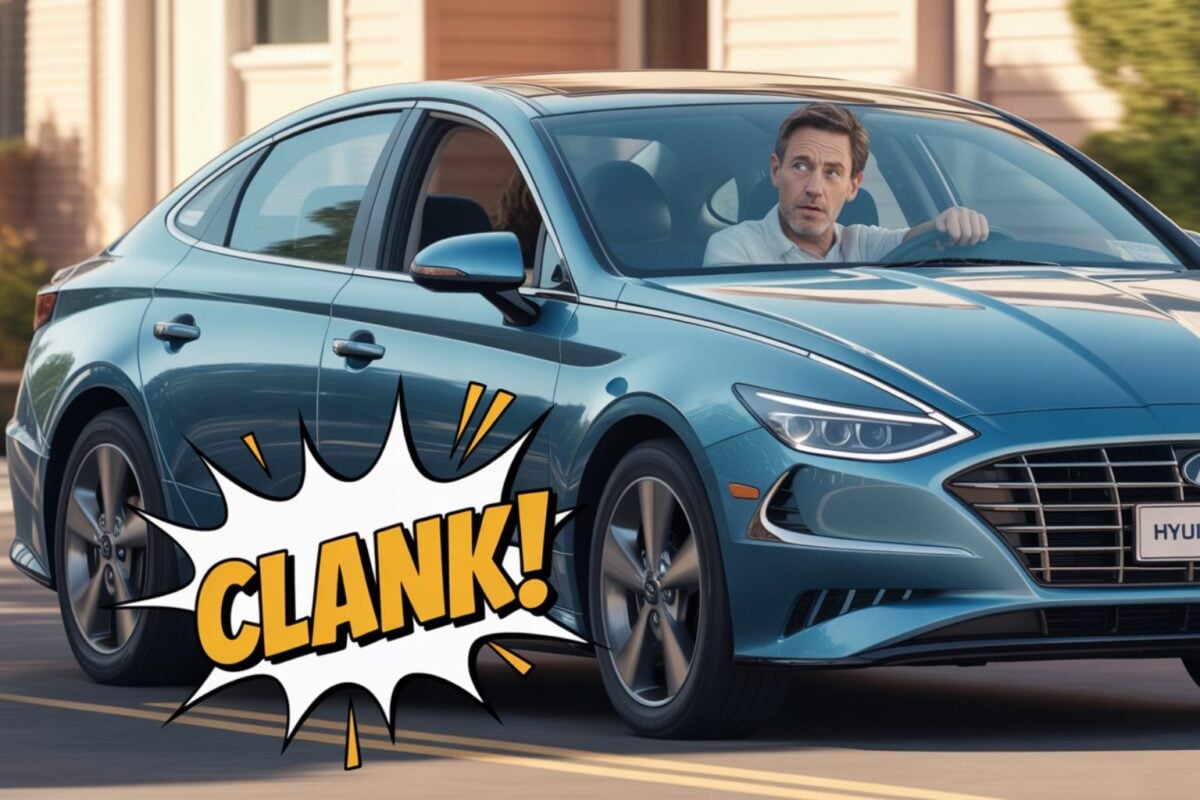
Walter Gluzkin faces a months-long battle with National Car Rental over a damage claim on a Hyundai Sonata he returned just 30 minutes after picking it up. National’s damage recovery unit is demanding his insurance information for repairs he says he never caused. Can National get away with that?
Question
I recently rented a Hyundai Sonata from National at Raleigh-Durham Airport. Within minutes of driving off the lot, I started hearing noises from under the car. I drove a couple of exits, then turned around and brought it back.
When I entered the National facility, one of the attendants said, “Well, there’s another Sonata with the lower engine cover coming loose.” I explained what happened, and a representative said no problem, and I got another car. I had the Sonata for maybe 30 to 60 minutes total.
About a month later, I got an email from National’s Damage Recovery Unit demanding my insurance information. I called and explained I did nothing to the car — I just drove it out of the lot and onto the highway. A representative said since I only had the car for such a short time, I should be good.
But three months later, I got another demand. I appealed, and they denied it with no explanation. I never got photos of the damage or explanations of what they’re claiming I did. I’ve emailed three National executives listed on your site but haven’t heard back. I’ve been a loyal National customer for 20 years. National wants me to pay $2,000 for the damage. This is ridiculous! — Walter Gluzkin, Miami Beach, Fla.
Answer
When you returned that defective Sonata within an hour and an employee acknowledged there was “another” car with the same problem, that should have been the end of it. National should have documented this as a mechanical failure, not customer damage. The fact that even its own employee recognized this as a recurring issue with that model should have protected you completely.
Instead, National’s damage recovery unit decided to pursue you for money. I’ve lost count of the number of times I’ve seen this. Usually, customers roll over and surrender their insurance information. But not you.
I think you could have strengthened your case by getting the employee’s confession in writing. But honestly, you shouldn’t have needed to. National’s own employee confirmed this was a known defect.
National’s actions are problematic on several levels. Under most state consumer protection laws, businesses can’t charge customers for pre-existing defects. Also, National should have provided you with detailed documentation of the alleged damage, repair estimates, and photographic evidence — not just vague demands for insurance information.
Seems the comment was about Hyundai Sonatas in general. The lower engine cover is not something I am aware of being a problem, but rental companies would probably see many of them.
It would be questionable to me whether insurance would cover something like that at all. It’s just a splash guard under the engine. $2,000 would be wildly excessive as well.
Of course, this is all based off a comment by a rental agent who hadn’t looked at the vehicle. Either way, the customer returned it as soon as the noise was noticed and National should not have attempted to charge them.
Read more insightful reader feedback. See all comments.
You did exactly what I would have recommended: escalating to National’s executives. I publish their contact information on my consumer advocacy site, Elliott.org. The fact that they initially ignored your appeals is frankly embarrassing for a company that claims to value customer service.
Most importantly, you were not a pushover. That’s a key ingredient to a successful resolution. When you’re right, you have to stand up for your rights!
I contacted National on your behalf and it reviewed your rental record. “Customer satisfaction is our top priority,” a company representative told me, “and maintaining a customer’s long-term loyalty is important to us.” National contacted you and agreed to drop the claim.
Walter Gluzkin returned a defective car immediately, yet National’s damage unit ignored its own employee’s admission and tried to stick him with a $2,000 bill.
Your voice matters
What you’re saying
Readers were largely united in outrage over National’s attempt to charge Walter Gluzkin for a pre-existing mechanical defect, with many sharing their own defensive strategies for renting cars. The discussion also raised a deeper frustration: that companies only do the right thing when public pressure forces their hand.
-
Companies only act when the spotlight is on
Dee Eagle argued National dropped the claim not out of goodwill but to avoid bad publicity, pointing out that genuine customer satisfaction would have prevented the situation entirely. Tim agreed, noting companies tend to “fold like a cheap suit” when a consumer advocate steps in — and that showing proof of damage before charging customers shouldn’t require a law; it should just be standard procedure. Blues Traveler put it bluntly: without this intervention, a regular person would be out $2,000 simply for reporting a mechanical issue.
-
The video documentation habit
Tina and Don Shirah said they now film every rental before leaving the lot, having lost trust in rental companies to do the right thing. But Dan raised a concern this case exposed: video wouldn’t have helped here since the damage was on the underside of the car, leaving him wondering how anyone can prove pre-existing undercarriage damage. Dee Eagle echoed this, noting that drivetrain problems often go undetected until the car is actually driven.
-
The inspection gap at busy airports
Frank Loncar shed light on the reality of high-volume airport rentals: cars get a quick wash and are rushed back to the line, meaning minor mechanical issues go unnoticed. elbee pointed out that this conveniently turns National’s problem into the customer’s problem, and suggested the company owes Walter Gluzkin not just a dropped claim but a sincere apology and compensation for the ordeal. Gerri Hether captured the double standard well: consumers are required to prove their claims, so why aren’t companies held to the same standard?

Have a question about this story? Tell us what happened — we read every comment.
Join the conversation