

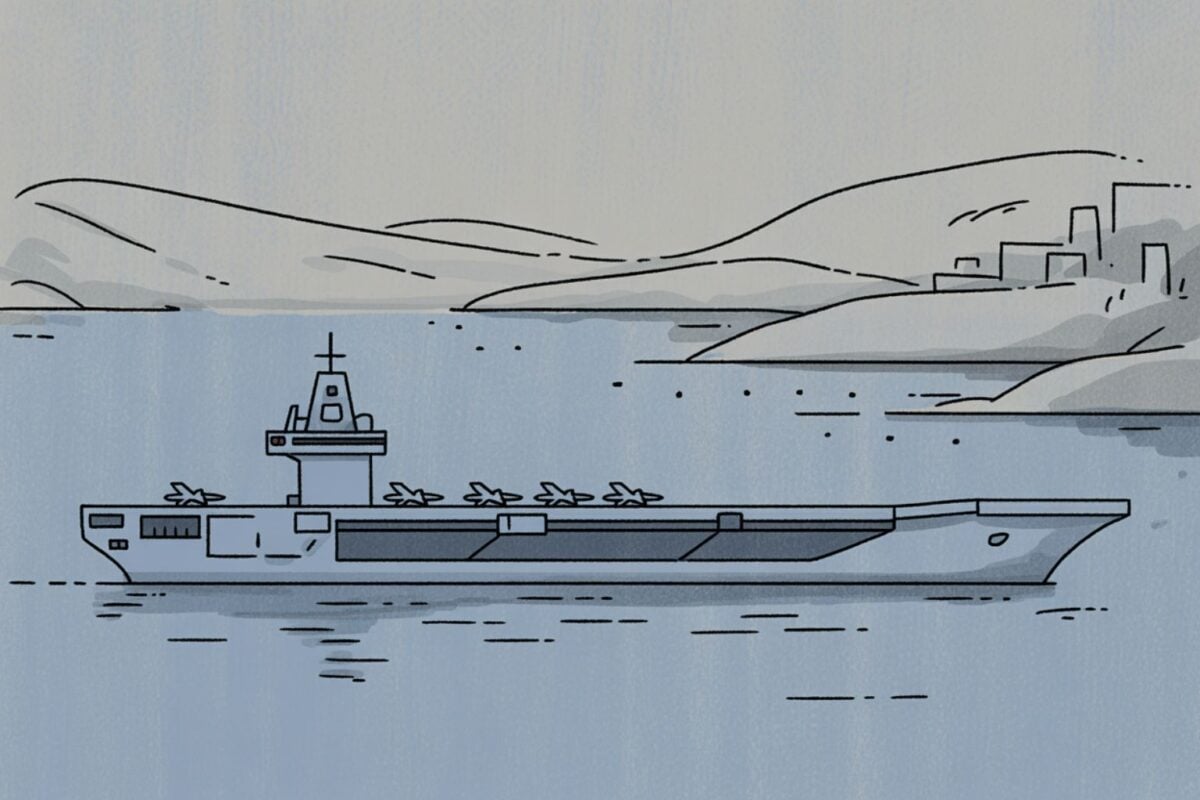
If you’re holding a ticket to Europe or Asia, you might want to check your flight status after you finish this article. The U.S. military is massing an impressive amount of hardware in the Persian Gulf, with reports suggesting a decision to attack Iran could come within the next week.
While diplomats are still talking, the U.S. has assembled its largest concentration of forces in the Persian Gulf since mid-2025, including multiple aircraft carriers and F-35 fighters.
For travelers, the impact isn’t just a future “what if.” It’s happening now. Airlines are adjusting their schedules and rerouting planes to avoid being in the crosshairs. It’s a familiar and frustrating story that could eclipse the fallout from the conflict in 2023, which disrupted air travel through the Middle East.
With the U.S. deciding to attack the Caribbean and South America routinely, make war in the Middle East, and make pretense to murder Americans and immigrants inside our own borders, it seems obvious that the most real and imminent danger in the world is sitting in Washington, D.C. We should cancel all that.
Read more insightful reader feedback. See all comments.
A travel warning from the State Department
The U.S. government has been clear about the situation. In its latest Iran advisory, it says “Do not travel to Iran for any reason.” The virtual U.S. embassy is even more urgent, telling U.S. citizens to “leave Iran now.” (Related: Have airlines failed you during the Iran war?)
You don’t have to connect too many dots to conclude that U.S. military action is imminent.
Here’s where things stand
The situation is moving fast, and the aviation industry is treating the region like a hot zone.
- International airlines, including Air France, KLM, and IndiGo, have already suspended or canceled flights to destinations near Iran.
- Airlines are steering clear of Iranian airspace following warnings from the European Union Aviation Safety Agency about the risk of misidentification.
- Experts warn that an actual strike would lead to immediate airspace closures in the UAE and Qatar, potentially stranding thousands of transit passengers.
If the U.S. attacks Iran, don’t expect the travel industry to take care of you. During the last Middle East conflict, our advocacy team handled hundreds of cancellation cases where the airline basically said, “Too bad!”
What will you do?
That brings us to this week’s big question:
And a few follow-up questions:
- If you said yes, what’s the main reason? Is it the fear of being stranded, or is it a general safety concern?
- If you said no, are you keeping your plans because you’ve already paid for the trip, or do you think the news is overblown?
Also, have you ever had a trip canceled because of a war, and did the airline treat you fairly?
My take: Passenger rights are one of the first casualties of war. Airlines use these “force majeure” events to walk away from their obligations, often leaving you with nothing but a useless flight credit. If you’re headed anywhere near the Middle East, make sure you have “cancel for any reason” insurance, or you might find yourself stuck with a bill for a vacation you never took.
Your turn
What do you think about the escalating tensions? Is it a reason to stay home, or are you going anyway? I’d love to hear your thoughts in the comments.

Have a question about this story? Tell us what happened — we read every comment.
Join the conversation


What you’re saying
Readers are divided on the severity of the threat, but most agree on one crucial detail: the logistical nightmare of canceled flights and stranded passengers is a much bigger immediate concern than physical danger on the ground.
The transit trap
M.C. Storm and Jennifer pointed out that their greatest fear isn’t their final destination, but getting stuck in a Middle Eastern transit hub with no way home. They advised avoiding any flight itineraries that connect through the Gulf to eliminate the routing risk.
Pressing forward
George Schulman and Renae refuse to let geopolitical tensions cancel their vacations. George argued against modifying plans based on the “whims” of politicians, while Renae is keeping her trip to China intact by relying on strategic flight routing and purchasing refundable tickets.
Ripple effects and anxiety
Even travelers far from the conflict zone are feeling the pressure. Donna M. is double-checking her travel insurance for a river cruise in France, while Ben is reconsidering domestic flights altogether due to fears of retaliatory proxy attacks.