in this case
- Greg Rothman booked a seven-day Caribbean cruise on Holland America for $650 using an MGM casino certificate, received verbal confirmation, and got a zero-balance invoice showing he’d paid in full.
- After booking $850 in non-refundable airline tickets from Los Angeles to Fort Lauderdale, Holland America sent a second invoice demanding another $800 or threatening to downgrade him to a windowless interior cabin.
- Despite escalating to supervisors and losing sleep over the situation, Rothman received only form letters blaming MGM for the pricing error, with Holland America refusing to honor the original confirmed booking.
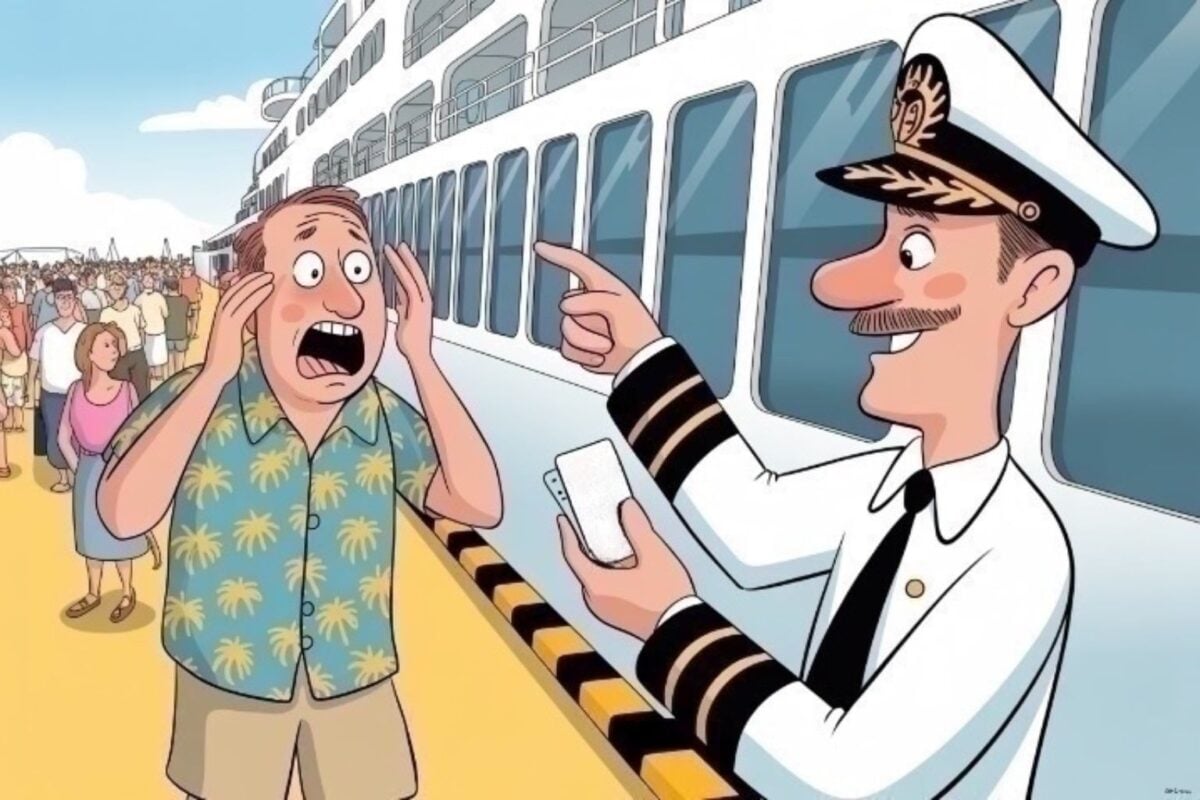
Greg Rothman thought his Holland America cruise was locked in: a seven-day Caribbean sailing in a veranda stateroom for $650, courtesy of an MGM casino certificate. He pays in full and then books non-refundable airline tickets from Los Angeles to Fort Lauderdale. Hours later, a second invoice arrives — this one demanding another $800 or threatening to bump him down to a windowless interior cabin.
Question
I recently booked a seven-day Caribbean cruise on Holland America. I paid $650 for a veranda stateroom, courtesy of an MGM casino certificate.
An agent verbally confirmed the booking and I got a zero-balance invoice. Then Holland America changed the price to $1,450 and told me to pay $800 more or lose my cabin.
I’ve begged supervisors to call me; all I get are form letters blaming MGM. I’ve already booked nonrefundable airline tickets from Los Angeles to Fort Lauderdale for $850. I’ve also lost two days of sleep. Help! — Greg Rothman, West Hills, Calif.
Answer
Once Holland America issued an invoice showing a paid-in-full stateroom, it created a binding contract under federal maritime law and California’s consumer-protection statutes. The company can’t unilaterally rewrite the deal by citing an internal mix-up with MGM. If the agent miskeyed the certificate level, that’s on Holland America — not you.
I see this as a clear failure in data synchronization between Holland America and MGM. A zero-balance invoice represents a finalized transaction and a binding contract.
Attempting to charge an additional $800 because of a “partner error” is essentially trying to make the customer pay for the company’s technical debt.
Read more insightful reader feedback. See all comments.
You followed the script to resolve this. You accepted a quoted price, paid in full, received written confirmation, then made downstream plans. Holland America, meanwhile, followed a different script: blame the casino partner, change the terms, and dare the customer to walk away. That’s not customer service. It’s a shakedown.
I’ve seen this kind of thing before. It usually happens when someone pays a too-good-to-be-true price, like a zero fare. But your initial $650 fare was not a decimal point error, and since you received it in conjunction with a special offer from MGM, you couldn’t have known that Holland America would kick it back to you.
What could you have done differently? In hindsight, just a little. You could have taken a screenshot of the confirmation page as proof of your purchase. And you could have roped MGM into this, to get the company to pressure Holland America to do the right thing.
When the stonewalling started, you escalated — exactly as I recommend. You asked for supervisors, kept every email, and finally copied the cruise line’s chief commercial officer, its senior VP of guest services and its president. You’ll find the direct contacts for all the Holland America executives on my consumer-advocacy site, Elliott.org.
I also reached out to Holland America for you. A representative called you, apologized, and reinstated your original obstructed-view veranda for the $650 you already paid. Holland America also threw in a $200 in shipboard credit.
I’m happy this is resolved, but it shouldn’t have taken all of these escalations for Holland America to help you. But in an age of increasing automation, apparently that’s what it takes
Your voice matters
Greg Rothman paid $650 for a Holland America cruise and received a zero-balance invoice confirming full payment. After booking non-refundable flights, the cruise line demanded another $800 or threatened to downgrade his cabin, blaming a partner for the error.
- Should cruise lines be legally prohibited from changing prices after issuing a zero-balance, paid-in-full invoice?
- If a company’s internal error causes a pricing dispute, should the customer automatically be protected or should the company be allowed to correct the “mistake”?
- Have you ever had a cruise line or travel company try to charge you more after confirming your booking?
What you’re saying
Readers saw this as a clear-cut contract violation, arguing that a paid-in-full invoice should end the discussion. Many criticized the company’s attempt to shift its internal “technical debt” onto a customer who had already committed to non-refundable travel.
-
The bait-and-switch
M.C. Storm labeled the move a “blatant bait-and-switch,” noting that the company waited until the traveler was financially committed with non-refundable flights before demanding more money. Dangerous Ideas added that such tactics destroy the value of promotional certificates.
-
A contract is a contract
Tim, Blues Traveler, and Claudia C. Davis argued that a zero-balance invoice constitutes a binding contract under maritime and consumer law. They noted that companies are quick to enforce contracts when a customer makes a mistake and should be held to the same standard.
-
Escalation works
Jennifer praised the decision to go straight to the Chief Commercial Officer, noting that front-line agents are often powerless to fix cross-company errors. She emphasized that breaking through the “wall of form letters” is the only way to get a real resolution.

Have a question about this story? Tell us what happened — we read every comment.
Join the conversation