in this case
- Kim Snyder books an Amtrak Auto Train trip to avoid flying after cancer treatment, but a confirmation from a Gmail address hints that she used a copycat site.
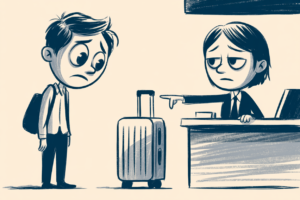
- After a grueling 21-hour delayed journey, she attempts to cancel her return leg, only to face a shadily operated booking agent who refuses a refund.
- The situation spirals when the scammers demand she file a credit card chargeback—and then insist she wire the money directly to them.
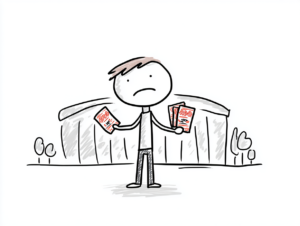
As a cancer survivor recovering from a stem cell transplant, Kim Snyder says she needed to avoid crowded spaces and germs while rebuilding her immune system. Flying felt too risky. The Amtrak Auto Train, with its private bedroom option, seemed like the perfect solution for her trip from Virginia to Florida.
It wasn’t.
Little did she know her quest for safety would plunge her into a labyrinth of delays, dubious emails, and a $1,200 dispute with a shady business.
Her case isn’t just a travel nightmare; it’s a cautionary tale that resonates with anyone traveling. It raises several critical questions:
- How can you spot a fake travel booking site masquerading as the real deal?
- What are your rights when a train is massively delayed or your trip gets radically changed?
- What should you do if a company you suspect is fraudulent suddenly demands you pay them back after you’ve won a chargeback?
How did Snyder get here? Let’s follow her tracks.
A journey derailed before it begins
Snyder and her husband, Mark, booked a southbound Auto Train trip online last winter. They believed they were making the reservation directly through Amtrak, having found a number for the company online through a search.
A few days before their trip, Snyder received an email from a Gmail account.
“We encountered a technical issue while processing your Amtrak Auto Train ticket, resulting in your bank card being charged, but the ticket not being booked,” it said. “To resolve this, we have used our company card to complete the booking on your behalf.”
Why would Amtrak use a Gmail address?
Why did Amtrak need to use its own credit card to buy a ticket for itself?
Snyder, sensing trouble, finally went directly to the Amtrak website to find her reservation. It existed, but she felt increasingly uneasy about the booking agent she’d used.
The next email brought worse news: Their train was cancelled due to a “technical issue.” An Amtrak representative rebooked the couple the next day. But it was a nightmare.
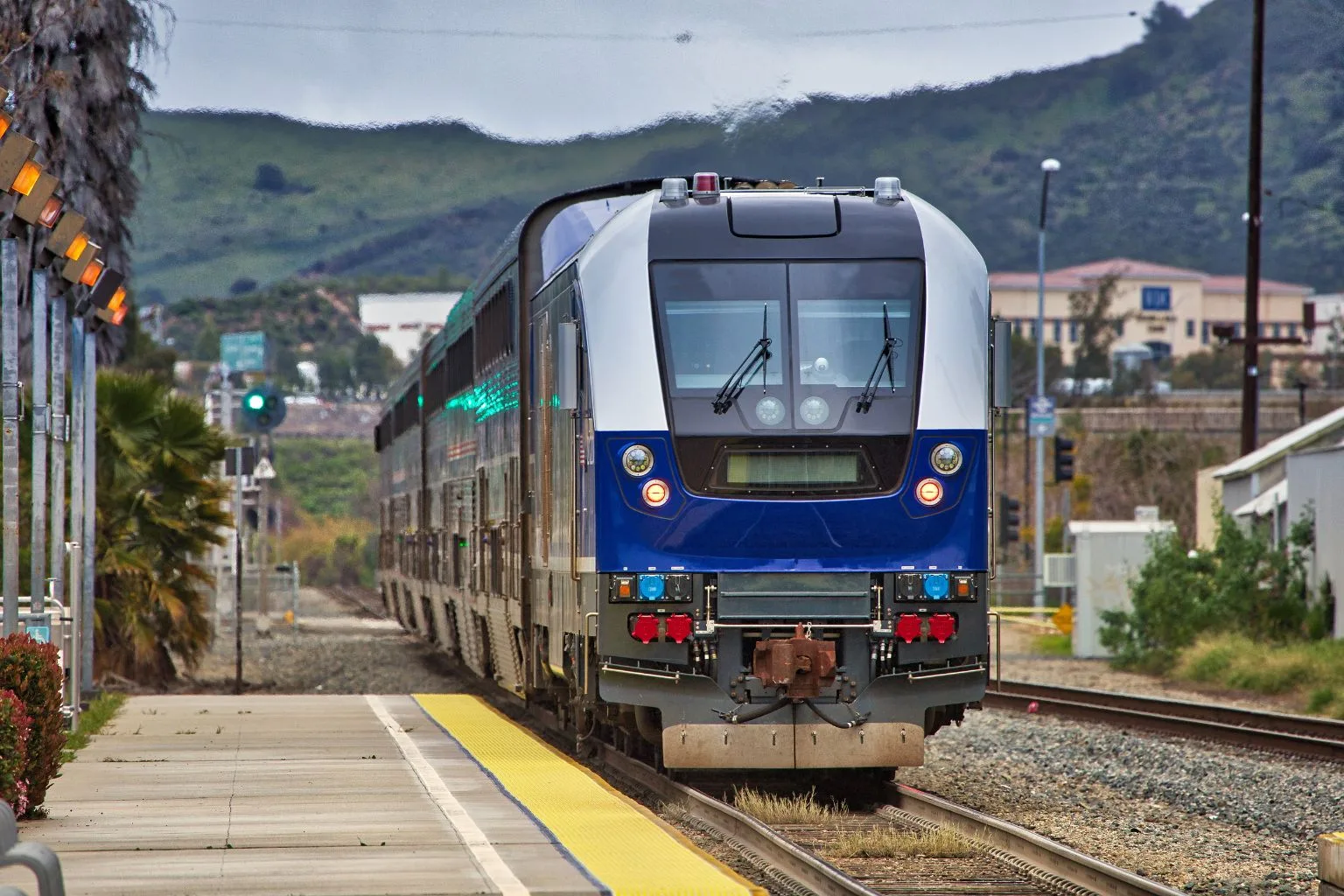
The train departed Lorton, Va., six hours late. Instead of the promised 17-hour overnight journey, it took 21 grueling hours, disrupting their plans.
“While traveling, no updates were given to us regarding arrival times,” Snyder noted.
The primary reason for choosing the train – a controlled, less germ-ridden environment – evaporated as they spent excessive time in crowded stations.
Facing critical chemotherapy treatments back home, and with Amtrak unable to guarantee a timely return — at least according to her agent — the Snyders made a tough call: They canceled their northbound Auto Train trip scheduled for a few weeks later and asked for a refund of $1,200, the remaining value of their ticket.
Snyder emailed Amtrak through the Gmail account, asking for her money back.
“The trip has already been booked at a discounted price,” a representative explained. “So cancellation is not possible.”
Snyder persisted. Finally, the Gmail address sent her a voucher for the full $1,200.
Case closed? Not by a long shot.
I empathize with the Snyders in the sense that it is easy to be misled by a fake website. However, no legitimate business should be using @gmail.com, @yahoo.com, @aol.com emails.
Amtrak is directly dependent on Congress for funding, and Congress has been extremely parsimonious with the agency – Congress would rather give billion-dollar subsidies for road or air travel than give a bent nickel to Amtrak. Amtrak mostly rides on freight rail tracks and while the legislation required freight lines to give priority to passenger trains, they don’t. A cancelled train and a six or ten hour delay is pretty normal for an Amtrak long distance train.
Congress will never, ever provide consumer protection rights to Amtrak passengers that could end up costing the Federal government money. Ain’t gonna happen.
Read more insightful reader feedback. See all comments.
How can you spot a fake travel booking site masquerading as the real deal?
Snyder’s ordeal is a textbook fake booking site case. Scammers create professional-looking websites, often using names and logos confusingly similar to legitimate companies like Amtrak, United, or Marriott. They buy ads or optimize their sites so their phone numbers appear at or near the top of search results when you look for “Amtrak phone number” or “book Amtrak train.”
When you call, they answer promptly, often using the real company’s name or just “reservations department.” They sound professional.
They will book your travel, usually on the actual company’s website, so your reservation is real. That’s how they get your trust — and your credit card number.
The catch? They often tack on hidden, exorbitant service fees. Or, as in the Snyders’ case, they might claim a “technical issue,” and try to charge you directly, pocketing the difference between what they pay Amtrak and what they charge you. Sometimes, they just steal your payment info outright.
The red flags were all there for the Snyders. Did you spot them?
1. The email address: Amtrak doesn’t use Gmail, Yahoo, Hotmail, or any free public email service for official customer reservations or communication. Ever. Legitimate corporations use their own domain (e.g., @amtrak.com, @united.com, @marriott.com). A Gmail address claiming to be an official reservations desk is a glaring neon sign screaming “SCAM.”
2. The inconsistent story and urgency: The “technical issue” requiring rebooking, the sudden train cancellation with limited alternative dates offered, the claim their card didn’t work so the agent used his “company card,” the vague “minor issue” preventing cancellation — it’s all designed to create confusion and pressure, and prevent rational scrutiny. Legitimate companies have clear, consistent policies published on their official websites. Scammers don’t.
3. The payment shenanigans: The request for the last 4 digits of the card after booking, the story about the agent paying with his company card – these are huge red flags about how payment is being handled and the potential for fraud.
4. The pressure to avoid a cancellation: The repeated dodging of a straightforward refund request, pushing vouchers or future credits instead, is a hallmark. Scammers don’t want to give cash back; they want to keep it any way they can.
How to protect yourself from an Amtrak scam
Always book directly. Type amtrak.com directly into your browser. Do not rely on a random search engine search for the official site or phone number. (Our list is far more reliable.)
- Verify contact information: Find the official customer service phone number on Amtrak.com. Don’t trust numbers from search engines or third-party sites without verification.
- Check the email address and URL. Is the sender using a different domain from the company’s main site? Does the website URL look slightly off (for example, amtraktrainreservations.com instead of amtrak.com)? Don’t click links or call numbers in unsolicited emails or texts.
- Beware of urgency and too-good-to-be-true deals. Scammers create false urgency (“Only one seat left!”) or offer unrealistic deals and flexibility to bypass your suspicion.
- Use a credit card. They offer significantly stronger fraud protection than debit cards.
The Snyders’ initial suspicion was correct. They weren’t dealing with Amtrak. They were dealing with a fake business and a phantom operator hiding behind a Gmail address.
My advocacy team confirmed Amtrak had no record of the voucher the Snyders were issued.
What are your rights when a train is delayed or your trip gets changed?
Even if the Snyders had booked directly with Amtrak, their experience highlights the often-frustrating reality of passenger rights in the U.S., particularly for rail travel, which lacks the robust federal protections governing airlines.
Let’s examine them one by one, starting with the delay on their trip to Florida. The train departed late, turning a 17-hour trip into 21 hours. It caused significant inconvenience and forced plan changes.
But here’s the brutal truth for Amtrak passengers: There’s no federal law mandating compensation for delays on Amtrak, unlike the EU’s strong rail passenger rights. Amtrak’s policy is blunt: “Amtrak does not guarantee connections between trains or guarantee arrival or departure times and is not liable for any claims resulting from delays.”
Also, if the Snyders chose to rebook on a day with available seats, it wouldn’t inherently trigger any cash refund for the southbound leg unless they had decided not to travel at all.
(Amtrak may, as a gesture of goodwill, offer travel vouchers for severe delays, but it’s under no legal obligation to do so, especially for delays caused by factors outside its control.)
For their return trip to Virginia, there’s more bad news: Cancellation might not have been an option. When you cancel a trip, your refund rights depend entirely on the fare rules of your ticket. Amtrak offers different fare types (Saver, Value, Flexible), each with different cancellation and refund policies.
Generally, less expensive fares are nonrefundable but might be converted to a voucher (minus a fee) if canceled before departure. More flexible fares may be refundable to the original payment method.
The Snyders booked a bedroom — typically a higher fare — but the specific rules attached to their ticket were unclear. The bogus booking agent had given them conflicting information about the refundability.
The Snyders felt the southbound delays were so severe and the lack of reliability so profound that it negated the value and safety premise of their northbound booking. But Amtrak’s failure to perform adequately on one leg doesn’t automatically invalidate the contract for an unused, future leg.
Their strongest potential leverage would have been goodwill based on the cumulative experience. But that’s discretionary, not a right.
What should you do if a company you suspect is fraudulent suddenly demands you pay them back after you’ve won a chargeback?
This is where the Snyder case took a bizarre, almost surreal turn. After my team intervened, the apparently fake business quickly agreed to a refund.
But no refund materialized.
The Snyders were prepared to accept the loss. But a few months later, the scammers did something unexpected. They contacted the Snyders and asked them to file a chargeback with their credit card company for the entire amount.
Even more bizarrely, they instructed the Snyders not to file for just the disputed $1,200 return leg, but for the full amount, claiming a partial chargeback “would not work with their bank.”
Seeing a chance to recoup some loss, the Snyders filed the chargeback for $1,500, covering the return leg plus some expenses. PNC Bank investigated and, ultimately, granted a permanent credit for the full disputed amount.
Then the emails from the scammers started again, this time desperate and demanding: They wanted the Snyders to wire them $1,200 – supposedly the cost they had incurred booking the southbound leg.
The Snyders didn’t want to keep money they felt might be owed for the trip they actually took. But wiring money to a known scam operation felt reckless. My team advised extreme caution. The scammers’ emails grew increasingly frantic.
How did this train journey end?
Snyder’s quest for a safe journey ended in a minefield of deception. They took the southbound train under stressful conditions. They canceled the northbound leg because of Amtrak’s unreliability. They wrestled with a phantom company for a refund.
And finally, the scammers asked them to commit what felt like fraud by wiring them money, which could have been an act of money laundering.
After the bizarre chargeback request from the scammers themselves and a thorough investigation by their bank, the Snyders received a permanent credit for the full disputed amount.
My team’s advice: Don’t wire the scammers money.
The Snyders wisely heeded this advice. They didn’t wire a dime to the booking site. The frantic emails eventually stopped. The Synders kept the bank’s credit.
This case screams two things: First, the epidemic of fake booking sites is worsening, preying on travelers when they’re most vulnerable. Companies like Amtrak, airlines, and hotel chains have to be far more aggressive in policing search results and publicly warning consumers about these scams. Their logos and reputations are being hijacked.
Second, the labyrinthine and weak consumer protections for significant rail delays in the U.S. leave passengers like the Snyders holding the bag when things go sideways. A system where a 21-hour train ride instead of 17 offers nothing except an apology is simply unacceptable.
How to spot a fake booking site
Don’t let a copycat derail your next trip
The red flags: If you see these, hang up
The defense: Protect your wallet
Executive contacts
If standard Amtrak customer service has not addressed your issue, you may consider escalating your complaint to the executives below.

Your voice matters
Kim Snyder thought she was booking a safe trip home, but a simple Google search led her into a $1,200 trap set by a copycat booking site.
- Do search engines bear responsibility for allowing scammers to buy “top result” ads that mimic legitimate companies like Amtrak?
- Have you ever accidentally booked travel through a third-party lookalike site when you meant to book direct?
- Would you have spotted the red flags—like a Gmail address from “customer service”—before it was too late?
What you’re saying
Readers empathized with how easily copycat sites can fool travelers, but many pointed out the “neon sign” red flags like Gmail addresses. Others debated whether Amtrak’s service failures are just par for the course.
-
The “Official” trap
BKMatthew and Gerri Hether noted that sophisticated graphics make fake sites look convincing, often appearing as the top search result. AJPeabody suggested specifically searching for “Official Site” to avoid clicking on ads for scammers.
-
The email red flag
deemery and BKMatthew emphasized that no legitimate corporation uses free domains like Gmail or Yahoo for customer service. Mike recognized the scammers’ refund request as a classic “overpayment” fraud tactic designed to bypass bank security.
-
Amtrak’s reality check
Sue Le Grand pointed out another inconsistency: the Auto Train requires a vehicle, yet the scammers booked it without one. Eric and Brielle pushed back on the idea that the delay was minor, calculating a total disruption of 34 hours for a medical patient.



Have a question about this story? Tell us what happened — we read every comment.
Join the conversation