
in this commentary
- Chris’s Doha-to-Auckland flight hit a snag when New Zealand required proof of onward journey. He booked a Christchurch-to-Sydney ticket on the spot. Most unexpected problems shouldn’t be unexpected, including the coming ETIAS $7 EU entry fee.
- Run a double-check audit on every reservation before leaving, especially online travel agency bookings. Print contracts of carriage. Screenshot confirmations with dates and numbers to force hotels to own lost reservations and find alternate accommodations.
- When loyalty programs fail, try local rental agencies at competitive rates. Travel insurance’s 24/7 assistance finds English-speaking doctors and books appointments via app. AI tools answer “flight canceled, what to do in Chicago?” questions. One-quarter of travelers already use AI for problem-solving.
Even the most experienced traveler can run into trouble every now and then. But how do you get out of trouble?
I needed to think quickly when I checked in for a recent flight from Doha, Qatar, to Auckland, New Zealand. I had taken care of the visa for New Zealand, but then the ticket agent asked me for proof of an onward journey.
Huh? Well, it turns out New Zealand won’t let you into the country unless you can show that you’re not going to overstay your visa.
Unexpected problems crop up all the time when you travel — whether it’s a car rental company that runs out of vehicles, a lost hotel reservation, a sudden illness, or a visa glitch. For example, many American travelers will get blindsided by the new European Travel Information and Authorisation System (ETIAS), a $7 fee paid to enter the European Union, when it goes into effect next year. (Ah, if they read my column.)
But as it turns out, there are things you can do to avoid these unexpected travel problems. In a moment, I’ll also tell you how that little paperwork problem with New Zealand ended.
To solve a travel problem, you have to see it coming
I’m surprised by how many travelers don’t even bother to verify the basics before they leave. This is one of the oldest rules in the book — so old, perhaps, that people have forgotten it.
“You have to contact each hotel, each tour operator, your airline, and your car rental company to verify everything,” says Susan Sherren, who runs Couture Trips.
Here’s how a pro does it: Before a client leaves on a trip, she runs a double-check audit. She checks every reservation, paying special attention to anything done through an online travel agency.
“Those are fraught with problems,” she says.
The permutations of documents and information required are nearly infinite. If we require airlines to guess at the answers using information provided by customers, we will see cases where customers shift the burden of figuring out their situation to the airlines. I recently went to New Zealand and knew we needed to prove we were leaving. But for someone there for business, the rules might require more, maybe a visa rather than an ETA. Is writing a column about Auckland while in Auckland a business trip? Beats me. Maybe shifting the burden on Qantas to figure out what an American needs to enter New Zealand via Australia is too much.
Read more insightful reader feedback. See all comments.
That allows her to fix any problems before her customers leave home. It’s an easy trick you can use, too.
But it’s not the only trick for having a smarter trip. Here are a few more:
Print and read the rules. How can you hold a company to its rules if you don’t know what they are? Your airline has what’s called a contract of carriage, the legal agreement between you and the company. You can find it on the airline’s website. Similarly, cruise lines have ticket contracts and car rental companies have contracts. Sarah Blocksidge, a director for a marketing agency in Cleveland, always prints a copy of these rules before she leaves. “I know what I am entitled to when my flight is canceled,” she explains.
Think outside the loyalty program. Too often, travelers are prisoners of their loyalty programs. So when they run into a problem like a car rental agency that runs out of vehicles, they lean on the company for a fix. If that doesn’t work, try plan B, says Las Vegas-based frequent flier Andy Abramson. “I turn to local auto rental car agencies,” he says. “Many offer rentals at competitive rates when big-name companies are sold out.” True, you won’t get your points — but you will get a car.
Never lose another reservation. Travelers have become too reliant on hotels and other companies to track their reservations. That’s a mistake, says Stephanie Webb, who works for a tour company. “I always recommend taking screenshots of your confirmation emails and booking details. If a hotel claims they don’t have your reservation, showing a record with dates and confirmation numbers can help resolve the issue faster.” Also, if they’ve lost your reservation and they’re fully booked, your paperwork will make them own the problem and find you alternate accommodations.
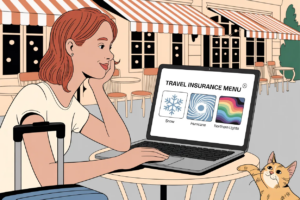
Look for hidden benefits. Let’s say you get sick on the road and need a doctor. Your travel insurance company can help you find an English-speaking M.D. while you’re abroad. “If your travel insurance plan includes 24/7 emergency assistance, then it’s worth giving the emergency assistance provider a call,” says Will Nihan, CEO of Travelex Insurance Services. Some travel insurance companies — including his — will find a doctor and even make an appointment for you through a smartphone app. That’s a cool hidden benefit.
Ask an AI for help. Artificial intelligence is developing so quickly that even I’m having a hard time keeping up, and I’m a tech enthusiast! Ross Borden, CEO of Matador Network, which operates a travel AI called GuideGeek, says one-quarter of his audience already uses AI to solve their travel problems. “We see users asking questions like, ‘My flight is canceled so I have an extra night in Chicago. Is there anything cool to do or see near O’Hare Airport?’ or ‘Getting into Dublin late due to flight delay. Where’s a good place to eat at 2 a.m.?,'” he says. And AIs are getting better at answering those kinds of questions — and solving problems — every day.
Or you could ask me for help, because chances are, I’ve made the mistake in my travels.
How I solved my unexpected travel problem
In case you’re new to this column, here’s how I fit into the picture: I’m on the road 365 days a year. I don’t have a permanent home, and I haven’t for many years. And even though I wrote How to Be The World’s Smartest Traveler, it’s only because I’ve made almost every mistake in the book.
So how did I fix the onward journey problem with New Zealand? I calmly sat down on a bench at the airport and asked my son, who is also my travel companion, where he wanted to go after our two months in New Zealand ended. (Related: The loyalty trap: When travel rewards programs turn against you.)
“Australia,” he said without hesitation.
Fortunately, airline tickets from Christchurch to Sydney were a bargain at the time. So I booked a ticket on Qantas, showed it to the ticket agent, and checked in for my flight.
Problem solved.
Or was it? The bigger lesson here is that most unexpected travel problems shouldn’t be unexpected. You should see them coming, whether it’s a visa, a missing reservation, or a car rental company that runs out of vehicles. Don’t be like me. Plan ahead.
Your voice matters
Chris nearly missed his Auckland flight when New Zealand required proof of onward journey. He solved it by booking a last-minute ticket on the spot. The lesson: most unexpected travel problems shouldn’t be unexpected with proper planning and verification.
- Should airlines be required to warn passengers about destination entry requirements like proof of onward journey during the booking process?
- Should travel companies be legally liable when they lose confirmed reservations and fail to provide alternate accommodations?
- Do you verify every reservation before leaving home, or do you trust companies to track your bookings correctly?
What you’re saying
Readers argued entry requirements are too complex for airlines to predict, warned AI might give outdated data, and suggested travelers do their own homework on country websites.
-
Too complex for airlines to handle
George Schulman voted no because permutations are nearly infinite. Business versus tourism rules differ, and asking Qantas to figure out what Americans need for New Zealand via Australia is too much. Tim worried AI would give old or incorrect data and said travelers are responsible for visas, inoculations, and onward travel, not airlines.
-
Check country websites yourself
Gerri Hether checks reservations daily and country official websites. She found France requires proof of onward journey and 30,000 euros medical insurance, which neither airlines nor cruise sites mentioned. Frank Loncar asked for a trusted site listing oddball requirements occasional travelers wouldn’t think to ask about. AJPeabody said airlines should tell you, but trust and verify yourself.
-
Use AI against government AI
box_500 spent weeks getting confusing AI emails from UK passport office. He fed the nonsense email into Grok, which identified the problem (extra middle name), wrote a letter explaining it, and shook the passport loose. His 2026 trick: fight government AI with the same AI they’re using.

Have a question about this story? Tell us what happened — we read every comment.
Join the conversation