in this commentary
- Travel websites now track your mouse movements and battery life to predict how desperate you are to book—and raise the price accordingly.
- Your Netflix subscription and zip code act as secret signals that tell algorithms you can afford to pay a premium for the same hotel room others get for less.
- Incognito mode is not enough. Experts reveal the “digital hygiene” and counter-surveillance tactics you need to outsmart the bots and find the real price.
Aren’t you being a little paranoid, thinking that your airline or hotel is spying on you? Are you overdoing it by switching to “private” mode on your browser when you buy airline tickets, to avoid paying a higher price?
Maybe. Maybe not.
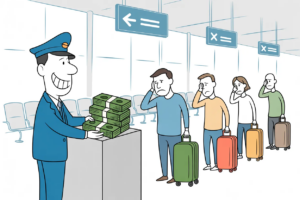
Travel companies have become scarily sophisticated at sizing you up online. They’re not just tracking your clicks anymore. They’re building detailed profiles using data crumbs you didn’t even know you dropped, according to experts. And that profile often determines the price you see. The newest manipulation tools are sneakier, harder to dodge, and almost impossible to prove.
“Travel companies often use internet cookies, IP addresses, loyalty cards, and user log-ins to track and store information about an individual customer’s purchase history,” explains Krista Li, a professor of marketing at Indiana University. “Prices of the same product are effectively different between new and past customers.”
The downside of dynamic pricing optimization
In the travel industry, this practice goes by the harmless-sounding name of dynamic pricing optimization. It’s anything but harmless if you’re a traveler. It means if you live in a more expensive ZIP code or belong to a hotel chain’s loyalty program or, really, do anything online, you could pay more for your next trip.
But wait, hasn’t this been going on for years? Allegedly, yes. But in the last few months, a combination of cutting-edge artificial intelligence and a set of new digital tools has made it easier than ever to manipulate a fare or hotel rate. (Related: Has travel gotten too expensive? Yes, and here’s what to do about it.)
“I’ve seen how travel companies weaponize behavioral data,” explains Clayton Johnson, a digital marketing strategist. “From your Instagram posts to your laptop’s screen resolution. Travel companies use this to maintain your price profile even when you think you’re browsing anonymously. ”
So, what are the newest tricks in their bag?
OK, let’s do the lightning round. Here’s what they’re up to:
The mouse stalker. Forget just tracking what you click. Some algorithms now monitor how you move your cursor. “Slower scrolling or hesitant mouse movements can signal higher purchase intent,” Johnson says. “Like you’re savoring the dream. That’s a green light to nudge the price up a notch.”
Search history poisoning. Looking up flights to Miami, then Vegas, then Barcelona? Big mistake. Travel sites buy vast troves of search data and use it to make assumptions based on your searches. For example, if you’ve looked for multiple destinations quickly, you’re tagged as a flexible traveler. Translation: Less price-sensitive. Premium pricing activated.
The subscription snitch. That Spotify or Netflix account? It might be costing you more than your monthly fee. Dieter Hsiao, a global e-commerce CEO, observed this firsthand: “A client’s system showed me identical searches. Users with active streaming subscriptions saw $340 hotels. Non-subscribers saw $240 options. The price assumes disposable income.”
Always beware of marketing fluff–whether it is “only 2 rooms left,” “limited time offer,” or “new and improved.” Know that expression, “where the rubber meets the road?” For marketing, it is “where the rubber meets the sky.”
No, I don’t think we need government regulations but a need to educate buyers to be aware. I also noticed a price difference if I want to see the AAA/CAA rates–they are usually higher than the “lowest rates” shown to a club member. Maybe it is time to switch to Duck Duck Go’s browser for buying travel.
Read more insightful reader feedback. See all comments.
Device fingerprinting. Travelers think they can dupe the system by using “incognito” mode on their browser. But digital marketing expert HJ Matthews says that’s not enough.. “Sites use browser fingerprinting – tracking your screen resolution, installed fonts, plugins. It creates a unique ID that survives private browsing. Your ‘anonymous’ search isn’t anonymous. And a company can use the information to jack up your rates.”
Artificial scarcity on steroids. That “Only two seats left!” warning flashing red? Magee Clegg, the CEO of a business-to-business marketing firm, admits it’s often a psychological ploy. “I helped a hotel client implement this,” says Clegg. “They’d show scarcity messages even with 50+ rooms free if someone had searched before. Booking rates jumped 340 percent.The warning creates panic-buying.”
Geotargeting. Rob Gundermann, a marketing and technology expert, says rates are different based on your IP address. He’s experienced it himself when shopping for a hotel room in Las Vegas. “Identical Vegas hotel dates showed ‘only two rooms left’ at $189 from my Pennsylvania office,” he says. “A Texas VPN IP showed 8+ rooms at $156. The scarcity was fabricated based purely on my geography.” (A VPN, or Virtual Private Network, allows you to change your reported geographic location.)
To sum up, online travel agencies use all the information you send them — plus any information they can get their hands on about you — to display the highest possible price. It’s absurd. But you don’t have to take it.
Here’s your anti-manipulation toolkit
Feeling watched? Good. Awareness is step one. Step two is fighting back.
You don’t need a PhD in computer science. You need strategy.
Go incognito correctly. Private browsing is basic hygiene, but fingerprinting weakens it. So pair it with regularly clearing your browser cache and local storage. Don’t just close the window; scrub the trail.
Deploy the VPN. Masking your IP address is essential. Try setting your VPN, if you have one, to a location perceived as less affluent or even a different country. I hear from readers who claim to save hundreds of dollars by relocating from a city to a rural area.
Segregate your browsers. If you use Chrome for general browsing, fire up Firefox with strict privacy settings (disable third-party cookies, block trackers) for travel searches and bookings. It’s harder to build a profile of you when you change browsers, according to experts.
Embrace device hopping. Check prices on your phone and laptop. “Flights were $80 more expensive on mobile,” recounts Seth Gillen, an entrepreneur who tests pricing. “They assume mobile users want speed, not comparison.”
Book when no one else is. Avoid peak “dreaming hours” (lunchtime, evenings). That’s when markups happen. Airlines bid 40 percent higher for ads during the lunchtime hour, according to Gillen. Instead, aim for Tuesday or Wednesday mornings between 9 and 11 a.m. That’s a quieter time for booking.
And one more thing: Experts say you should never search for fares on an airline or hotel site while logged in with your loyalty account (it knows everything about you). Only log in when you’re ready to make a booking. Then log out of all your accounts after you’ve made the reservation.
The truth about how companies get you to pay more
Can you prove that algorithm charged you $50 more because you use a MacBook and live in a fancy zip code? Probably not. Airfares change in a nanosecond. A dozen legitimate factors (inventory, competitor pricing, global events) play a role in the fare or hotel rate you see.
“It’s difficult to isolate personalization from normal volatility,” admits Aniko Öry, an economics professor at Carnegie Mellon. “Airlines primarily price based on route, time, and booking window.”
But the sheer volume of identical experiences paints a damning picture. It looks suspicious. It feels manipulative. And the travel industry’s fancy algorithms offer zero transparency. (Related: Is the “off” season disappearing for travel?)
And the worst part about it? These pricing shenanigans are perfectly legal, says Anton Radchenko, CEO of AirAdvisor and an attorney.
“Until regulations catch up,” he adds, “travelers are on their own.”
Travel pricing isn’t a fair fight. You’re up against algorithms that know if you lingered too long on that business class seat and whether you subscribe to HBO Max. They’re like hungry digital raccoons, rifling through your browsing trash. (Related: Travel companies don’t want to hear from you. Here’s how to make them listen.)
But you’re not powerless. If you think like a spy, cover your digital tracks and use some of the techniques I’ve outlined, you have a fighting chance.
Your voice matters
Travel companies track your mouse movements and check your subscriptions to decide how much to charge you. It is high-tech surveillance disguised as “dynamic pricing.”
- Should it be legal for companies to charge different prices to different people based on their device or zip code?
- Do you believe the “Only 2 seats left!” warnings, or do you treat them as fake pressure tactics?
- Have you ever seen a price jump right before your eyes just because you searched for the same flight twice?
What you’re saying
Readers shared their own run-ins with surveillance pricing, confirming that devices and locations change the final bill. While some advocate for privacy laws, others are taking matters into their own hands by switching browsers and devices.
-
The device gap is real
JAASON caught the algorithm in action: searching for the same hotel on a laptop yielded prices $10 to $50 cheaper than on a phone. Tim combats this by segregating his browsing habits, using different browsers for streaming versus shopping.
-
Regulation vs. Education
Jerry A called for EU-style data privacy laws to stop companies from monetizing consumer data against them. Tina noted that without regulation, fake scarcity warnings like “only two seats left” have lost all credibility with savvy buyers.
-
Direct is the only defense
Crystal shared a horror story of booking via Priceline only to find the local hotel rate was half the price. She declared she is done with search engines and will email hotels directly to bypass the algorithm entirely.

Have a question about this story? Tell us what happened — we read every comment.
Join the conversation