In this story
- Many travelers worry about the flight, but the biggest dangers are often on the ground, where simple stress and distraction can lead to accidents and theft.
- Learn about the top threats travelers overlook, from physical accidents like escalator falls to digital scams like fake Wi-Fi and theft at charging stations.
- Find out why security experts say the best defense is simple: slow down, stay aware of your surroundings, and be prepared before you even leave for the airport.
An airport can be a dangerous place.
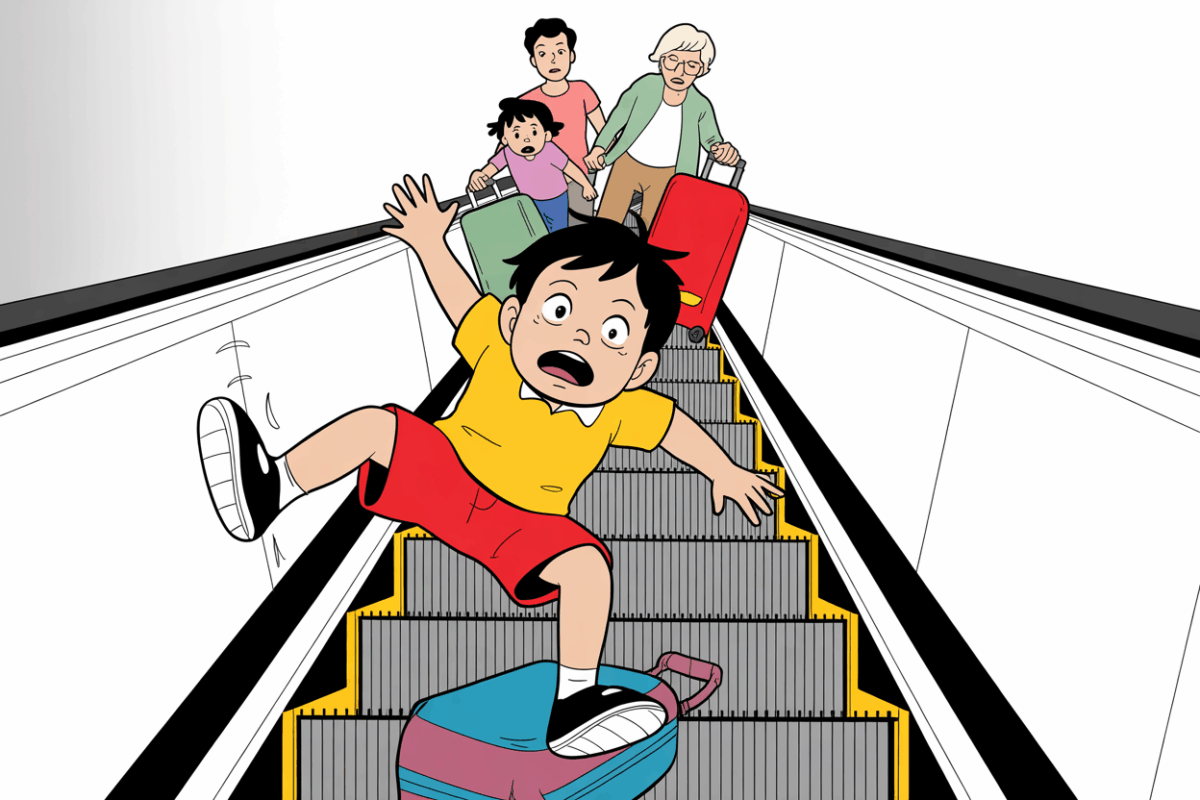
Just ask Brandon Barron, who recently flew from Charlotte to Orlando with his wife, four young kids and his mother, who has Alzheimer’s.
“My three-year-old son was holding on to one of our bags while on the escalator,” he recalls. “The bag started to tumble down the stairs — and he tumbled with it.”
With most travelers fixated on aviation safety — which is understandable, given some of the recent high-profile incidents — they’re less concerned about safety inside the airport itself. But that may be a mistake. As people start their holiday trips, experts say that often travelers encounter more danger before they board their flights, and not all of them are physical.
Barron, who works for a timeshare company in Charlotte, got lucky. He caught his son before he fell down the escalator.
At most U.S. airports, the danger is similar to those encountered by Barron’s family. With so much happening at the same time, it’s easy to lose focus. Airport authorities know that, and they’re working to address the problem by reducing the stress of air travel.
Your voice matters
Our story highlights that many travel dangers are on the ground, caused by distraction and a lack of awareness. This raises questions about how we approach our time in the terminal.
- What’s the most dangerous or stressful situation you’ve ever encountered inside an airport?
- Which of the ‘hidden’ dangers mentioned in the story — like fake Wi-Fi, theft, or curbside crime — worries you the most?
- After reading this, will you change anything about your airport routine to be more aware of your surroundings?
For example, Pittsburgh International Airport (PIT) recently launched a new initiative called “We Got You.”
“We’ve found that even the best-prepared travelers may find themselves in stressful or unexpected situations,” says Elise Gomez, manager of customer experience at the Allegheny County Airport Authority, which operates PIT. “But they also get a front-row seat to some common traveler missteps.”
What are the common passenger mistakes?
I asked Gomez to elaborate on the common missteps that can sometimes translate into danger. Here’s what her ambassadors reported:
Not preparing for air travel. The most common problem is overweight luggage, followed closely by failing to observe the TSA’s liquids and gels rule. The resulting panic repacking can stress you out and — and lead to bad decisions.
Not giving yourself enough time to get to your gate. Gomez advises getting to the airport 2 to 2 ½ hours before your flight. Otherwise, you might have to run to catch your flight, and that can increase the chances you’ll fall and hurt yourself.
Not packing your ID or putting it in the wrong bag. Passengers often pack their ID in their checked luggage or put it into a pouch in their carry-on that’s hard to access. This can lead to more panic or having to unpack your entire bag at the screening area.
Confession: I made that mistake on a recent flight from Kuala Lumpur to Kuching, Malaysia. I checked the pocket in my backpack where I normally keep my passport, and it wasn’t there. I panicked. I unpacked the entire backpack on the spot, searching for my ID. Finally, I found it at the bottom of the backpack. Instead of sliding it into the pouch where I always keep it, I had carelessly dropped it into the bottom of the backpack.
Hopefully, I’ll never do that again. But I haven’t experienced such anxiety in years, and I can tell you that while I was rifling through my luggage, I wasn’t capable of making sound decisions.
What about other dangers at the airport?
I was curious about other dangers at the airport, so I asked travel experts for their opinions.
Not paying attention. One of the biggest problems is noise-canceling headsets. “They can be an invaluable asset to any traveler,” says Bob Bacheler, a frequent traveler and managing director of a medical transportation service. “But they should only be used in flight.” He’s witnessed countless episodes of passengers wearing noise-canceling headphones and earbuds walking through airport terminals, oblivious to their surroundings and putting themselves and others in danger. They can’t hear those all-important gate-change announcements; nor can they hear the golf carts coming up behind them. (Here’s everything you need to know about planning your next trip.)
Logging on to a fake Wi-Fi network. Cybercriminals sometimes set up fake networks with names similar to real ones, such as “Airport_Free_WiFi.” And passengers fall for it. “Verify the network name with the airport staff before connecting to it,” advises Eric Plam, president at wireless connectivity company SIMO. And even if you trust the open wireless network, avoid online banking, shopping, or accessing sensitive work information on it. “Save these activities for secure, private connections,” he adds.
Not watching for thieves. Even when you’re past the security screening area, you should still be on your guard — particularly when you’re in a place with more lax security restrictions. Your phones and computers are particularly vulnerable, according to Justin Crabbe, the CEO of a private jet service. “At charging stations, thieves frequently target travelers who are preoccupied with their electronics,” he says. “Organized criminal groups set up diversions, while accomplices steal briefly unattended bags.” Pickpockets can be a problem too, particularly in the main terminal. Crabbe says people tend to focus on following directions instead of watching their belongings.
Losing your focus curbside. Travelers often forget that airport curbside areas are publicly accessible. “They can be susceptible to criminal activity, with incidents of carjackings, luggage theft and robberies frequently reported,” says Frank Harrison, regional security director for the Americas at World Travel Protection. “While you’ll often see security and airport staff on site, most are focused on specific duties and may not be monitoring non-passengers diligently.” He says things can get confusing, with family members, friends, chauffeurs and onsite merchants in the area. Thieves take advantage of the confusion, which can lead to danger.
Will you change your approach to airport safety?
Add it all up, and security experts say the airport experience feels a little bit less safe these days. Which is a problem, given how few travelers actually think about their safety at the airport. (I admit, I’m one of them. I usually feel the airport is a safe place, but it isn’t always.)
So what to do?
“Be on guard,” Harrison told me.
Keep your valuables with you, maintain situational awareness, mind the problem areas like drop-off locations, charging stations and luggage carousels — and please, watch your kids. Especially when you’re on an escalator.
The hidden dangers of the airport
A guide to staying safe in the terminal
Watch out for these threats
Rushing and distraction
Not arriving early or misplacing your ID can cause panic. A rushed, stressed traveler is more prone to accidents, like falls on escalators or leaving bags behind.
Physical hazards
Noise-canceling headphones make you oblivious to your surroundings, from service carts to important announcements. They are best saved for the plane.
Opportunistic theft
Thieves target preoccupied travelers. Be extra vigilant at charging stations, curbside drop-off areas, and in crowded terminals where pickpockets operate.
Digital scams
Cybercriminals set up fake “free” Wi-Fi networks to steal your data. Always verify the official network name and avoid accessing sensitive information on public Wi-Fi.
How to stay safe
Be prepared
Arrive early, pack your ID where it’s easy to reach, and know the airline’s rules.
Be aware
Keep your head up and your valuables close. Pay attention to your surroundings.
Be smart online
Double-check Wi-Fi names and use a VPN if you must connect to a public network.
Be patient
The best way to avoid stress-related mistakes is to slow down and give yourself extra time.



Have a question about this story? Tell us what happened — we read every comment.
Join the conversation