In this commentary
- A luxury resort in Fiji experiments with coral restoration, farming, and waste reduction to protect a fragile reef ecosystem.
- Behind the five-star experience are unglamorous realities, including battery smuggling, diesel generators, and constant tradeoffs.
- The story asks whether sustainable luxury tourism can be more than a marketing promise when comfort, carbon, and conservation collide.
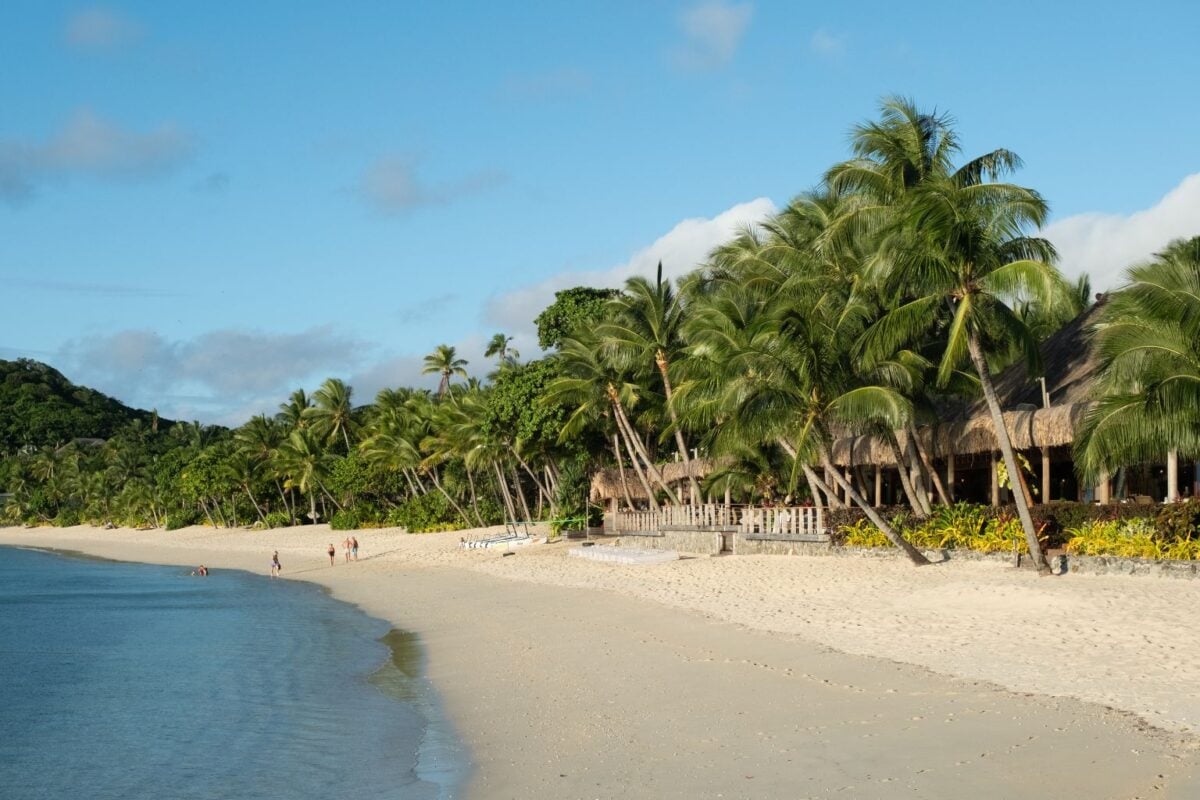
To see Kokomo’s Christmas trees, you have to dive into the South Pacific.
These trees aren’t decorated with tinsel or lights. They’re rebar skeletons suspended in the gentle currents of the Great Astrolabe Reef, covered in fragments of living coral.
“We scout the reef for heat-tolerant corals in the summer,” explains Alisi Soderberg, a marine biologist at Kokomo Private Island, a luxury resort on the southern end of Fiji. “We harvest fragments from these survivors, attach them to the metal branches—and wait.”
Luxury travelers crave green initiatives with their cocktails. Yet the ice machines cooling their drinks run 24/7. Running an island without destroying the environment is messy, expensive, and technically difficult.
Soderberg nurses an ailing reef. Up the hill, a chef tends a terraced garden to lower the resort’s carbon footprint. And a manager obsesses over recycled batteries. Together, they’re trying to answer a burning question about Fijian luxury tourism: Is this planetary salvation, or just greenwashing with a better view?
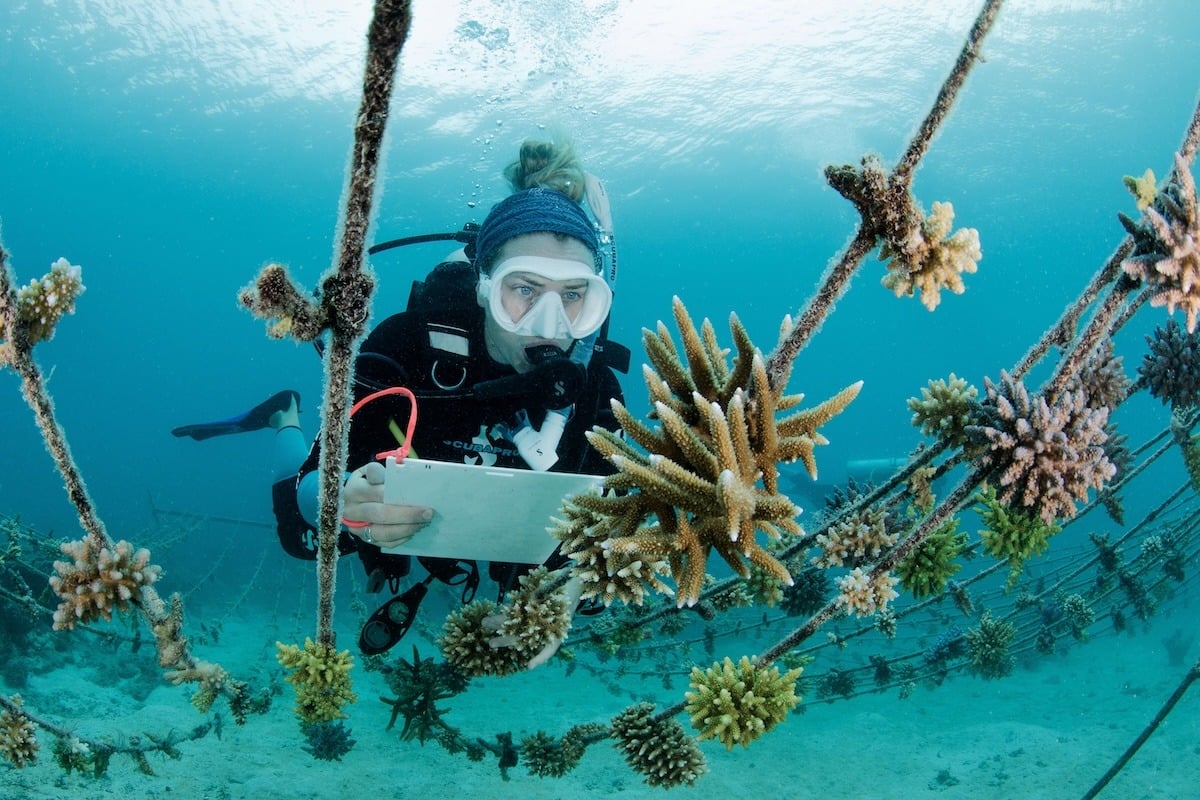
A marine biologist plants coral at Kokomo Private Island. (Kokomo Private Island)
Your voice matters
Kokomo Private Island presents a rare look behind the scenes of luxury sustainability. From coral restoration to battery smuggling and on-island farming, the resort raises a question many travelers are wrestling with.
- Can a luxury resort truly be sustainable, or are these efforts inevitably outweighed by energy use and air travel?
- Do hands-on projects like coral regrowth and local farming change how you view high-end tourism?
- Should travelers pay more to support resorts that invest in environmental protection, even if perfection is impossible?
It’s always Christmas underwater
Soderberg doesn’t sugarcoat the ocean’s condition. She stands before an atmospheric diagram, explaining climate change: Greenhouse gases form a blanket that traps heat and warms the oceans.
When water overheats, coral stresses. It expels the zooxanthellae algae living inside it—the engine that provides the coral’s color and food. (Related: Behind the fight for sustainable tourism in Okinawa.)
“When the zooxanthellae leaves, the coral turns white,” Soderberg says. “It isn’t dead yet. But if it stays white, it will die within a month.”
Enter the Christmas trees. The team harvests heat-tolerant Acropora corals and attaches them to these metal frames. They grow for six to eight months before the team transplants them back onto the reef.
This is a classic example of confusing symbolism with substance. Eye-catching visuals, moral signaling, and a tidy narrative, but very little discussion of scale, tradeoffs, or real-world impact.
Sustainability isn’t about clever stunts. It’s about hard, often unglamorous operational decisions that don’t make for cute headlines. And it’s also worth saying out loud: not every change in climate is inherently bad.
Read more insightful reader feedback. See all comments.
It is slow, manual labor. They don’t anchor the boat, since it would damage the reef. Instead, they drift, planting life into the seabed one piece at a time.
The resort enforces a strict no-fishing zone extending 650 feet from shore. Apparently, the fish know it.
“Jump in the water and the fish come toward you,” Soderberg says. “They aren’t threatened. Giant Trevallies and Emperors swim freely.”
The real stars are the manta rays. The team tracks the local population, identifying them by unique belly spots. They have identified 550 individuals. They even track pregnancies.
Conservation becomes a closed loop: Guests pay to see the mantas and that money funds the tracking that protects them.
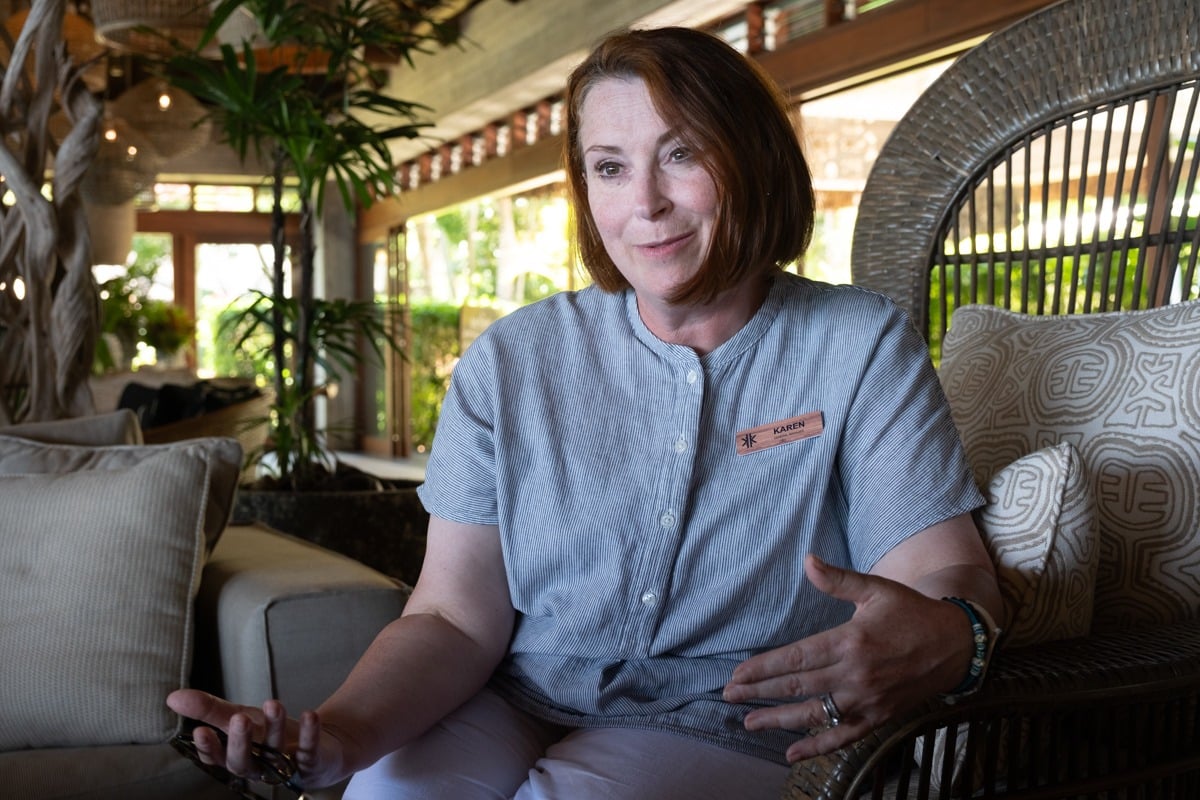
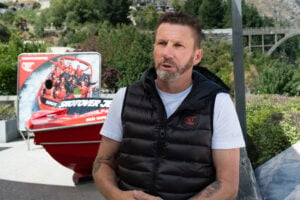
Karen Merrick sits in the reception area of Kokomo Private Island Resort.
The battery smuggler
“I’m a do-gooder,” admits Karen Merrick, the general manager.
Two months on the job, and she already has a nemesis: batteries.
On a remote island, you can’t just toss a double-A battery in the trash. It ends up in the ground, leaching chemicals into the water table and the reef Soderberg is trying to save. So Merrick resorts to smuggling.
She collects the resort’s dead batteries, stuffs them into empty protein powder tubs, and carries them off-island to countries with recycling facilities.
That’s right, the manager of an exclusive resort hauls toxic waste in gym supplement jars. Such is the unglamorous reality of island sustainability.
Merrick says sustainability requires hard choices. The resort is downsizing from five generators to four and looking into installing photovoltaic systems to cover 25 percent of its energy needs. The goal: carbon neutrality in 10 years.
Then there is the air conditioning, the island’s biggest power drain. Merrick, who is from the Scottish Highlands, looks at the breezy villas and sees energy leaking through the cracks.
She plans to install draft excluders on the doors—a low-tech fix for a high-end problem. It is a constant war between the frigid rooms guests expect and the carbon footprint she tries to erase.
But for Merrick, sustainability involves more than batteries and bulbs; it involves people.
She recounts a program she helped run in the Maldives teaching local women—historically not taught to swim—lifesaving water skills. She plans to bring that energy to the Fijian communities near Kokomo through other resort-sponsored educational programs.
“It’s what we should be doing,” she says. On an island where the ocean is everything, ensuring the neighbors can navigate it is as vital as protecting the reef.
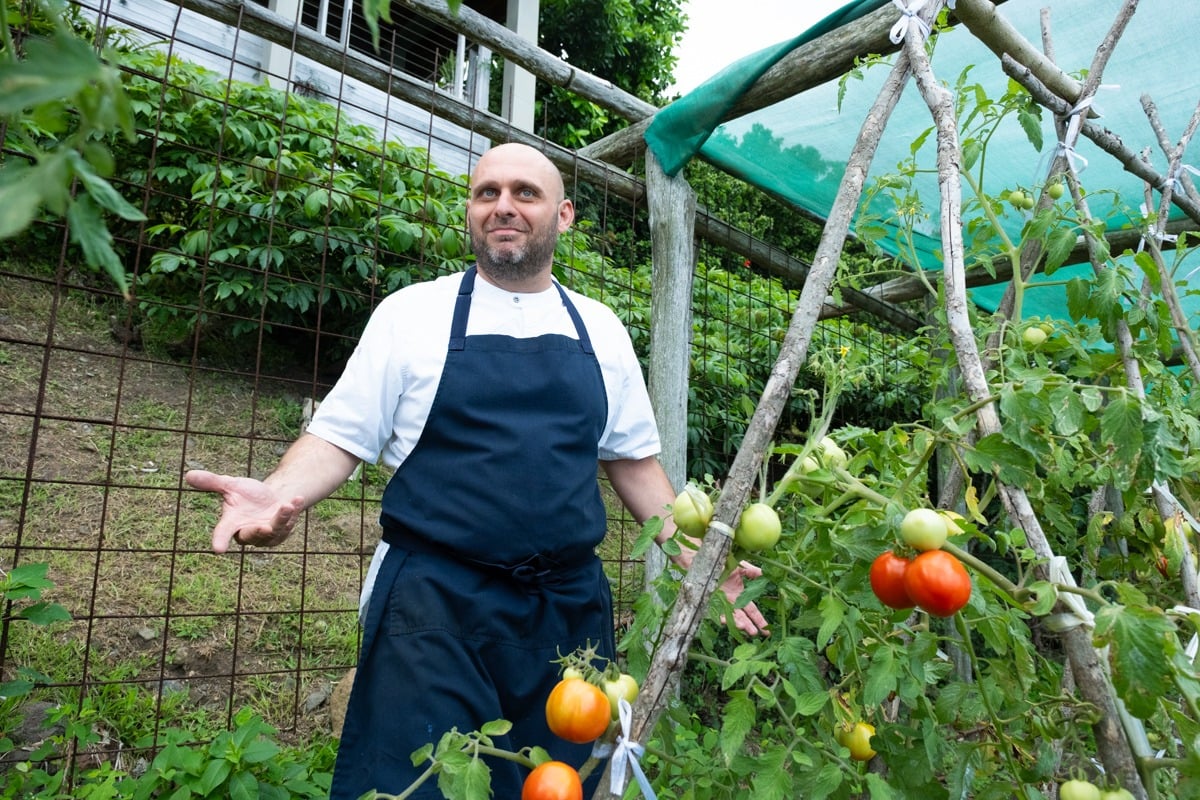
Chef Vincenzo Naione stands behind a tomato vine on one of the farm terraces at Kokomo.
The sweet and salty tomato
If Soderberg manages the water and Merrick oversees waste, Vincenzo Naione, the head chef, handles the earth. He stands on the third level of the resort’s terraced garden, a five-level engineering feat carved into the hillside.
He points out zucchini, eggplants and peppers. He’s most proud of the tomatoes. Exposed to the Pacific breeze, the soil is infused with sea salt.
“Supermarket tomatoes taste like water,” he says. “Pick one from here, and you have that natural saltiness.”
This is not a garnish garden for Instagram. It’s a working farm.
Naione takes a visitor to the hydroponics greenhouse, where lettuce and herbs grow in water-fed pipes. The system is hyperefficient. A head of lettuce grows in 40 days, rather than the 56 required in soil.
The system creates a staggering amount of food. The resort harvests roughly 80 percent of crops like lettuce and bok choy on the island. It is self-sufficient in bananas and cassava, a staple for the 300 staff members living there.
And then there is the honey. The island has its own apiary.
Naione offers a visitor a taste of the honeycomb. It is dark, viscous, and intense—a robust flavor nothing like the sugar syrup sold in plastic bears.
“You can taste the difference,” he says.
Is this a sustainable resort?
Cynicism comes easy in luxury tourism. You see private jets and high thread counts and assume sustainability is a marketing brochure checklist.
Sometimes, it is.
But walking the hydroponic rows with Naione, watching Soderberg tend her coral trees, and hearing Merrick plot to smuggle batteries, you realize here, at least, the effort is real.
It is not perfect. Kokomo still runs diesel generators, imports half its produce, and fights a constant battle against rust, salt, and logistics.
High-net-worth vacationers demand these experiences. They want the pristine reef and the farm-to-table tomato. But they also want air conditioning and hot showers. Balancing those demands requires more than good intentions. It requires protein jars full of batteries and steel trees under the sea.
“Everything works on Island time,” Merrick says. But the team at Kokomo is working as fast as it can to save the place they call home.
Is sustainable luxury tourism real?
What it actually takes to protect paradise
It starts underwater
Sustainability is unglamorous
Food matters too
The real question
What you’re saying
Readers are sharply divided on whether Kokomo’s coral “Christmas trees” represent meaningful conservation or a symbolic gesture wrapped in luxury branding. The debate centers on scale, tradeoffs, and transparency.
-
Symbolism versus substance
Joseph Caruso and Miles Will Save Us All question whether visually striking coral projects meaningfully offset private flights, diesel generators, and high-energy luxury operations, warning against mistaking optics for impact.
-
Engineering curiosity and long-term risk
Mr. Smith and 737MAXPilot focus less on intent and more on execution, raising questions about the long-term effects of metal rebar in marine ecosystems and whether today’s solutions could become tomorrow’s problems.
-
Transparency earns credibility
Others, including Sandra and Jennifer, say the article’s refusal to gloss over generators, air conditioning, and logistics makes the conservation effort feel more honest and worth supporting, even if it is imperfect.
Read more


Have a question about this story? Tell us what happened — we read every comment.
Join the conversation