
in this commentary
- Rostock and Schwerin in eastern Germany’s Mecklenburg-Vorpommern region are racing toward sustainability. Rostock aims to cover all energy needs from renewable resources and cut CO2 emissions 40 percent by 2030. Schwerin Castle became a UNESCO World Heritage Site in 2024 and the city wants 100 percent renewable energy by 2035.
- The region built a hotel from shipping containers, runs buses on electric motors and trams on green electricity, and sorts trash so religiously that neighbors correct you if you mess up. Over 80 percent of Rostock’s waste gets used for energy through treatment, fermentation, and incineration.
- Going all-in on green tourism drives away some tourists and cruise ships. Doing nothing makes you complicit in destroying the environment. This part of Germany is steering carefully and quietly toward sustainability.
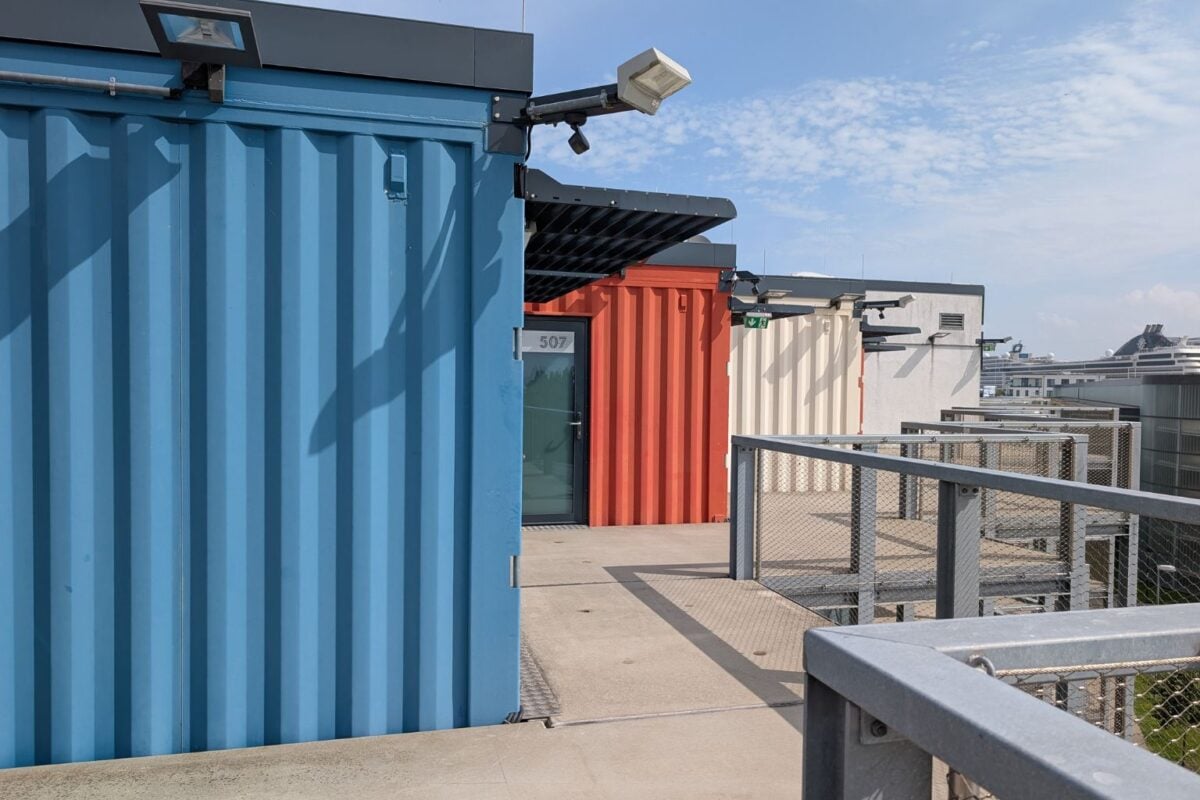
From the top floor of Dock Inn, a hotel made of shipping containers with a commanding view of the harbor and dockyards, you might see a ferry bound for Sweden sliding silently by in the distance. Beyond it, there are the dense forests of the Steilküste, a coastline with steep cliffs plunging into a cold sea.
This is a part of Germany that is just as quietly taking the next steps in its green journey. Tourism sustains Warnemünde, with its busy port, its Baltic beaches, hotels and restaurants. But the entire region is also considering how sustainable it wants to be, and how sustainable it can be.
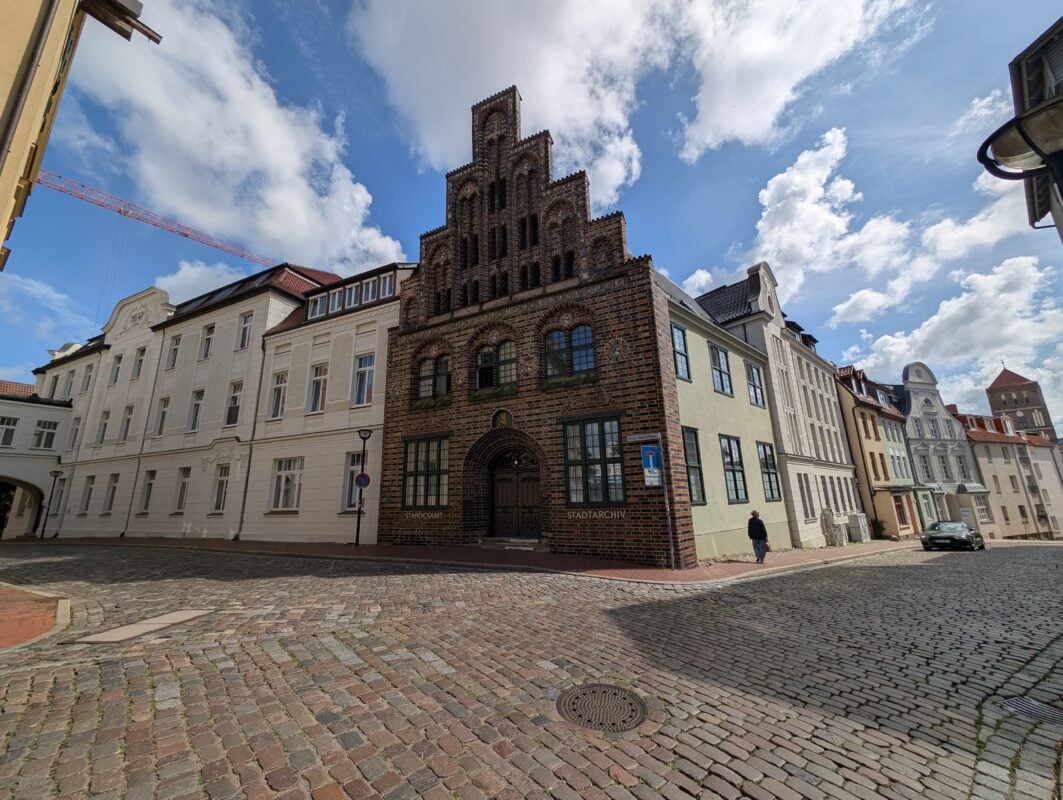
Rostock has cultivated an image as a green city by the sea. (Photo by Aren Elliott)
Rostock’s new green identity
Rostock, the largest city in the German state of Mecklenburg-Vorpommern, has cultivated an image as a green city by the sea.
The city has set a long-term goal to cover all its energy needs from renewable resources, pledging to cut its CO2 emissions in 2030 by 40 percent compared to 2010 levels. Rostock also champions environmental management, with its city council integrating strict new environmental benchmarks into contracts and administrative decisions.
I love this story. It makes me want to go there!
Read more insightful reader feedback. See all comments.
Rostock Port has worked with cruise lines to minimize emissions, including shore power initiatives using low-emission fuels like liquefied natural gas. And there’s the ambitious H2GE Rostock project, which is developing a dedicated import terminal for green ammonia (a key hydrogen carrier), and creating a new pipeline infrastructure for distribution across eastern Germany.
You can even see Rostock’s green ambitions in unexpected places, such as the Nikolaikirche (St. Nicholas Church). It was almost destroyed during World War II, but has been reimagined as a living space and events center. (Related: Amid soaring fuel prices, these cities are offering free rides.)
“They’re also trying to be sustainable,” says city guide Nicolai Pahne, pointing to the church roof. It’s covered with solar panels.
Pahne says the green initiatives extend to recycling. Over 80 percent of the city’s waste is used for energy purposes through a combination of mechanical and biological treatment, fermentation and incineration, he says.
Rostock isn’t the only city in Mecklenburg-Vorpommern with a sustainability focus.

A view from the top of Schwerin Castle. (Photo by Aren Elliott.)
Schwerin Castle becomes a World Heritage Site
In Schwerin, the nearby state capital, another type of sustainability is also underway. That’s where Schwerin Castle has become a massive tourism magnet and a monument to the region’s green agenda.
The castle is not only the active seat of the state parliament, it is also the city’s number-one tourist attraction. Built mostly in the 19th century, it consists of 38 separate elements, including the Grand Duke’s residence palace, manor houses, secular and sacred buildings, and ornamental lakes. (Related: The German hotel that banned Nutella — and what it reveals about green travel’s biggest problem.)
“The castle is the highlight of the city,” says Teresa Beck-Babajanyan, a guide.
UNESCO agreed, and in 2024 named the building a World Heritage Site.
But Schwerin’s commitment to climate action is not just symbolic. It’s deeply ingrained in its governance. The city has set its sights high, with goals such as deriving 100 percent of its energy supply from renewable sources by 2035. The Schwerin public utility company, Stadtwerke Schwerin, has been generating heating for the city via its own biogas plant since 2007. A geothermal plant, currently under construction, will further boost the share of renewables in the district heating network by about 20 percent, according to officials.
The city also harnesses green electricity from ten solar plants. Schwerin began converting its entire bus fleet from diesel to electric motors in 2020, and its tram network has been running on green electricity for years.
But what truly stands out in Schwerin is the pervasive, everyday commitment to sustainability.
Beck-Babajanyan says if you don’t sort your trash correctly — separating paper and plastic, for example — your neighbor might do it for you. Visitors to Schwerin are often taken aback by that level of enthusiasm.
“But that’s how we are,” she adds. “We take it personally.”
You can feel that sentiment in the entire state of Mecklenburg-Vorpommern.
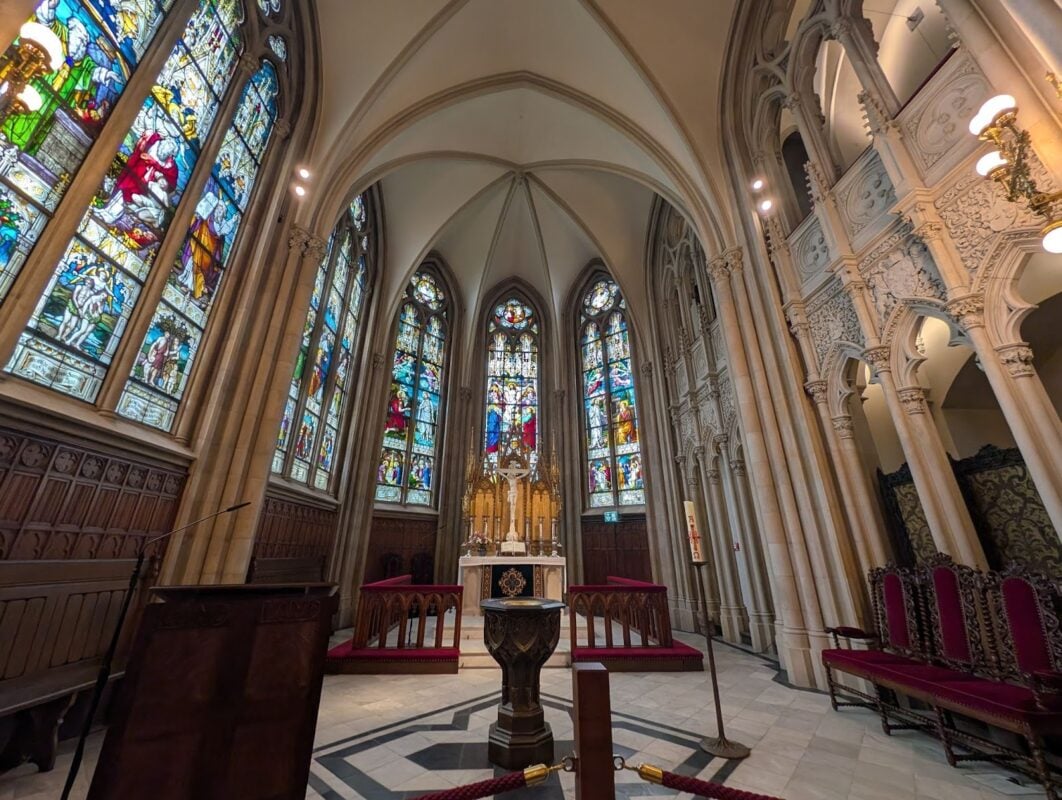
The altar of Schweriner Dom, the cathedral inside Schwerin Castle. (Photo by Aren Elliott)
A region embracing sustainable tourism
Beyond these two major cities, the entire region of Mecklenburg-Vorpommern is promoting sustainable tourism. Options range from vacation apartments to hotels and campsites that have agency certifications from Biohotels to GreenSign. These accommodations often use green electricity, recycled paper, and LED lighting, and many offer e-bike rental or electric car charging on-site.
The Dock Inn in the coastal town of Warnemünde is an excellent example of sustainability. It’s a hostel famously constructed from shipping containers. Located right on the bustling port, it offers an immediate connection to Rostock’s maritime heritage. Repurposing industrial elements into comfortable living quarters is, of course, a time-honored tradition in Germany. But this kind of adaptation also points to a greener future.
Building a hotel from decommissioned shipping containers often can cut the price of construction by up to 30 percent, not to mention saving natural resources that would otherwise be used. Containers are also sturdy, and their modular structure cuts labor time dramatically.
It’s a stay that immediately underscores how Rostock, a city defined by its seafaring history, is cleverly leveraging its past for contemporary, sustainable tourism.
Eastern Germany quietly charts a green course for a sustainable future
Mecklenburg-Vorpommern is plotting a course toward a sustainable future by blending environmental innovation with a deep respect for its cultural heritage. Cities like Rostock and Schwerin are proving that ambitious green goals are achievable through concerted public and private efforts. This commitment extends beyond policy, shaping urban development and daily life across the region.
This collective drive, from large-scale infrastructure projects and strategic urban planning to daily personal habits and cultural preservation, should position Mecklenburg-Vorpommern as a leading example in sustainable development.
Truth is, if you go all-in on green tourism, you drive away some of the tourists — and a cruise ship or two. If you don’t do anything, you’re complicit in the destruction of the environment.So when it comes to green tourism, this part of Mecklenburg-Vorpommern is steering the ship carefully and quietly toward sustainability. If you pay close attention, you’ll notice it.
Your voice matters
Rostock and Schwerin in eastern Germany are cutting emissions, building hotels from shipping containers, and running buses on electric motors. Neighbors correct your trash sorting. But going all-in on green tourism drives away some tourists and cruise ships.
- Should tourist destinations risk losing visitors to pursue aggressive sustainability goals?
- Should hotels built from repurposed shipping containers become the standard for coastal tourism development?
- Should communities enforce neighbor-to-neighbor accountability for recycling and waste sorting compliance?
What you’re saying
Readers loved the story and wanted to visit, questioned whether cruise ships undermine green goals, and debated if sustainability is visible to tourists.
-
Makes me want to visit
Debra Beasley said the story made her want to go there. 737MAXPilot noted travelers overlook these in-between cities for Berlin or Hamburg, and he did too. Blues Traveler said it’s impressive Rostock found a way to maintain medieval character while moving toward carbon-neutral future.
-
What about the cruise ships?
Miles Will Save Us All wanted to know if Rostock is addressing the environmental impact of cruise ships docking in nearby Warnemünde. Cruise ships have a certain reputation. Mr. Smith wondered how much is visible to average visitors. Does the city offer bike sharing or green corridors for tourists to participate, or is it mostly internal policy?
-
Government allows sustainability
Gerri Hether said sustainability is only as good as a region’s government allows it to be. She applauded cities with sustainability programs but said there will never be large programs in the U.S. with the current government. OnePersonOrAnother called it ironic to highlight Germany given the country shut down carbon-free nuclear reactors, massively increased CO2 output, and sharply raised electricity prices.

Have a question about this story? Tell us what happened — we read every comment.
Join the conversation