in this case
- A scammer posing as an Audible representative tricks a customer and steals $3,495 through a Zelle transfer.
- Federal law (Regulation E) protects consumers from unauthorized bank transfers, but Wells Fargo initially refuses to help.
- An effective paper trail and escalating the complaint to the right people can force a bank to follow the law and issue a refund.
When Stephen Mills’ wife tries to cancel her Audible subscription, she inadvertently gives scammers access to her computer. They steal $3,495. Why won’t Wells Fargo help her get the money back?
Question
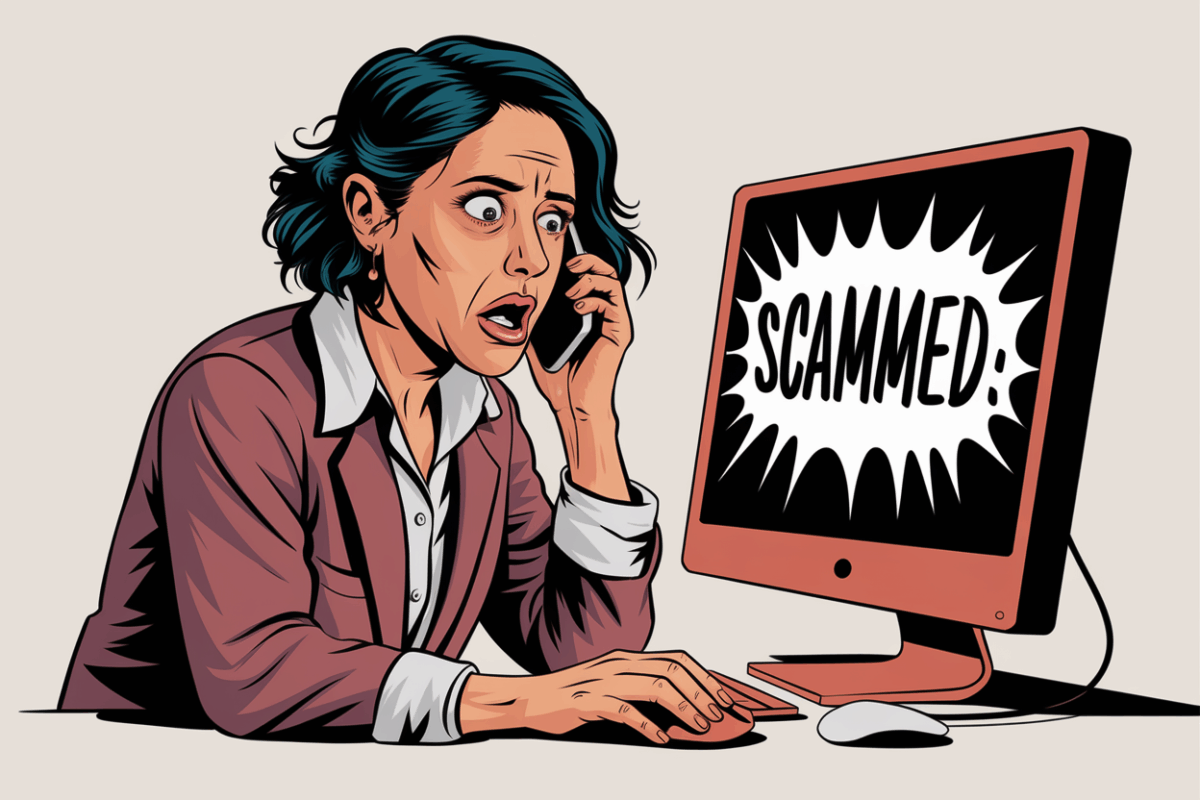
My wife tried to cancel her Audible subscription but called a fraudulent number from a spoofed Google listing. The scammer tricked her into downloading remote access software and stole $3,495 via Zelle from our Wells Fargo account.
We reported the fraud within minutes, closed the account, and cited Regulation E protections. But Wells Fargo refused to refund the money or disclose where it went. We’re retired and can’t afford this loss. Why won’t the bank help? — Stephen Mills, Hollister, Calif.
Answer
Wells Fargo should have refunded you immediately. Once you reported the unauthorized Zelle transfers, Wells Fargo has a legal obligation under the Electronic Funds Transfer Act (Regulation E) to investigate promptly and provisionally credit your account within 10 business days if it couldn’t resolve the claim by then.
Federal law is clear: Banks must refund unauthorized electronic transactions unless they can prove you acted with “gross negligence” or lied about the fraud. Even Zelle says that what happened to you would be considered fraud under Regulation E, noting that if someone gained access to your account, and stole money or sent it without your permission, “this could be defined as fraud.”
Your voice matters
Scams involving P2P payment apps like Zelle are on the rise, leaving consumers vulnerable and banks often unwilling to help. Now we want to hear your perspective.
- Have you or someone you know ever been the victim of a Zelle or other payment app scam?
- Who do you believe should be responsible for the financial loss in these scams — the customer, the bank, or the app itself?
- Should federal laws be strengthened to force banks to cover losses from these types of fraudulent transactions?
But not Wells Fargo. Instead of helping you, the paper trail you kept suggests it stonewalled you and tried to close the case quickly without giving it full consideration. It didn’t even tell you where the money went, which could have helped your recovery efforts. Banks often hide behind Zelle’s terms, which shift liability to consumers in cases of “authorized” payments. But this wasn’t authorized; it was fraud enabled by a malicious third party.
You might have avoided this by going to Audible’s website instead of searching for an Audible number on Google. Unfortunately, scammers have been setting up websites that pretend to be official sites. I’m sure your wife knows this now, but if a representative tells you to install an app on your computer, that should be a big red flag. It’s also a lesson for the rest of us. Other giveaways: A real person answers on the first ring (that never happens with a real company) or someone asks you to use a gift card through Apple or Amazon to pay for something.
Scammers are clever. They find a way of weaseling their way onto your computer to transfer money. Always enable two-factor authentication, and never share any one-time codes with a “company “representative.
Read more insightful reader feedback. See all comments.
You did everything right after the fraud: reporting it immediately, closing the account, and invoking Regulation E.
Wells Fargo should have helped you. When companies drag their feet, escalating to executives is key. I’ve published Wells Fargo’s leadership contacts on my consumer advocacy site, Elliott.org. You can also find the executive contacts for Zelle there. (Here’s our best guide to help you get your money back from Zelle.)
After I contacted Wells Fargo on your behalf, it refunded the full $3,495. While I’m relieved your case was successfully resolved, it shouldn’t take media intervention to compel a bank to follow federal law.
Next time, please go to the company’s website for contact information. Or you can visit my advocacy site, where I carefully vet the phone numbers to ensure you won’t get scammed
Your Zelle scam defense plan
How to protect yourself from fraud and fight for your money
Verify your contact info
Never call a phone number from a search engine result. Always go to the company’s official website to find their customer service contact information. Scammers often create fake listings to trap victims.
Spot the red flags
Hang up immediately if a “representative” asks you to download software, grant them remote access to your computer, pay with a gift card, or share a two-factor authentication code.
Report and cite the law
Contact your bank the moment you suspect fraud. Close the account and file a formal report. When you do, specifically mention that you are protected by the Electronic Funds Transfer Act (Regulation E).
Escalate your case
If the bank denies your claim, don’t give up. Escalate your complaint to the company’s executives. If you’re still stuck, file a complaint with a consumer advocate for help.

Is Wells Fargo ignoring your fraud claim?
When the bank’s customer service department won’t help you recover your money after a scam, you need to talk to a real person who can help. We have the direct contacts for the Wells Fargo executives. Get the Wells Fargo executive contacts
What you’re saying
Your comments paint a grim picture of peer-to-peer (P2P) payment apps, with Zelle drawing the most fire. You believe these platforms are riddled with risks and lack the fundamental protections consumers need. Many of you argue that banks are shirking their legal responsibilities, leaving customers vulnerable and holding the bag when fraud occurs.
-
“Avoid Zelle like the plague”
That’s the strong consensus from readers like Kenneth Weger, deemery, and AJPeabody. You see Zelle as inherently dangerous, a tool that makes it too easy for scammers to operate. Jennifer Hanuschak’s story of being scammed by a healthcare provider underscores your collective advice: the convenience is not worth the risk.
-
Banks are ignoring their legal obligations
As The Brown Crusader points out, Regulation E is supposed to protect consumers from unauthorized transfers, but you feel banks are acting like Zelle exists in a legal gray area. Jennifer agrees, noting that it often takes media pressure to force a bank to “do the minimum.” You believe banks are pushing a product on consumers without providing the necessary safety net.
-
This isn’t just about being “scam savvy”
While some readers argue for more personal responsibility, many of you push back. As EricLG states, a victim’s caution “does not make the crime any less criminal.” You believe the focus should be on the banks’ legal duty to protect their customers, not on blaming victims who fall prey to increasingly sophisticated scams.




Have a question about this story? Tell us what happened — we read every comment.
Join the conversation