
in this case
- Yesim Saydan flew from New York to Amsterdam. A ticket agent weighed her carry-on backpack and charged her $30 for being overweight. First time ever.
- On her connecting flight, the airline tried to charge her for drinking water. Their card processor wasn’t working so she couldn’t pay in cash. She had no euros.
- Travel companies are adding more gotcha fees than ever before. Hotels enforce late checkout strictly. Airlines weigh personal items. Customers never asked for these surprise charges.
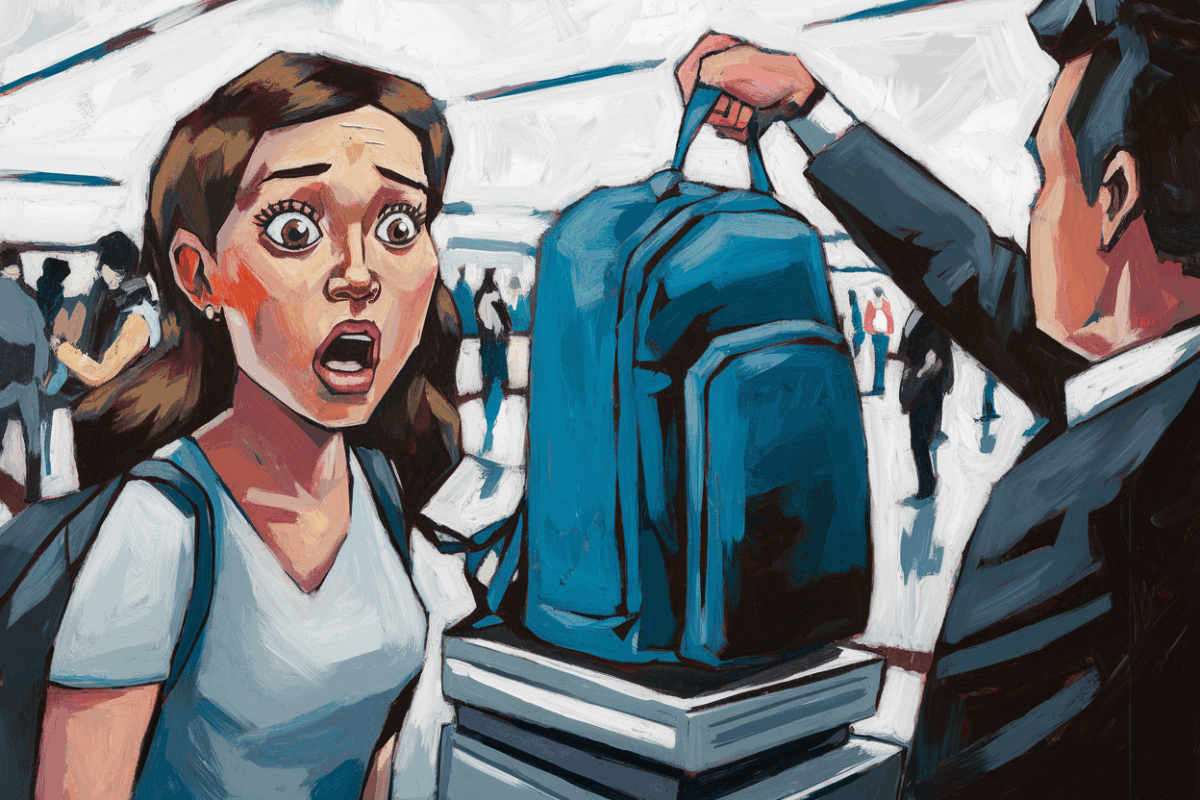
When Yesim Saydan flew from New York to Amsterdam recently, she was shocked when a ticket agent weighed her carry-on backpack.
At first, she thought it was a joke. But then the agent assured her it wasn’t, and that even though her luggage was the correct size, they would add the weight of her checked bag to her backpack to see if she was exceeding the airline’s restrictions.
“It was the first time ever that I had an airline weigh my personal bag,” she says.
Saydan’s bags were a few pounds overweight and she had to pay an extra $30.
Gotcha!
The junk fee spigot is on
“Junk fees are like a spigot that can be turned higher at any moment,” says Bill McGee, a senior fellow for aviation at the American Economic Liberties Project. “Many travelers are unaware of their full cost until their reservations are already made.”
And it’s becoming a bigger problem. As the Middle East conflict drags on and fuel prices continue to rise, travel companies are adding more “gotcha” fees like the one Saydan encountered on her flight to Europe.
The latest strain of fees is tricky. There are no major announcements like the one Southwest Airlines made when it ended its popular “Bags Fly Free” policy; often it’s just an internal directive to reinterpret a rule in a way that’s more profitable for the company.
This kind of nonsense isn’t new, but the innovations have taken even me by surprise. On a recent domestic flight in Malaysia, Air Asia dinged me for an overweight backpack just like Saydan. I had to pay an extra $30 to carry it on the plane.
“Introducing new junk fees and raising the existing ones are key ways that travel companies increase their revenue streams during downturns,” explains McGee.
Saydan, a communications consultant from New York, reluctantly paid the fee, hoping it was an anomaly. But it wasn’t. On her connecting flight, her airline tried to charge her for drinking water.
“Their card processor wasn’t working so you had to pay in cash,” she remembers. “And I didn’t have any euros on me.”
Charging for water? That’s a thing too, and it’s even spreading to legacy carriers.
Gotcha!
How can an airline disclose the total cost including all fees, when those fees are going to vary hugely depending on a range of variables like passenger status, number and weight of bags checked, number and weight of carry-on, what if anything passenger will want to eat or drink. I agree information about those fees should be readily available upfront, before the ticket is purchased, though.
Read more insightful reader feedback. See all comments.
What are the new “gotcha” fees?
Experts are struggling to keep up with the newest junk fees because of the clever way they’re being implemented.
- A hotel might have a late checkout fee and simply direct its employees to enforce it strictly: “no waivers, no favors.”
- An airline might have weight limits for luggage, and in challenging economic times, will tell its gate agents to strictly enforce the limits and charge passengers for any excess weight. (Related: The great luggage abandonment: Why travelers are ditching their bags at the airport.)
- Travel companies can also quietly move the goalposts on loyalty programs by adjusting their rates for redeeming a “free” room or seat, or adding a nondescript “carrier-imposed fee.”
Travel companies disclose these extras, but just barely.
Consider what happened to Madeline Miller when she rented a car.
“I used the pre-installed toll pass, which resulted in an additional ‘convenience’ fee,” says Miller, an academic writer from Toms River, N.J. “The kicker? Although I only used the toll once during my rental period they charged me the full daily fee for the entire time I rented the car. The rental company showed me the fine print deep within the contract when I tried to argue about the charges afterward.”
When profits are good, a car rental company is likely to zero out a renter’s bill when they complain. Now? Not so much.
Customers never asked for these “gotchas”
I talk to travelers every day, and the evidence that junk fees are proliferating is overwhelming. They’re harder than ever to spot, and customers definitely don’t want to pay them.
“We’re seeing more ‘gotcha’ fees and restrictions than ever, from airlines and hotels to car rentals and cruises,” says Mike Hallman, CEO of Medjet, a medical evacuation membership program for travelers.
He says the watershed moment came earlier this year, when Southwest Airlines started charging most passengers for checked luggage. (Here is everything you need know about planning your next trip.)
“I think a lot of families were surprised by that,” he says.
Here’s the maddening thing about the new fees. Customers never asked for them. (True, they consistently book the lowest-priced car rental rates, hotel rooms and airfares, but that doesn’t mean they are asking for more fees. It’s the opposite, actually.)
“Travelers today are encountering more unexpected fees because airlines are increasingly shifting toward an unbundled pricing model, offering lower base fares while charging extra for services that were once included,” says Mario Matulich, president of CMP, a customer service consultancy.
He says “gotchas” are dishonest.
“By hiding mandatory fees and taxes, you are misleading your customers, plain and simple,” he adds. “And once that trust is lost, good luck getting it back.”
How to avoid gotcha fees this fall
Good thing there are specific actions you can take to avoid gotcha fees:
Do your research carefully. A quick online search isn’t enough, says Mitch Krayton, a travel advisor from Denver. “Reviews won’t always help,” he says. That’s because cruise lines, hotels and other businesses have found ways of manipulating search engine results to hide important information. These unscrupulous businesses will often reveal their fees at the end of your booking transaction. “Reject misrepresented properties,” he says. You can also book through an advisor like Krayton Travel, who will sort through the junk fees for you.
If you have a question, don’t be shy. The latest twist, as I’ve already mentioned, is a creative reinterpretation of an established rule. The confusion benefits the travel company. “Ask the right questions,” says Medjet’s Hallman. “Otherwise you could end up with a surprise.”
Know your rights. “When you experience a gotcha moment (whether it involves your seat, luggage, or pricing) you can always refer to the Department of Transportation’s passenger rights,” says Danny Karon, a consumer lawyer based in Cleveland and author of “Your Lovable Lawyer’s Guide to Legal Wellness: Fighting Back Against a World That’s Out to Cheat You.” He says you can find the guide while you’re standing at the gate and quote chapter and verse of the rules if your airline violates them.
Above all, don’t reward a travel company with your business when it slams you with a “gotcha” fee. That sends a message that it’s OK to charge you a low price and then ambush you with a surprise fee. And that leads to even more fees.
Believe me, I’ve seen this before. If you put up with “gotcha” fees, this won’t end well.
How to avoid gotcha fees
Protect your wallet from hidden charges
Research beyond the search engine
Travel companies hide fees from quick online searches and manipulate rankings. Reject misrepresented properties, or use travel advisors who filter out junk fees automatically.
Ask direct questions
Airlines and hotels bend established rules to their advantage. Ask specific questions about mandatory fees before you confirm your booking.
Enforce your rights
Consult the Department of Transportation’s passenger rights guide when facing surprise charges. Quote the specific regulations to airline staff to resolve the issue.
Never reward companies that ambush you with surprise fees. Take your business elsewhere and send a clear message that transparency matters.
Your voice matters
Airlines are weighing personal items and charging surprise fees. Hotels strictly enforce late checkout. Travel companies shift to unbundled pricing, hiding mandatory costs. Junk fees are proliferating and customers never asked for them.
- Should airlines be legally required to disclose all fees including carry-on weight charges before purchase instead of at the gate?
- Should hotels be required to include all mandatory fees in their advertised room rates rather than adding surprise charges at checkout?
- Should travel companies face penalties for charging fees that were previously included in the base price without clear advance notice?

Have a question about this story? Tell us what happened — we read every comment.
Join the conversation