

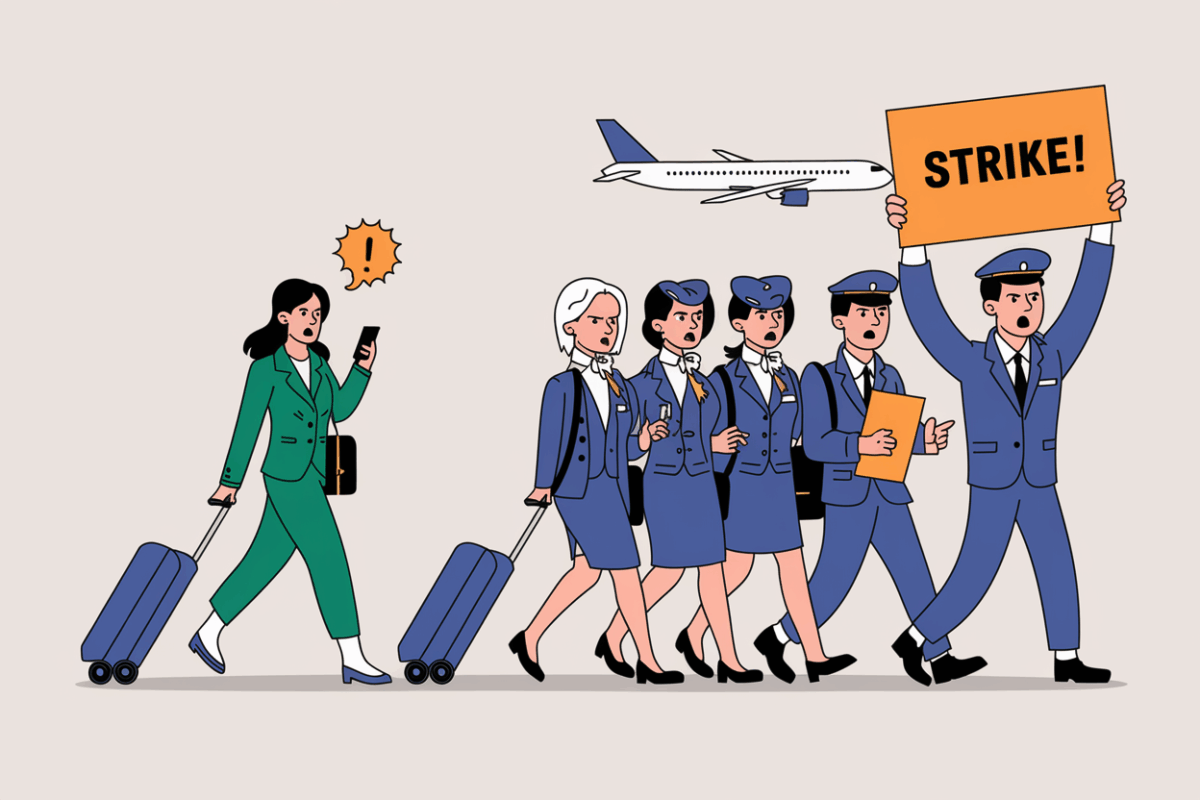
in this case
- Aer Lingus tried to enforce its own 85 percent refund rule, but a powerful passenger protection law made it clear the traveler was owed 100 percent.
- The airline gave the passenger the silent treatment, a common tactic companies use to wear customers down until they give up.
- With the airline refusing to budge after months of silence, the passenger knew she had one last option to get the company’s attention.
When a strike threatens Martha Rhine’s trip to Dublin, Aer Lingus offers her a full refund for her business class ticket. But she gets only a portion of her ticket back. What’s going on, and how can she get the rest back?
Question
I paid $7,155 for a business-class ticket from Hartford, Conn., to Dublin on Aer Lingus. When a pilot strike threatened my trip, the airline emailed me three options, including a full refund, which I selected.
Aer Lingus refunded me $6,096 but withheld $1,058, claiming business-class tickets only qualify for an 85 percent refund. I filed multiple claims, called repeatedly, and even sent a registered letter to the CEO. No one responded. How can I get back my money? — Martha Rhine, West Hartford, Conn.
Answer
Aer Lingus owes you the full refund it promised. Period.
Under EU Regulation 261, passengers are entitled to a full refund if their flight is canceled because of a strike. Airlines can’t impose arbitrary refund caps based on fare class in that situation.
Aer Lingus’s 85 percent policy appears to violate EU 261. Worse, the airline ignored your documented requests for months, and that’s a blatant violation of consumer trust.
Your voice matters
In this case, Aer Lingus invented an 85 percent refund “policy” that violated EU law, and only paid in full after we intervened. What should happen when airlines ignore the rules?
- Have you ever had an airline refuse a refund you were entitled to?
- Do you think Aer Lingus’s 85 percent refund “policy” was a mistake or a deliberate tactic to keep customer money?
- Should there be automatic, significant penalties for airlines that violate well-established refund laws like EU 261?
Aer Lingus should have processed your refund promptly after you asked for it. Its customer service department should have stated its policies up front and escalated your case when you had a problem. And, of course, the CEO’s office should have acknowledged your letter when you wrote, rather than stonewalling.
Maybe Aer Lingus got confused when refunding your ticket. It thought you had requested a refund of the ticket for reasons other than the strike, and the rules for your business-class tickets only entitled you to an 85 percent refund.
You did everything right: You saved correspondence, pursued multiple channels, and contacted executives. But when companies dig in, persistence alone isn’t enough. That’s when involving an advocate or regulators like the U.S. Department of Transportation or the Irish Aviation Authority becomes critical. Filing a complaint with one or both of these agencies might have been enough to light a fire under Aer Lingus to give you what it promised.
By the way, you don’t have to send the CEO a letter next time. You can start at the beginning of the executive chain, which might result in a faster response. I publish the emails of all the Aer Lingus executives on my consumer advocacy site, Elliott.org.
Read more insightful reader feedback. See all comments.
I contacted Aer Lingus on your behalf.
“Aer Lingus sincerely apologizes for the delay in processing this customer’s full refund,” a representative responded. “The outstanding amount has now been processed as a matter of priority.”
How to get your airline refund
A step-by-step guide for travelers
Identify the problem
The airline canceled your flight or failed to provide a service, but is offering a partial refund, a voucher, or nothing at all, citing internal policies.
Know your rights
Depending on your itinerary, you may be protected by laws like EU Regulation 261 or Department of Transportation rules. These regulations often guarantee a full cash refund for cancellations, regardless of the airline’s policy.
Take these actions
- File a claim through official channels.
- Follow up with phone calls.
- Contact company executives directly.
- Keep a detailed paper trail of all communication.
Escalate if necessary
If the airline doesn’t respond or denies your valid claim, file a complaint with the Department of Transportation (DOT) or a relevant international authority. You can also contact a consumer advocate for help.
Reach the goal
Through persistence and escalation, you can secure the full cash refund you are legally owed.
Key takeaways
Know the law
Regulations like EU 261 are your most powerful tool.
Escalate smartly
If the company won’t listen, contact an advocate or regulator.
Keep records
A detailed paper trail is your best evidence.
Don’t give up
Persistence is key. Stonewalling is a strategy to make you quit.

Stuck in a customer service loop?
When your emails go unanswered, you need a direct line to someone who can help. We publish the names, titles, and direct email addresses for the executives at Aer Lingus. Get the Aer Lingus executive contacts



Have a question about this story? Tell us what happened — we read every comment.
Join the conversation
What you’re saying
Aer Lingus’s attempt to withhold a full refund for a canceled flight struck a nerve. You were clear that the airline’s actions were not just poor customer service, but a blatant violation of the law, and you shared your strategies for fighting back.
The rule is the rule
Top commenter Alan Gore and others stated the case in the clearest possible terms: If an airline cancels your flight, you are legally entitled to a 100% cash refund. The original ticket terms don’t matter; the law is the law.
This isn’t a mistake, it’s a strategy
Many of you, like The Brown Crusader, believe the airline’s 85% refund “policy” and subsequent silence were not accidents. You see it as a deliberate tactic to retain cash, betting that most passengers will eventually give up the fight.
Stronger penalties are needed
Several readers argued that airlines will continue to ignore regulations until there are serious financial consequences. You called for “whomping” federal penalties and better enforcement to stop carriers from inventing their own rules.