
in this commentary
- Germany’s Baltic islands of Rügen and Usedom blend historical reckoning with sustainability, from Art Deco villas confiscated from Jewish owners during WWII to marinas built entirely from local wood and houseboats achieving over 300 nights of occupancy through quality-focused tourism.
- Businesses like Wasserferienwelt and Naturhafen Krummin have embedded sustainability into operations with locally sourced products, energy-saving initiatives, and strict protection of the Baltic ecosystem, while Königsstuhl National Park guards its dramatic white cliffs with a cantilevered Skywalk that prevents erosion from foot traffic.
- Usedom is pursuing island-wide green certification to manage 1 million annual tourists visiting a town of 40,000, encouraging train travel with a Usedom Card for free public transportation, while climate change unexpectedly stretches the tourism season from May-September to potentially March-October, offering an opportunity to spread visitor traffic more evenly throughout the year.
The Baltic Sea islands of Rügen and Usedom are known for their serenity — those quiet postcard-perfect days during the summer when the calm ocean waters reflect a cloudless sky. But this part of northern Germany, a long-cherished vacation spot for Europeans, also has its secrets.
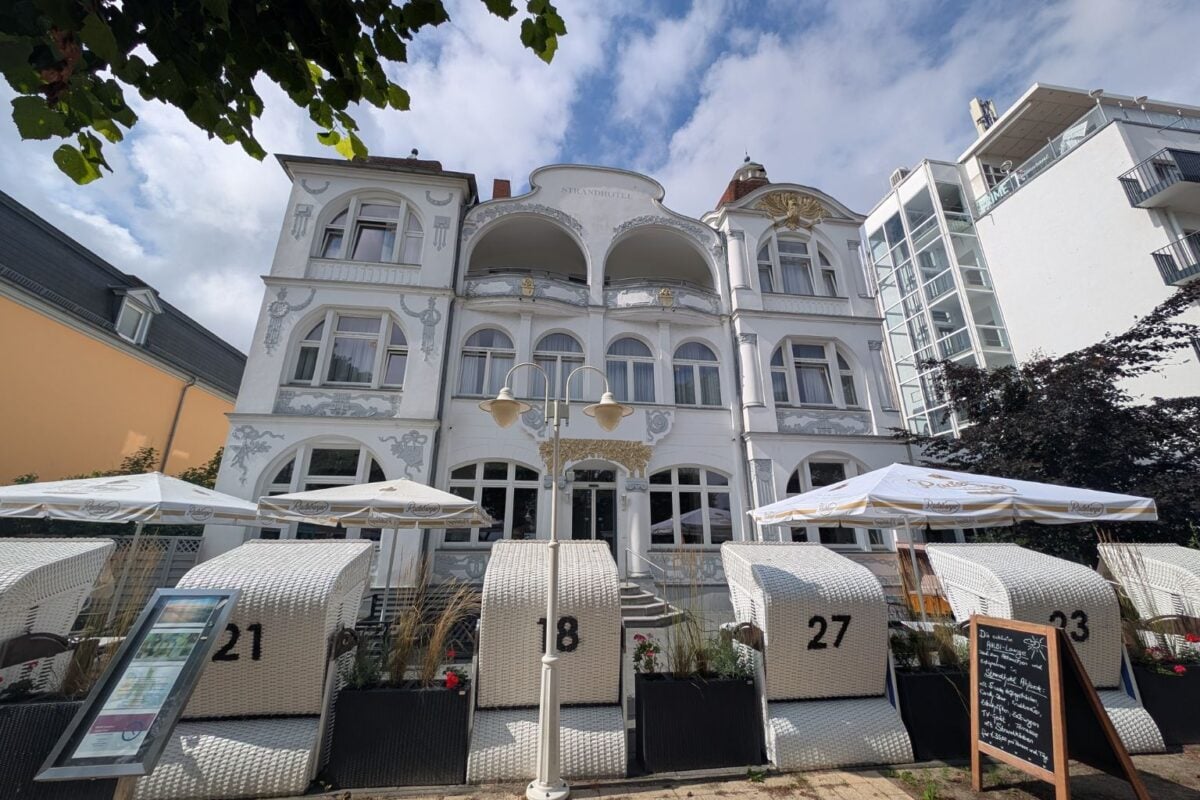
You can discover some of them on a bike tour of Usedom’s legendary promenade. There, you can see the Art Deco villas confiscated from Jewish owners during World War II or the unsightly DDR-Turm, a remnant of the East German times. You can also continue your bike ride into Poland.
But those aren’t the only surprises. This area is quietly redefining what it means to be a sustainable tourist destination. Far from mere buzzwords, sustainability here is integrated into the DNA of business operations, nature preservation, and strategic planning, driven by local pioneers committed to a greener future. That, in turn, has revealed more surprises.
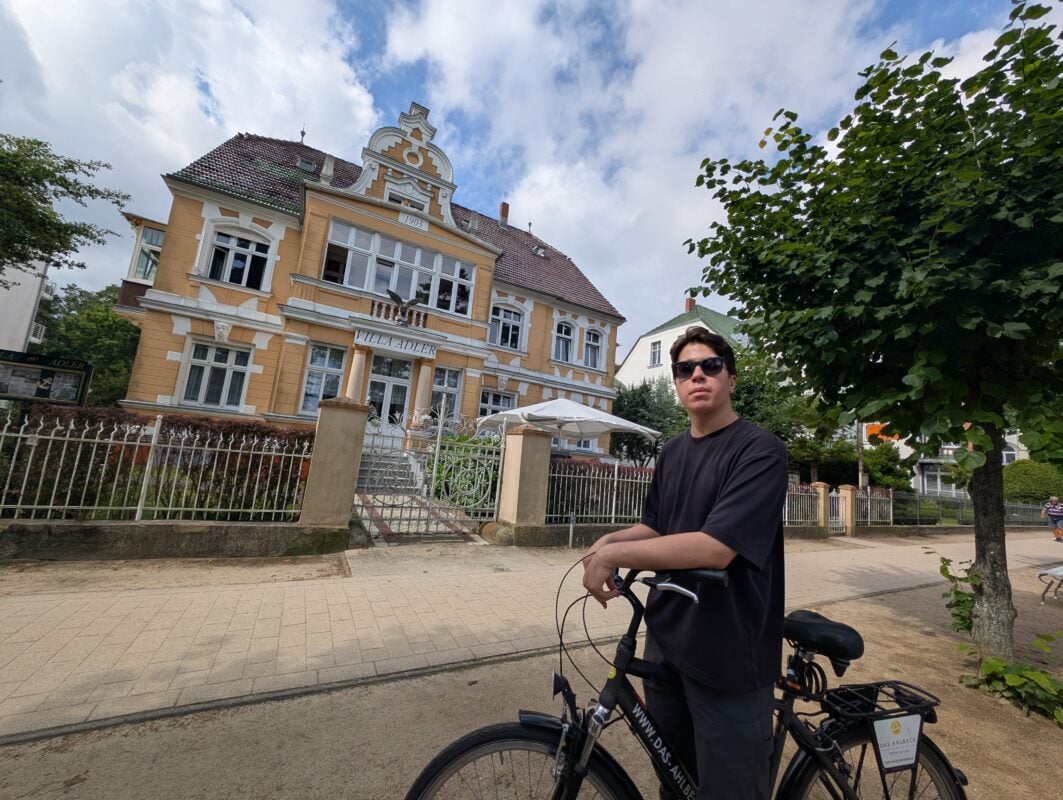
A bike tour along the Europa Promenade. (Photo by Aren Elliott)
A bike tour through time in Usedom
The Europa Promenade, the longest beach promenade in Europe at 7 ½ miles, stretches from Bansin through Heringsdorf and Ahlbeck all the way to Świnoujśce, Poland. It’s a ride through the past best undertaken by bike.
This is a region famed for its distinctive spa architecture, with many grand villas constructed during a building boom between 1875 and 1900. The resorts of Heringsdorf, Ahlbeck and Bansin became beloved summer retreats for city dwellers.
Out of curiosity, what would happen if someone could prove their relative had to give up the villa that this person could have rightfully inherited? Would that person be able to take possession of the villa their grandparents or great-grandparents bought and built and had to involuntarily give up?
Read more insightful reader feedback. See all comments.
Riding along the beach, you’ll find a captivating architectural tapestry. Jana Olschewski, a local guide, says visitors from Berlin and Hamburg flock here during the summer, leading to Usedom’s affectionate, if slightly odd, nickname as the bathtub of Berlin.
One of the most common architectural styles is Art Deco, but the architects didn’t limit themselves. Some of the standouts are best described as eclectic because they blend several influences. Some, like the Germania villa, incorporate striking maritime details into their facades, with ships and mountains carved into the sides of the building.
Olschewski says during World War II, many Jewish owners were forced to abandon their summer villas and flee to Israel or the United States. Another scar along the beach is the DDR Turm, a resort built when Germany was divided (DDR stands for Deutsche Demokratische Republik). It’s a classic Plattenbau — a ready-made apartment — that clashes with the otherwise aesthetically pleasing architecture.
“It’s one of the ugliest things we have,” says Olschewski, an art historian. “But it is also worth preserving.”
If you feel ambitious, try cycling all the way to Poland on the other side of the island. That border, too, is a reminder of this region’s history. A tour of the promenade is more than a leisurely ride. It’s also a historical passage, revealing how Usedom has navigated its identity through centuries of geopolitical change.
And the journey is continuing.

A hotel overlooking the Baltic on the eastern German island of Usedom. (Photo by Aren Elliott)
Water-centric sustainable tourism
In Rügen, the Wasserferienwelt is pursuing another kind of sustainability. The family business, led by co-owner Till Jaich, has a nearly 70-year legacy steeped in maritime tradition. What began as a venture in outdoor recreation now encompasses nine marinas along the German coastline.
Jaich’s family moved to Rügen in the early 1990s, one of the first Western businesses to invest in the former East Germany.
“It was pretty complicated because we did not know the rules,” Jaich explained, detailing the challenges of establishing marinas where water sports were once forbidden for ordinary citizens. (Related: Germany has a 150-year-old rule about forests. It may be the sanest idea in travel right now.)
But Jaich continued developing, eventually opening Germany’s first houseboat accommodations. The property’s dedication to sustainability is obvious, from locally sourced products to its energy-saving initiatives.
The marina’s deep connection to the Baltic Sea is also evident in every detail, right down to the robust construction of the floating homes, which are designed to withstand the region’s winters and winds.
Farther east, on Usedom, the Naturhafen Krummin is also doubling down on sustainability. Its goal is to offer a peaceful, natural experience while also being respectful of the fragile ecosystem in the Baltic islands.
Its commitment extends to the building materials they choose.
“We have a marina completely made out of wood,” explains manager Frank Schmidt. “Every beam you see grew here.” The Naturhafen (natural harbor) also deliberately kept the bay largely untouched — nothing built up, nothing changed — to ensure the experience is as close to nature and as sustainable as possible.
Schmidt says he sees a bright future for sustainability in the Baltic islands. At Krummin, that means focusing on quality instead of quantity. To manage traffic on the single main road of Usedom, especially during peak season, they offer flexible arrival and departure days, and even a pick-up service for guests arriving by train. Its houseboats achieve an impressive occupancy rate of over 300 nights, so there’s not much room for more tourists. There’s also an emphasis on authentic, nature-based activities like canoeing and hiking.
In Rügen, guarding the white cliffs
The iconic Königsstuhl National Park in Rügen is renowned for its dramatic interplay of green forest, blue sea and white cliffs.
Gesine Häfner, a spokeswoman for the UNESCO World Heritage site, says the park operates under strict regulations that protect this fragile environment. For example, you can’t leave marked paths and can’t get too close to the edge of the cliffs, which are prone to erosion.
The National Park center itself offers an interactive exhibition that takes visitors through 96 million years of history, to a time when the chalk cliffs in the area were underwater. It shows how glaciers shaped the landscape and tells the story of Königsstuhl through engaging multimedia exhibits.
“The core motivation here is to educate people,” Häfner added. “To show them what we have here, and why it’s worth preserving.”
One standout feature is the new Skywalk, a cantilevered platform that allows visitors to experience the breathtaking views of the chalk cliffs without contributing to their erosion, a significant safety concern. Häfner noted that before the Skywalk, visitors would simply walk to the edge.
“But due to erosion, it wasn’t safe to keep it open,” she says.
The best way to reach the visitor’s center is to hike from nearby Sassnitz. It’s a memorable walk through ancient forests along the tops of the white cliffs. Even on a rainy day, Häfner says that visitors can still enjoy the center by simply taking the bus directly to the entrance from Sassnitz.
Usedom’s island-wide green vision for the future
Usedom isn’t just home to sustainable businesses. The entire island has plans for a comprehensive green transformation.
Michael Steuer, the managing director of Usedom Tourism, explains the goal.
“We’re trying to get the whole island certified as a sustainable tourist destination,” he says.
Usedom Tourism itself is already certified as a green business by GreenLabel, a regional accreditation program.
“The aim is to inspire others to join us on this path,” he adds. “It’s important to future generations.”
But what would a greener Usedom look like? One challenge is welcoming 1 million tourists per year to a town of 40,000 inhabitants. Planners hope to reduce the number of cars and encourage people to arrive by train.
Usedom’s tourism authorities already offer visitors a Usedom Card, which includes all public transportation, and encourages guests to leave their cars parked.
“This makes a lot of sense during the busy summer,” says Steuer.
A silver lining for climate change
And then there is the surprise. Beyond traffic management, Usedom is strategically adapting to changing climate patterns. Warmer weather has already stretched the season by a few weeks on both ends, beginning in May and ending in September. But even warmer weather means tourist season may soon start as early as March and last until October. That provides an opportunity to attract more visitors during the off-season and avoid a crush of visitors during the summer.
The collective efforts on Rügen and Usedom, from the innovative water-centric businesses and dedicated park conservation to the island-wide strategic vision for sustainable tourism, are a standout in northern Germany. These islands are actively shaping a sustainable future. And they’re showing that respect for nature, community, and forward-thinking business practices can create a resilient and more authentic travel experience for the next generation of visitors.
The Baltic islands of Rügen and Usedom are finding innovative ways to handle massive tourist crowds while protecting their fragile coastlines. We want to know how you factor sustainability into your own vacation plans.
Your voice matters
What you’re saying
Readers grappled with the unresolved question of Art Deco villas confiscated from Jewish families during WWII, asking whether descendants could reclaim their grandparents’ property. The conversation revealed both fascination with the islands’ sustainability efforts and concern about historical justice.
-
What about restitution?
Tim asked what would happen if someone could prove their relative had to give up a villa they could have rightfully inherited, wondering if descendants could take possession of property their grandparents or great-grandparents built and were forced to abandon. Susan Stevens echoed this concern, asking if anything has been done to repay or allow Jewish ancestors to regain property seized by the Nazis.
-
Sustainability beyond brochures
Jennifer called the article a reminder that sustainable tourism works best when it’s part of everyday decisions, not just something promoted in brochures. The comment highlighted how Usedom’s green transformation goes beyond marketing to become embedded in actual business operations and island-wide planning.
-
The islands sound inviting
Gerri Hether noted that despite the article’s heavy historical content, it doesn’t discourage tourism. In fact, the islands sound lovely, suggesting the balance of reckoning with dark history while celebrating natural beauty and sustainable practices creates an appealing destination.

Have a question about this story? Tell us what happened — we read every comment.
Join the conversation