

in this case
- A guest uses the hairdryer that came with his Vrbo rental, and the next thing he knows, he’s being blamed for a major electrical problem and hit with a $1,000 bill. Here’s what happened.
- Vrbo took $1,000 from his security deposit, but was it the right call? We’ll break down the rules on damage claims and look at why these disputes often seem to favor the homeowner.
- When the owner and Vrbo wouldn’t budge, this renter used one final, powerful tool to get his money back. Find out what it is and how you can use it, too.
Picture this: Something goes terribly wrong with your vacation rental, and instead of fixing the problem, the owner slaps you with a $1,000 bill. And when you complain to the rental platform, it tells you that you’re out of luck and then charges your credit card.
Well, Bill Thramann doesn’t have to imagine, because it happened to him when he rented a house from Vrbo in Clermont, Fla.
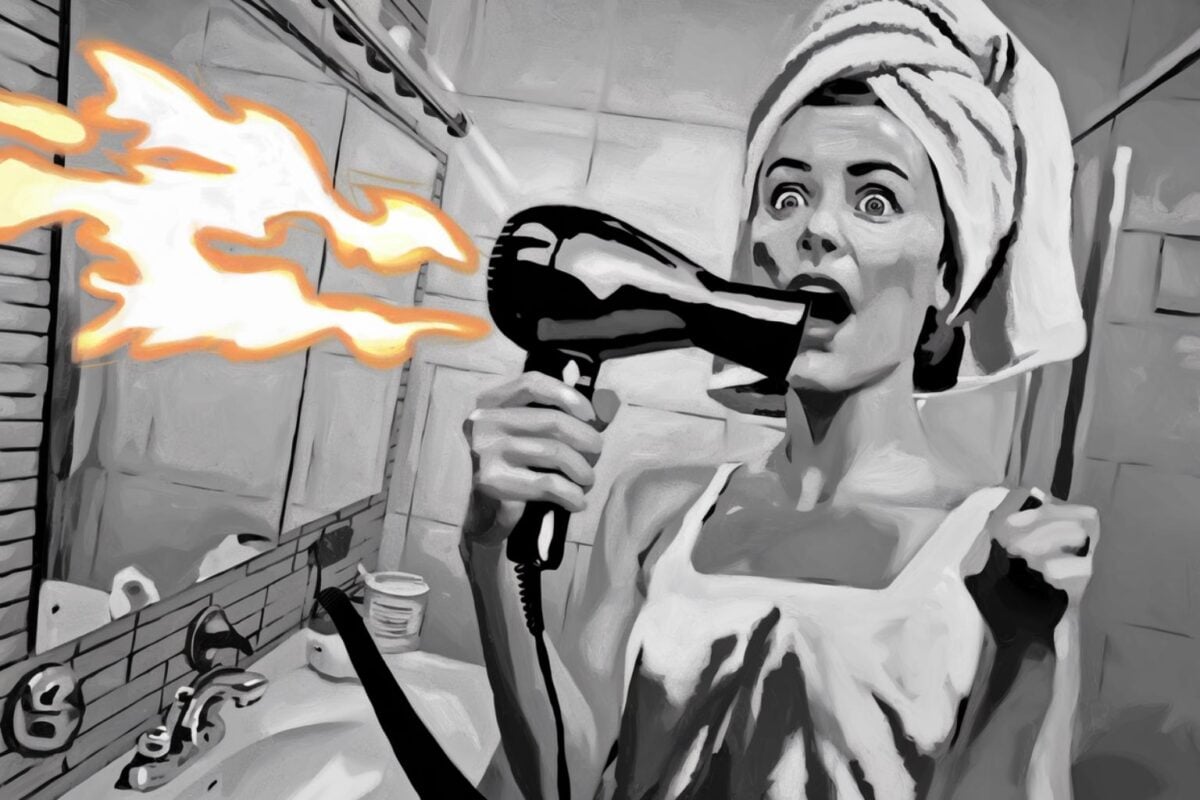
At issue is a hair dryer, supplied by the owner, that shorted out a bathroom fixture and necessitated a major repair. The owner filed a claim with Vrbo, which responded by keeping $1,000 of Thramann’s $1,500 deposit.
“You should be able to use a supplied hair dryer without compromising the rental’s electricity,” he told me. “I want the remaining $1,000 back.”
But Thramann’s case is far from simple, and it raises a few questions:
- When can Vrbo take money from your security deposit?
- What if there’s a conflict between the host and guest?
- How do you resolve an unfair charge with Vrbo?
Before we answer those, let’s take a look at what happened to Thramann and his family in Florida.
Your voice matters
In this case, a guest was charged $1,000 after a host-supplied hairdryer revealed the property’s faulty wiring. Vrbo sided with the host, leaving the guest to fight the charge on his own. Now, we’d like to hear your opinion.
- Who do you think is responsible for the damage — the guest who used the appliance or the host whose property had wiring that wasn’t up to code?
- Was Vrbo’s decision to charge the guest’s security deposit fair? How should rental platforms handle disputes where both sides have a valid argument?
- The guest only won after filing a credit card chargeback. Have you ever had to resort to a dispute to resolve a travel problem? Share your story.
Would you pay $1,000 for a hair dryer malfunction?
Thramann had rented a place in Central Florida so that he could be nearby, while his father underwent a medical treatment in Orlando. On the morning after their arrival, his sister used a hair dryer that had come with the home.
“It stopped working after five seconds,” he says. “She tried to plug it into alternate bathroom outlets and none of them were working.”
Thramann contacted the property manager, who delivered a new hair dryer and made an appointment for a technician to visit the home. The technician replaced one of the outlets, but said more repairs needed to be done.
He assumed the problem had been fixed, but no. The plug worked, the hair dryer worked, but a few weeks after returning from Florida, he noticed a new problem: Vrbo had only returned $500 of his $1,500 deposit.
Thramann asked for an explanation. The property manager claimed the hair dryer had caused extensive damage to the home, and the repair cost was $1,250.
“The technician had recommended changing the whole circuit with wires to prevent further damage,” he says. “We found one burned electrical outlet, which caused the damage to the whole wiring in that circuit.”
Read more insightful reader feedback. See all comments.
Eventually, Thramann’s sister reached out to the technician, who told them a slightly different story. The wiring in the home was not up to code. The damage was extensive, but it wouldn’t have been nearly as bad if the home had the right wires. He also said the $1,250 estimate the owner was quoting them was incorrect. He would only charge the owner $450 for the repairs.
Still, Vrbo sided with the owner and took $1,000 from his deductible. Can it do that?
When can Vrbo take money from my deductible?
Vrbo has policies in place to help hosts protect their rental properties, including different options for damage protection. (This is not to be confused with its liability insurance protection for homeowners.)
Hosts can require that travelers either purchase property damage protection, pay a refundable damage deposit, or have a credit card on file for damage charges.
If a guest damages something, hosts have two weeks after checkout to file a claim. Vrbo requires that they back up the request with a repair invoice. In my experience, it generally will side with an owner when there’s alleged damage to a home. (Here’s our guide to resolving your consumer problem.)
The process isn’t entirely host-friendly. For example, I stayed in a Vrbo in Houston a few years ago. At the end of the stay, a curtain rod had gone missing. I had seen my teenagers playing “Three Musketeers” with the rods, and even though I interrogated them about the rod’s whereabouts, the owner couldn’t find it. So she said she would file a claim, and I agreed to help her.
It turns out that Vrbo’s paperwork requirements didn’t make a claim for a curtain rod possible. The owner said Vrbo imposed a minimum on claims and that she also had to show an invoice for the curtain rod, which she couldn’t.
Another time, one of my kids destroyed an ornamental peacock in a Vrbo rental but failed to tell me about it. When the owner asked me about the decorative bird, I said I hadn’t seen it (because I hadn’t). Years later, long after the claim window had closed, my daughter confessed to the deed.
But yes, Vrbo can take money from your deposit — and sometimes, it should.
What if there’s a conflict between the host and guest?
Thramann went back and forth with the owner and Vrbo. Although the vacation rental platform wanted to keep $1,000, the host had other ideas.
The host had received another estimate of $1,992 to rewire the bathroom and wanted him to cover it. (Alas, Thramann had only paid a $1,500 deposit, so that wasn’t going to happen.)
So it seems both the host and guest were unhappy — and now Vrbo had to be the referee.
Vrbo’s terms give it a broad license to charge you for damage to a property, and it doesn’t really have to justify the charges.
As a practical matter, most guests know why they’re being billed, and Vrbo simply processes the transaction on behalf of the host. But in rare cases, it must act as a mediator. It’s not an enviable position.
Vrbo was trying to please both parties. The owner wanted nearly $2,000 for a complete redo of the bathroom’s electricity. The customer wanted to pay nothing. The solution was to split the difference, charging Thramann $1,000.
Based on that resolution, I’m not sure if Vrbo really took the time to carefully review the claim. No one denies the bathroom’s electrical system was fried — there were photos and estimates documenting the damage.
The issue was how the damage happened. A guest used an owner-supplied hair dryer in the normal way, but the house’s wiring was not up to code. Since there’s no way Thramann’s sister could have known this, it’s unclear how the problem is Thramann’s fault.
How do you resolve an unfair charge with Vrbo?
What are the steps Thramann should have followed to fix this?
Ask the host to remove the charges. Thramann did that, and he sent me an extensive paper trail of his correspondence with the host. The host consistently deferred to Vrbo, saying it was up to the platform to refund his money. (That’s untrue. The host could have dropped the claim but refused to do so.)
Ask Vrbo for help. He also tried to persuade Vrbo to remove the charges, but it answered him in a robotic way — no can do, the host has filed a claim. And around and around we go!
Appeal to a Vrbo executive. Thramann tried to take his case to the next level, but Vrbo would not drop the claim, presumably because the host wouldn’t drop the claim.
Even though it’s clear that Thramannn wasn’t to blame for any of this, you have to take a moment to appreciate the forces at work behind this case. The owner wants Vrbo to pay for a new electrical system. If it doesn’t, the owner could remove his listing on Vrbo, which would cost Vrbo. The company is in a difficult position. The one party who’s expendable is Thramann. He’s not paying a listing fee or commission to Vrbo, and for all it knows, he may never rent through Vrbo again. So, sticking him with a bill just makes business sense.
A surprising resolution
I asked Vrbo to review Thramann’s case.
“In this case, after learning about the electrical issue during Mr. Thramann’s stay, the host decided to file a claim against the refundable damage deposit to cover the repair cost,” a representative told me. “Our team reviewed the supporting documentation provided by the host and concluded that the claim was valid, and the case was closed. The host did provide a partial refund of the damage deposit despite the issue. Our team also provided One Key Cash as an additional gesture for Mr. Thramann to use towards his next eligible trip.”
One Key is Vrbo’s loyalty program.
I read this to mean that Vrbo pushed a claim through that it knew was problematic and gave Thramannn some points to soften the blow.
Come on.
But that’s not the end. Thramann filed a dispute with his credit card under the Fair Credit Billing Act.
“Amex sent me a response one week later saying the situation was concluded in my favor for the full amount of $1,000,” he says.
How to fight an unfair vacation rental damage claim
A step-by-step guide to getting your deposit back
Contact the host first
Immediately ask the host to remove the charges. Present your side of the story calmly and clearly. The host can drop the claim at any time.
Escalate to the platform
If the host refuses, take your case to the rental platform (like Vrbo or Airbnb). Provide all your evidence, including photos and correspondence.
Appeal to an executive
If customer service sides with the host, don’t give up. Find a company executive and send a brief, polite email explaining the situation and why the charge is unfair.
File a credit card dispute
This is your most powerful tool. Under the Fair Credit Billing Act, you can dispute a charge for services you didn’t accept or that weren’t delivered as agreed.
Key takeaways
You are not liable for pre-existing issues
If an appliance malfunctions due to faulty wiring, that’s the owner’s responsibility, not yours.
Platforms may have a bias
Rental sites often favor hosts, who are their primary source of revenue. Don’t assume their decision is final.
Your credit card is your best advocate
A chargeback is often the quickest and most effective way to resolve an unfair charge from a travel company.
Document everything
Keep a detailed record of all communications, photos of the property, and any repair estimates.

Stuck in a customer service loop?
When customer service isn’t helping, it’s time to escalate your case. We’ve got the executive contacts for Vrbo that you need to get the attention of someone who can help. Get the Vrbo executive contacts




Have a question about this story? Tell us what happened — we read every comment.
Join the conversation

What you’re saying
Your reaction to this story was a mix of outrage and sharp strategic advice. You universally agreed that a guest should never be responsible for faulty wiring, but the most insightful comments explained *why* Vrbo should have seen this as more than just a simple damage dispute.
Frame it as a safety hazard
Several of you, led by philsego, pointed out the critical mistake in how the complaint was handled. This wasn’t a damage claim; it was a life-threatening safety issue. By reporting faulty electrical systems, you put the platform on notice, dramatically increasing their liability and forcing them to act.
Remember who the real customer is
A strong theme, summed up by Ben, is that on platforms like Vrbo, the host is the real customer, not the guest. You noted that Vrbo’s tendency to side with property owners, even in absurd situations like this, reveals where their financial loyalties lie.
The owner is responsible, period
Our top commenter, JAASON, and many others stated the obvious: the homeowner is entirely responsible for maintaining safe, up-to-code electrical wiring. Blaming a guest for using a host-provided appliance is ridiculous, and many of you suspected it was a shady attempt to get a renter to pay for pre-existing problems.