
in this commentary
- Robert Grunnah booked a $67 round-trip flight to Denver, only to face a massive delay, an overpacked plane, and an exhausted gate agent. He quickly realized the airline was slashing staff and basic services just to make the cheap fare profitable.
- Deep travel discounts carry a steep human and environmental toll. Industry insiders warn that rock-bottom prices force hotel housekeepers to work grueling shifts, push tour guides below a living wage, and even compromise aircraft safety through outsourced maintenance.
- Relentless price-cutting degrades the very places you want to visit. Find out why experts say we can no longer afford ultra-cheap travel, and how paying a fair price protects local workers and communities.
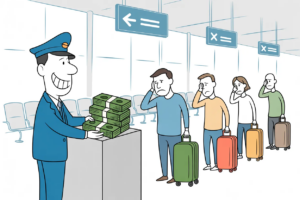
Robert Grunnah thought he’d scored a deal when he found a round-trip flight from Austin, Texas, to Denver for just $67. But as he sat on a delayed plane, watching an overworked agent juggle an overbooked flight, he wondered: Was his flight too cheap?
“Something is seriously wrong with that business model,” says Grunnah, a real estate investor from Austin. “The flight was three hours behind schedule, the gate agent was weary and frazzled, and the plane was fully booked to the point of discomfort. That $67 ticket informed me that the airline was selling seats to fill planes and slashing staff and services to dangerous levels.”
Welcome to the dark side of travel’s race to the bottom, where the deep discounts come with hidden costs that are not only degrading your experience but also harming communities, workers, and the environment itself.
It’s a complex issue that calls into question company practices, government policy and the decisions you make as a traveler. But it all kinda makes you wonder if you’re not paying enough for your trip.
“You get what you pay for” — how does anyone Not understand this? If I pay that price for a plane ticket – I expect an overcrowded bus experience.
If I pay that price for a hotel – okay I would never pay such a low price for a hotel – it would not support the level of comfort and convenience that I expect. Hopefully the OP learns to pay for what he wants, or learns to live with that old adage..
Read more insightful reader feedback. See all comments.
The human toll of bargain travel
While conventional wisdom suggests travel is becoming too expensive — and yes, I’ve written about that subject — a growing chorus of industry insiders argues the opposite: Travel has become dangerously cheap in some cases, and someone else is always paying the real price.
Alexandra Dubakova, the chief marketing officer for a tour operator based in Zürich, Switzerland, recently visited Egypt where she saw it firsthand.
“Cheap prices equal cheap lives,” she explains. “In hotels, in restaurants, in tourist traps, everyone I encountered seemed exhausted and beleaguered. But the moment they made eye contact with a foreigner, their transformation was instantaneous. The smiles flipped on and off like light switches.”
The numbers behind Egypt’s tourism industry tell the story: workers earning wages so low that they resort to begging. Dubakova recalls the most troubling example. In a public restroom, a desperate man stole all the toilet paper and then stood at the door and resold it to tourists.
“It was disturbing,” she says.
Cord Thomas, president of a vacation rental management company in Broomfield, Colo., has observed this dynamic across the hospitality industry.
“The number of housekeepers cleaning 20 rooms per shift maintains low hotel prices while famous tourist spots transform into overpopulated souvenir images,” he says. “Travelers who save money usually fail to notice the employee exhaustion and environmental damage that result from their bookings.”
Environmental and cultural destruction
The environmental cost of ultra-cheap travel extends far beyond carbon emissions — and leisure travel.
“Frequent fliers are responsible for the bulk of aviation emissions,” says Rebecca Thompson, founding CEO of Sustainable Travel Technologies.
Ultra-cheap prices are difficult to square with the sustainability narrative many travel companies have tried to weave.
On the one hand, they deeply discount their fares and rates; on the other, they claim they are being environmentally responsible by using small amounts of sustainable aviation fuel, or by building solar farms, recycling, or growing vegetables behind their hotel. I’ve been covering sustainability for years, and I hear this type of doublespeak far too often.
Cultural heritage pays an equally steep price. Frank Marr, a spokesman for Nueva Vista, a destination-management company operating in Armenia’s Caucasus Mountains, has watched discount tourism hollow out authentic experiences.
“Full-day excursions can drop below $25, pushing guides under the local living wage,” he reports. “Discount crowds flood Instagram-famous areas like Tbilisi’s Old Town, while quieter UNESCO treasures — Sheki’s Khan Palace in Azerbaijan or the Akhtala Monastery in Armenia — struggle for conservation funds.”
What to do about the race to the bottom
Travel industry experts increasingly recognize that the obsession with low prices is unsustainable.
“Low prices tend to hurt any industry when players attempt to differentiate themselves on the price front,” explains Denish Shah, a marketing professor at Georgia State University. “Airlines have tried to achieve economies of scale by shrinking legroom space and reducing the quantity and quality of in-flight meals. All of this has come at the expense of service quality and consumer experience.”
The reality of ‘cheap’ travel often proves to be costlier than the advertisement. For example, AirHelp’s latest U.S. Luggage Report found that 72 percent of travelers rank extra fees as a top concern.
“Hidden fees can erode trust and create legal and regulatory challenges for airlines and travel companies,” adds Eric Napoli, AirHelp’s chief legal officer.”
The too-low prices may also affect safety, according to Bill McGee, a senior fellow at the American Economic Liberties Project. His research reveals that airlines cut costs in critical areas to prop up the dirt-cheap prices.
“”A mechanic told me that the $99 ticket came with a price,” he says. “And the savings came from outsourcing heavy aircraft maintenance to El Salvador, China, and Singapore — far away from the watchful eyes of the Federal Aviation Administration.”
So what’s the solution?
The path forward requires fundamental changes in how companies price travel products, and how we perceive the value of those products.
Napoli of AirHelp says one solution is better pricing disclosure.
“Airlines and travel companies should be transparent from the start, especially as passengers select different bag options or services and fees start piling on,” he says.
Rebecca Thompson of Sustainable Travel Technologies thinks better government policy could address the problem.
“A tax has been proposed on frequent flyers, where travelers pay more as they take more flights,” she says. “This could see those polluting the most paying for the impact they’re having on the environment, while still keeping it affordable for the majority to take their once-a-year trip.”
John William, a travel advisor at Easy Travel and Tour, says prices should reflect the accurate cost of delivering the service. Also, many people are willing to pay for a product that benefits the community.
“I think travelers are more ready to pay a reasonable price, provided they realize how it helps sustainable communities, fair treatment of labor, and conservation,” he says.
Of course, the solution ultimately rests with travelers.
“People should avoid taking short weekend breaks because of inexpensive flight prices,” says Thomas, the vacation rental expert. “Spend your money on fewer meaningful trips, which will benefit the local community.”
You get what you pay for
Grunnah’s cheap flight wasn’t his only brush with unsustainable pricing. He also paid $45 per night for a room in a hotel that should have cost $180 a night. The experience haunted him long after checkout.
“One individual was handling the front desk, checking in guests, answering the phone, and receiving maintenance calls, all simultaneously,” he recalls. “The housekeeping staff was cleaning rooms so fast that overall cleanliness was compromised, and the breakfast bar was out of food by 8 a.m. because management cut corners wherever possible. I felt bad paying so little because I could see the human cost of my low rate.”
That guilt represents a growing awareness among travelers that bargain prices extract value from places they claim to celebrate. Ultra-cheap travel doesn’t democratize experiences. It degrades them, turning destinations into theme parks and workers into props in someone else’s Instagram story.
Bottom line: Maybe we can’t afford these cheap prices.
Your voice matters
Everyone loves scoring a massive travel deal, but rock-bottom prices often mean someone else is paying the real cost. We want to know how you balance your vacation budget with the ethical impact of your trip.
- Have you ever booked an unbelievably cheap flight or hotel room, only to realize the low price came at the expense of exhausted workers or terrible customer service?
- Are you willing to pay a higher, “fair” price for your travel if you know the money goes toward fair wages for local workers and sustainable environmental practices?
- Should governments step in to tax frequent flyers and regulate ultra-low fares, or is it entirely up to consumers to vote with their wallets?
What you’re saying
Readers pushed back hard on the idea that travelers should feel guilty for scoring a bargain, arguing that expectations must simply align with the price tag.
-
You get what you pay for
TMarin and CasaAlux pointed out the obvious reality of budget travel: if you pay $67 for a flight, you should expect an overcrowded bus experience, not first-class treatment. Tim and Michael Tipton agreed, noting that anyone booking rock-bottom fares or $45 hotel rooms must accept the inevitable delays, extra fees, and stripped-down service that come with the deal.
-
Don’t blame the consumer
marie rejected the idea that bargain hunters are responsible for exhausted workers, blaming corporate greed and dynamic pricing instead. Mark added that paying a premium price does not guarantee a company treats its employees well. He argued that good working conditions stem from mutual respect between management and staff, not from how much a customer pays at the register.
-
Challenging the narrative
Several readers disputed the article’s claims about safety and emissions. Larry David Bradley noted that budget carriers like Frontier actually operate some of the youngest, most fuel-efficient fleets in the country. Meanwhile, OnePersonOrAnother called out the maintenance argument, reminding readers that overseas repair facilities must still meet the exact same strict FAA standards as domestic ones.

Have a question about this story? Tell us what happened — we read every comment.
Join the conversation