
in this commentary
- Richard Karwic left his cruise early to check on his elderly mother-in-law. He got a $300 fine for violating federal shipping laws. He’d boarded a foreign-flagged vessel in Los Angeles and disembarked in San Francisco, where the ship was only scheduled to pick up passengers.
- The Jones Act restricts cargo. The Passenger Vessel Services Act restricts passengers. Foreign-flagged ships can’t transport passengers between two U.S. ports without first visiting a distant foreign port. Travelers who disembark early for illness have faced fines of nearly $1,000 per person. One couple paid $1,882 to leave a ship in Alaska. A family paid $1,600 after missing their start because of bad weather.
- President Trump suspended the Jones Act during the Iran conflict to ease energy supply disruptions. The Jones Act passed in 1920 to bolster shipbuilding. Today fewer than 1 percent of the world’s ships are made in the United States. Repealing the Jones Act would save U.S. consumers nearly $769 million per year on petroleum alone.
After Richard Karwic left his cruise early to check on his elderly mother-in-law, he was shocked to receive a $300 fine from his cruise line.
It turns out Karwic had inadvertently violated a set of federal laws meant to protect domestic shipping. He’d boarded a foreign-flagged vessel in Los Angeles and disembarked in San Francisco, where the ship was only scheduled to pick up passengers.
“What they did may have been legal,” says Karwic, a financial advisor from Wethersfield, Conn. “But it was certainly not moral, ethical—or fair.”
It only took a war in Iran for the government to agree. Last week, President Trump suspended the Jones Act amid the Iran conflict in an effort to ease energy supply disruptions. For the sake of people like Karwic, maybe rules like these need to stay suspended. (Related: UPS kept my $400 after damaging my computer — can it do that?)
Current law effectively prohibits foreign-flagged ships from transporting passengers between two different U.S. ports without first visiting a distant foreign port. The Jones Act, which the president suspended, applies to cargo. Another law, the Passenger Vessel Services, imposes similar restrictions to passengers.
These limits are often inaccurately referred to as the Jones Act even though the laws are separate and distinct. But there’s no question about the consequences of violating them. I see the effects too often at our consumer advocacy organization, where readers face massive civil penalties for boarding at the wrong time.
I agree that the Jones Act and the Passenger Vessel Services Act should be repealed, but they both need to be done by acts of Congress, not yet another executive order. However, I don’t see this current do-nothing Congress ever addressing this.
Read more insightful reader feedback. See all comments.
What happens when you break the law?
Travelers who have to disembark a ship early because of a sudden illness have faced fines of nearly $1,000 per person. One couple was required to pay $1,882 just to leave a ship in Alaska.
Circumstances beyond your control are not enough to avoid Jones Act penalties. Passengers who miss their initial departure because of flight delays and try to catch up with their cruise at the next U.S. port have been denied boarding or charged $300 to $800 per person. In one instance, a family had to pay $1,600 for two people to board after missing their start because of bad weather.
Even death isn’t a good enough reason to avoid the Jones Act. One couple forced to disembark to attend a funeral after a family member passed away was charged $600.
Cruise lines can’t waive these penalties. The U.S. Customs and Border Protection fines the carrier, and then the cruise line bills its customers.
The laws don’t work
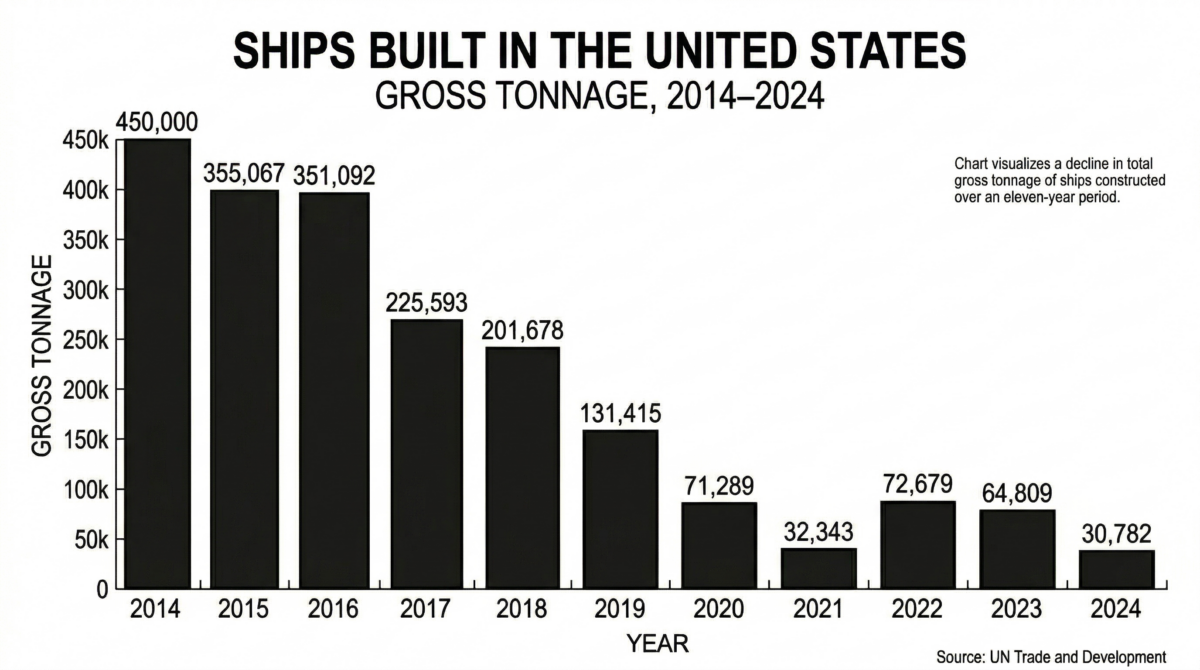
The Jones Act, originally passed in 1920 to bolster domestic shipbuilding, has failed its original mission. Today, fewer than 1 percent of the world’s ships are made in the United States. Instead of protecting a thriving industry, the law is nothing more than zombie regulation that limits travel flexibility and drives up costs for everyday citizens.
Similarly, there’s no evidence that the Passenger Vessel Services Act is making cruising better or more affordable for American travelers. Instead, it leads to tortured itineraries to foreign ports like Nassau or to cruises where passengers can’t even get off the ship in port.
The benefits of permanent suspension
A permanent end to these restrictions would transform the American travel experience. Travelers facing medical emergencies or family tragedies would no longer be forced to pay thousands in penalties or be held captive on ships because they need to change their arrival or departure port.
A suspension of Jones Act restrictions could also lead to a surge in domestic routes. Lifting the foreign port stop requirement would allow for more direct coastal cruises and short-haul travel between American cities, a market currently choked by 140 years of regulation.
Repealing the Jones Act—the one limiting cargo—would save U.S. consumers nearly $769 million per year on petroleum alone, according to a 2023 academic study. These savings would ripple through the economy, potentially lowering the fuel costs that drive up plane tickets and cruise fares.
But mostly, repealing these two outdated laws is the right thing to do. Americans’ ability to move between their own country’s ports should not be an indulgence granted only during international conflicts or natural disasters. And cargo having to travel extra miles for no good reason just wastes time and energy.
These laws have outlived their usefulness. To protect travelers from bureaucratic traps and to modernize the American economy, this suspension must be extended to passengers—and it should stay in place forever.
Your voice matters
Richard Karwic got a $300 fine for leaving his cruise early to check on his mother-in-law. Federal shipping laws ban foreign-flagged ships from moving passengers between U.S. ports without visiting a foreign port first. Travelers have paid up to $1,882 to leave ships early for illness or funerals.
- Should passengers be fined for leaving cruise ships early due to medical emergencies or family deaths?
- Should the Jones Act and Passenger Vessel Services Act be permanently repealed instead of just suspended during crises?
- Should cruise lines be allowed to waive passenger penalties when circumstances are beyond travelers’ control?
What you’re saying
Readers debated Congress versus executive orders, questioned how the law helps domestic shipbuilding, and warned about slippery slopes if foreign vessels operate U.S. routes.
-
Congress should repeal, not executive orders
GradUT said repeal needs Congress, not another executive order, though he doesn’t see the do-nothing Congress addressing this. sister7 said bigger fish to fry, but family emergencies should be exempt. Tim supports repeal but said executive order will have to do until Congress acts.
-
How does this help shipbuilding?
Tim asked how the Jones Act helps shipbuilding when passengers get fined regardless of where ships were built. George Schulman explained foreign-flagged ships between U.S. ports must stop at distant foreign ports. Scrapping tax treaties and enforcing labor laws would increase cruise costs since staff works seven days a week.
-
Slippery slope warnings
SeasideCali warned about slippery slopes. Will foreign vessels on the Mississippi follow U.S. labor laws? Who operates Puget Sound ferries? What about letting Lufthansa or RyanAir take over domestic routes? Joe X said foreign airline competition would be great.

Have a question about this story? Tell us what happened — we read every comment.
Join the conversation