in this case
- A traveler cancels his Carnival cruise and gets hit with a surprise $500 fee for a “nonrefundable promotion rate.”
- The travel agent and cruise line point fingers, refusing to explain or refund the undisclosed charge.
- Find out why clear disclosure is required and how to break the “blame loop” when companies hide behind fine print.
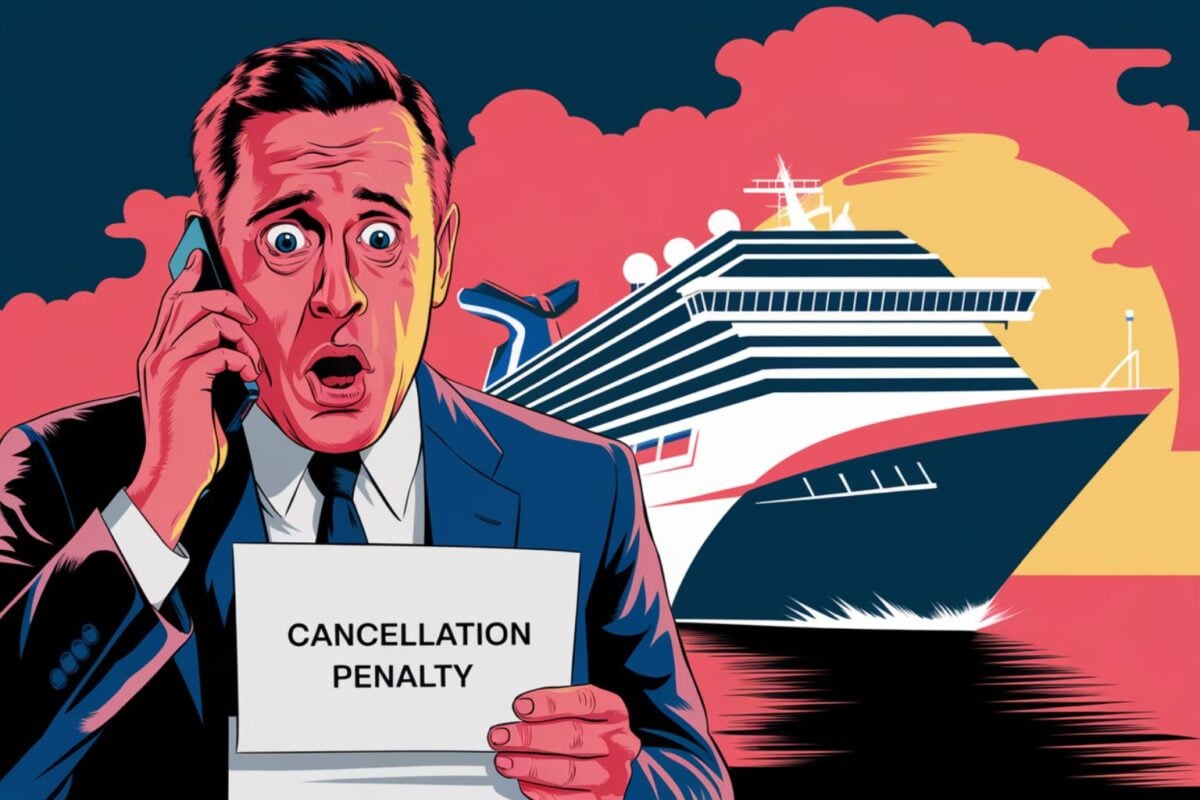
When Cory Belkov cancels his Carnival cruise, he gets a refund — minus a $500 cancellation fee. It’s the first he’s heard of the fee. Does he have to pay?
Question
I booked a Carnival cruise through American Airlines Cruises travel agency in February for a July sailing. I paid $3,738 upfront, plus $342 for trip insurance.
When we canceled in mid-March, the travel agent said Carnival would refund $3,300 but withhold a $500 penalty for a “nonrefundable promotion rate.”
Nobody mentioned this fee when we booked! The travel agent told us to take it up with Carnival, and Carnival told us to contact the agent. The insurance company also refused to cover the $500.
When I asked Carnival to explain the “promotion rate,” they redirected me to the agent, who claimed they couldn’t access fare details. I’m stuck in a loop. How can I get my $500 back? — Cory Belkov, Virginia Beach, Va.
Your voice matters
Cory Belkov got hit with a surprise $500 cancellation fee. The travel agent blamed Carnival, and Carnival blamed the agent. This “blame loop” is a classic consumer problem. We want to hear your thoughts.
- Who do you think is really responsible for disclosing cancellation fees: the travel agent or the cruise line?
- Have you ever been charged a surprise fee (“nonrefundable rate,” “promo term”) you didn’t know about when booking travel?
- What’s your best tactic for breaking a customer service “blame loop” between two companies?
Answer
Carnival and your travel agent had a duty to clearly disclose cancellation terms before you booked. Federal Trade Commission rules prohibit unfair or deceptive practices, including burying fees in fine print. If your rate was nonrefundable, that should have been prominently stated in your confirmation — not revealed retroactively.
Carnival’s “Super Saver” fares often carry strict terms, and consumers deserve to know exactly what they’re trading for a discount. The terms aren’t exactly spelled out on Carnival’s website. It only says, “A nonrefundable and nontransferable deposit is required at the time of booking,” but it doesn’t say how much. Your travel agent, American Airlines Cruises, should have disclosed that to you.
Agencies have a legal obligation under state consumer protection laws (like Virginia’s Consumer Protection Act) to accurately explain booking terms. Passing you between Carnival and the agent is a breach of that duty.
Your travel advisor should have also acted as your advocate when you raised questions about Carnival’s $500 fee. Based on the correspondence you showed me of the back-and-forth between you and the agent, it appears that didn’t happen.
I notice that most of your communication between you, your agent and the cruise line happened by phone. Certainly, a phone call can be helpful if you need immediate action to resolve something — like a cancellation or rebooking. But when it comes to a refund request, you need something in writing.
Of course they got the runaround! The whole system is designed to wear down regular customers. These giant travel corporations and their middlemen count on you giving up. They have all the power and all the lawyers, while this family is just trying to get their $500 back. It’s a relief Chris stepped in to balance the scales.
Read more insightful reader feedback. See all comments.
There’s an important lesson for all of us here. Always scrutinize the terms of your purchase before booking. The confirmation you received did not mention a $500 cancellation fee. When frontline reps stonewall you, contact an executive. I publish Carnival’s leadership contacts on my consumer advocacy site, Elliott.org. That’s sometimes enough to break the logjam.
Fortunately, Carnival’s ticket contract suggests cancellation penalties must be outlined at the time of booking. If yours wasn’t, you’ve got some leverage.
Companies love blaming each other, but consumers shouldn’t pay for their chaos. I contacted American Airlines Cruises on your behalf. The company refunded the $500 as a “goodwill gesture.”
Fight hidden travel fees
Your guide to avoiding surprise charges & the blame game
Before you book: scrutinize everything
During the dispute: create a paper trail
When you’re stuck: escalate & break the loop
Executive Contacts
Stuck in a loop with Carnival Cruise Line? Take your complaint straight to the top. Here are the executives who can help you navigate your issue.

What you’re saying
The “blame loop” between the agent and cruise line is a familiar, frustrating tactic. While many (including travel professionals) hold the agent responsible for failing to disclose the fee, the top comment argues the system is designed to wear consumers down.
-
The agent’s duty to disclose
Many commenters, including professional travel agent Donna Gyland, state the fault lies with the agency. Donna says she “always notify my clients, in writing,” about nonrefundable rates. GradUT agrees, noting their agent records a verbal acknowledgment, and argues the agent “is the party at fault.”
-
It’s a system designed to wear you down
Top commenter Blues Traveler argues the system is “designed to wear down regular customers” who lack the power to fight back. The Brown Crusader calls it the “blame loop,” where neither company takes responsibility. Jennifer calls it “gotcha marketing in disguise.”
-
Personal responsibility vs. corporate tricks
737MAXPilot offers a counter-argument: “Maybe read the contract you sign next time.” Alan Gore fires back, arguing that charging a fee on a resold cabin is “double dipping.” Meanwhile, OnePersonOrAnother wonders if the fee was real or just the agent “trying to keep their commission.”


Have a question about this story? Tell us what happened — we read every comment.
Join the conversation