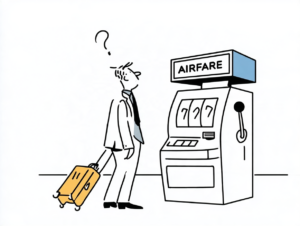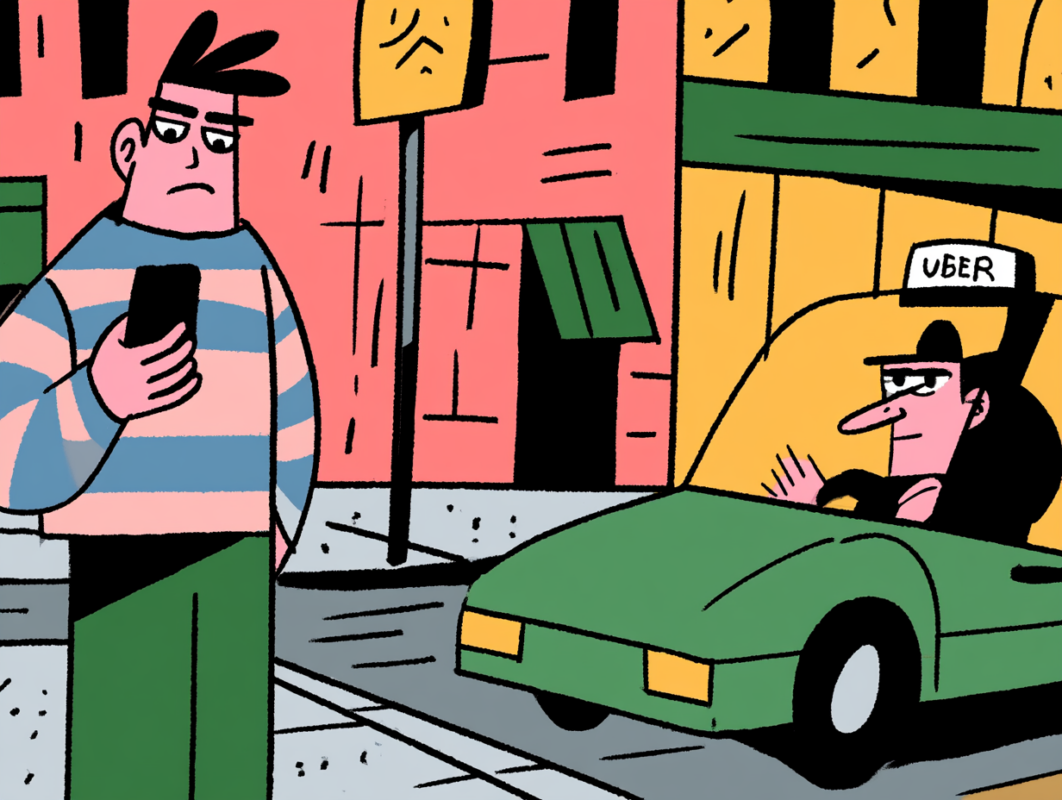
What if a grocery store charges you more for milk because it knows how many kids you have in your house? Or a ride app quotes you a higher fare because you haven’t installed a competitor’s app on your phone?
Those aren’t random “what ifs.” They’re scenarios the Federal Trade Commission (FTC) published as examples of pricing that would raise legal concerns under the law. It’s an uncharacteristically pro-consumer position from an agency that seems to go out of its way to protect the interests of businesses.
A few months ago, I argued that banning surveillance pricing like this, as some states have done, was the wrong move. Requiring disclosure of surveillance pricing was the answer. Make them show their work.
Several readers wrote to say this consumer advocate had gone soft. So it was a little surreal when the FTC agreed with me last week.
One day, in my fictional future, the price will be the price. No fees, no personalization, no ups, no extras, no credit card surcharges, no nothing, nada. And all illness will be cured, and politicians will speak the truth, and pigs will fly.
What the agency wants
The government has proposed a rule that businesses would have to clearly disclose when a price is personalized. Merchants would also have to show the basis for it and the types of data behind it.
FTC Chairman Andrew Ferguson said shoppers expect everyone to see the same price.
Last year, a rule on unfair or deceptive fees took effect that bars hiding the total price for live-event tickets and short-term lodging. It was a partial victory for consumers. The original proposal would have covered restaurants, food delivery services and car rental companies, until the FTC narrowed it.
So a hotel has to show you the all-in number for your room, including those annoying mandatory resort fees. The car rental counter in that hotel’s garage doesn’t.
Sure, there have been other small advances. StubHub agreed to refund $10 million over deceptive ticket pricing in an FTC action announced earlier this year. But it’s not nearly enough.
Every day, readers complain to me that they feel duped by dishonest prices that didn’t include an undisclosed fee or surcharge. This business-friendly administration has been dragging its feet on protecting consumers, but now it appears to have finally drawn a line in the sand.
Why disclosure could work
The FTC says Congress hasn’t given it the authority to prohibit personalized pricing. Disclosure is the next best thing.
So let’s talk about disclosure.
The Supreme Court said in 1965 that falsely claiming an item usually sells for an inflated price is deceptive, and the FTC cited that case in a footnote of its personalized pricing statement.
When a company has to put in writing that it charged you more because your personal data suggested you’d pay it, that sentence becomes evidence not just in the court of public opinion, but potentially in an actual court. A state attorney general can subpoena it and a plaintiff’s lawyer can quote it to a jury.
Companies don’t change their ways because shoppers squint at fine print. They reform because someone made them write down the sentence, and then it went viral on social media. Oops.
The FTC filed both problems in the same drawer. Its statement opens by saying the agency wants the price you see to be the price you pay, with no surprises or hidden charges. Then it lists the cases that got it here. They’re hidden fee cases, like that StubHub settlement. Surveillance pricing isn’t among them.
The agency even quotes a 1950 appeals court decision on why a partial disclosure doesn’t count. Telling less than the whole truth, the court said, is a well-known method of deception. The FTC wrote that down, then proposed a rule that covers one kind of omission.
What an honest price looks like
When you go grocery shopping in Paris or Berlin, the number on the shelf is the total amount you pay.
European law defines the selling price as the final price for the product, including VAT and all other taxes. Europe even requires that if you announce a price cut, you have to state the prior price, and the prior price means the lowest price the seller charged in the 30 days before the reduction. No invented “was” number.
Australia does the same thing. Its competition regulator requires retailers to display the total price as a single figure, meaning the lowest amount a customer could pay, including taxes, duties and any unavoidable or preselected fee.
That’s the standard we deserve in the United States. One price. No base fares, no pre-tax subtotals, and definitely no drip pricing that hides the real number until checkout.
We’re not getting it this year. The FTC says Congress hasn’t given it that power. What we have instead is a weakened commission arguing that companies should at least have to explain themselves.
An agency constrained like this—yet still demanding price transparency—is still better than the complete lack of oversight we had a month ago.
Say something
Comments go to the FTC website and the deadline is September 18. Mine will say the same thing this column says: Disclosing a personalized price is a good start, but we shouldn’t stop there.
Until then, when a price appears on your screen, consider it a work of fiction. Ask yourself: Is this everything? If the answer is no, walk away. That’s the fastest way to improve the rules of these ridiculous pricing games.

Have a question about this story? Tell us what happened — we read every comment.
Join the conversation