If you’re in Topeka, Kan., next year, you can tour the state capitol, spend an afternoon at the Brown v. Board of Education National Historical Park or catch a concert at Evergy Plaza.
Oh, and you’ll pay more for your hotel room. On January 1, the city’s transient guest tax rises from 7% to 8.5%. The City Council approved the increase unanimously in May. The money will help fund Visit Topeka, which promotes tourism to the area, as well as Evergy Plaza, the Jayhawk Theatre, Constitution Hall and a planned downtown ice rink. But you wouldn’t know it by looking at your hotel bill, where taxes are added as a “P.S.” and without much explanation.
The hotel industry generated $85.1 billion in local, state and federal taxes in 2025, up $1.7 billion from the previous year, according to the American Hotel & Lodging Association.
A single line marked “taxes” makes it too easy for cities to keep raising them. Every hotel bill should come with a standard label, like the Nutrition Facts panel on a box of cereal. I call it Room Facts.
Hotel taxes are out of control
Topeka Deputy Mayor Michelle Hoeferer has pointed out that the tax isn’t collected from Topeka residents “unless they stay in a hotel.” In other words, the people paying it don’t get a vote.
The city has plenty of company. Eagle County, Colo., doubled its lodging tax from 2% to 4% this year. Hawaii raised its transient accommodations tax to 11% too, calling it the nation’s first climate impact fee. Tulsa voters will decide Nov. 3 whether to nearly double their city’s hotel guest tax, from 5% to 9.9%.
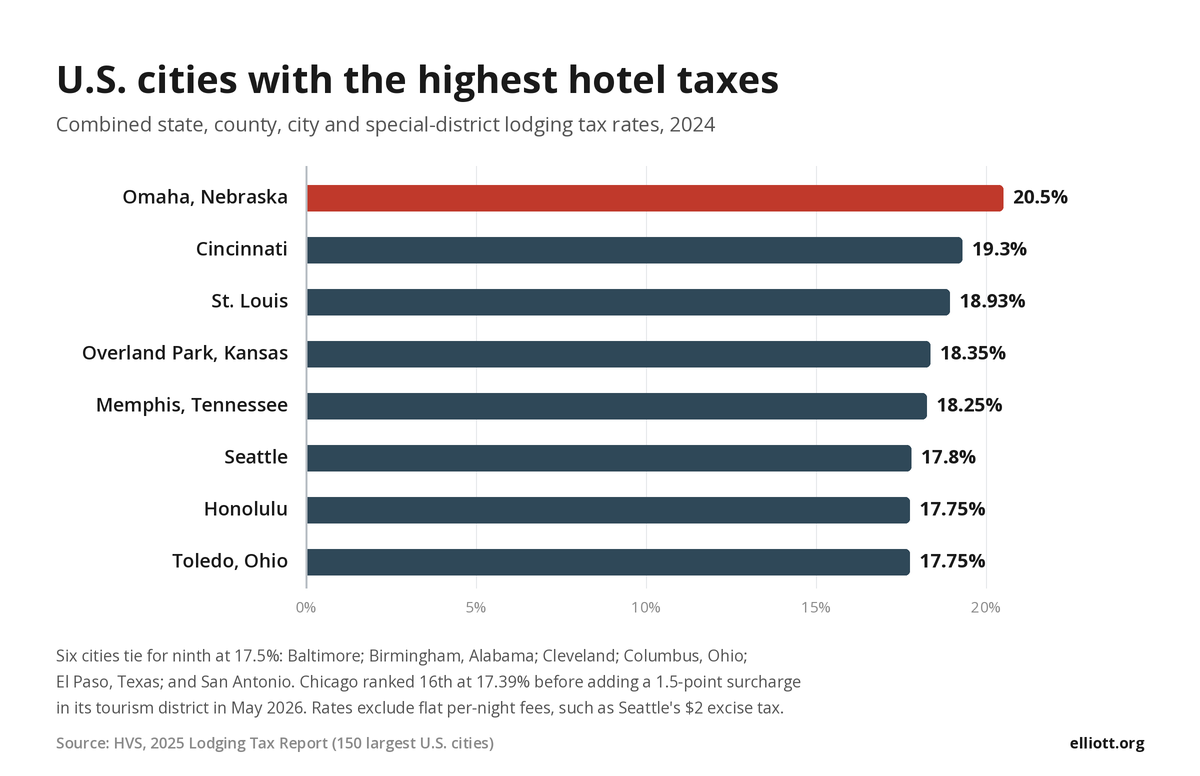
And then there’s Omaha, Nebraska, where the combined lodging tax can reach 20.5%, the highest among the nation’s 150 largest cities.
The world is doing it, too
Vienna raised its lodging tax from 3.2% to 5% on July 1 and plans to go to 8% in July 2027. It also got rid of an 11% deduction hotels used to take before calculating the tax, so guests now pay a higher rate on a bigger number.
In March, Kyoto raised its per-person tax on rooms costing 100,000 yen (about $670) or more from 1,000 yen (about $6.70) to 10,000 yen (about $67). Edinburgh began collecting a 5% visitor levy this year, the first citywide levy in the U.K.
It’s not unfair to ask visitors to chip in. After all, tourists ride the buses, walk the sidewalks and call the police when someone swipes their luggage.
Covering the cost of a theater or ice rink is more questionable. The trouble is that almost nobody knows they’re funding a community’s entertainment when they stay in a hotel. It’s not disclosed in a meaningful way.
You can’t haggle with the tax man
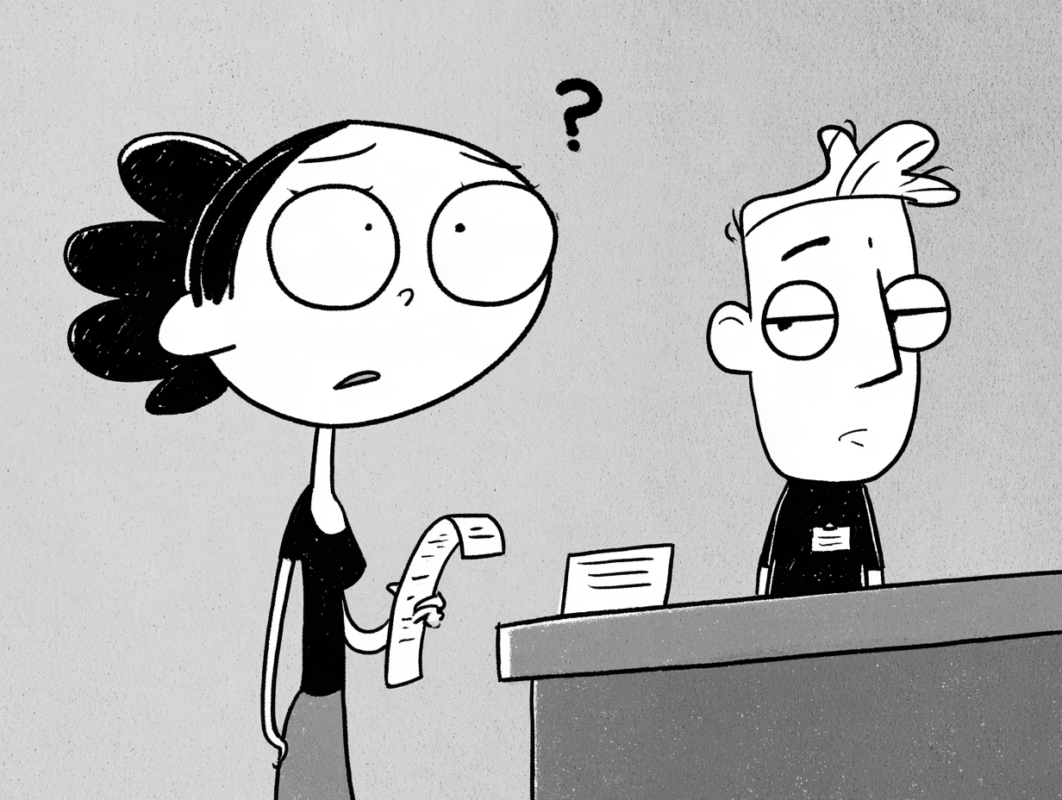
You can try to negotiate a room rate. You can skip the minibar, and maybe talk your way out of a resort fee or destination fee. But you can’t negotiate a tax. It’s the one charge on your bill you have no say over. Worse, no one has to explain it to you. (Not only that, but even if the front desk clerks wanted to explain it, they probably have no idea what the tax is for.)
The Federal Trade Commission’s rule on unfair or deceptive fees took effect in 2025. It requires hotels to advertise a total price that includes mandatory fees, which was a long-overdue win for travelers.
But the rule also lets businesses leave “government charges” out of that total. So the price you see online may still exclude taxes. And when you check out, your bill often lumps them into a vague, single line.
We need Room Facts
Here’s a fix that comes straight from the grocery store aisle. Congress passed the Nutrition Labeling and Education Act in 1990, and the familiar black-and-white Nutrition Facts panel followed a few years later.
When regulators added trans fat to the label in 2006, manufacturers started reformulating their products. The Centers for Disease Control and Prevention later found that trans fat levels in the blood of white adults fell 58% between 2000 and 2009. The label helped change how people shopped, and it changed what companies were willing to sell them.
Room Facts would work the same way. It’s a standard box on every hotel bill. It lists each tax, its rate, the dollar amount, who collects it and what it pays for.
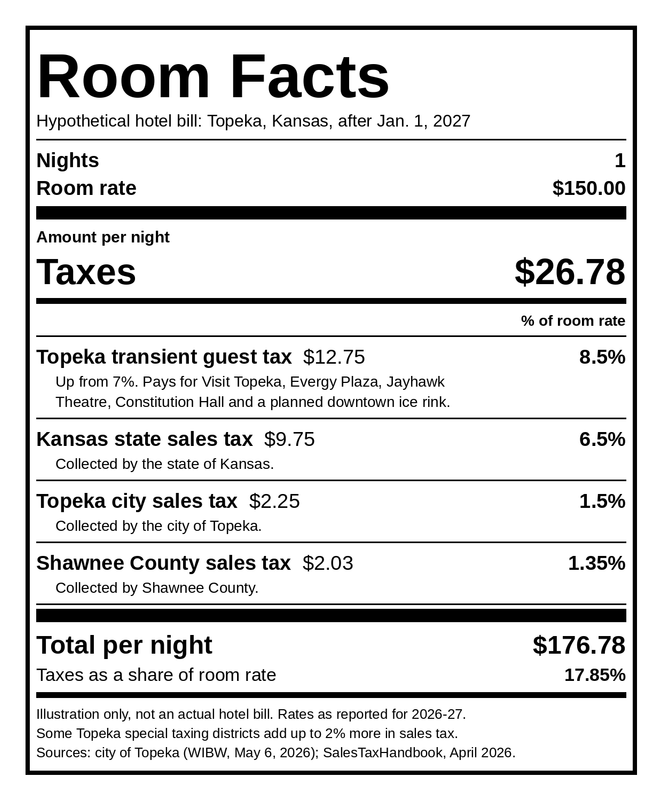
Here’s how one might look for a hypothetical $150 room in Topeka next year. Once you add Topeka’s new guest tax to the usual state, county and city sales taxes, that room carries $26.78 in taxes a night. That’s almost 18% on top of the rate. You’d never know it from a single line that says “taxes.”
Why the label pays off
Knowing what you’re paying won’t lower your bill, but it could change where you stay on your next vacation. If your label showed that a big share of your taxes went to convention marketing, you might book a hotel outside town next time. You might even email the mayor.
City halls would notice. Lodging taxes are politically easy because visitors don’t vote. They do, however, spend money, write reviews and tell their friends. A traveler who can see the whole stack of taxes can complain about it, compare it with the next town or decide not to come back. That kind of feedback is the only brake the system has.
Room Facts would cost next to nothing. Hotels already calculate every one of these taxes, so printing them in a standard box is a formatting job, not a new burden. Any hotel that objects to showing guests where their money goes should have to explain why.
In the meantime, Topeka, you’ve got a new ice rink coming.

Have a question about this story? Tell us what happened — we read every comment.
Join the conversation