All this talk about pacing the frontier of artificial intelligence overlooks a reality that travelers experience every day.
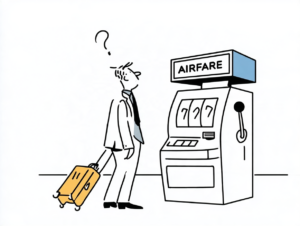
An algorithm already determines your airfare. Another sets the hotel’s rate. And another answers your complaint with a non-answer, hoping you’ll give up.
AI arrived in the travel industry years ago, and consumers are paying higher prices and enduring worse customer service because of it. Why isn’t anyone pacing that frontier?
AI became a topic of conversation last week when Dario Amodei, who runs Anthropic, said the race is moving too fast, and the companies running it ought to agree to ease off — to “pace the frontier,” in his words. Sam Altman at OpenAI said he agreed. So did Elon Musk. When three men who spend their waking hours trying to out-build each other all suggest tapping the brakes, it’s worth a look.
Here’s the problem with this conversation: It’s the wrong conversation.
We should be talking about how AI is already making our lives worse. Case in point: the travel industry.
The chatbot defense
Airline AI shenanigans go back at least four years. When Jake Moffatt’s grandmother died in 2022, Air Canada’s chatbot told him to book right away and claim the bereavement discount later. That wasn’t true. The airline’s real policy, posted on another page of its own website, says the discount can’t be claimed once you’ve flown, and it refused him the refund. When Moffatt took his case to British Columbia’s Civil Resolution Tribunal, Air Canada’s defense was that the chatbot is, as the tribunal put it, “a separate legal entity that is responsible for its own actions.”
That’s right, an airline filed a legal document blaming its own AI.
The tribunal wasn’t buying it and awarded Moffatt about $575. The decision remains the closest thing the traveling public has to a rule about AI mistakes, and it came from a small-claims body in a Canadian province. The Federal Trade Commission says there’s no AI exemption from the laws on the books, which is true, but also leaves every traveler to prove it one $575 case at a time.
Call it the chatbot defense: A company keeps the savings from automating and hands you the risk. You’ll hear it again.
A fare set for an audience of one
Last year, senators demanded answers from Delta Air Lines about reports it planned to price seats using AI. Delta claims it doesn’t use personal information to set individual fares and won’t start.
But the senators wrote that letter because the technology works. Someone will eventually use it. New York already requires sellers that use personalized algorithmic pricing to say so on screen, in capital letters: THIS PRICE WAS SET BY AN ALGORITHM USING YOUR PERSONAL DATA. The law took effect last November and survived a retail industry challenge in federal court. Roughly two dozen states have introduced something similar this year.
There’s a catch. Federal law bars states from regulating what airlines charge. No court has tested whether these disclosure laws apply to your airfare. The industry that invented dynamic pricing may turn out to be the one industry these disclosure rules can’t touch.
When the software is the conspiracy
In July, the Third Circuit revived a lawsuit against Atlantic City casino hotels. Guests alleged the hotels fed current, nonpublic room rates and occupancy figures into Cendyn’s Rainmaker pricing platform, then accepted its recommendations about 90 percent of the time. Between 2017 and 2019, room rates climbed $15 to $60, occupancy dropped 8% and revenue rose 22%.
The court didn’t find the hotels guilty of anything; it ruled only that the guests get to make their case. And it made a point worth carrying into every other corner of travel: You don’t need a smoke-filled room when everybody’s feeding the same machine.
Who gets the last seat to Denver?
Here’s the one nobody’s writing about: When a hub melts down, software decides the rebooking order, also known as a reseating algorithm. It takes into account elite status, fare class, connection value, and probably your lifetime spend. The airline calls it optimization. It’s an unappealable ranking of human beings by profitability, and you will never see where you stood in line.
I’m not asking anyone to turn it off. Sorting a rebooking queue by something is better than sorting it by nothing. But shouldn’t the airline tell us where we are in that line? Disclosure alone would improve behavior, because a few of those factors would look ugly on a viral social media post.
What’s the fix to the travel industry’s AI madness?
The fix? Make the bot’s promise binding, the way that Canadian tribunal did, so no U.S. carrier gets to try the chatbot defense here. Give travelers a right to see the base along with the “just for you” fare set by an algorithm. And the next time when there’s a delay, let passengers know where they’re standing in line instead of making them guess.
In travel, AI isn’t going to end the world. But it sure isn’t making our world any better.
Amodei is right to worry about rogue software taking over the internet. But back here in coach, our ambitions run smaller. We’d settle for an airline willing to take responsibility for its own AI.

Have a question about this story? Tell us what happened — we read every comment.
Join the conversation