I remember F-Bomb Girl. How could I ever forget her?
She claimed she’d suffered an injury on a shopping trip. No one from the grocery store chain would respond to her complaint.
When our advocacy team shared the company’s contact information and offered to walk her through the complaint process, she replied: “F**K YOU USELESS PIECES OF S**T!!!!”
We usually won’t go near a case with gratuitous profanity and writing in uppercase, which is yelling online. So her case went directly into our F-Files.
There are seven phrases that all but guarantee your case will fail. Dropping F-bombs is just one of them. I’ll get back to F-Bomb Girl’s case in a moment. But first, let’s have a look at the other phrases that will doom your case. I’m featuring five of them in this story. The other two are in this week’s podcast.
WARNING: This episode contains material that may not be suitable to a younger audience. Listener discretion is advised.
(Also, we’ll have your comments from our last podcast at the end.)
Our advocates read every request that arrives through the help form. Most are fixable. But a discouraging number show up pre-broken, sabotaged by the person who wrote them, usually in the first paragraph, and usually with a single word.
“I’ll Sue”
The instant you threaten litigation, the people who could help you go silent, Your file goes directly to the legal department — and lawyers don’t issue goodwill refunds.
A customer service supervisor can bend a rule, waive a fee, or hand you a credit. In-house counsel doesn’t play that game. The safest response to a threatened lawsuit is no response at all.
There’s a second problem. You probably can’t sue. Most consumer contracts contain an arbitration clause paired with a class-action waiver, and federal courts enforce those under the Federal Arbitration Act. (The Supreme Court settled the question in AT&T Mobility v. Concepcion in 2011.)
What’s left? Small claims court. If you have a real case and can afford the filing fee, that’s your venue. But making threats won’t help your case. File the paperwork, mail the notice, and let the summons do the talking.
I know that some high schools are now offering courses in financial literacy, and I’d love to see them all doing it. The curriculum of these courses should include “How to Write a Successful Complaint Letter” using the tips Chris mentions here.
And this could even be incorporated into a high school English class utilizing what has been taught about how to write an argument by backing it up with well-written examples as well as proper grammar and punctuation.
“F**k you”
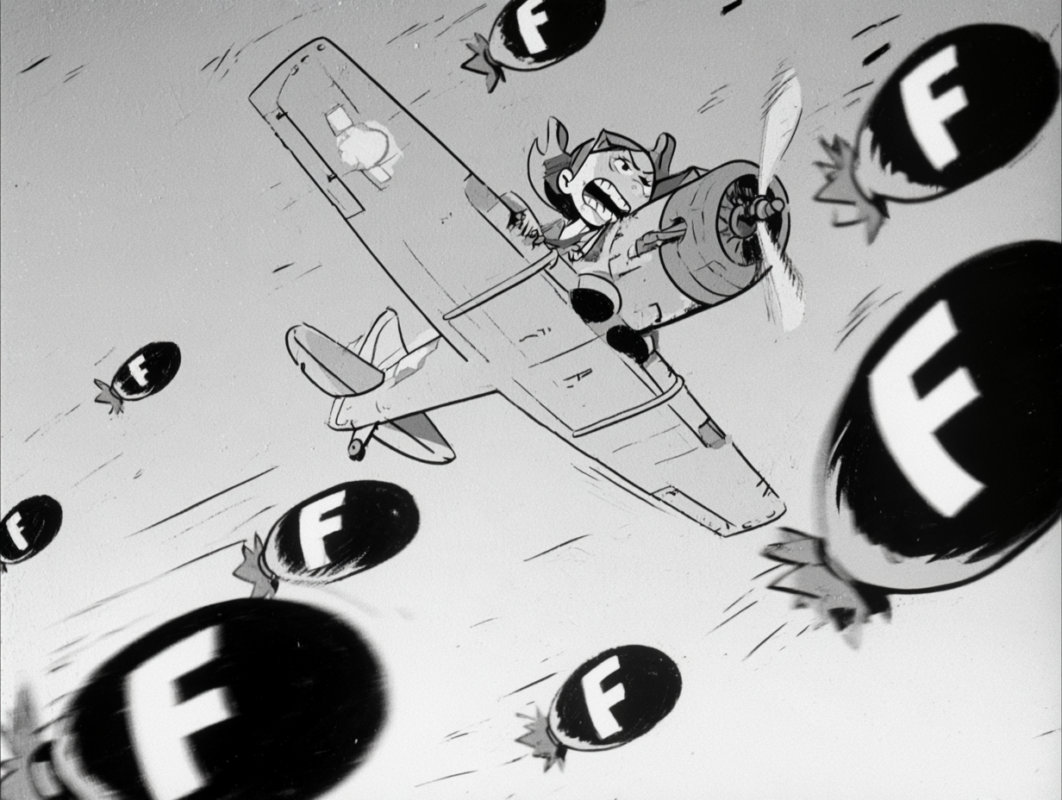
You’d be amazed how many complaints arrive with the F-bomb in them, or perhaps I should say bombs. They just keep dropping ’em like it’s World War III. A recent submission about undelivered packages used it in nearly every sentence, including the field where we ask what resolution the reader wants.
I understand the impulse. What I don’t think people understand is the paper trail they’re building. Profanity can trip a spam filter and keep your email from arriving at all. What does arrive goes into your customer record, and everyone who touches your case afterward reads it before deciding how hard to work for you. The agent you cursed at isn’t the person who approves your refund. The person who approves your refund gets a summary, and your profanity will be in it.
The people on the other end of that email are already having a rough time. Perceptyx, a technology company, surveyed 21,000 front-line employees in early 2025 and found that 53% had recently dealt with customers who were verbally abusive, threatening or unruly. Axonify, a workplace training company, polled 500 U.S. retail, hospitality and food service workers and found that 72% encounter incivility daily or weekly. Rude people get tuned out.
There’s also a contractual risk that readers rarely see coming. American Airlines rewrote its conditions of carriage in 2021 to require that passengers behave appropriately and respectfully toward other passengers, crew and any American team member. The previous version covered airport employees only. Violate the rules and you could get banned from flying on the airline.
So what happened to our F-Bomb Girl? She kept sending brief, profanity-laced messages until we blocked her. We still don’t know what her injury was. I’d hate to guess.
“Never again”
We see it weekly, sometimes in capital letters: “I will never fly your airline again.” It’s the most self-defeating sentence in consumer advocacy.
When an agent decides whether to refund your $340 — particularly as a “goodwill” gesture — the calculation involves what your future business is worth. Tell the company you have no future business, and you’ve answered the one question the agent was weighing.
One reader told us Frontier Airlines had wrecked a once-in-a-lifetime trip by bumping her daughter. She demanded cash instead of a credit because she’d “never fly Frontier again.” (Details are in the podcast.) She was owed the cash anyway, which she’d have discovered if she’d looked up the rule instead of writing the letter. (Details on this case in the podcast.)
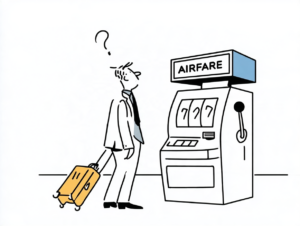
Which brings up the better approach. Stop asking for kindness and start asking for compliance. If an airline cancels your flight or changes it significantly and you decline both the rebooking and the voucher, it owes you a cash refund to your original form of payment under the Transportation Department rule that took effect in 2024. A “significant” change means arriving three or more hours late domestically, six internationally. If you’re involuntarily bumped from an oversold domestic flight, federal regulations entitle you to 200% of your one-way fare, capped at $1,075, or 400%, capped at $2,150, depending on how late the airline gets you there. It has to pay by cash or check the day it happens. And that’s true whether you intend to fly on the airline again or not.
“Pain and suffering”
This is a tort phrase wandering around inside a contract dispute. It doesn’t belong there. One reader asked for $5,000 after her flight to Tel Aviv was canceled. What she was owed was the fare.
The law here is settled and unkind. In Eastern Airlines Inc. v. Floyd, the Supreme Court held in 1991 that passengers on international flights can’t recover for purely mental injuries unaccompanied by physical injury, and courts have applied that logic ever since. Domestically, federal rules cover your ticket and your fees. They do not cover your ruined week, your missed wedding, or your sleepless night in an airport chair. The United States has no equivalent of EU 261, the European delay-compensation rule. But even the EU doesn’t have a clause for pain-and-suffering compensation.
By the way, attorneys do this too, and they should know better. Every so often a reader tries to bill and then bully an airline for the hours spent on the complaint. That invoice goes into the shredder.
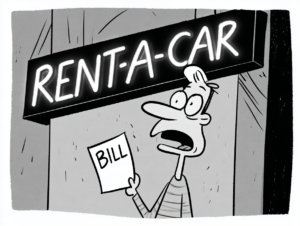
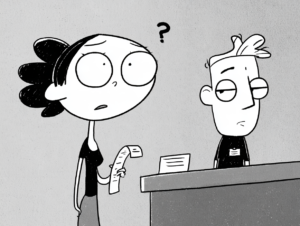
Here’s what you can collect: documented out-of-pocket costs. The hotel you had to book, the rental car you had to extend, the meal you had to buy. Attach the receipts, total them at the bottom, and ask for that number. A specific, provable figure might get paid.
“This is illegal”
Readers reach for this word when they’re furious and running out of vocabulary. It costs you the case twice over. You’ve made a legal accusation you can’t support, which routes your file straight to the lawyers. And you’ve told the company you don’t know what your own contract says, because most of what enrages travelers is perfectly lawful.
Overbooking is legal. A nonrefundable ticket is legal. Change fees are legal — whether you read the contract before you booked or not.
It’s better to read the contract and use it as leverage against a company that’s done you wrong. Cruise lines have a ticket contract, rental car companies have a rental agreement, and hotels answer to state lodging law. All of it is published, and companies move faster when you catch them breaking their own rules than when you accuse them of breaking the government’s.
And when a law does apply, name it. A sentence containing “14 CFR 250.5” reads very differently from one containing “THIS IS COMPLETELY ILLEGAL!!!!” One of them is far likelier to get escalated. The other gets a form letter about how much the company values you.
The two words I left out
There are seven phrases on our list, and the last two aren’t in this article. Neither one contains a syllable you’d need to censor, but both can sink a case. One of them is a refusal dressed up as a personality trait. The other is a single adjective that tells us, usually by accident, that we’re the wrong people to call.
Both are on this week’s episode of the Elliott Confidential podcast, along with your enlightening comments from the last podcast.
In the meantime, the letter that works is short and specific about both what went wrong and what you want. It contains no adjectives you’d be embarrassed to read aloud and no estimate of the value of your suffering. Write that email, attach the receipts, and you may not need us at all.

Have a question about this story? Tell us what happened — we read every comment.
Join the conversation