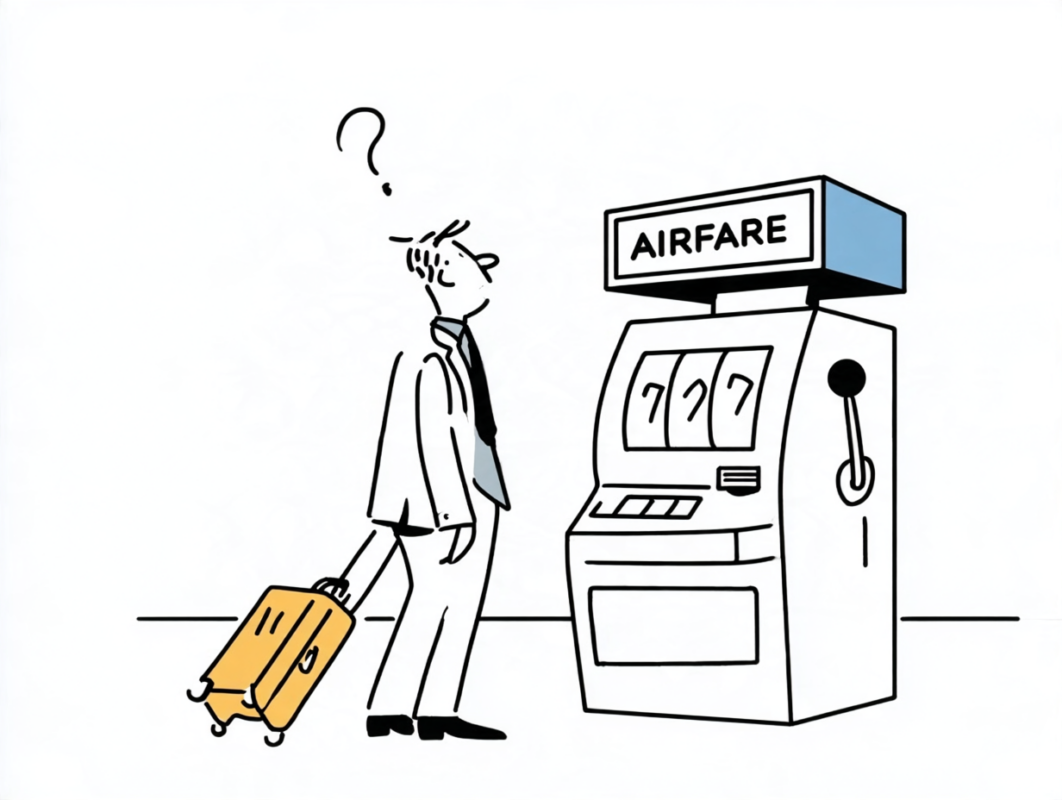
The difference between the airfare you see and the airfare you pay has become the most dependable — and maddening — feature of American air travel.
You know the routine. A cheap price catches your eye, you click, and the boxes start popping up. There’s an extra $40 for your checked bag, another $25 for a seat assignment.
The average airline passenger last year paid a base fare of $166 and then handed over another $21 for extras, a 13% increase. As a share of the fare, those extras have more than doubled in the last decade.
In the case of many carriers, this is a feature, not a bug. Ancillary fees, the industry’s euphemistic term for everything that isn’t the fare, accounted for 60% of Frontier Airlines’ revenue last year.
No surprise, then, that whenever anyone suggests showing the whole price up front, airlines find a creative excuse to decline. No, they say, it would confuse travelers and raise airfares for everyone.
Not so fast. Airbnb and the other vacation rental platforms tested that claim recently, and guess what? The airline claim is dead wrong. Even so, the Transportation Department is preparing to bet against the evidence.
These ticket pricing games have gone too far
The airline industry claims luggage is optional, so it doesn’t belong in the advertised fare. Come on. Who flies without at least a carry-on bag? And yet airlines are trying to monetize every aspect of your flight, including the carry-on bag with your laptop and medications.
The airline industry also argues that a seat assignment is a choice. It’s not. If you have a ticket, you get a seat. All the airlines have really done is make their passengers deeply insecure about their ticket status (“Wait, do I need to buy a seat assignment to get on the plane?”).
I used to choose Frontier over Southwest because I could fly cheap with just a personal bag and resented having to pay extra for every single SWA flight just so some people could always take two bags for free. I thought they were right to start charging for bags.
I do like to have a seat assignment but usually won’t pay extra for it. I love the Frontier model where each person pays only for what they want and are willing to pay for.
However, I rarely fly with them because they don’t have decent service to any of the places I want to go.
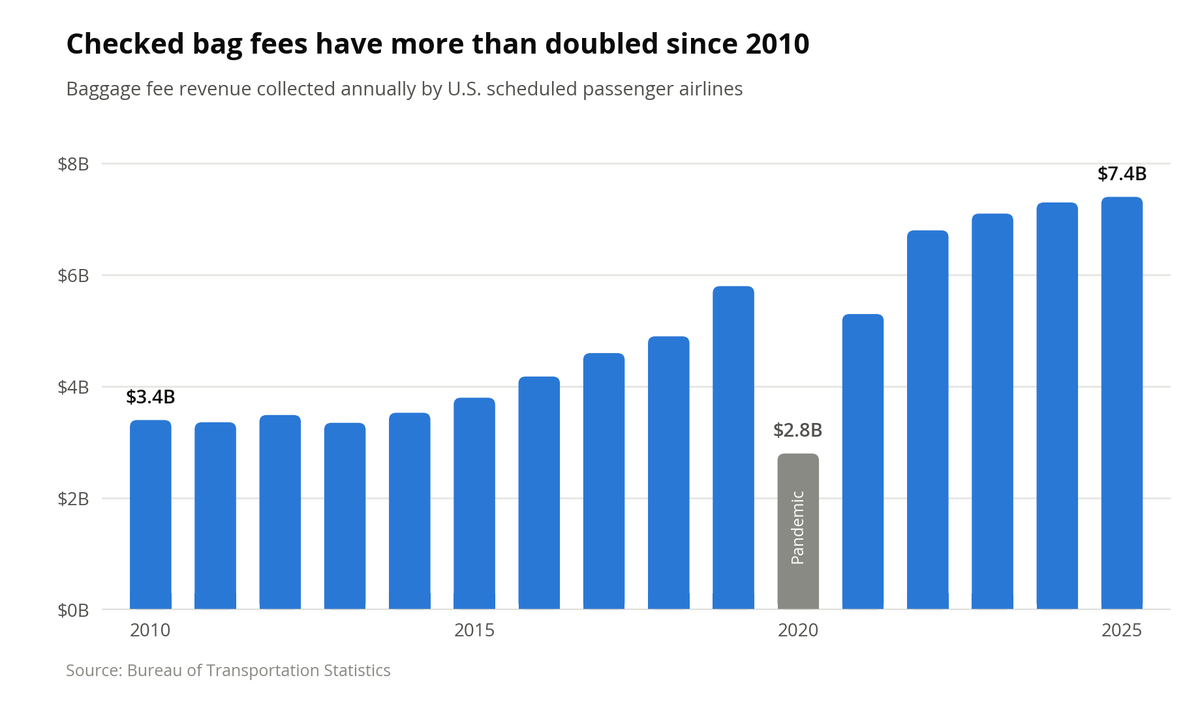
The money involved is not incidental. U.S. airlines collected $2.1 billion in checked bag fees in the second quarter of this year, the government reported September 15. Baggage fees have more than doubled since 2010, from $3.4 billion to $7.4 billion last year.
The Airbnb test
Airbnb switched to total-price display worldwide in April 2025, three weeks before the Federal Trade Commission’s new rule on unfair and deceptive fees took effect. The nightly rate, the cleaning fee and the service charge became one number in the search results. Vrbo and Booking.com did the same thing.
Then look what happened to the company that supposedly couldn’t survive showing you the real price. In the first quarter of this year, Airbnb’s revenue rose 18%, to $2.7 billion, and gross booking value rose 19%. In the second quarter, revenue hit $3.6 billion, up 17%, on $27.2 billion in bookings, with net income of $816 million. Management called it some of the company’s strongest results in years.
Did honest pricing do that? I’m a consumer advocate, not an economist, and the earnings report is largely silent on that question. But one thing I can say: It sure isn’t hurting. Guests didn’t scatter at the sight of a bigger number, and bookings didn’t stall. The company that used to bury a cleaning fee now leads with the total and keeps growing.
Let us uncheck the box, please
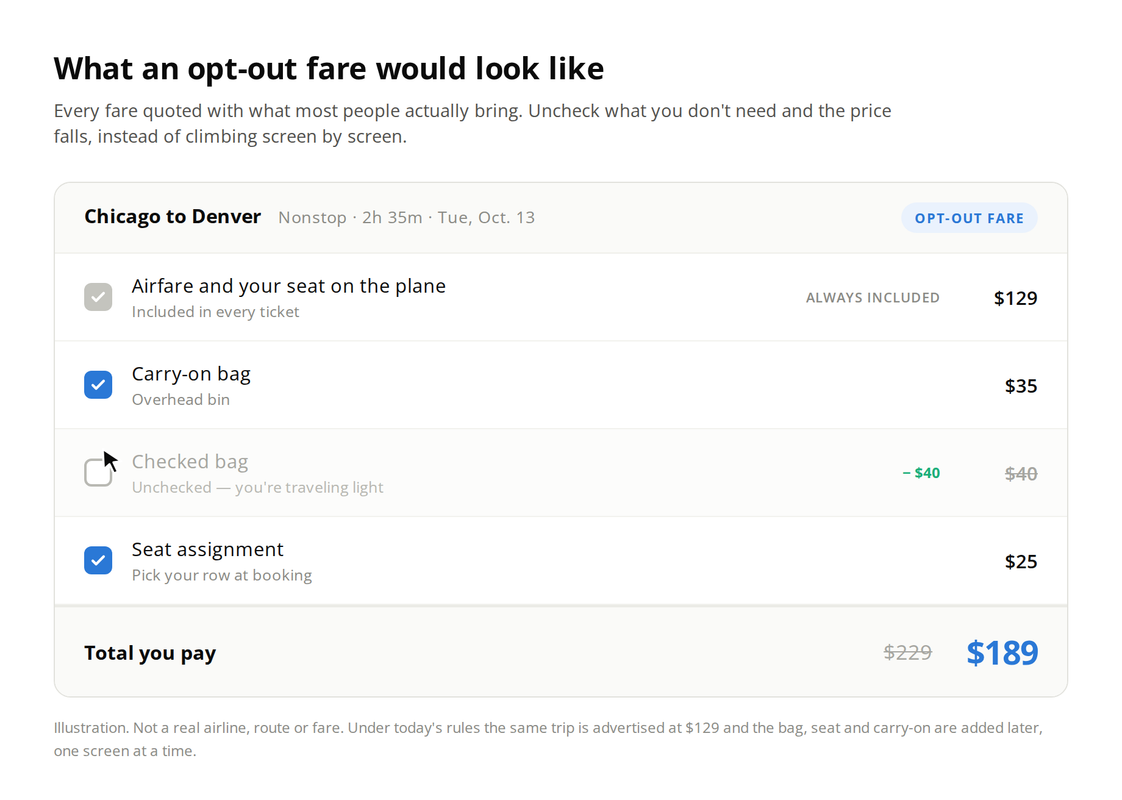
The fix isn’t complicated. Quote the fare with what people take on a plane: a carry-on, a checked bag, a seat assignment. Put a checkbox next to each one. Traveling light? Uncheck the box and watch the price fall. Don’t care where you sit? Uncheck the seat and save a few dollars more.
Opt-out savings instead of opt-in fees.
It’s fine to unbundle an airfare, but let us do the unbundling after showing us a realistic and bookable price. Stop hiding the total from customers by creating a fare almost nobody buys
What Washington should do
The European Union gave final clearance this summer to rules requiring airlines to display “air fares including allowance for a piece of hand baggage before the start of any booking process,” and guaranteeing every passenger a free personal item of up to 40 by 30 by 15 centimeters (about 16 by 12 by 6 inches) or one that fits under the seat in front. Those rules take effect in 2027.
We’re going the other way under the current administration, which favors a more deregulatory approach. The Transportation Department’s flexible pricing proposal would let carriers break the fare into pieces displayed as prominently as the total, and asks whether its Full Fare Rule should be scrapped altogether. That rule is why the advertised airfare has been honest-ish since 2012.
The National Consumers League and six other groups filed comments against it in late August and asked for a public hearing on the matter. The department hasn’t answered.
Washington should keep the Full Fare Rule and add the opt-out default. Then it should require carriers to publish the share of passengers who pay each fee. If bags really are optional, the number will say so. Airlines know it to the penny and have never printed it.
Honest pricing has worked for Airbnb and the other vacation rental platforms, and it is about to work in Europe. Why not here, too?

Have a question about this story? Tell us what happened — we read every comment.
Join the conversation