Cartoon of a wide-eyed woman staring at a computer screen while booking a trip, packed luggage stacked beside her.

Airlines want to hide the real price of your ticket. Should the government let them?

Remember what booking a flight used to be like? You would spot a $99 fare, click it, and then meet the carrier-imposed surcharge. Then the mandatory fuel surcharge. Then, somewhere near the end, the taxes. By checkout, your $99 flight cost $180. In 2011, the Department of Transportation put a stop to it with the full-fare rule, which says the price an airline shows you has to be the price you pay, taxes and fees included, and that the total has to be the most prominent number in the ad. The airlines went to court to kill the rule and lost, and travelers have shopped with confidence ever since. Now that standard is back on the table. The DOT has proposed letting airlines display each piece of a fare just as prominently as the total, and it is separately asking whether the rule should be repealed outright, which would allow advertised fares that leave out taxes and mandatory fees altogether. The department calls the current requirement unnecessarily prescriptive and raises legal questions about it. Consumer advocates answer that a price you cannot actually buy at is not a price.

Cartoon of a scowling woman holding an oversized fork beside a giant bare foot.

Should cruise lines ban more passengers?

A video from a Carnival cruise made the rounds this month: a passenger seated in the ship’s dining area, scratching a bare foot, then going back to eating with the same hand. The comments wrote themselves. But underneath the reaction sits a question the cruise industry has never really answered. Look at what actually gets people banned from cruise ships. Violence and threats. Illegal drugs. Vandalism, harassment, theft, ignoring safety orders. Every category on the list has the same thing in common: malice, criminality, an intent to harm. A passenger who creates a public-health problem in a shared dining room fits almost none of it. And yet a cruise ship is a closed environment where norovirus and other illnesses move fast, so it is at least arguable that someone exposing hundreds of people to infection is a bigger problem than one guest throwing a punch in a lounge. The puncher gets a lifetime ban. So should the list be wider, or is the real question who gets to decide?

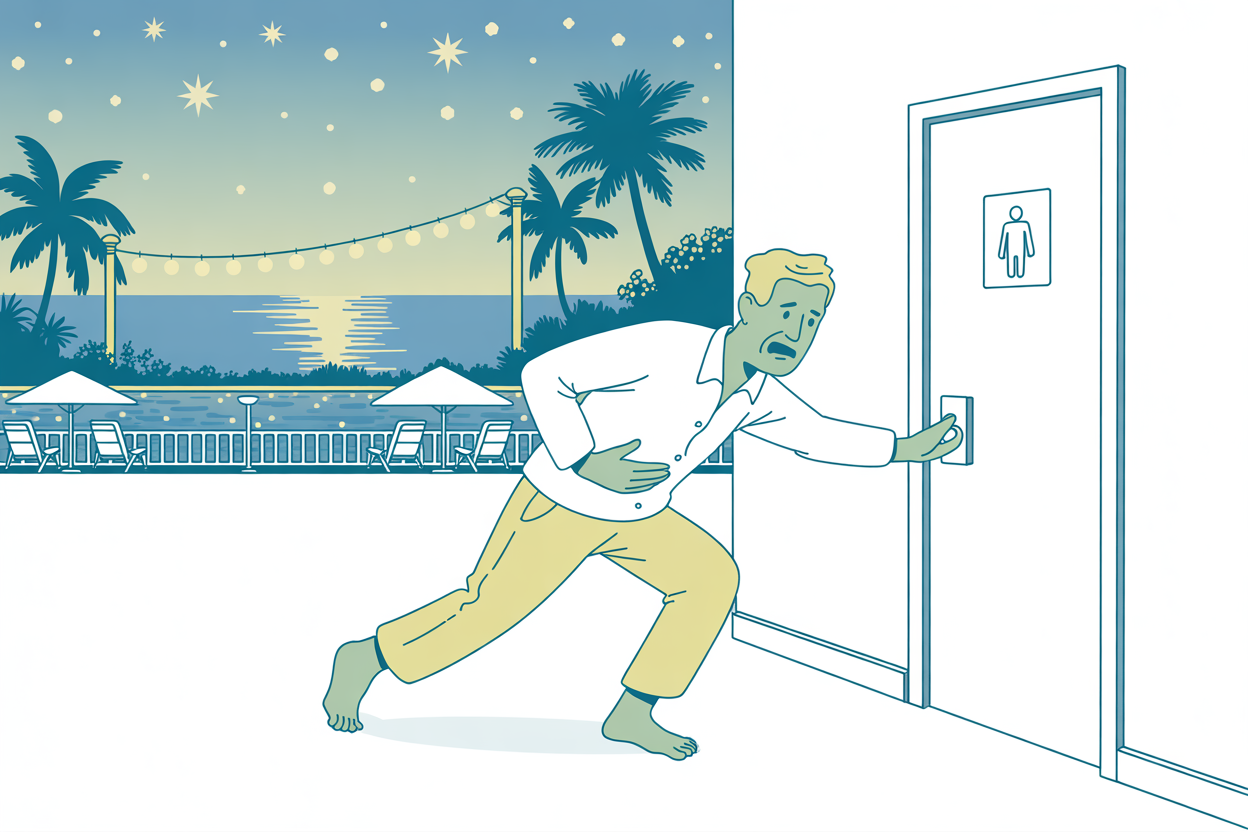
Cartoon of a green-faced traveler clutching his stomach as he rushes toward a restroom door, a palm-lined resort at dusk behind him.

How an airport sandwich could destroy your next vacation

It starts with a plate of chilled shrimp at the resort buffet. It looks pink and fine, sitting on a bed of ice, and you feel fine after you eat it. Then, six hours later, your vacation is over and you are on the bathroom floor. Late summer is peak season for exactly this kind of culinary hazard, and this year the risk is sharpened by record heat colliding with a travel industry already in meltdown, delayed flights, understaffed hotels, tarmac waits with the air conditioning broken. While everyone worries about cancellations and lost bags, something more dangerous is brewing quietly in galley carts and buffet lines. Your food depends on a cold chain, a temperature-controlled path from farm to fork, and when the heat spikes, that chain can snap. The bacteria that move in when it does are the kind you cannot see, cannot smell, and cannot taste, which is what makes them so easy to eat.

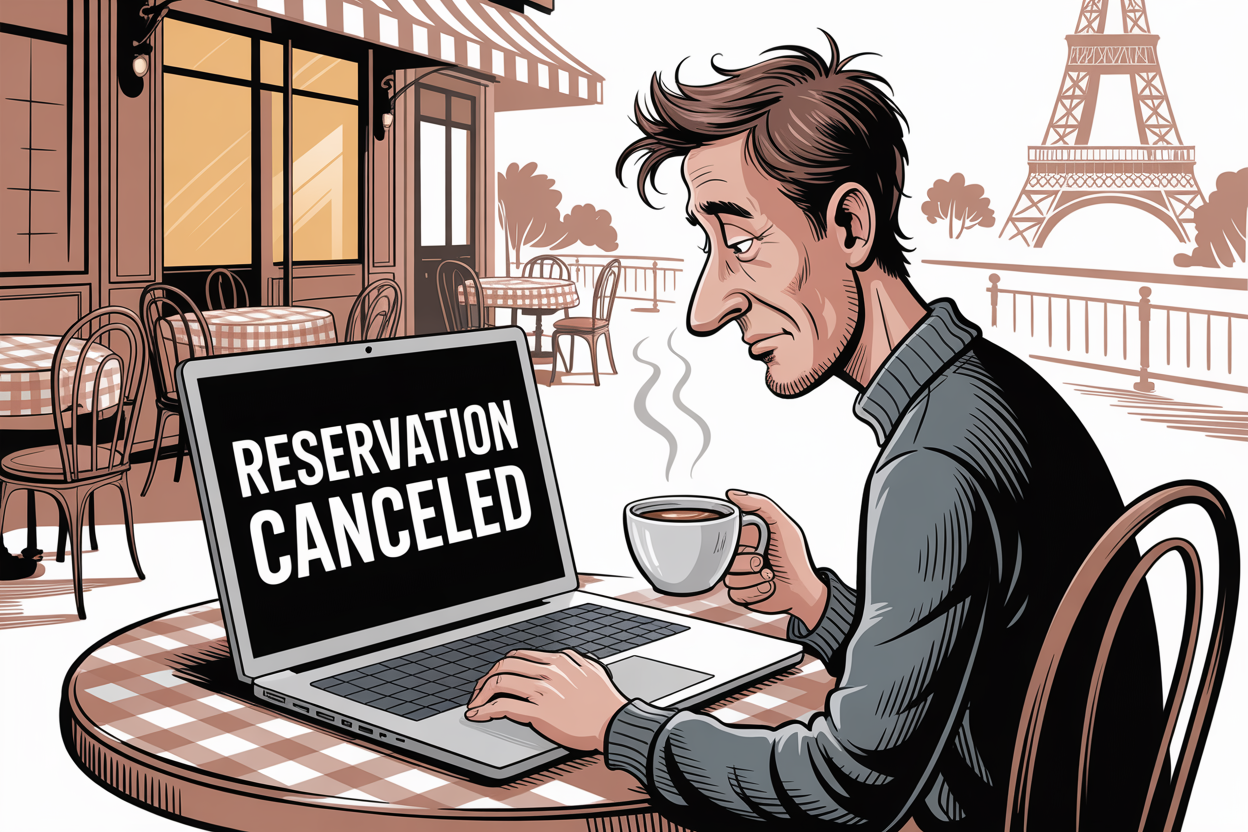
Cartoon of a dismayed man at a Paris cafe table, Eiffel Tower behind him, staring at a laptop screen that reads "RESERVATION CANCELED."

Travel companies say their customers are no-shows—but are they?

On a recent flight from San Francisco to Paris, Dan Skilken was a no-show. It was not his fault. A weather delay scrambled his first leg, the airline rebooked him, and then someone pushed the wrong button, so the system decided he had missed his connection. He only found out when he tried to check his return reservation from France and discovered he had no tickets at all. Because that is how it works: miss one leg of a flight, and the airline quietly cancels the rest. Skilken knew the industry well enough to sort it out, but plenty of travelers do not, and lately there are more of them. Teresa McGee flew from Detroit to Charlotte on American Airlines without a hitch, then tried to fly home and was told she had no ticket. She had a boarding pass proving she had flown the outbound. The airline could not tell her why, only that it had labeled her a no-show and that a new ticket would cost her. Cases like these keep landing in my inbox, and they raise an uncomfortable question. When a company marks a paying customer a no-show and keeps the money, is that a clerical slip, or has the no-show become a quiet little revenue stream?

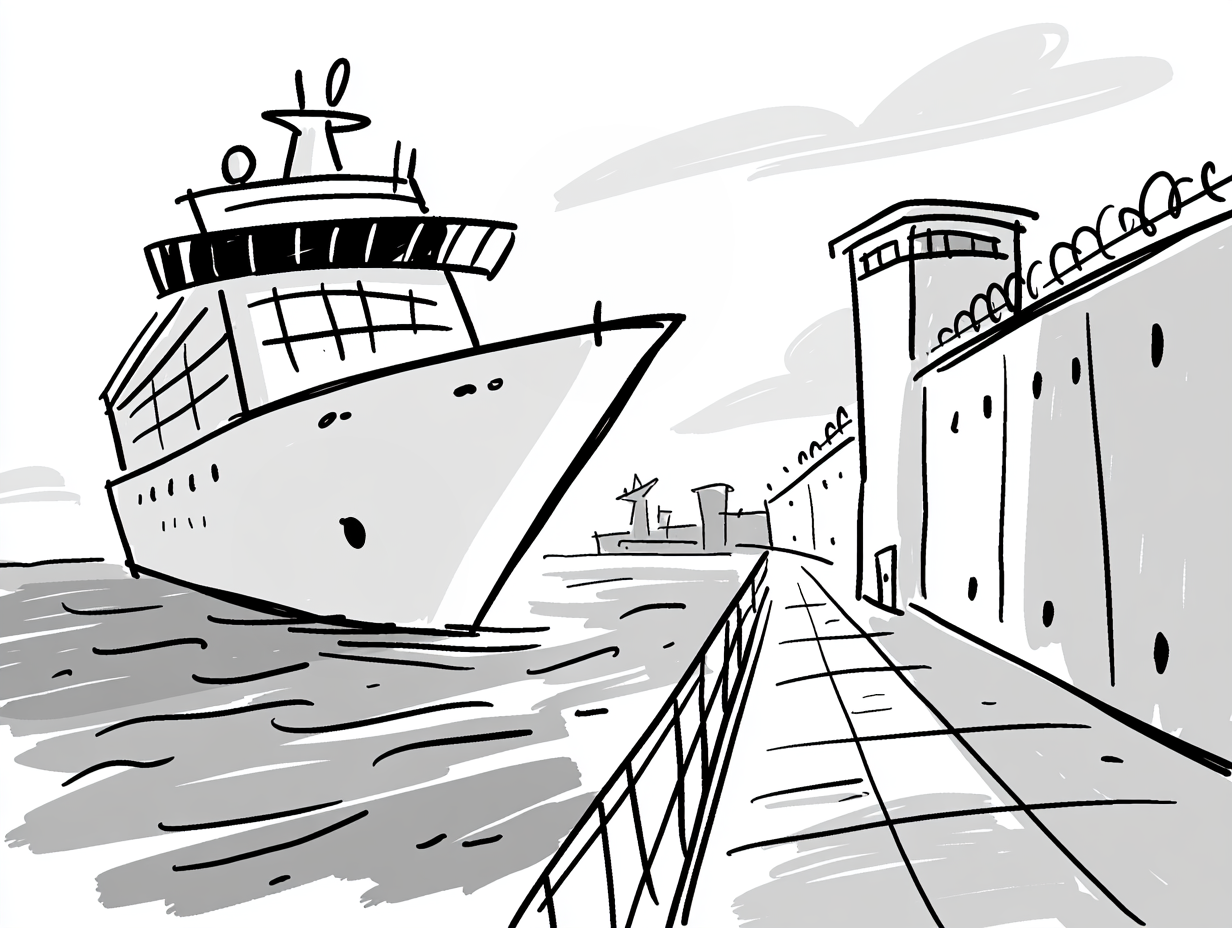
Black and white cartoon of a cruise ship docked beside a high prison wall topped with razor wire and a guard tower.

The FBI wants you to report cruise crime. Then what?

The FBI has a message for cruise passengers as vacation season begins: if you are assaulted, kidnapped, or sexually assaulted at sea, report it right away. It is good advice. Of course you should report a crime. But the announcement leaves out what happens after you speak up. The law meant to track crime at sea, passed in 2010, counts only a short list of the most serious categories. Its requirements generally reach incidents involving U.S. nationals, which leaves out most crew members and plenty of passengers. Thefts count only above a dollar threshold. And an assault is reportable only if it causes “serious bodily injury,” a term the law never defines, which turns a beating into a judgment call. Here is the part that deserves a longer look: the FBI tells passengers to report incidents to the cruise line, and the cruise line is the one that reports them to the government. A company sells you a safe vacation, then helps decide whether what happened to you counts as a crime worth counting.

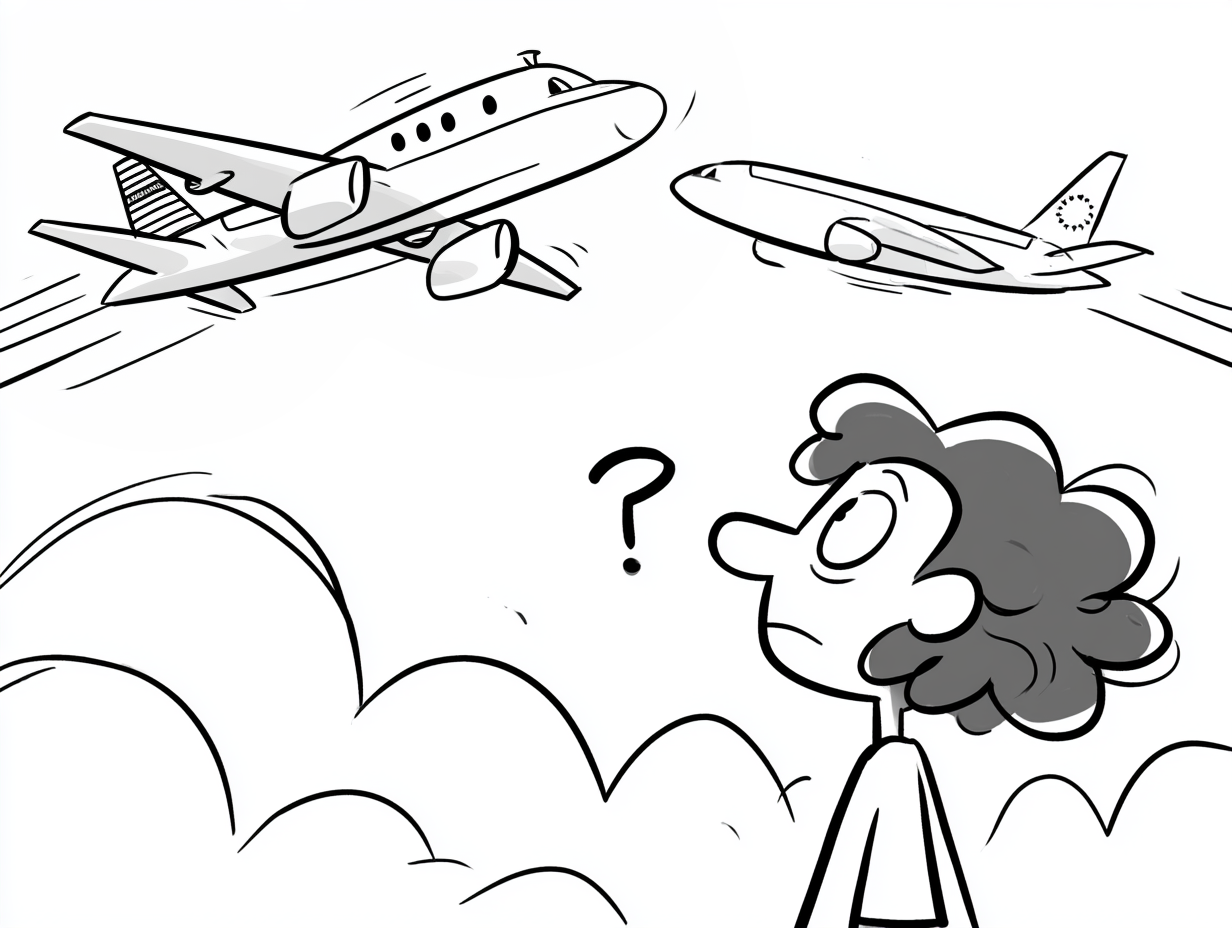
Black and white cartoon of a puzzled traveler with a question mark overhead watching two airplanes fly away in opposite directions.

America and Europe just went opposite ways on airline fees. Who’s right?

How much of an airline ticket’s price do you deserve to see when you shop for a flight? The United States and Europe just answered that question within days of each other, and came to opposite conclusions. In America, a rule that would have required airlines and booking sites to show you the cost of a checked bag or a ticket change the first time a fare appeared never survived. A federal appeals court blocked it before any airline had to comply, then threw it out entirely, faulting the government for skipping a step rather than finding fee transparency unlawful. Instead of redoing the rule, regulators made the defeat official and restored the older standard: airlines note that fees may apply and point you toward the fine print. Europe went the other way, approving its first overhaul of air passenger rights in more than two decades, with fares that must include the cost of a standard carry-on from the outset. Airlines argue that unbundling lets travelers who skip the extras pay less, and that every mandatory fee is disclosed before you buy. Consumer advocates counter that a fare hiding the bag charge is not really a price at all.

Harri Fletcher, the head chef at Everybody Eats in Wellington, New Zealand.

Can Wellington become the world’s first zero-waste capital?

Inside a busy kitchen on Dixon Street, the head chef at Everybody Eats is turning what most restaurants throw away into three-course meals. It is one corner of a much larger experiment: Wellington, New Zealand’s capital, is trying to become the world’s first zero-waste capital, and it is doing it so quietly that most visitors never notice. To arrive here now is to step into a living laboratory for sustainable travel, a place where being green means cutting waste, saving energy, and lowering emissions, often entirely behind the scenes. A pay-as-you-can restaurant where a homeless guest might share a table with the prime minister. Hotels that have swapped single-use plastics for refills. A community hub built around repair and reuse, and a national museum that folds zero-waste principles into everything it does. The city is betting that a greener way to travel can feel less like a sacrifice and more like simply walking its compact, cafe-lined streets, and that visitors who show up are part of proving it can work.

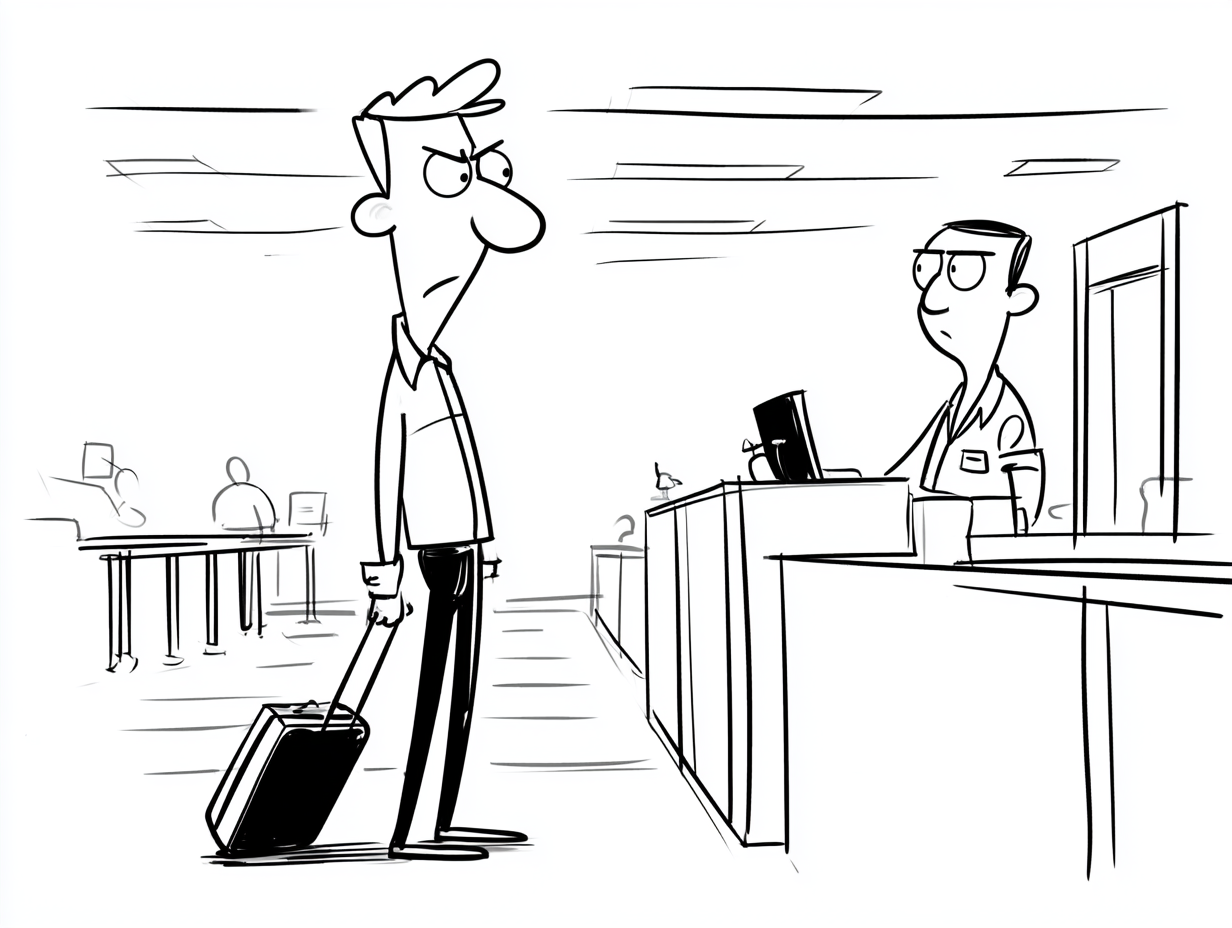
Black and white cartoon of an annoyed traveler with a rolling suitcase glaring at an airline agent behind a check-in counter.

You’re mad at the wrong machine

Does the TSA want to measure your luggage? You might think so after a viral aviation report warned that the agency’s newer 3D scanners have smaller entry tunnels than the old X-ray machines, and that an oversized carry-on might not fit, potentially sending you back to the counter to check it. Travelers connected the dots fast: the government as the airlines’ baggage enforcer, turning every overpacked bag into a checked-bag fee. It is a textbook case of decoy outrage, a fake scandal that soaks up all the anger a real one deserves. The tunnels are indeed smaller, and the TSA advises asking a screener for help. But there is no algorithm flagging a bag an inch too wide, and no documented wave of passengers being marched back to pay up. If your bag fits and passes screening, it flies. The scanner panic is a non-story. The question it accidentally raises, about a government that already helps airlines keep the true cost of flying out of the advertised price, is not.

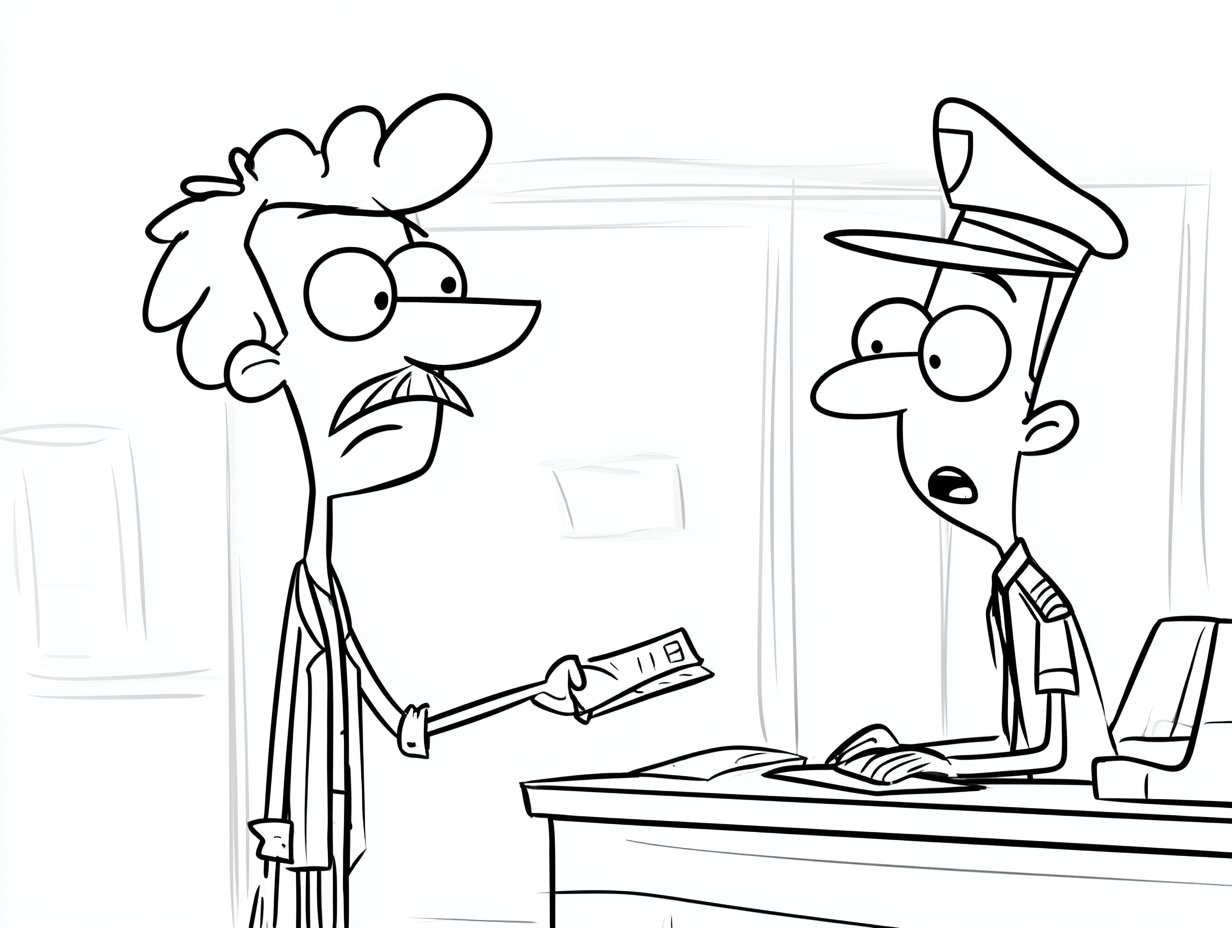
Black and white cartoon of a traveler handing his passport across a desk to a uniformed border officer at passport control.

Your passport just got political. Here’s what that means

The next time you hand over your passport at a border, it might double as a political statement. To mark America’s 250th anniversary, the State Department has begun issuing a limited-edition commemorative passport unlike any before it: a fully valid travel document, with all the usual security features, whose interior pairs a sitting president’s portrait with the text of the Declaration of Independence. A passport historian says he can find no precedent for a sitting head of state’s image in a passport, not even in authoritarian regimes. Other countries have made their travel documents political in quieter ways, a disputed map here, a national-identity redesign there, but a leader’s face inside the book appears to be new. You only receive the commemorative version if you apply in person at one office in Washington, where it becomes the default; everyone else keeps the standard design, which works identically at every crossing. Supporters call it a patriotic keepsake for the semiquincentennial. Critics ask whether any single administration belongs inside a document issued to every citizen.

Cartoon of a weary traveler standing with a red suitcase beside a self-service check-in kiosk while three uniformed airport employees nearby chat among themselves and ignore her.

Self-service fatigue hits travel: Why are we having a DIY backlash?

Judy Williams stood in two lines at the airport just to drop a single checked bag, and then the machine rejected it, again and again. The real insult was not the glitchy kiosk. It was the three employees standing nearby, chatting and hugging, who did not lift a finger to help. That small scene is the reality of do-it-yourself travel: you do the unpaid work, and when the system fails, you are on your own. Across the industry, more of travel’s routine tasks have been handed to the traveler, the app check-in, the self-tagged bag, the help center that loops without ever reaching a person, and the convenience can start to feel like something closer to abandonment. Self-service technology, one customer-experience expert notes, was never meant to replace human support. It was meant to enhance it. In travel, the gap between that intention and the reality keeps widening.