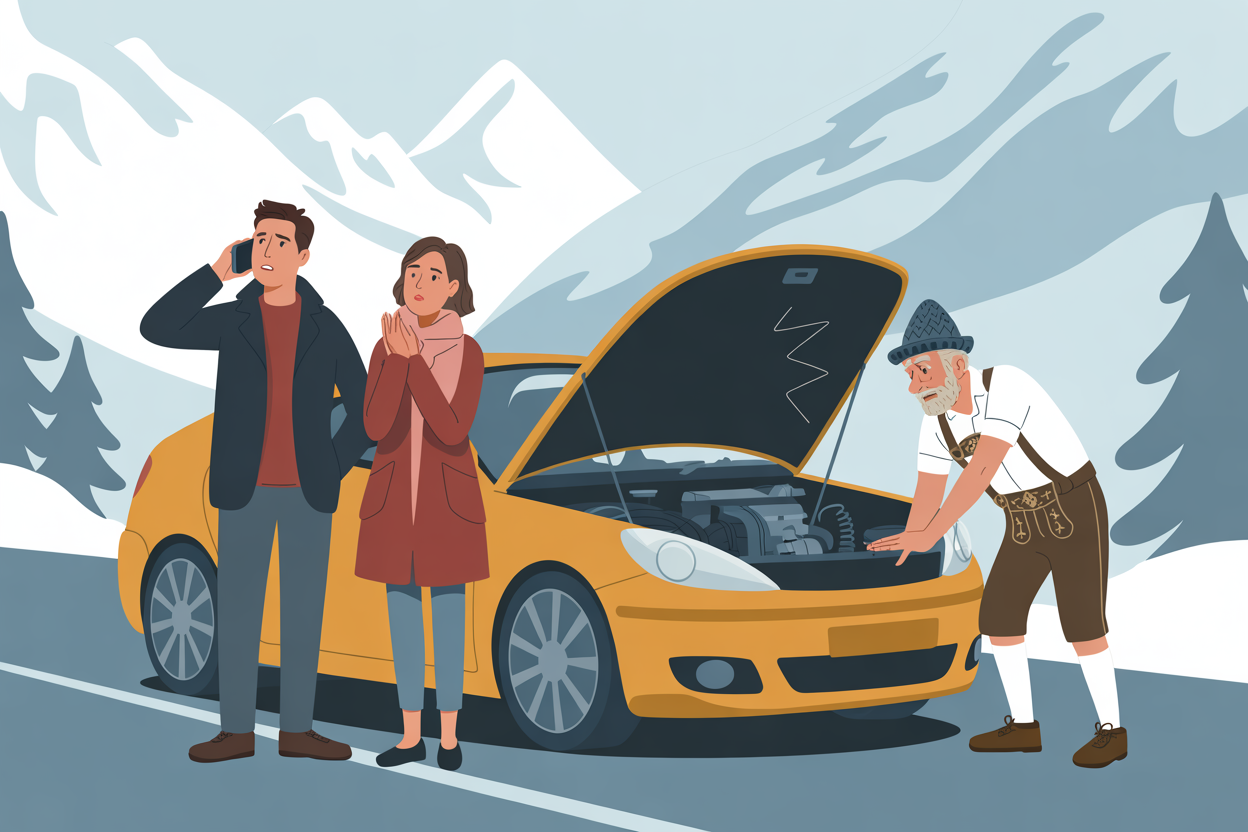
Illustration of a worried couple beside a yellow rental car with its hood up on a snowy Alpine road, the man on his phone for roadside help as a man in lederhosen inspects the dead engine.

Help! Alamo charged me $1,000 after my car battery died in the Swiss Alps

Kjell-Erik Berggren rented a car from Alamo at Geneva Airport for a six-day trip through Switzerland, and it worked perfectly until the last morning. Staying in a mountain village at 1,500 meters, he and his group woke to a cold, frosty morning and a car that was completely dead: no lights, no starter, nothing. Roadside assistance told them to leave the vehicle and find another way to the airport, which they did at considerable expense. Then, two months later, Alamo charged more than $1,000 to his credit card with no prior agreement or warning, on two invoices showing different totals that did not even match what was charged. The company pointed to a roadside protection product he had declined and an insurance deductible he had chosen. But there is a principle worth knowing before you accept a charge like this: rental companies are typically responsible for mechanical and electrical breakdowns that are not caused by customer negligence or misuse, and a battery that dies on a cold morning after five days of normal use points to a defect in the vehicle, not a mistake by the driver.

Stylized illustration of a distressed traveler clutching his chest in front of a palm-lined hospital as medical staff wheel a patient on a gurney toward the entrance, evoking a vacation cut short by a family emergency.

The hotel refunded his money, but the booking site kept it anyway

When John Moss’s stepfather was rushed to the hospital, he knew his Florida vacation was over before it started. He contacted Traveluro, the site where he had booked a nonrefundable $615 stay at the Hilton Melbourne Beach, and sent hospital records proving the family emergency. The hotel understood and agreed to cancel without penalty, releasing the money back to the booking site. All Traveluro had to do was pass it along. Instead, weeks of silence followed, until Moss filed a dispute with his credit card company and Traveluro suddenly made him an offer: drop the dispute, and we will send your refund. Here is what every cardholder should understand before saying yes. A credit card dispute freezes the transaction while your issuer investigates, which means the merchant cannot touch the money until the matter is resolved. That is real, tangible leverage, and a company asking you to give it up in exchange for a promise is asking you to trade the one protection the law puts on your side.

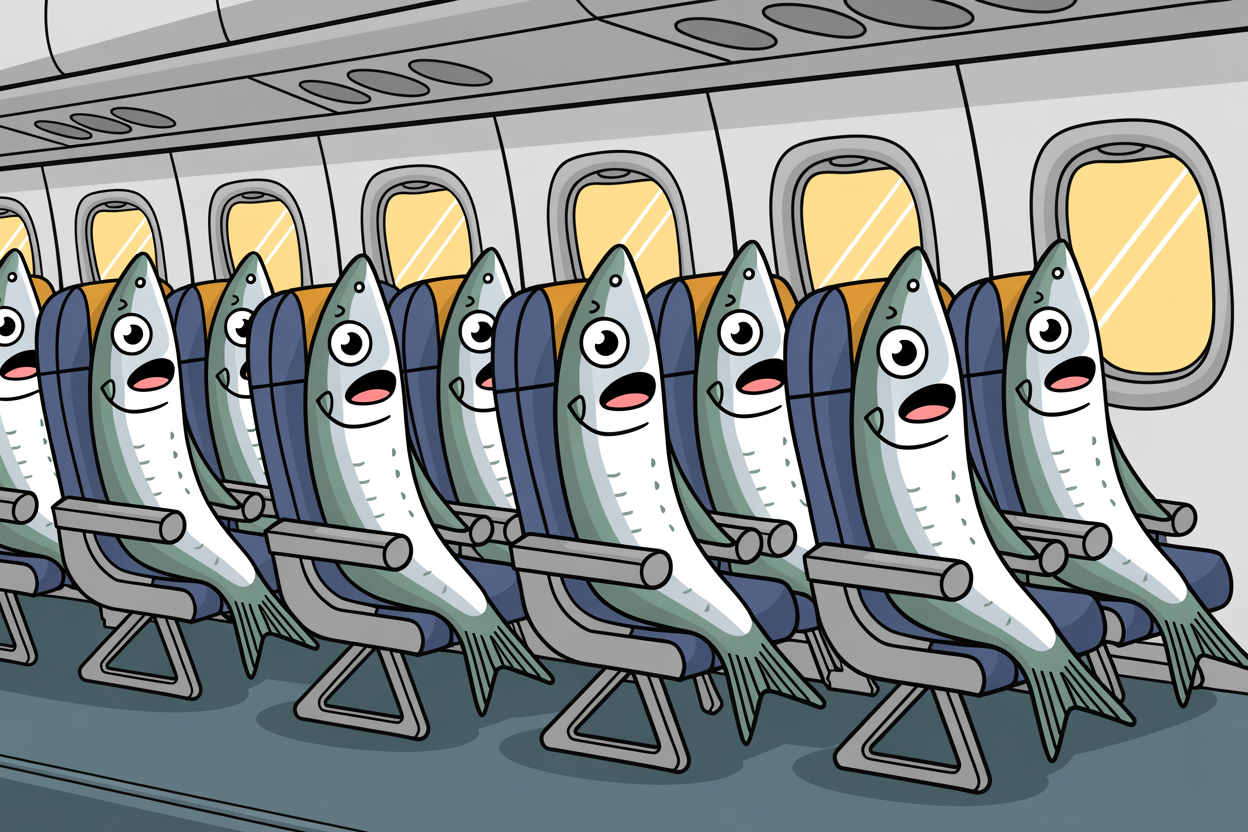
Cartoon of smiling sardines packed upright into narrow airplane seats in a tightly spaced cabin, illustrating how shrinking economy legroom crams travelers in like sardines.

Premium creep: How the travel industry downgraded you for profit 

Remember when you could check a bag, choose your seat, and stretch your legs on a flight without paying extra? It is not an urban legend. You used to be able to do all three at no additional charge. A 34-inch seat pitch was once standard in economy class. Today the industry calls that same space premium economy and charges you more for it, while the 30-inch squeeze becomes the new normal. Call it premium creep, the quiet industry-wide pattern where yesterday’s basics quietly become today’s luxuries, wrapped in marketing language about choice and flexibility. And it is not just airlines: hotels, cruise lines, and even car rental companies have all found ways to strip out what used to be included and sell it back to you. Which raises the question worth sitting with the next time you compare two fares: are you buying an upgrade, or just paying to undo a downgrade the company handed you in the first place?

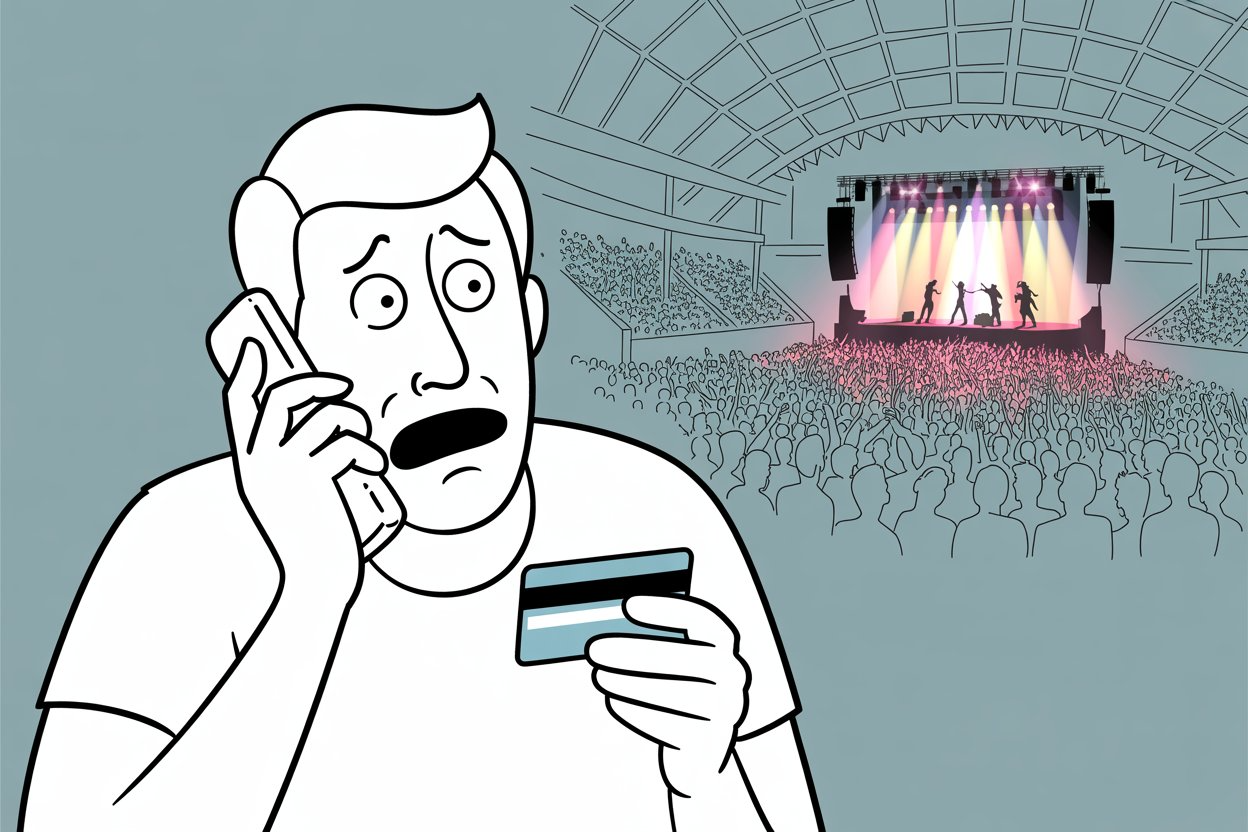
Illustration of a worried man on the phone holding a credit card while a concert crowd watches performers on stage, representing a StubHub ticket refund dispute.

This StubHub rep’s “help” with Coldplay tickets cost me $3,000!

Paul Avron’s daughter bought three Coldplay tickets at Hard Rock Stadium in Miami for $1,027, nine months before the show, as a birthday gift for her best friend and the friend’s dad. On the day of the concert, the StubHub app said the tickets were being released, but they never appeared. With the show already starting, the family called StubHub in a panic and asked for the tickets or replacements so the group could get in. The last representative refused to provide replacement tickets and said they had to buy new ones, promising StubHub would refund the original $1,027. The rep said he saw three tickets for just $1 more than the original purchase and sent a link. The tickets were actually $1,000 each, and StubHub charged the credit card $3,000. The family disputed the charge with their credit card company and contacted StubHub directly, but both representatives said they would not credit the account. The family never accepted or used the expensive tickets and never attended the concert. StubHub’s FanProtect Guarantee promises valid tickets or your money back, and says StubHub will find comparable replacement tickets when possible.

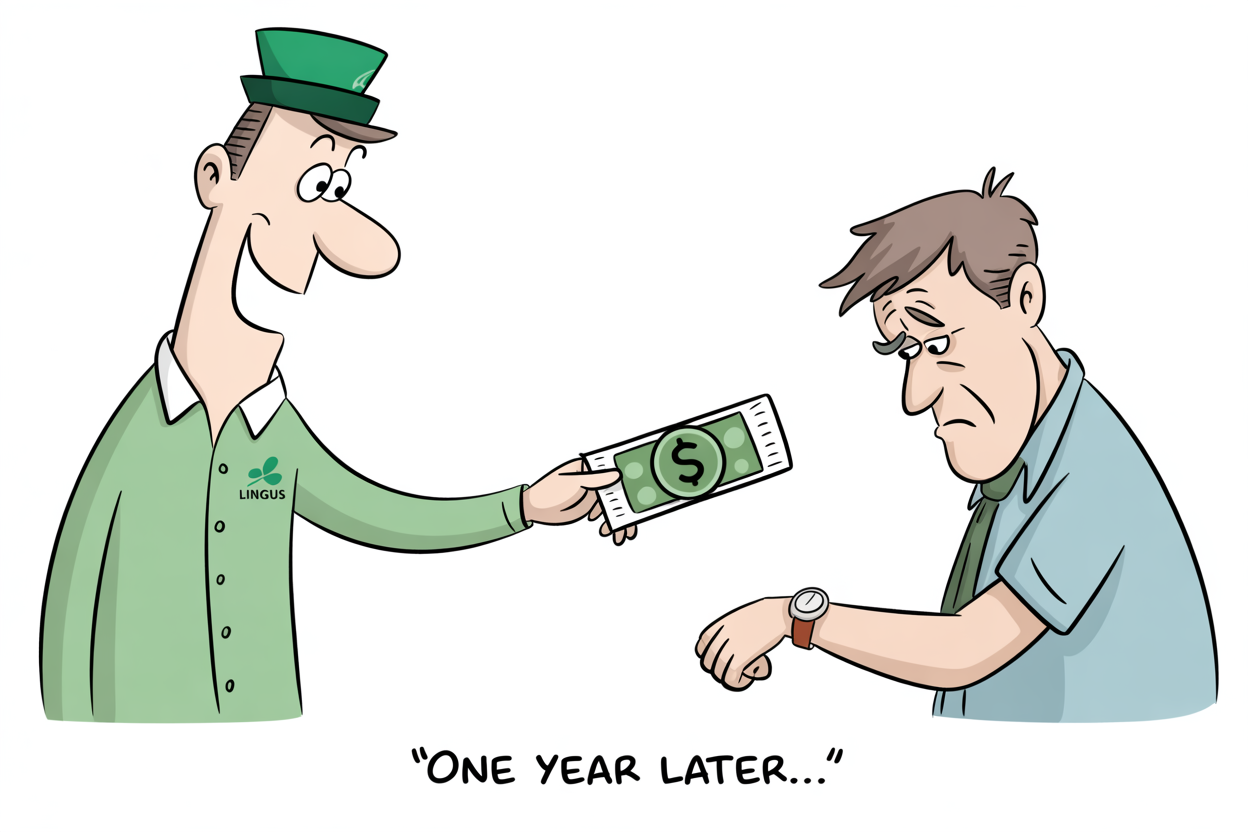
Illustration of an Aer Lingus representative offering a voucher to a frustrated customer checking his watch, with the caption “One year later…”

Aer Lingus issued her voucher but ghosted her husband for over a year

After a death in the family, Beatrijs Albarran and her husband Jorge had to cancel their Aer Lingus flights. The airline issued their refunds as vouchers, $938 for her and $925 for him, and emailed that both had been processed. But when Beatrijs called the next month to book a new trip, an agent told her Jorge’s voucher was never actually issued. The couple, who live in Buffalo, New York, wanted to fly from Toronto to Scotland because the fares are better, and asked whether the vouchers could be reissued in Canadian dollars. Beatrijs received hers in U.S. dollars within a reasonable time. Jorge’s never arrived. For more than a year she called repeatedly, hearing the same response that a supervisor was working on it, while automated emails said the case was under review. More than 15 months after Aer Lingus said it processed the voucher, it still had not appeared. Under Aer Lingus policy, vouchers are issued in the same currency as the original booking, so no conversion was needed to book from a Canadian airport, and the Department of Transportation requires airlines to process refund and credit requests promptly.

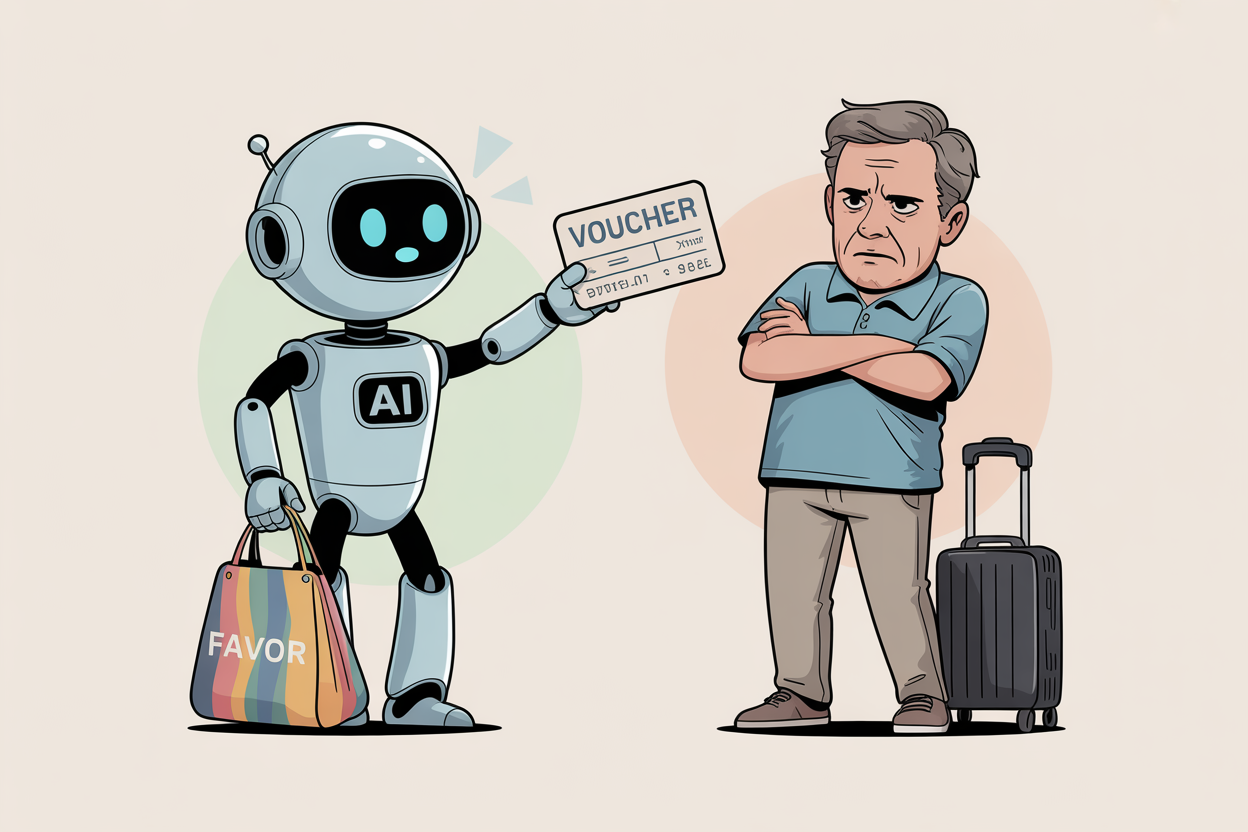
Editorial cartoon illustration of a smiling AI robot with "AI" labeled on its chest holding out a paper voucher in one hand and a colorful striped "Favor" shopping bag in the other, while a frustrated middle-aged man in a blue polo shirt stands with arms crossed next to his black rolling suitcase refusing the offer, illustrating how travel companies use automated systems to push customers into accepting vouchers instead of legally required cash refunds

Why are travel companies replacing real refunds with “coupon justice”?

Travel companies are increasingly replacing cash refunds with vouchers and goodwill credits when flights cancel, hotel rooms fail, and rental cars run out of vehicles. The practice exploded after the pandemic when companies pivoted to vouchers to hoard cash. The actual redemption rate for travel vouchers is below 10 percent, meaning a 90 percent chance the credit goes unused and the company keeps your money entirely. Under U.S. Department of Transportation rules, airlines must provide prompt refunds to your original form of payment when they cancel flights or make significant schedule changes. Airlines offering only vouchers without a genuine cash option violate these legal obligations. Hotels and online booking sites operate in a legal gray zone with few hard rules governing refund practices.

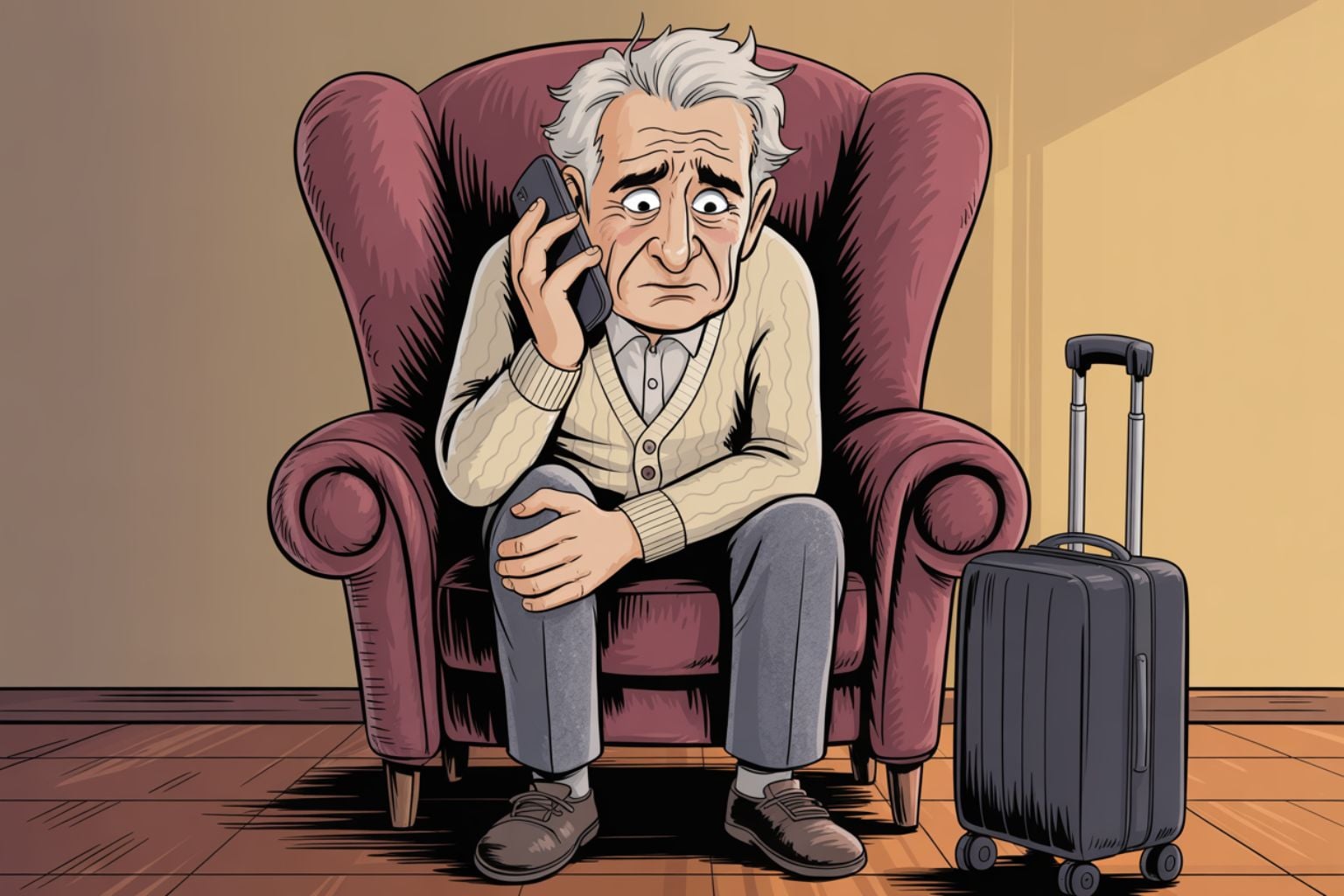
Editorial cartoon showing a worried elderly gray-haired man in a beige cardigan and gray trousers sitting in a dark red armchair with his hand on his sore right knee while holding a cell phone to his ear, with a black wheeled suitcase standing nearby on the hardwood floor, illustrating a senior traveler trying to secure a medical refund after a hip condition forced him to cancel a transatlantic flight

Why is ITA Airways making it impossible to get a medical refund?

Daniel Lichtblau booked two ITA Airways tickets from Chicago to Turin four months in advance. Shortly after booking, he learned he could not travel due to primary osteoarthritis in his right hip. He submitted a medical certificate from his orthopedic surgeon covering the travel dates and requested a refund for his ticket and a date change for his wife’s ticket. ITA Airways initially confirmed receipt of the documentation, then denied the refund claiming the certificate lacked a prognosis specifying the exact dates of inability to travel. The airline refused to specify what additional language was required. Under U.S. and state consumer protection laws, airlines must provide accurate guidance about their refund requirements.

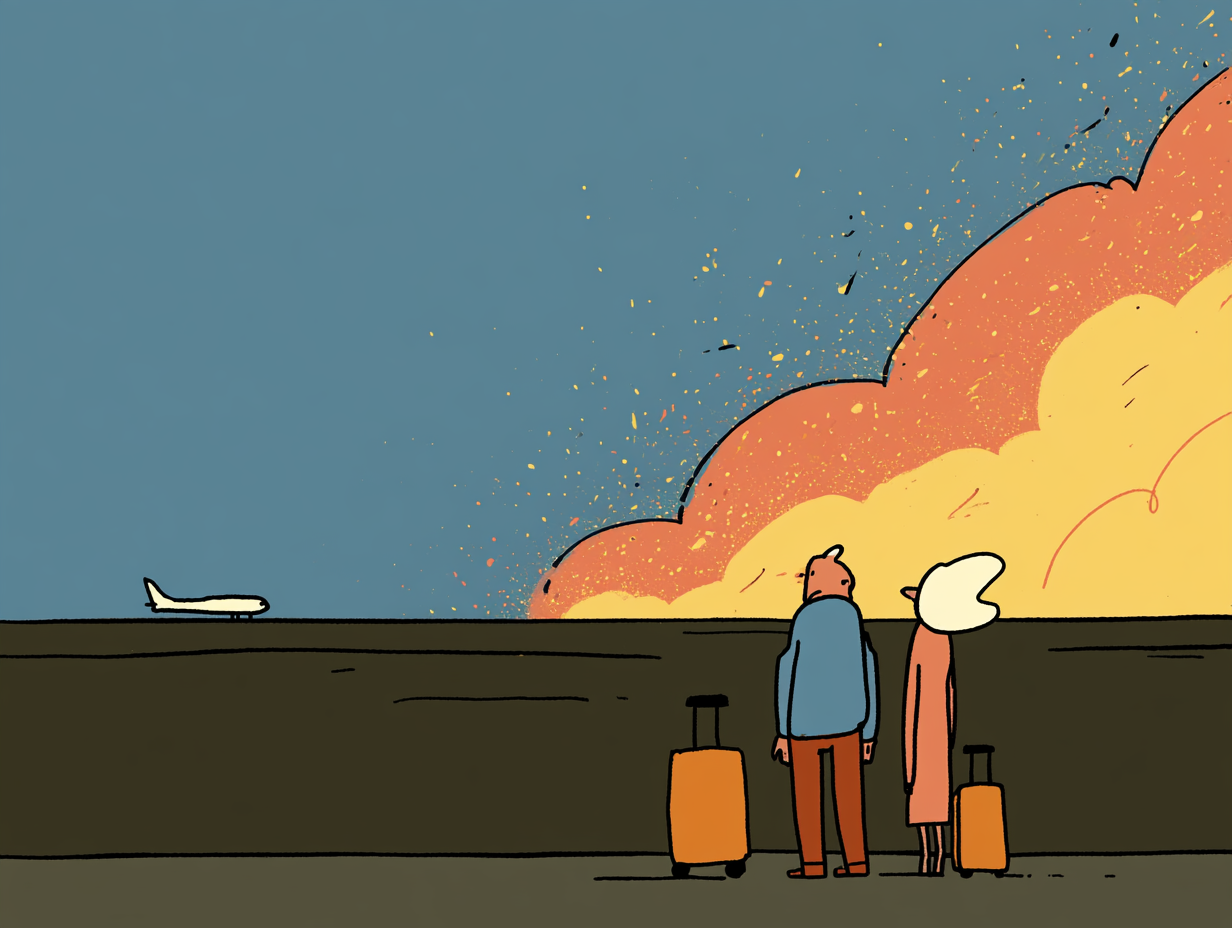
Editorial illustration of a couple standing on a dark airport tarmac with two orange roller suitcases, watching from a distance as a fiery orange and yellow explosion cloud rises into the blue sky beyond, with a small white airplane visible on the horizon, illustrating the uncertainty of booking summer vacation travel during an active geopolitical conflict in the Middle East

Is it safe to book a summer vacation yet?

The U.S. and Iran are reportedly close to a deal that would end the war, lift sanctions, release frozen Iranian funds, and reopen the Strait of Hormuz. Travel companies say the worst is priced in. Airbnb expects second-quarter bookings to drop one percentage point across Europe, the Middle East, Africa, and Asia Pacific. Booking Holdings cut its full-year revenue forecast through June. Iranian lawmakers called the U.S. proposal a wish list. Before booking, check State Department advisories at Level 3 or Level 4, examine flight routes for airspace closures, buy cancel-for-any-reason insurance, and pay only with a credit card.

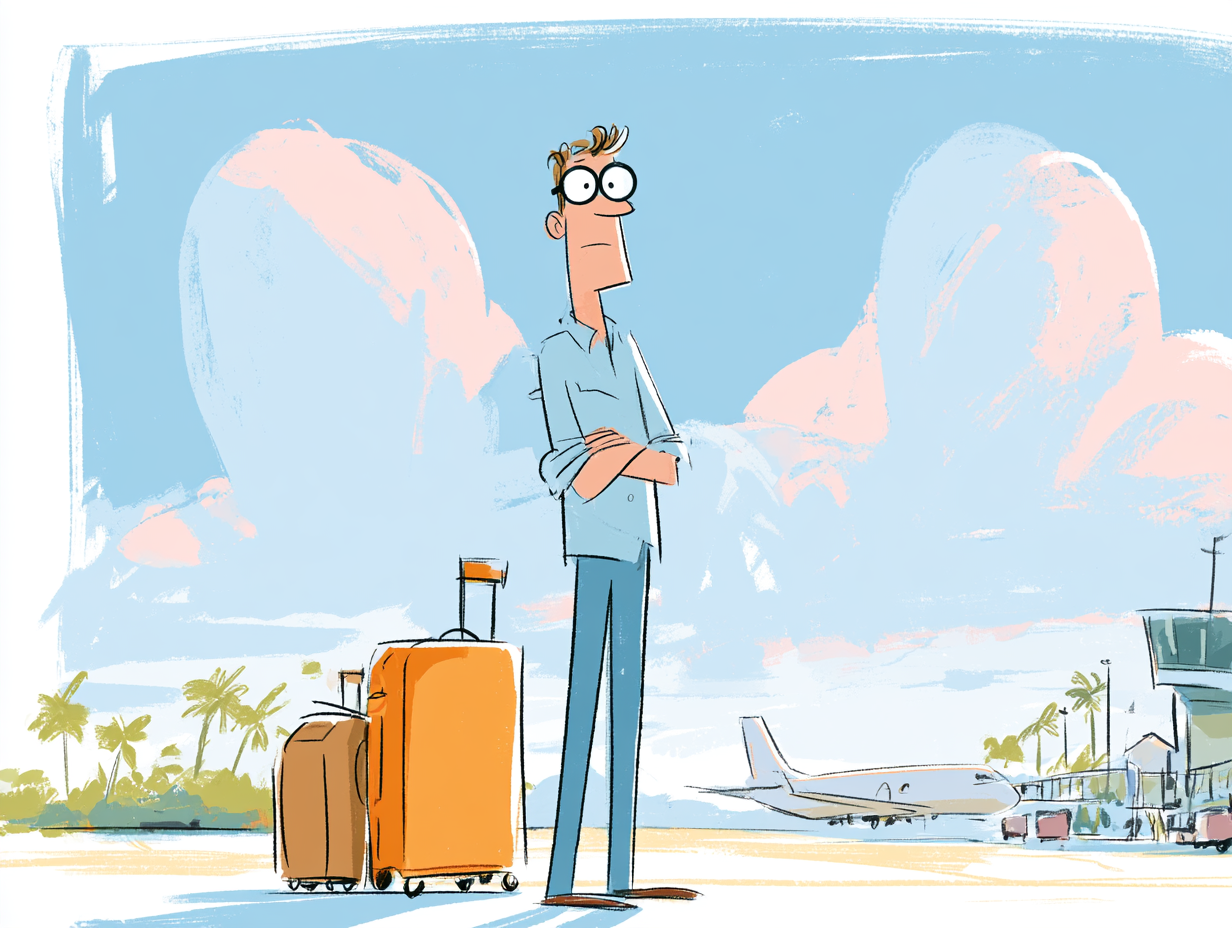
Editorial illustration showing a thin man with brown hair and round glasses standing with arms crossed next to two orange roller suitcases on an airport tarmac with palm trees and a small white airplane visible in the background, illustrating a passenger left stranded after an airline schedule change forced him to buy replacement flights at his own expense

Aeromexico offered him a “free” flight change. Then it refused to give him one.

Jorrit Muller booked Aeromexico flight 335 from Puerto Vallarta to Orlando for a wedding. Three months before departure, Aeromexico shifted his flight one hour earlier, into the reception time. The airline notified him that if the new flight did not work, he could move to another at no additional cost. When he tried to use that offer through Aeromexico’s WhatsApp support, the available flights were operated by Delta as code-share. An agent told him to request a refund instead, then Aeromexico denied the refund. Under DOT rules, a significant change for international travel requires a schedule shift of six hours or more.

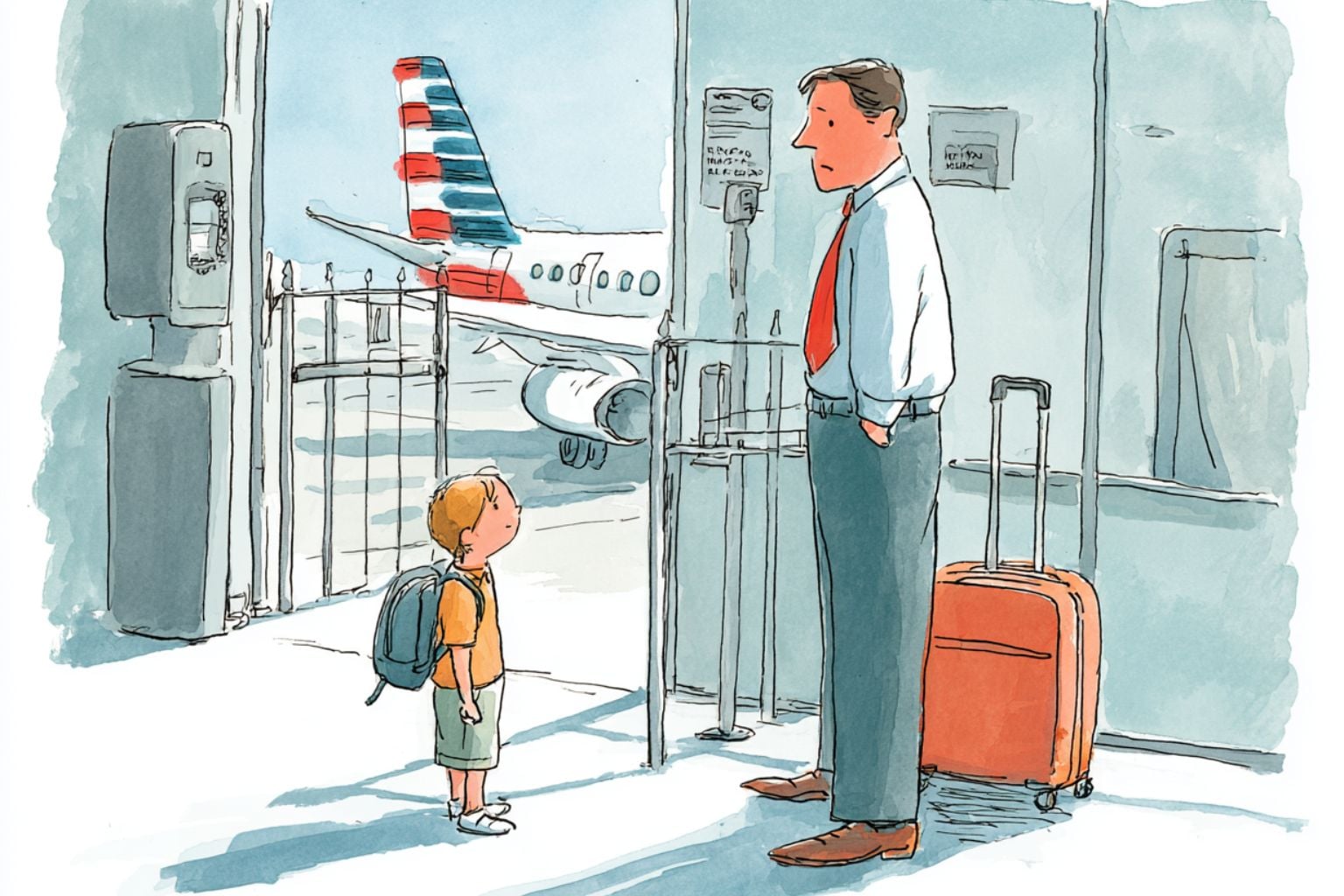
Watercolor editorial illustration of a father in a white shirt and red tie standing with his young son who carries a backpack at an American Airlines departure gate, with an American Airlines plane visible through the window beyond the closed gate door, illustrating how families get separated when airlines pull passengers from boarding lines and document involuntary bumping as voluntary

American Airlines claims I voluntarily gave up my seat, but that’s a lie

Charles Shearer was traveling from Cleveland to Japan for his mother-in-law’s funeral when American Airlines pulled him and his young son from the boarding line. His grieving wife boarded alone while gate agents offered $500 vouchers, with one even verbally acknowledging the bumping was involuntary. American later documented the incident as voluntary in its system, denying him the federal compensation of up to $2,150 per passenger that involuntary bumping triggers when passengers arrive over two hours late. Federal law mandates 400 percent of one-way fare in cash compensation, paid at the airport on the day of the flight.