in this commentary
- A look at the current state of air travel, from higher fares and fees to new technologies like facial scanning.
- An overview of how the passenger experience has changed, including new boarding procedures and consumer rights.
- A glimpse into the future of flying and why the biggest changes are yet to come.
Air travel has changed a lot. But it’s nothing compared to what lies ahead.
Changed how? Well, you’ve probably heard about the new TSA rules, the luggage fees and the dangers of air travel.
But there’s more. And if you’re an occasional air traveler, you’ll want to get the big picture because it will prepare you for what lies ahead.
What’s new when you’re flying in 2025?
Some of the recent changes to air travel have not been for the better. For example:
- You can keep your shoes on. The TSA announced the end of its hated “shoes-off” policy at TSA checkpoints last month, with no clear reason given. Then again, it never gave us a clear reason for the policy in the first place.
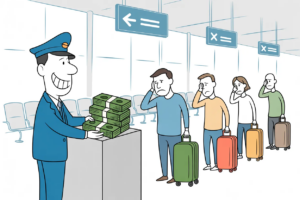
- Everyone pays for a checked bag. Yes, even Southwest Airlines is charging for checked luggage. Airlines collected a stunning $7.2 billion in baggage fees in 2024. This year, it will be more.
- Flying feels more dangerous. There have been several airline disasters, including a deadly mid-air collision between an Army helicopter and an American Airlines flight in January and an Air India flight that crashed into an Ahmedabad hostel minutes after takeoff, killing 240 people. Passengers are skittish.
So how is air travel changing in 2025?
This is what flying is like now
Let’s start with the air travel experience itself. Flights are fuller and space is tighter than ever. In fact, if you’re flying somewhere this summer, you should congratulate yourself. In 2025, you’re probably part of the busiest year in the history of air travel. (Related: Angry air travelers lash out at each other during the summer of not-so-fun travel. Here’s how to handle it.)
“Air travel has rebounded,” says Jason Block, CEO of WorldVia Travel Group. That puts a squeeze on regular passengers. If you’ve booked a no-frills economy ticket, you may face a higher risk of being bumped from your flight. So if you have a little extra money, Block suggests buying a more flexible ticket. You’re still not bump-proof, but at least you’ll move up the list.
Smile for the TSA
The passenger screening experience is different but not necessarily better. The TSA has new scanners that take your picture to verify your identity. New technology might allow you to keep all your belongings in your bag and speed up screening — “might” being the operative word.
“The process is more inconsistent than ever,” says Andy Abramson, a frequent traveler and a communications consultant from Las Vegas. “Procedures change from airport to airport. In some cases, all you need is your boarding pass. In others, you need your ID, and in others, nothing but your facial scan.” (Related: Is air travel getting better? Here are the surprising reasons it is.)
Speaking of technology, many air travelers have raved about new onboard Wi-Fi capabilities. Airlines like Air New Zealand, Emirates and JetBlue include the price of Wi-Fi in their tickets.
Overall, do you think the air travel experience is better or worse now than it was before the pandemic? Are the new technologies and consumer rights enough to offset the higher prices and fuller planes?
How do you feel about facial recognition technology at the airport? Is it a welcome convenience that speeds things up, or an invasion of privacy you’d rather avoid?
What’s the one change you’ve noticed most since you started flying again? Share your thoughts and experiences in the comments below.
Your face is your boarding pass
The TSA isn’t the only one using facial scans. Some U.S. airlines have started using facial scans instead of boarding passes. It’s a little bit of an adjustment for passengers.
“I stood awkwardly in front of a camera, feeling like a contestant in a dystopian game show,” says Chris McGuire, a real estate broker from Birmingham, Ala. (Related: Want better customer service when you travel? You must be joking.)
In 2024, Frankfurt became the first airport in Europe to fully adopt facial recognition. Other airports, including Tokyo and Dubai, also have face-scanning technology. If you haven’t flown in a while, you may not have to fumble for your boarding pass before you get on the plane. (Related: The year ahead: Here’s what travelers should expect in 2024.)
I’ve used face-scanning technology on many occasions and it usually works, but it can be slow. Getting through customs in Santiago, Chile, took a while and the agent kept apologizing for the technology. So don’t forget to pack your patience.
No more ticket change fees
Airline ticket change fees disappeared during the pandemic on U.S. airlines. So if you have to change your flight, you won’t have to pay a $250 fee on top of any fare difference.
“That’s one of the most significant changes,” says frequent air traveler Bob Bacheler, who is the managing director of Flying Angels, a medical transport service. “Airlines introduced more flexible booking and cancellation policies, allowing passengers to change or cancel flights without heavy penalties” (Related: Aspire to travel the world? Read this before you go.)
Bacheler thinks the fees will return eventually, and he’s right. If they do, airlines will call them something else — maybe a “convenience” fee?
Read more insightful reader feedback. See all comments.
You may board your flight differently
“Some airlines are implementing new boarding procedures,” says Andy Palacios, vice president of growth and strategic partnerships for App in the Air. The most significant is United Airlines, which last fall began boarding economy passengers with window seats before those with middle and aisle seats.
Palacios recommends avoiding the general boarding mayhem by getting a credit card or earning elite status. Anything that gets you into the first boarding group can save you from having to gate-check your carry-on or just getting stuck in a crowd. (Here’s our guide to booking an airline ticket now.)
You have new rights, too
If something goes wrong on your flight, you may find that your airline will do more for you. That’s because the Department of Transportation (DOT), which regulates airlines, has been applying steady pressure on domestic airlines to improve customer service. (After all, taxpayers bailed out the airlines during the pandemic.)
Airlines now offer guaranteed meals, accommodations and ground transportation to and from a hotel when they’re at fault for a cancellation. (You can find out about all your rights on the DOT’s Fly Rights website.)
In the last six months, the government has effectively ended its regulatory efforts for customer service. It’s unlikely we’ll see any major changes until 2028.
But flying “feels different” now
Passengers say it feels like something has shifted when it comes to air travel.
“Flying feels different,” says Robert Khachatryan, a frequent flier and founder of a freight forwarding service in La Crescenta, Calif.
He’s correct. It’s not just that customers have a few new rights or that the technology is getting an upgrade — or even that boarding is a little different.
There’s a sense that something big lies just ahead. Air travelers have become disenchanted with commercial air travel, with its high fares, fees, long lines and terrible customer service. And the relief may not come from new rules to protect the rights of air travelers but from a fundamental change in the way we fly.
So if flying feels different to you now, just wait. You ain’t seen nothing yet.
This is the first of a two-part series on the future of air travel. Here’s part two.
Flying now
A guide to the new rules of air travel
What it costs now
Pandemic-era cheap fares are over. Expect higher ticket prices and increased fees for checked baggage, which can be up to $35 per bag on domestic flights.
Your face is your ticket
The TSA and airlines are using facial scanning to verify identity at security and the gate. In many cases, you may not need to show a physical boarding pass.
The rules have changed
Most major U.S. airlines have eliminated change fees. Airlines are also testing new boarding methods, like seating window passengers first to speed things up.
You have new rights
Thanks to DOT pressure, airlines now guarantee meals, hotels, and transport for significant delays or cancellations that are their fault. Check the DOT’s site for details.
Related reads

Have a question about this story? Tell us what happened — we read every comment.
Join the conversation