Christopher Elliott

Christopher Elliott is the founder of Elliott Advocacy, a 501(c)(3) nonprofit organization that empowers consumers to solve their problems and helps those who can't. He's the author of numerous books on consumer advocacy and writes three nationally syndicated columns. He also publishes the Elliott Report, a news site for consumers, and Elliott Confidential, a critically acclaimed newsletter about customer service. If you have a consumer problem you can't solve, contact him directly through his advocacy website. You can also follow him on X, Facebook, and LinkedIn, or sign up for his daily newsletter.
Cartoon of a frustrated traveler with arms crossed standing between two suitcases in an empty airport gate area, beneath a large red departures sign reading "FLIGHT DOES NOT EXIST."

Booking.com said my flight was confirmed, but the airline says it never existed

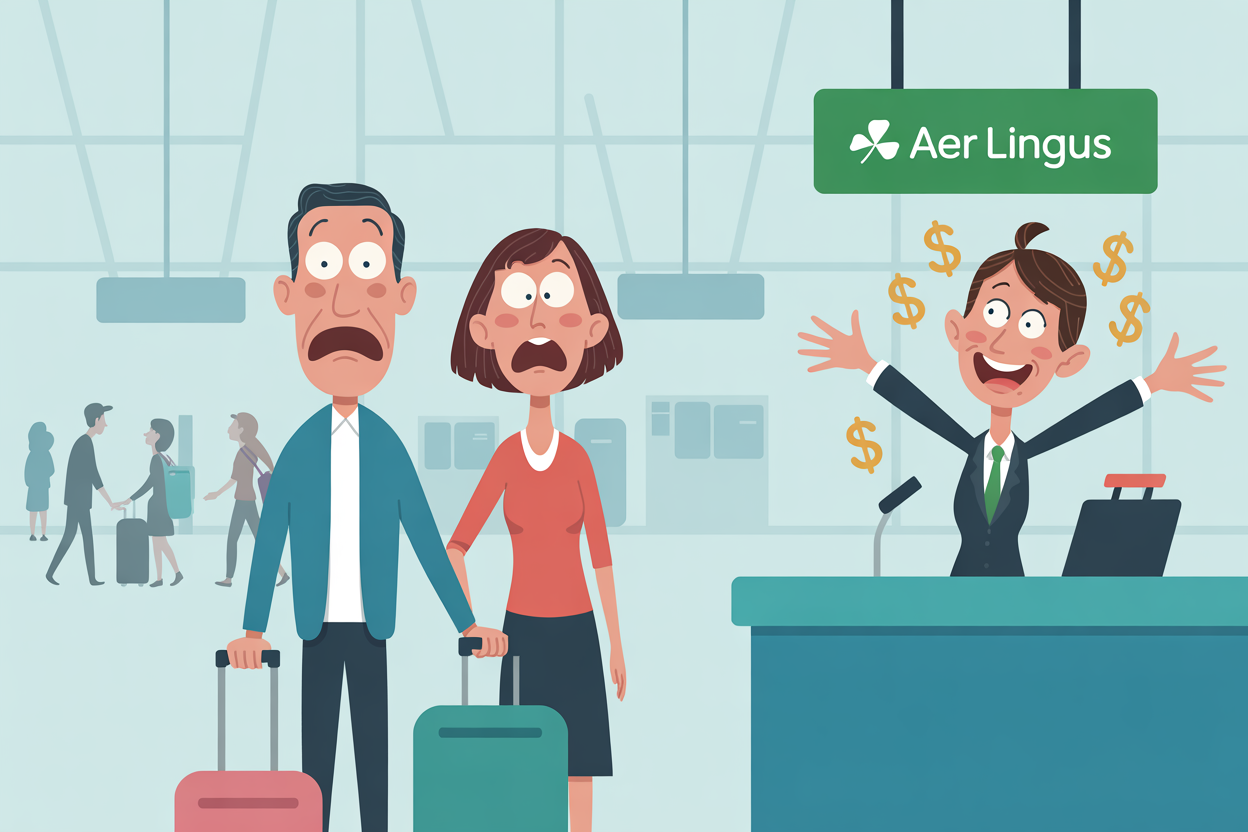
Lindley Kinerk’s last morning in Dresden seemed routine. She and her companions packed up, checked out, and headed to the airport for their 8:25 a.m. flight home to Boston. They had even gotten a friendly check-in reminder from Booking.com the night before. Then they reached the counter and learned something that would cost them nearly $6,000: their flight did not exist. Not that morning, not any morning. It had been off the airline’s schedule for months. Booking.com, it seems, had quietly rebooked them on an earlier flight and never said a word, and the airline insisted the whole thing was not its problem. With a third ticketing agency tangled into the booking and every company pointing at the others, Kinerk had to buy new tickets on the spot just to get home. What she did next, and what Booking.com eventually said about her money, is where this case turns.

Cartoon of a furious, wild-haired traveler raising a suitcase overhead as if to smash a laptop that displays a large red "BOOK" button on its screen.

Are you rage-booking your next vacation? Here’s how to stop

It was a $12,000 vacation to Bali, booked late one night after a stressful business meeting. Sydney Ceruto, a neuropsychologist, remembers it well, because it happened to one of her patients. “She told me later she didn’t even want to go,” Ceruto says. “She just needed to feel like she was escaping.” We are living in the age of rage-booking, the impulsive travel purchase driven by exhaustion, anger, or heartbreak rather than any real desire to see a place. More than half of American travelers say they feel exhausted, and a striking share admit they have booked a trip purely to get away from their lives. It is reshaping how the whole industry sells to you, and some companies have figured out exactly how to profit from your worst, most depleted moments. The question is whether you can catch yourself before you click, and there are clearer warning signs than you might think.

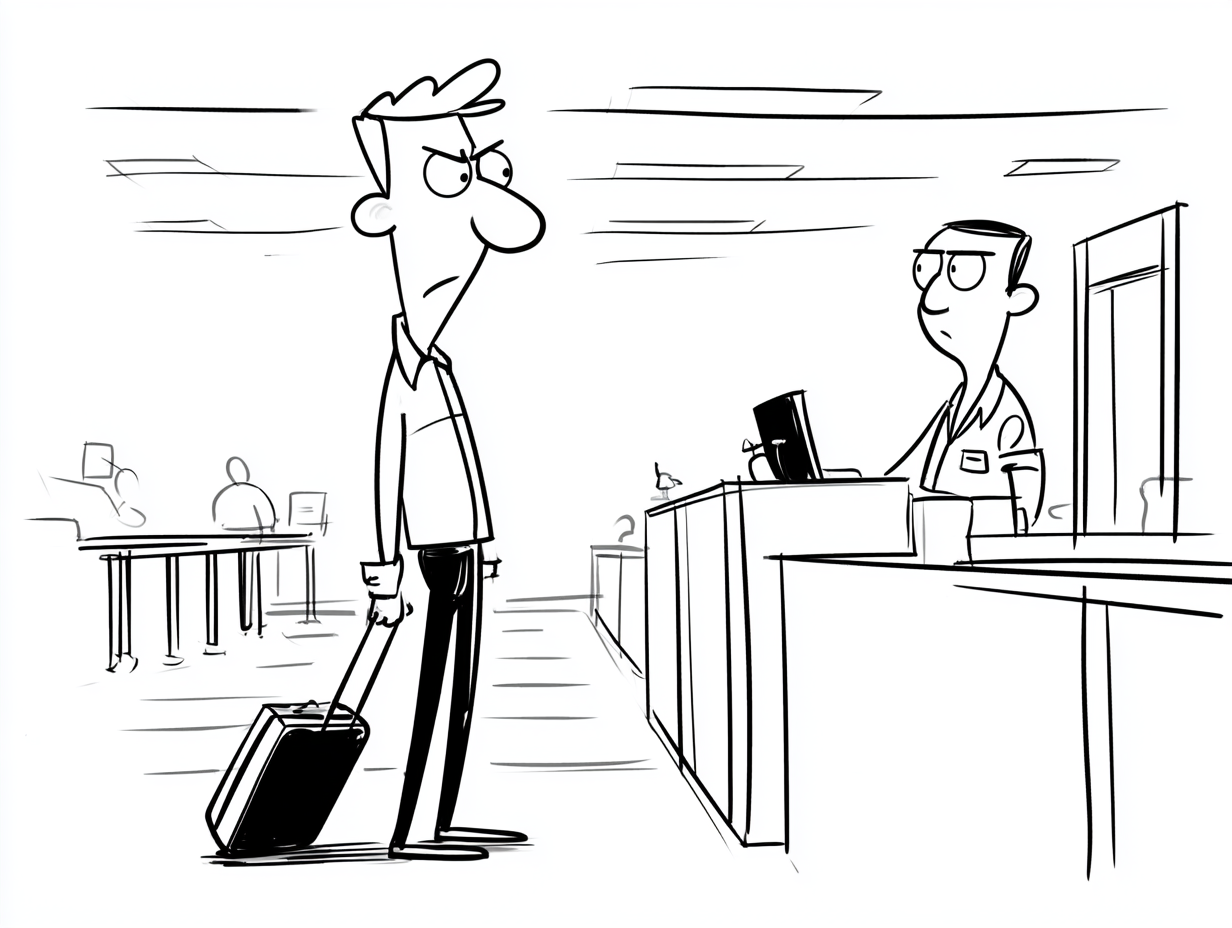
Minimal black and white line cartoon of a wide-eyed traveler holding a rolling suitcase at an airport counter while an agent behind the desk gestures, suggesting a conversation about baggage.

The war is over. Let’s bring airline baggage fees down now.

Peace negotiators may be dotting the i’s on a deal to end the Iran war, but air travelers are paying attention to something else: the cost of their checked bags. Remember when jet fuel prices spiked after the fighting broke out earlier this year? Every major American airline rushed to raise its checked bag fees. United, American, Delta, Southwest, JetBlue, they all went up. The airlines blamed the war, and at the time they had a point, since fuel had roughly doubled. But then the ceasefire came, oil pulled back from its highs, and guess what? Not one airline has announced it is bringing its luggage fees back down. There is a name for this pattern, and once you see how it works, and what Europe just did about bags while U.S. carriers went the other way, the summer ahead at the airport starts to look very different.

Vicky Tohopu, owner of NIU Shack in Raiatea, collects herbs for her vegan lunch

On Tahiti’s outer islands, time is the ultimate luxury

Vicky Tohopu’s quiche defies French tradition. She binds it not with butter and flour but with a grated breadfruit shell harvested steps from her open-air kitchen, filled with coconut, basil, and lime pulled from the valley’s volcanic soil. Under the table, a puppy named Cleopatra chews on a guest’s slipper. Everything here is vegan, and everything is worlds away from the manicured overwater-bungalow fantasy of French Polynesia. This is Raiatea, one of Tahiti’s outer islands, where Tohopu built a mountain refuge to survive after doctors gave her two months to live fifteen years ago. She unplugged from the grid, installed solar panels, pumped water from the river, and healed herself through a radical return to nature. A short ferry away on Huahine, a vanilla farmer works only half a day because the bean refuses to be rushed, and fishermen still let centuries-old stone traps and the tide bring in dinner. On these islands, sustainability is not a slogan but a rhythm, and the currency that buys paradise is one most travelers have forgotten how to spend.

Cartoon of a disappointed concertgoer holding a ticket stub while standing in a packed crowd far from a brightly lit stage where performers appear as tiny distant figures.

SeatGeek promised first-row seats. I got section G instead!

Sean Thomas paid SeatGeek $2,744 to see The Weeknd, and the listing made the value clear: premium floor seating in the first five rows, plus a special VIP merchandise bundle. Then the tickets arrived. They were for Section G, a long way back from the stage, and the VIP package did not match the terms SeatGeek’s own rules require. When he complained, the answers kept shifting. First a representative told him “first five rows” actually meant a general zone, not literal rows. When he disproved that, the company redefined the stage itself, suggesting runways now count as part of it, and then uploaded a brand-new seat map after he filed his complaint. His Buyer Guarantee was supposed to protect him against exactly this. What happened when he invoked it, and what SeatGeek finally said about his $2,744, is where the case turns.

Line cartoon of a worried woman holding a boarding pass and pulling a suitcase as her family of three sits anxiously in airport gate seats behind her.

“A travel nightmare”: United changed my flight but never told me — now I’m out $2,000

Krupa Singampalli had booked a United trip home from Australia for her family of four, with business class upgrades bought using miles and a copay for each passenger. The outbound leg went smoothly. The return became a nightmare. At 1 a.m. in Cairns, she opened the United app and saw her 74-year-old mother’s seat had quietly slipped to waitlisted. A schedule change had rerouted the whole family through Sydney, except the message announcing it had never reached her inbox. When they got to the airport, the partner airlines could not find their reservations, the agents pointed at one another, and a flight departed without them while she was still on hold. Desperate and unwell, she bought four new one-way tickets out of her own pocket just to keep moving. Only later did she learn what United had done with the seats she thought she still had, and what the airline would say when she asked it to make the whole thing right.

Cartoon of a shocked couple standing beside their blue rental Jeep, staring wide-eyed at a small pile of sand on the ground next to the vehicle's tire.

Budget’s $125 sand trap: When does a “dirty” floor mat become a rental car rip-off?

When Barb and Steve Pfeffer returned their rental Jeep after an eight-day hiking trip in the Pacific Northwest, the drop-off seemed routine. A friendly Budget agent verified the fuel, thanked them, and sent them on their way. It was anything but routine. Two weeks later, they found a $125 cleaning fee on their credit card. The reason? Excessive sand on the floor mats. Budget claimed the debris forced the Jeep out of service for detailing. The Pfeffers, who have rented cars for more than 40 years and never once been charged a cleaning fee, were stunned. They admit there was sand, they had been hiking in national parks for over a week, but they argue a couple of dirty mats hardly justify sending a car to a detailer. The deeper problem is buried in Budget’s contract, in a single phrase that lets the company decide, entirely on its own, what counts as too dirty and what that judgment will cost you.

lack and white cartoon of a woman laughing with her arms crossed beside two rolling suitcases at an airport check-in counter, while a uniformed agent gestures apologetically under a wall of flight boards.

Traveling? Here’s why you should pack your sense of humor

Did you hear the one about the professor who spent 24 hours trapped in airport hell trying to reach a conference on happiness? It is not a joke. Travel has become absurd enough that humor is now a survival skill, and psychologists say the gap between the trip we are promised and the circus we actually get is exactly the thing we should be laughing at. The interesting part is what laughter actually does for a stranded traveler, and the way experts say to use it that most people get exactly backwards.

Black and white cartoon of a small couple with suitcases standing on a dark horizon, watching a paper airplane folded from a banknote fly up and away into a vast cloudy sky.

Air travelers deserve stronger consumer protections—in Europe and the U.S.

Mila Schoun knew what his downgrade was worth, but his airline pretended it did not. Schoun and his wife had paid Swiss International Air Lines for premium economy on a flight from Prague to Miami, and then the airline changed aircraft and put them in regular economy for the 10-hour crossing. He asked for the difference back. Swiss refused. What Schoun had on his side, even if he had never heard of it, was EC 261, a 21-year-old European regulation that makes airlines pay when they cancel, bump, strand, or downgrade you, and that quietly protects millions of Americans on any flight leaving an EU airport. Europe just spent the spring fighting over whether to gut that law, with the airline lobby pushing to raise the delay threshold and erase most claims. Passengers appear to have dodged the worst of it. But there is a quieter problem that no one in Brussels lobbied for and no one fought against, one that has been draining the value out of this protection for two decades while everyone argued about something else.