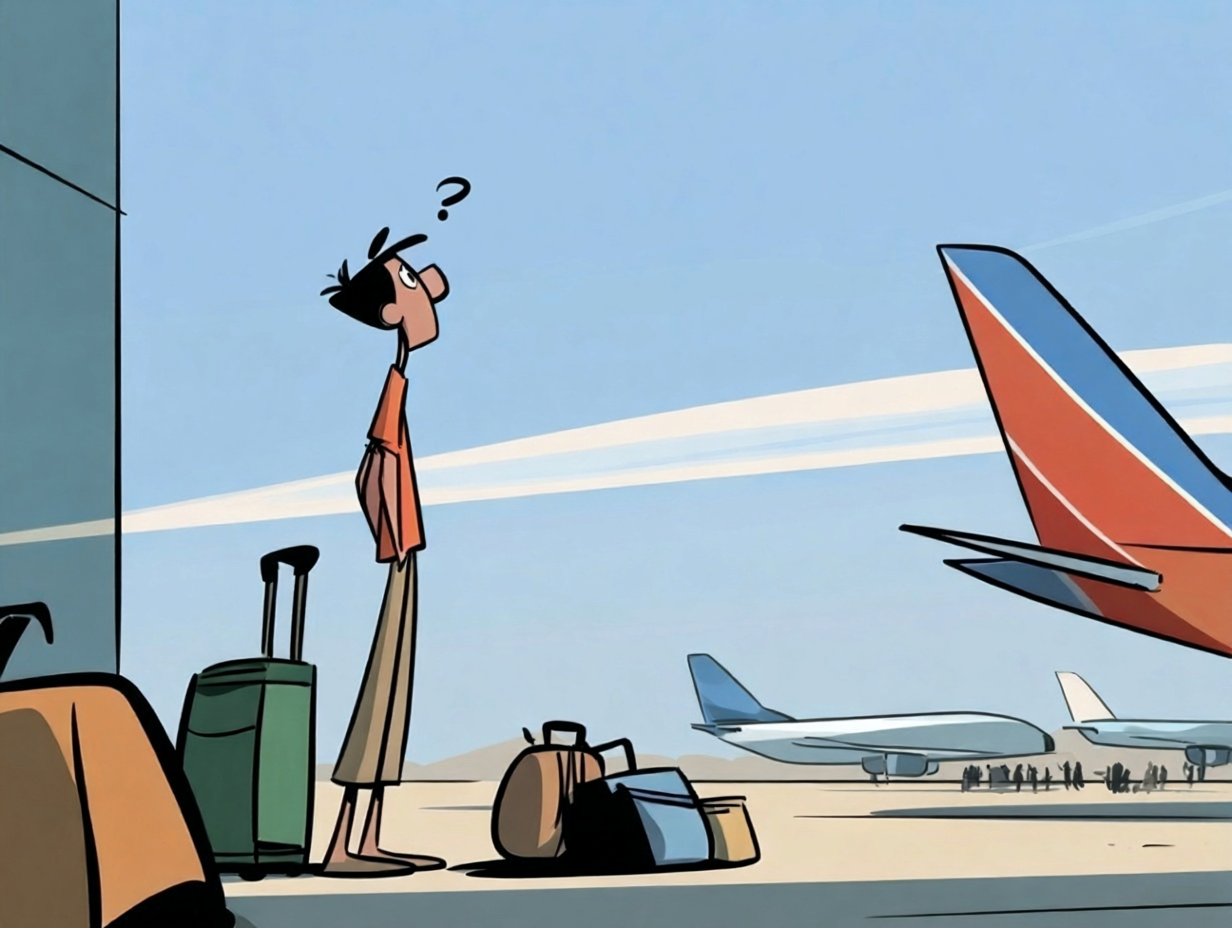
Guest sitting on a bed in a rented room with red stains spreading across the walls and floor

No, blood on the walls does not count as a vacation rental amenity

Michael Huang thought he had found a reliable and clean place to stay when he reserved a studio apartment in Penang, Malaysia, through Booking.com. Instead, he walked into something that looked like a crime scene.

There were stains on the surfaces that appeared to be blood. There was mold on the walls. The bedding was crumpled and smelly, carrying hair that did not belong to anyone in his family. Clumps of hair on the floor, spiderwebs through the property, a stained mattress, a dirty couch. In his words, it was a health hazard.

Hotel clerk asleep at the front desk while four guests wait in line with rolling suitcases

The ugly truth about August travel: Why you should stay home—or do this

Welcome to August, the month travel goes to die. The system has been redlining for months and now it is starting to crack. Planes are filthy. Hotels look neglected. The staff is exhausted and they are done with you.

If you are packing for a vacation right now, here is what you need to know. You are buying a product the system cannot always deliver. The infrastructure is built for a short summer sprint, not a hundred day marathon, and by the middle of August the machinery starts to sputter. The seasonal workers who staff the resorts and restaurants are leaving for the school year while the tourists are still arriving and the weather is still perfect. The people who remain are running on fumes.

Airline passenger reaching up to a closed overhead bin latch with a worried look

Would you pay extra to use the overhead bin?

Jetstar has announced that it will charge economy passengers to put a bag in the overhead locker. This is not the carry-on fee travelers already know. It is not a penalty for a bag that is too big or too heavy. It is a charge for the locker itself.

From February 2027, every Jetstar fare will include one under-seat bag measuring 40 by 30 by 20 centimeters, roughly a small backpack. Anything larger goes overhead, and overhead requires an add-on called Priority Carry-on, which runs between 25 and 52 Australian dollars one way depending on the route. The airline says the model keeps fares low, that customers pay only for what they need, and that the change came from passengers and crew who named gate weighing and the scramble for locker space as the worst parts of flying. The 7 kilogram weight limit goes away with it.

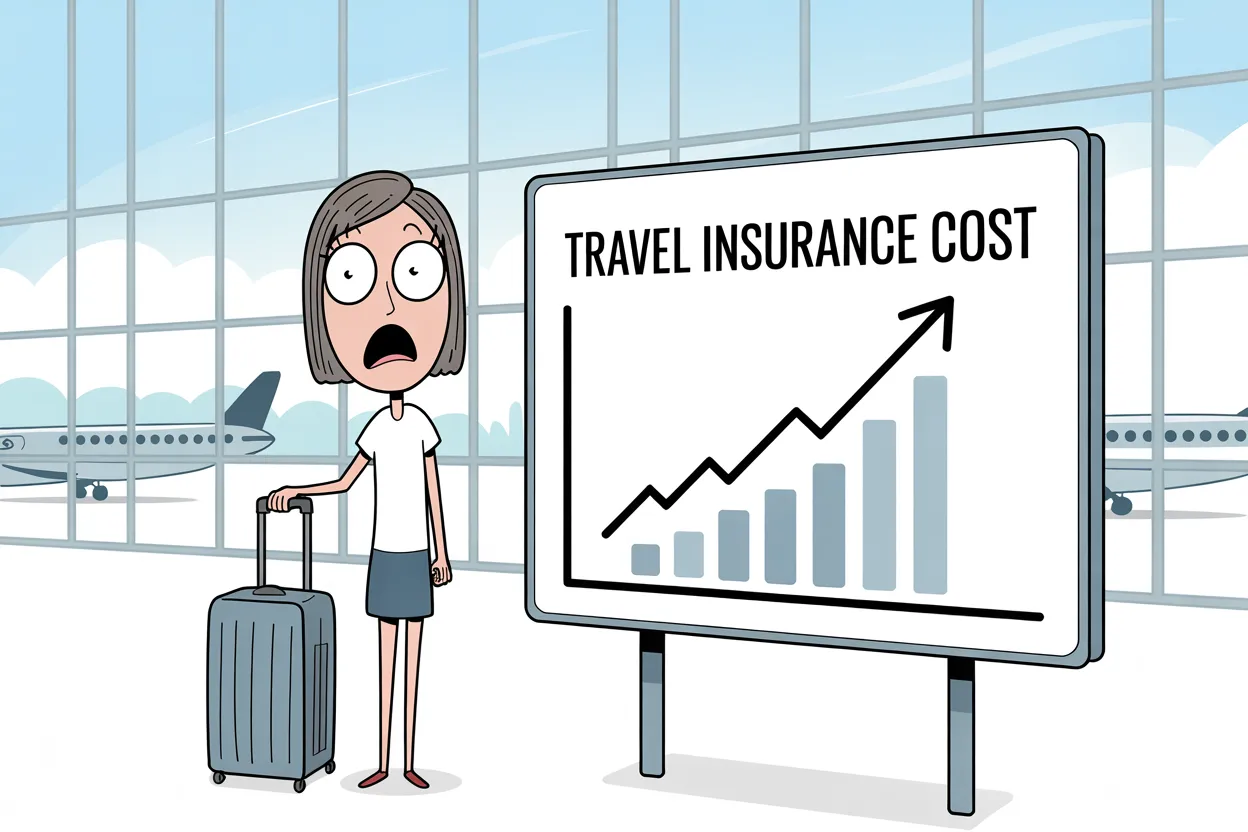
Traveler at a hotel front desk photographing a long paper receipt with his smartphone

More travelers are losing their insurance claims because of this. Don’t be one of them.

Something goes wrong on the road. A flight collapses, a bag disappears, you get sick in a country where you do not speak the language. You file a travel insurance claim expecting reimbursement, and then the insurer asks for documentation, and you realize you kept almost none of it. The blurry photos are on your phone somewhere. The confirmation email is buried. The hotel receipt is gone.

Industry experts say the event itself is rarely what sinks a claim. Missing paperwork is. And travel policies do not pay on your account of what happened. They pay on proof of loss, which means you have to be able to show what occurred, when, and what it cost you, in a form an adjuster can accept.

Cartoon of an exasperated woman in an apron standing hands-on-hips in her kitchen beside her wide-eyed cat, both staring at a green refrigerator with a taped-on "OUT OF ORDER" sign.

Sears left me without a refrigerator for six months—how do I fix this?

Karen Plaskon’s refrigerator died in February. That should not have been a crisis, because she had paid for a Sears Master Protection Agreement, the whole point of which is to make a failure like this someone else’s problem. Sears approved a replacement in April. Then the real ordeal began. The Frigidaire she ordered was canceled over delivery delays. Sears suggested a GE model in June. That one did not show up either. She spent hours on the phone, shuffled between departments that blamed vague “manufacturing delays,” while retailers like Costco were delivering refrigerators in days. Years earlier, Sears had settled a similar problem by simply cutting her a check. This time, it said that option no longer existed. Six months in, she still had no working refrigerator and no clear answer, just the question of what a protection plan is actually worth when the company that sold it decides to stall.

Cartoon of a shocked couple standing beside their blue rental Jeep, staring wide-eyed at a small pile of sand on the ground next to the vehicle's tire.

Budget’s $125 sand trap: When does a “dirty” floor mat become a rental car rip-off?

When Barb and Steve Pfeffer returned their rental Jeep after an eight-day hiking trip in the Pacific Northwest, the drop-off seemed routine. A friendly Budget agent verified the fuel, thanked them, and sent them on their way. It was anything but routine. Two weeks later, they found a $125 cleaning fee on their credit card. The reason? Excessive sand on the floor mats. Budget claimed the debris forced the Jeep out of service for detailing. The Pfeffers, who have rented cars for more than 40 years and never once been charged a cleaning fee, were stunned. They admit there was sand, they had been hiking in national parks for over a week, but they argue a couple of dirty mats hardly justify sending a car to a detailer. The deeper problem is buried in Budget’s contract, in a single phrase that lets the company decide, entirely on its own, what counts as too dirty and what that judgment will cost you.

Black and white cartoon of a frazzled airline passenger facing a smiling gate agent at a counter, who holds up a document labeled "OUR RULES," illustrating the gap between what travelers want and what the DOT's disclosure rule actually delivers.

Congress asked for passenger rights. It got a PDF

Airline passengers are tired of standing at the gate while agents hand out excuses. The Department of Transportation has a fix. Soon, airlines will hand out a piece of paper instead. The DOT just finalized a rule requiring airlines to publish a one-page summary of passengers’ rights. Congress ordered it eight years ago. The rule does not set any compensation amounts. It does not require meals, hotels, or rebooking when there is a delay. Each airline only has to briefly summarize its own existing policies, in whatever format it likes. The rule also skipped the public comment period, and in a detail that is hard to make up, the summaries are not even due yet, because carriers cannot submit anything until a separate government approval process is complete. When the regulated industry shrugs at a new regulation, that means something, and this rule drew no objection at all.

Line-art cartoon of an annoyed woman standing on her front steps with a hand to her head, watching a delivery van drive away down her suburban street.

Shein sent my package to my old address after I requested a return. Can I get a refund?

Alyssa Klenotich placed a $153 Shein order, then realized the site had autofilled her old address. She tried to fix it on the Shein website, but it was too late for the company to change anything. So she went to the carrier, SpeedX, and asked it to return the package to the sender so she could get a refund, and SpeedX accepted the request in writing. Then it delivered the package to the old address anyway, and her items were gone. SpeedX kept sending her form responses telling her to talk to the merchant, and she could not see why a loss the carrier caused was suddenly her problem to chase. Here is the principle worth knowing when a shipment goes sideways: you almost always go back to the merchant first, because that is the company you have a contract with and the one that hired the shipper, and the seller, not the carrier, is the party with the authority to issue your refund.

Cartoon of a shocked older couple sitting on a couch staring at a phone showing the Princess Cruises app, reacting to news that their booking has gone wrong.

He paid $2,369 for his cruise, but Princess canceled the reservation anyway

Robert Battaglia paid $2,369 for a Panama Canal cruise with Princess, booked through a travel agent, and he and his wife Norma paid the final balance a day before it was due. Two days later, he opened the Princess app and the reservation was gone. When his travel agent called, a representative said the couple were in default for nonpayment and owed roughly $2,000 more, though no one could say where the charge came from. It eventually traced back to a Princess Plus upgrade his wife had tried to add online, only for the website to report that the purchase failed and tell her to handle it later. Princess canceled the booking anyway and kept $1,298 as a cancellation fee, even though the account showed no balance due and the agent could see no pending charge. Here is the principle worth holding onto before you accept a cancellation like this: when a customer pays on time and the company’s own statement shows nothing owed, the burden is on the company to explain any later charge before it takes punitive action, not after.

Cartoon of a glum man standing alone outside a packed UFC arena as crowds stream past him to the entrance, illustrating a fan shut out of an event he paid for but could not attend.

StubHub’s FanProtect guarantee fails: The $4,606 ticket he never got

Roland Nazariyan paid $4,606 to see a UFC fight, and he missed the main event. He had ordered three tickets through StubHub on the day of the fight, and when none of them arrived in time, he called the platform. It refunded the first two orders after he sent screenshots showing the tickets were never delivered. The third and most expensive order sat in limbo, marked as in final escalation, and then came back denied: a seller had claimed the ticket was transferred, and StubHub told him he had never even contacted the company about it, despite its own emails in the thread asking him for proof. Here is the standard worth holding any reseller to before you accept a denial like this. StubHub’s FanProtect guarantee promises that you will get your tickets in time for the event, and if not, comparable or better tickets or your money back. A guarantee, in other words, is only as good as a company’s willingness to honor the words it is built on.