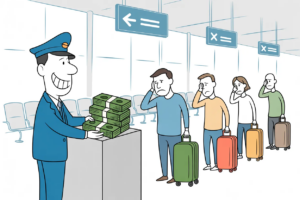
Celia Dunlap thought she had bought a little certainty when she paid an extra $805 for travel insurance before her Southeast Asia tour. But when her operator slashed a 40-day itinerary down to just 10, she found herself holding a nonrefundable airline ticket worth $4,500.
“My insurance policy didn’t cover my cancellation,” said Dunlap, a retired attorney from Littleton, Colo. “The policy was worthless.”
Travelers keep buying protection, and this year they’re buying it despite all the terms and conditions that sometimes make it unusable — and even though there’s less to protect you from.
It’s been the quietest Atlantic storm season on record. The Atlantic passed Sept. 11 without a hurricane, breaking a mark that had stood since 2002. Five tropical storms formed but none turned into a hurricane. By accumulated cyclone energy, a measure of how much storm power a season generates, 2026 is running more than 90% below normal. A strong El Niño has been tearing apart thunderstorms before they can organize.
The selling hasn’t slowed. The global travel insurance market is still on track to grow from $22.1 billion in 2025 to $56.5 billion by 2034. Caribbean bookings placed through the insurance marketplace Squaremouth are running 21% ahead of last hurricane season.
“This reflects a shift in traveler behavior, showing that they are seeking additional flexibility—just in case,” says Lauren McCormick, a spokeswoman for Squaremouth.
Travel insurance only covers specific circumstances, such as a trip interruption or a medical emergency, as Dunlap discovered. Insurance isn’t the only product being sold to nervous travelers. Hotels, cruise lines and ski resorts are writing promises of their own.
Why don’t travel insurers present a spreadsheet listing every conceivable situation for reimbursement? Check all the coverage you want and then get a price.
If you don’t like the price, roll the dice and uncheck a few. Everyone then knows risks and exclusions.
How do you “guarantee” your vacation?
These are the promises that show up most often:
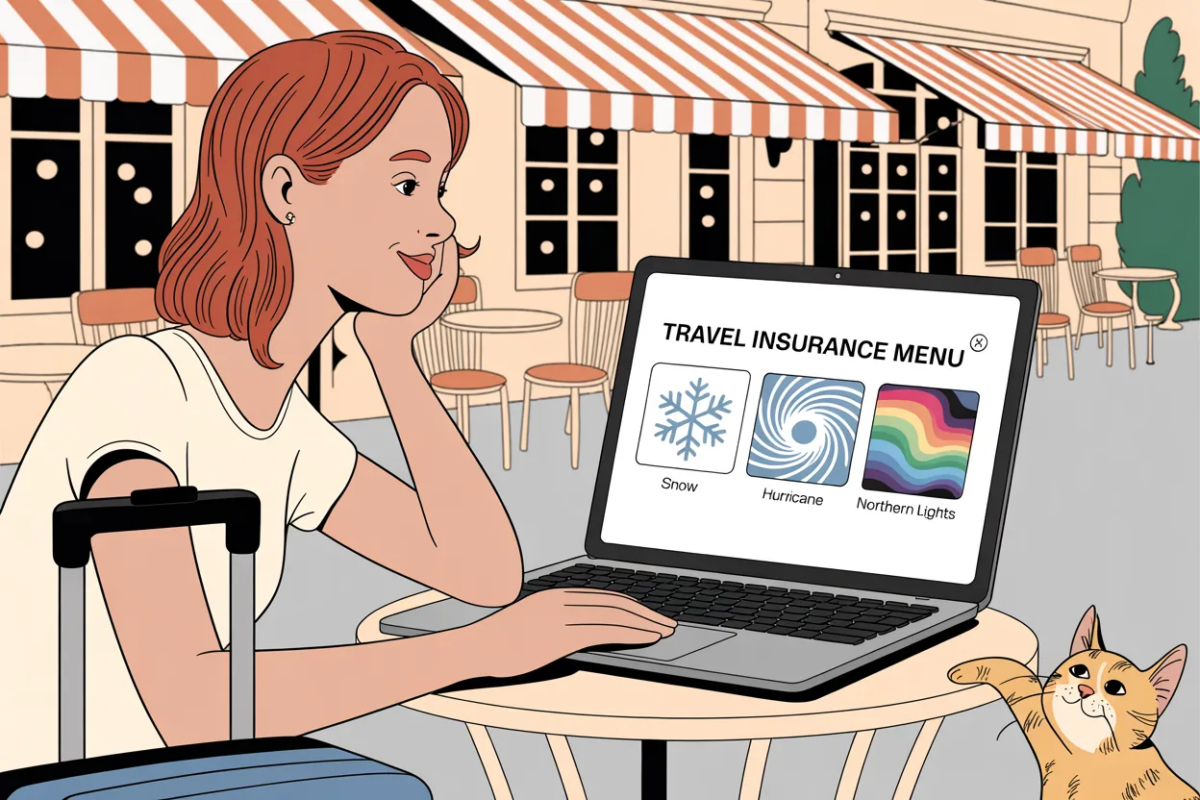
- Hurricane guarantees. Caribbean resorts waive cancellation fees when a storm threatens your dates. Baha Mar, which houses Grand Hyatt, SLS and Rosewood, will refund or reschedule if NOAA issues a hurricane watch or warning within seven days of your departure. Direct bookings only, and it doesn’t cover your airfare.
- Northern Lights promises. Hurtigruten, the Norwegian coastal line, promises you’ll see the aurora on your Norwegian cruise or your cruise is free (conditions apply). Havila Voyages offers a similar guarantee.
- Weather and snow guarantees. Some ski resorts now back their snow with a refund instead of an elevation chart. Val Thorens in France has famously issued snow guarantees. If rain is the worry, companies like Sensible Weather partner with hotels to offer weather guarantees that pay out automatically based on the forecast.
Insurance is still the product most travelers reach for, but even expensive “cancel for any reason” policies often only provide partial reimbursements, typically 50% to 75%, and sometimes exclude taxes and specific fees from the payout.
One newer coverage option is called parametric insurance. The coverage provides for flight disruptions and luggage issues and pays out automatically when a clearly defined event occurs.
“Travelers aren’t naive,” says Márcio Spínola, chief product officer at AirHelp, which offers a parametric policy called AirHelp+. “They know disruptions are inevitable. What they’re rejecting is the idea that protection should come with friction, loopholes, or months of waiting.”
Why travelers want a sure thing
“The lack of predictability is what worries many travelers,” explains Daniel Price, co-founder of WeatherPromise. “Travelers consistently report that weather is the top concern that they can’t control.”
The worry is outrunning the weather. Bookings to the Caribbean are up while the storms stay away, and travelers are still paying to protect trips against hurricanes that never formed.
“The world seems unsafe and our well-being is threatened,” says Thomas Plante, a psychology professor at Santa Clara University. “This is a perfect recipe for costly insurance. It helps people to ease their anxiety.”
Anxiety has turned travel into a financial product. Nobody booking a $50,000 trip to Antarctica is chasing spontaneity. They want to know what happens to the money when something goes wrong.
Phil Lockwood, a luxury travel broker, tells me his clients aren’t trying to guarantee perfection. “They’re trying to limit regret,” he says.
Do the guarantees work?
Whether the extra money is worth it depends almost entirely on the conditions attached.
- If you’re buying travel insurance, read the exclusions before you buy. Standard travel insurance is filled with exceptions. Even a “cancel for any reason” policy has limits. “It comes with very specific requirements that must be followed,” explains Terry Boynton, president of Yonder Travel Insurance. “it’s important not to make assumptions about it to ensure your coverage actually works when you need it.”
- Weather guarantees also have specific conditions. A typical WeatherPromise might be: “We promise to pay you $3,000 if you have more than two rainy days during your vacation.” It defines a “rainy day” as any day with more than two hours of rain between 8 a.m. and 8 p.m. Read those definitions closely, because they’re where the payout lives or dies.
- For hurricane and northern lights guarantees, the same rules apply. (I run a consumer advocacy organization, and we haven’t received a single complaint about any of these guarantees in the past year.)
Before you decide to skip coverage, remember that hurricane season isn’t over. It runs through Nov. 30. Jeff Masters, the hurricane scientist who co-founded Weather Underground, puts the odds of at least one Atlantic hurricane this year at about 80% and says not to be surprised by one or two from late September on. Remember, once a storm has a name, standard trip cancellation and interruption coverage won’t apply to it.
The guarantees pay out when the conditions are met, but the conditions are narrow.
“Review your travel insurance documents to understand what is covered and what is not covered,” says Daniel Durazo, director of external communications at Allianz Partners USA.
The human safety net
You may not be able to eliminate all the risk, but you can manage it better with a human travel advisor.
“I set expectations for my clients that there are no guarantees your trip will go exactly as planned,” says Jennifer Fernandez, a Fora travel advisor. “There is inherent risk in any form of travel, but being prepared—like having an emergency plan—can help.”
Fernandez says the person who rebooks you at midnight is worth more than the document. She points to the Caribbean airspace closures in early January, when U.S. military action against Venezuela stranded travelers across the region.
Insurers went to their exclusion clauses, she says. Advisors went to work rebooking flights, and some chartered ferries and yachts to move clients out.
Maybe you should embrace the unknown instead
There’s an argument that chasing a risk-free trip ruins the trip. Amanda Persi, founder of The Getaway Co., recently led a northern lights trip to Norway. She told her guests upfront that the lights might not show.
“We were very clear with our guests upfront that the aurora borealis can’t be guaranteed,” Persi says. “What surprised me was how relieved and receptive people felt once that pressure was removed.”
Persi argues that we’ve started to conflate peace of mind with certainty. By chasing a specific outcome, we miss the point of being present in a remote place. When her group finally saw the northern lights, it felt like a gift rather than something they were owed by a contract.
“Travel doesn’t need to be risk-free to be meaningful,” she says. “More often than not, it’s the uncertainty that makes a trip truly feel unforgettable.”

Have a question about this story? Tell us what happened — we read every comment.
Join the conversation