in this commentary
- Well traveled Americans are increasingly trying to blend in with locals by avoiding large groups of compatriots and downplaying their nationality to escape the loud tourist stereotype.
- Cultural sensitivity abroad involves more than just manners, as travelers are now ditching signature Americanisms like baseball caps and designer sneakers in favor of more discreet local fashion.
- Maintaining a low profile through quieter conversation and situational awareness can help visitors avoid becoming targets for anti-American sentiment while they are exploring foreign destinations.
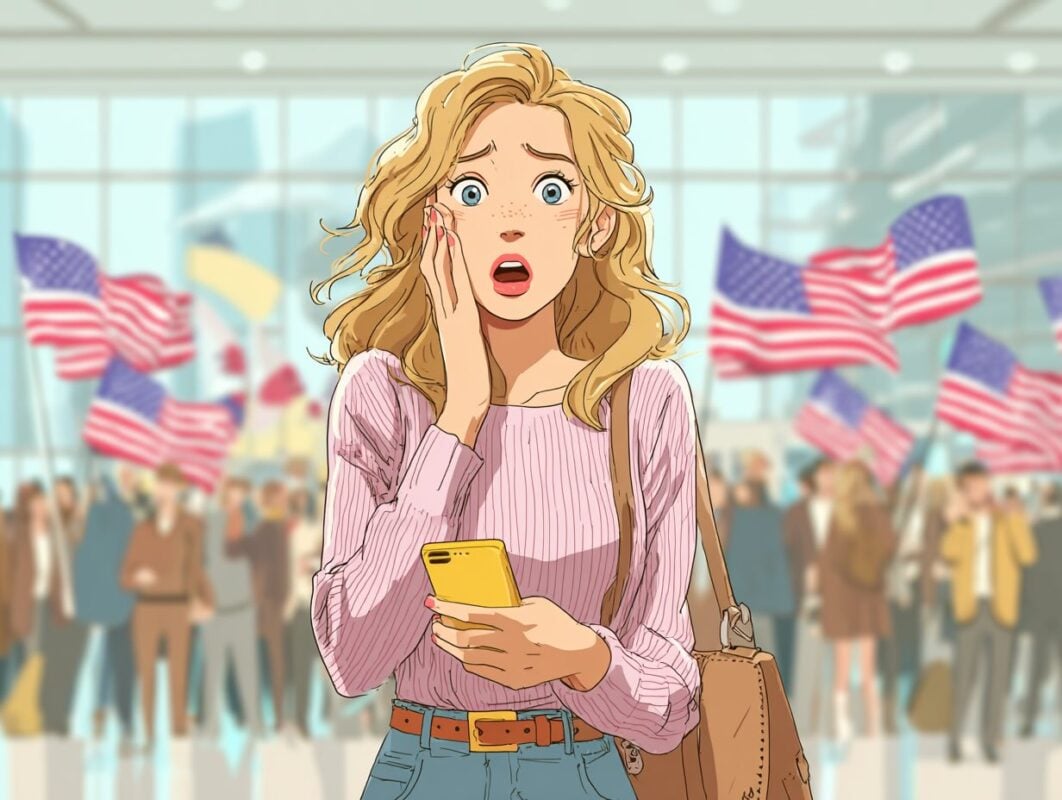
Shirley Barchi doesn’t want anyone to know she’s American when she travels abroad.
“The loudest voices are almost always Americans,” she complains. “They don’t respect the culture and language of the country I’m visiting. And they’re often rude if a server or clerk doesn’t speak English.”
So Barchi, like a lot of other well-traveled Americans, is distancing herself from her countrymen.
“There’s no need to associate myself with them,” says Barchi, a retired IT professional from Clermont, Fla.
Barchi avoids large groups of her compatriots and tries to blend in with other guests. And when someone asks where she’s from, she hesitates to answer, preferring to change the subject. But some visitors are going a step further.
Being culturally sensitive isn’t always easy
There have always been travelers who have downplayed their nationality. That trend has accelerated in the last year. Politics is certainly a factor, but Americans are often targeted when they’re abroad, regardless of which political party controls the White House.
But there’s something else driving it, and that is the American visitors themselves. Increasingly, it feels as if they forgot to pack their manners.
“In this era of social media and Instagrammable travel experiences, there’s been a rise in prioritizing personal gratification and comfort over full cultural immersion when traveling,” says Claire Law, a psychotherapist from Preston, England, who has studied travel behavior. “With that mentality, it’s perhaps unsurprising that problematic behavior is becoming more commonplace.”
Law says the underlying causes behind abrasive behavior are complicated and culturally rooted. For example, while assertiveness may be an important quality for Americans, it may be frowned upon in Asia. That doesn’t necessarily mean Americans are rude. They’re acting as they normally would instead of adapting to the culture of the country they’re visiting.
I travel 365 days a year, almost exclusively outside the United States. I’ve seen other Americans act abrasively so often lately that it surprises me when they behave respectfully. There’s a whole suite of Americanisms that rubs people the wrong way, from the volume (loud) to the way we dress (logoed T-shirts and sneakers) to the to the seemingly polite phrases that somehow come off as phony. (You know, “please,” “thank you” and “I really appreciate it.”)
I love being American, but sometimes I don’t love being around Americans when I travel. And I’m not alone.
How are travelers distancing themselves from American tourists?
Here are some of the ways American travelers are keeping a polite distance from the rest of the group:
Change of clothes
If you don’t want anyone to think you’re American, you have to dress the part. “I don’t believe in dressing in T-shirts and cutoffs or jeans when I travel abroad,” says Gloria Howard, a retired credit manager from Waterloo, Ill. “I try to always look well-kept and dressed according to the venue I will be attending.” No logoed shirts, no baseball caps worn backward. All those things identify you as an American tourist.
No sneakers
How do people spot an American abroad? “Our shoes are a giveaway,” says Thomas Plante, a psychology professor who has studied visitor behavior. U.S. guests love to wear designer sneakers, which are uncommon in other parts of the world. When Plante doesn’t want anyone to know he’s an American, he switches his footwear. When he was in Hungary a few years ago, he even bought an inexpensive pair of casual shoes to look like he belonged.
Turn down the volume
It’s true, compared to many other countries, Americans are a little louder. But it doesn’t have to be that way. “Don’t talk loudly with one another or on speaker phones,” says Barry Maher, a professional speaker based in Santa Barbara Calif. “Have a little awareness of your surroundings.” If you did, you might notice that no one else is yelling into their phones — or at each other. Or that doing so immediately identifies you as an American visitor.
Mind your manners
Often, it’s just a matter of brushing up on your etiquette. “I see Americans who are loud, rude, and entitled when I’m abroad,” says Sergio Diaz, a talent agent who frequently travels internationally. “Many Americans think they are the center of the world and then act that way,” he says. Diaz believes this behavior has gotten worse during an election year. He says he recoils when he sees MAGA caps and T-shirts because of the behavior it often brings with it.
American tourists do one more thing that immediately identifies them as U.S. tourists. They tip, even when it’s not the local custom. And it’s often done very publicly, with bills being parceled out to a bellman or server for the whole world to see. Some feel this public kind of payment offensive.
Should you deny you’re American?
No wonder then that some visitors are taking an extra step away from the other Americans by denying their nationality.
Ross Copas, a retired electrician from Tweed, Canada, was traveling with some American friends in Europe when a restaurant server asked where they were from.
“Ontario, Canada,” said Copas, while the Americans remained silent.
Copas had a good laugh. Canadian tourists have a reputation for being polite and a little quieter than the Americans, so the good will benefitted his travel companions.
I asked Copas how he would feel about Americans who wear a Canadian flag pin, leaving others with the impression they’re Canadian when they are not. He says he has mixed feelings about that.
“I guess it’s OK,” he says, “as long as you act the part.”
Why you should keep your nationality to yourself when you travel next year
Has it gotten so bad that you have to dress down, shut up and lie about your nationality?
Look around. Anti-American sentiment is not difficult to find when you’re abroad. It’s probably not your fault. If you’re reading this story, chances are you’re not in charge of setting U.S. foreign policy. But still. People think of you as an ambassador for your country. If you don’t want to be a target for anti-American sentiment, you’ll want to blend in.
“It’s always best to maintain a low profile when you’re traveling overseas,” says Bob Bacheler, a frequent international traveler who runs a medical transportation service.
In other words, you can lose sneakers and hoodie, turn down the volume and be respectful and still be proud of your nationality. I am.
How to blend in abroad
A guide for the incognito American traveler
The wardrobe shift
Social behavior
Mind your manners
your voice matters
Americans are increasingly changing their behavior and appearance to avoid being identified as tourists abroad. We want to hear your thoughts on cultural blending and travel identity:
- Have you ever felt the need to hide your American nationality when traveling in a foreign country to avoid being judged or targeted?
- Do you agree with the advice to ditch sneakers and baseball caps in favor of local fashion, or should travelers be allowed to dress as they do at home?
- What is your take on the “Canadian flag pin” tactic? Is it a harmless travel hack or an ethically questionable way to escape a bad reputation?

Have a question about this story? Tell us what happened — we read every comment.
Join the conversation