The dream of a luxury resort getaway usually doesn’t include the resonant baritone of a 100-pound Doberman Pinscher echoing through the hallway at 3 a.m. But it did for Terry Reilly and his wife when they checked into the Westin Hilton Head Island Resort & Spa.
A longtime marketing executive, Reilly knows a thing or two about brand promises. He spent his career analyzing customer satisfaction for Fortune 500 companies. Ironically, Marriott—the parent company of Westin—was once one of his clients.
So when Reilly and his wife checked in, they expected the “Six Pillars of Well-Being” that Westin splashes across its marketing.
Instead, they found themselves in pet heaven: a hotel that markets itself as pet-friendly but interprets that as “anything with four legs and a pulse gets a free pass.”
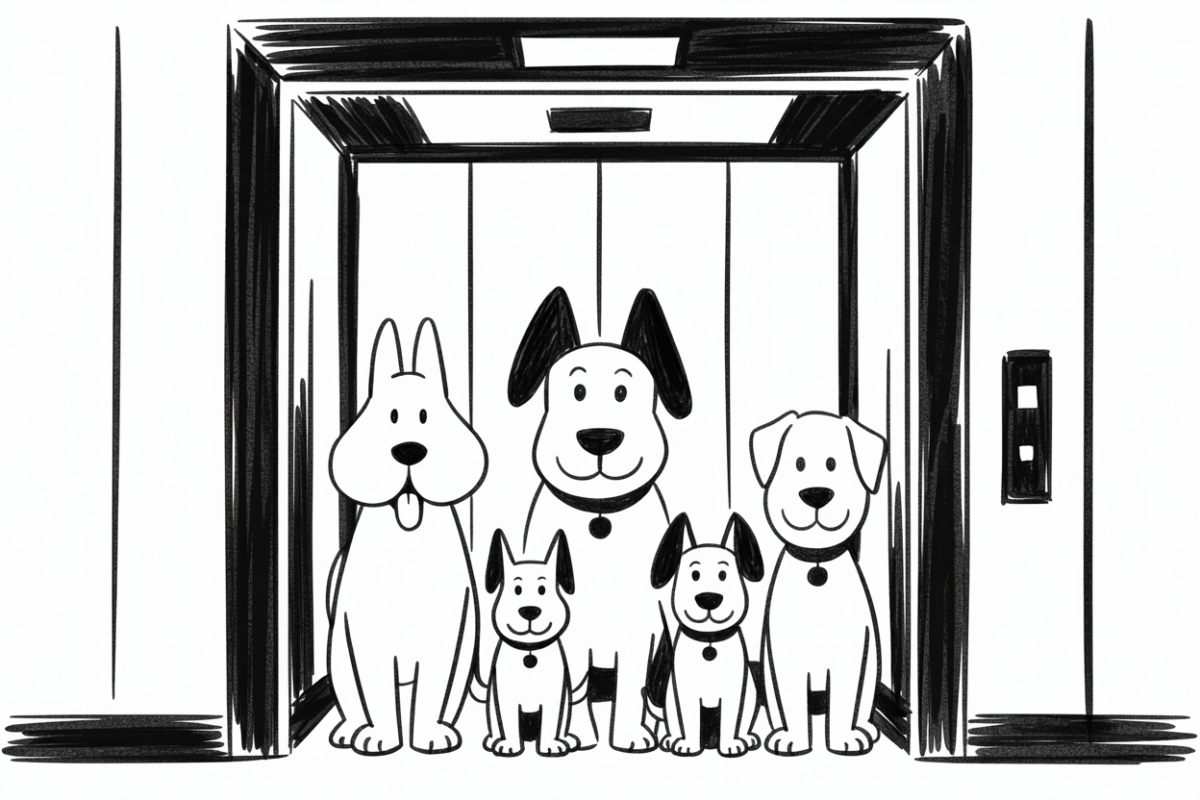
The Westin Hilton Head’s website is specific: pets up to 40 pounds are welcome, with a limit of two per room. But the reality on the ground was more like a casting call for a Best in Show sequel. Reilly spotted German shepherds, collies, and pointers that clearly blew past the weight limit. Dogs were in the elevators, dog hair was under the furniture, and one unfortunate pup even left a souvenir on the carpet that sat there for 24 hours.
For Reilly’s wife, who suffers from dog allergies, her stay became a health hazard.
This case raises several important questions:
- How can travelers hold hotels accountable when they ignore their own published pet policies?
- What are the legal and health implications of pets in “human” spaces like hotel restaurants and lobbies?
- How does a high-status loyalty member navigate a corporate “ghosting” when a local manager refuses to respond?
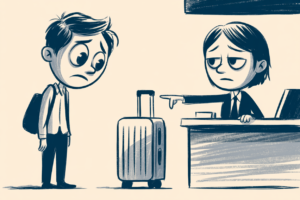
Reilly tried the direct approach. He wrote to the hotel’s general manager, citing the specific violations of the hotel’s published policy. He pointed out that while he doesn’t mind having dogs in the hotel, he doesn’t like them in all the common areas, particularly in dining areas.
He waited. And waited.
The manager didn’t respond. That’s when he reached out to me.
Nope, nope, nope!
I am a dog lover and I’ve had dogs pretty much every bit of my 62 years. However… My dogs are trained. My dogs aren’t aggressive. My dogs don’t stay in hotels with me. If I’m traveling with a dog, I stay in campgrounds and state parks. One, the stay is much more suitable for a dog and there’s acres of room for me to exercise them.
Other owners annoy the heck out of me with their, “My precious darling wouldn’t hurt a fly” (while they’re chewing on the ankle of the person at the next table).
I had a dog, once, that was extremely gentle and loving; until it was time to go to the vet. She was a scent hound and all the smells would overwhelm her to the point of shaking with anxiety. I would always sit as far away as possible with her so she could relax some and get away from other dogs as she is now unpredictable.
Because she was an unusually seen pet, a coonhound, people always wanted to pet her. I would tell them they were fine to approach but to please not bring their dog with them. Guess what would happen? Every. Single. Time?
“Oh, my dog is fine and won’t harm anyone.” I would tell them, it’s not your dog I’m worried about, it’s mine. Did they listen? Nope.
It’s never a good idea to have that many people with (probably) poorly trained dogs. It sounds like the hotel was utter chaos.
How can travelers hold hotels accountable when they ignore their own published pet policies?
Let’s get one thing out of the way: The Reillys are not anti-dog.
“My wife and I like dogs,” he explains. “We are previous owners, and our two children have dogs that we enjoy.”
But when a hotel publishes a policy on its website, it’s a part of the contract you sign when you book the room. If a hotel says “no dogs over 40 pounds” and then allows a Great Dane in the suite next to you, it has breached that agreement.
To hold a hotel accountable, you have to act like a detective. That’s what Reilly did. He documented the list of breeds present and noted the weight violations. He documented the failure of the staff to enforce the rules in the elevators and common areas.
When your vacation goes to the dogs, your best weapon is the hotel’s own fine print.
Take a screenshot of the pet policy at the time of booking. If the reality on the ground contradicts the screen, you have evidence of a material misrepresentation. In the travel industry, that’s a big deal. If you’re allergic, it’s an even bigger deal because the hotel is now failing to provide a safe environment.
You should also look for the hotel’s brand promise (here’s Westin’s). Reilly, with his background in market research, cited Westin’s “Six Pillars of Well-Being”—specifically “Sleep Well” and “Feel Well.” He argued that a barking dog at night is a direct violation of the “Sleep Well” pillar.
When you use a company’s own marketing language, you have increased the difficulty for it to argue. It’s much harder for a corporate liaison to say, “Well, we don’t actually care about your sleep,” when the word “Sleep” is plastered all over the lobby.
If the local manager ignores you, don’t just give up. Be polite and persistent (check out the Elliott Method for details). Then escalate your case.
When you take it up the corporate ladder, stay focused on the policy violation, not just your feelings. Reilly’s letter was clinical, factual, and hard to ignore. He asked for a refund because the hotel failed to provide the service it promised in writing.
But Reilly’s case also brings up a broader question about pets in hotels.
What are the legal and health implications of pets in “human” spaces like hotel restaurants and lobbies?
We’re living in an era of “pet creep.” It started with service animals—which are protected by the Americans with Disabilities Act and should be welcomed—and has developed into a free-for-all where people have been trying to board airplanes with their emotional support peacocks.
Hotels are caught in the middle, afraid of a lawsuit if they ask too many questions.
But there are limits. In many states, including South Carolina, health codes are clear about where animals can and can’t be. Reilly noted that he saw pets in the indoor restaurants at the Westin Hilton Head, which he claimed was a violation of state sanitary laws. He even witnessed a fight between two dogs in a dining area.
When a hotel allows non-service animals into areas where food is served, it’s potentially breaking the law. If you find yourself dining next to a golden retriever that is sniffing the buffet, you have every right to complain to the hotel, if not the local health department.
The health implications for other guests are significant. Allergies are a real concern. A hotel that allows dogs to roam freely through every hallway and elevator is essentially telling guests with allergies that their health isn’t protected.
Reilly suggested a simple fix: Limit dogs to the first floor and assign specific elevators for pet use. It’s a common-sense solution that respects both pet owners and those who prefer a dander-free stay.
The problem is that many hotels have become pet-permissive rather than pet-friendly. A pet-friendly hotel has rules, designated areas, and cleaning protocols. A pet-permissive hotel just stops saying “no.” That creates a chaotic environment where the “People First” mission of a company like Marriott gets buried under a pile of dog hair.
And what’s worse than that? When the hotel ignores your well-reasoned complaint.
How does a high-status loyalty member navigate a corporate “ghosting” when a local manager refuses to respond?
Reilly is a Lifetime Titanium elite member. In the world of Marriott, that’s like being royalty. You’ve spent a small fortune and decades of your life staying in its hotels. Is it too much to expect a return email?
But even the highest status doesn’t always guarantee a response from a busy general manager. When the Westin Hilton Head didn’t reply, Reilly asked me for our list of Marriott executive contacts, which I was only too happy to provide.
If you are being ghosted, the key is having a paper trail. Send a polite follow-up. If that fails to get a response, move up the chain. Reilly found his way to a corporate liaison, who finally got the ball rolling. No need to get my team involved, although we were ready to help.
The irony here is that the hotel’s silence actually made the situation worse for the brand. By the time a senior operations manager finally responded, the list of grievances had grown. Reilly’s friends, who stayed at the same time, reported unlivable conditions, including a lack of heat in the rooms and the lobby.
When a company ghosts a loyal customer, it sends a message that the relationship is one-sided. For a “People First” company, that’s a brand-killer. Reilly knew that. He reminded Marriott that violating a brand promise in the age of social media is a mistake you can’t wiggle out of.
The tension in these cases usually comes down to whether the company will admit it messed up or try to offer a “points” bribe to make the guest go away. For a $525 stay, Marriott had a choice: stand by its failing pet program or stand by its loyal customer.
So, how did this sequel to Best in Show end?
After the corporate office stepped in, Westin’s tone changed completely. The hotel acknowledged that it failed to uphold its own pet policy, including the size limits and the distribution of pet rooms throughout the property. It admitted the nighttime disturbances and the cleanliness issues were unacceptable.
Westin offered a full refund of $525.
“Of course knowing who to contact from you allowed this to happen,” he says.
In the end, Reilly got his money back, but the Westin Hilton Head has some soul-searching to do. If it wants to be a dog park, it should market itself as one. But if it wants to be a luxury resort for humans, maybe it needs to keep the dogs on a leash.

Have a question about this story? Tell us what happened — we read every comment.
Join the conversation