in this case
- Air Canada destroys a passenger’s $1,000 Rimowa suitcase and sends it to an unauthorized repair shop.
- The airline initially offers an inferior replacement or a $230 check, arguing the 10-year-old bag is depreciated and has no receipt.
- Find out what happens when the passenger refuses the lowball offer and fights for fair compensation.
Air Canada has destroyed Donna Wells-Boyle’s expensive luggage, she claims. Is there a reason it won’t repair or replace her bag? And how much does it owe her?
Question
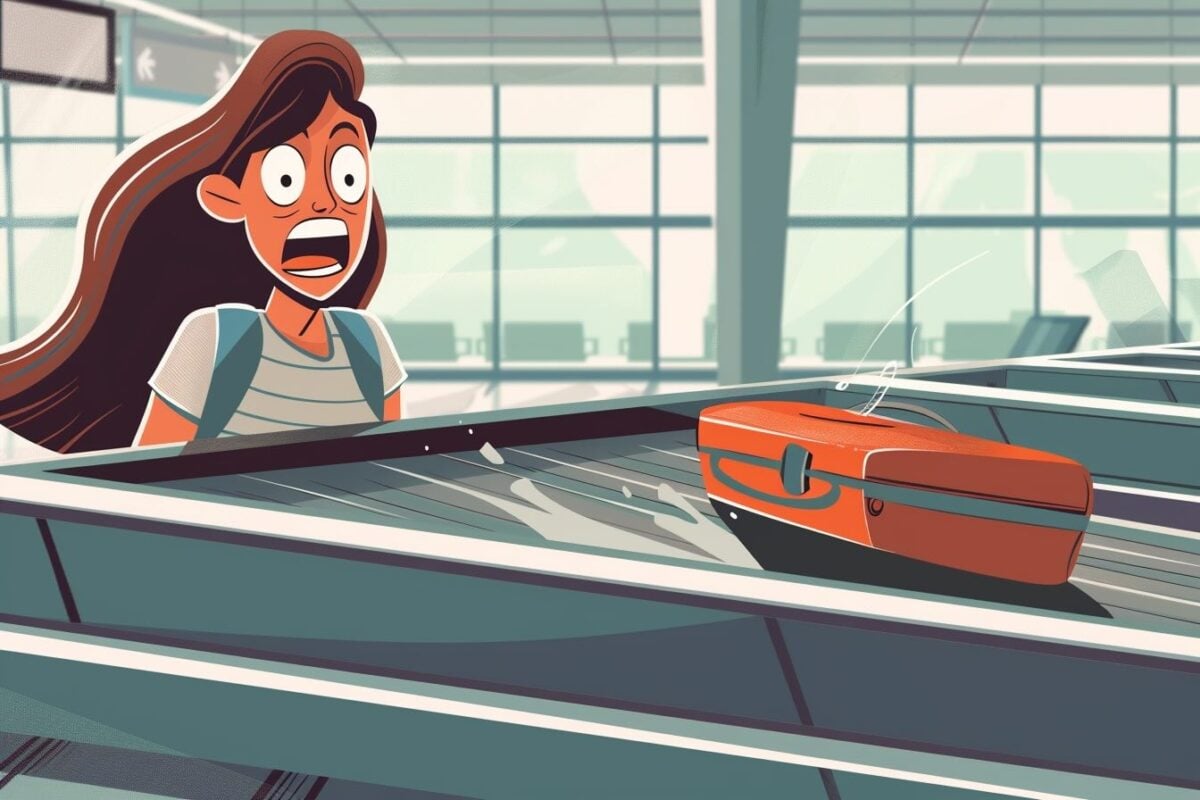
Air Canada destroyed my Rimowa suitcase on a recent flight from Toronto to San Francisco.
The airline instructed me to send the suitcase to a repair agent in Texas. The agent declared the suitcase unrepairable, despite the fact that they have no contract with Rimowa and no product expertise in that brand.
Air Canada then offered me a choice of inferior replacement bags, which I declined, and recently sent me a $230 check in proposed compensation.
I paid roughly $1,000 for my Rimowa bag, and it was of a quality to be a lifetime suitcase, so neither of these options is acceptable to me.
I have had multiple unsuccessful phone calls with Air Canada. I’ve escalated my complaint to the CEO by email using the contact information you provide on your website. I have received no response.
I would like Air Canada to either send the luggage to an authorized Rimowa repair shop and pay for the repairs or refund me for the luggage. Can you help? — Donna Wells-Boyle, Portola Valley, Calif.
Answer
Air Canada should have handled your luggage with care. And if your checked baggage was damaged while it was in the airline’s custody, it should have promptly paid for a repair or replacement.
Before I get to what went wrong, I have to say something about checking $1,000 luxury designer luggage. (Related: Problem with luggage: I waited too long to file a claim with my airline!)
Your voice matters
Donna’s $1,000 “lifetime” suitcase was destroyed by Air Canada. The airline’s compensation offer was just $230, citing the bag’s 10-year age and lack of a receipt. This dispute highlights the clash between passenger expectations for high-end gear and airline policies on depreciation. We want to hear your thoughts.
- What is fair compensation for a 10-year-old “lifetime” suitcase? Should the airline pay for a new one, or is a depreciated value (like $230) reasonable?
- Should Air Canada have sent the bag to an authorized Rimowa repair shop, even if the cost was high? Or is offering a “similar” (but inferior) replacement acceptable?
- Do you travel with expensive, luxury luggage? Or do you think passengers share some responsibility if they check a $1,000 bag that gets damaged?
I saw this recently when I was standing in front of a five-star hotel in Barbados (I was not staying there — too expensive!). Another guest had Italian designer luggage that didn’t belong in a cargo hold. It was strictly for show. (Related: Where’s my Air Canada voucher for $528? I’ve been waiting more than three months.)
Elliott’s guiding principles for luggage are durability and inconspicuousness. You scored well on durability: Your checked bag was made of sturdy plastic and, in your words, it was in “perfect” shape after many years and tens of thousands of miles of commercial air travel.
But you also want your checked bag to hold up to the rigors of travel without attracting too much attention, and pricey Rimowa luggage is a little flashy. You were lucky that no one stole it.
The bigger lesson is to document everything and know your rights under the Montreal Convention. Airlines bank on fatigue — you give up before they pay up. Donna stayed persistent, escalated smartly, and at least recovered half. Most passengers never even get that far.
Read more insightful reader feedback. See all comments.
How can you tell if you should check your luggage?
Checking a bag can feel a little iffy. Will your suitcase emerge unscathed on the carousel, or will it limp off with broken wheels and busted zippers?
Here’s what to look for to ensure your luggage is up to the task:
- Check the wheels: I always start there. The wheels should feel sturdy and roll smoothly. If they don’t, chances are the rest of the luggage isn’t made with quality parts — and it might fall apart.
- Consider the material: Hard-shell luggage offers better protection but can crack. High-denier nylon or polyester is durable and more forgiving. I like the newest hard-shell designs, but I’ve also seen some terrific nylon designs.
- Give it a squeeze: A sturdy suitcase shouldn’t flex much when you apply pressure. If it feels flimsy, it probably is.
- Look for reinforcements: Extra corner guards and edge protectors can prevent wear and tear in high-stress areas.
- Test the handle: Extend it fully and give it a good shake. Any wobbling is a red alert.
- Zip it: The zipper should glide easily and feel substantial. Look for models with self-repairing zippers.
Remember, even the toughest bag can fall victim to rough handling. Always remove valuables and fragile items before checking your luggage.
How can you get compensation if Air Canada destroyed your suitcase?
Under the Montreal Convention, which governs international flights, Air Canada’s maximum liability is $3,800, which is considerably more than you were claiming.
If Air Canada accepted your bag, and you paid a fee to have your luggage transported, it is responsible for transporting it to your destination safely. And it is also responsible for repairing your damaged luggage if it damages the luggage.
Sending your bag to someone who doesn’t understand how to fix Rimowa luggage is not my idea of of assuming responsibility for the damage. (Related: What should you do when an airline overcharges you for luggage?)
You bought the bag over 10 years ago and do not have the receipt, unfortunately. The bag’s serial number (assuming it’s not been thrown out at this point) would tell me the exact year of purchase. It certainly is past what was, at the time, its five-year warranty. (I believe the manufacturer now sells most of its bags with a lifetime warranty.)
You kept an excellent paper trail between yourself and Air Canada, which showed that you followed all the correct procedures. It shows you trying to get the luggage repaired and Air Canada then offering you an unacceptable replacement and then sending you a $270 check, which wasn’t enough to replace the luggage.
Here’s where things went off the rails a little. You’d worn out your luggage and didn’t have a receipt for it. Air Canada can ask for proof of your purchase when you request a replacement. If you don’t have it, you may not get the full amount. Also, given the bag’s age, there’s some depreciation.
It looks like you appealed this to one of the executive contacts for Air Canada that I publish on this site. And it also looks like Air Canada didn’t bother to respond. Not good. (Here’s our guide to resolving your consumer problem.)
You contacted my advocacy team for help. I asked Air Canada to review your luggage claim. Air Canada says that “after further review” they are sending you a second, $270 check. So your total compensation with the two checks comes to $500.
“I still think they owe me more,” you told me, “but I’m going to call it a day at this point.”
What to do when an airline destroys your luggage
How to fight back when they offer pennies for your pricey bag
Before you check in: prepare your proof
When your bag is damaged: act fast
If the airline refuses: escalate your claim
Executive Contacts
If your luggage claim is stuck or denied by Air Canada, try appealing to an executive. Here are the contacts who can help resolve your issue.

What you’re saying
Air Canada’s destruction of a 10-year-old Rimowa bag sparked a debate about compensation and the wisdom of checking expensive luggage. While the airline lowballed the passenger, readers were split on what “fair” really means.
-
The depreciation debate
Readers are divided. Gerri Hether found the passenger “a bit entitled” for wanting the full price for a 10-year-old bag, and Scott Kopper called the claim “ridiculous.” But Tim argued that if an airline destroys a bag, the passenger deserves a new one, not a depreciated amount. Marty Biscan compared it to an old car: “You’ll get what it’s currently worth but not what the value of it is to you.”
-
Expensive luggage is an invitation for trouble
Many readers argue that checking a $1,000 bag is a mistake. Alan Gore says brands like Rimowa “jump up and down yelling ‘I’m valuable’.” myterp and AJPeabody agree, preferring “budget-friendly” or “no great loss” bags that are less of a target. Neil called it “personal vanity foolishly” replacing common sense.
-
Documentation helps, but brand warranties are better
Top commenter Jennifer says the lesson is to “document everything and know your rights.” However, George Schulman shared a story where Qantas ignored all his receipts. Several readers, like SirWired and George Schulman, pointed to Briggs & Riley as the real solution, since its “Simple as That” warranty covers airline damage, no questions asked.


Have a question about this story? Tell us what happened — we read every comment.
Join the conversation