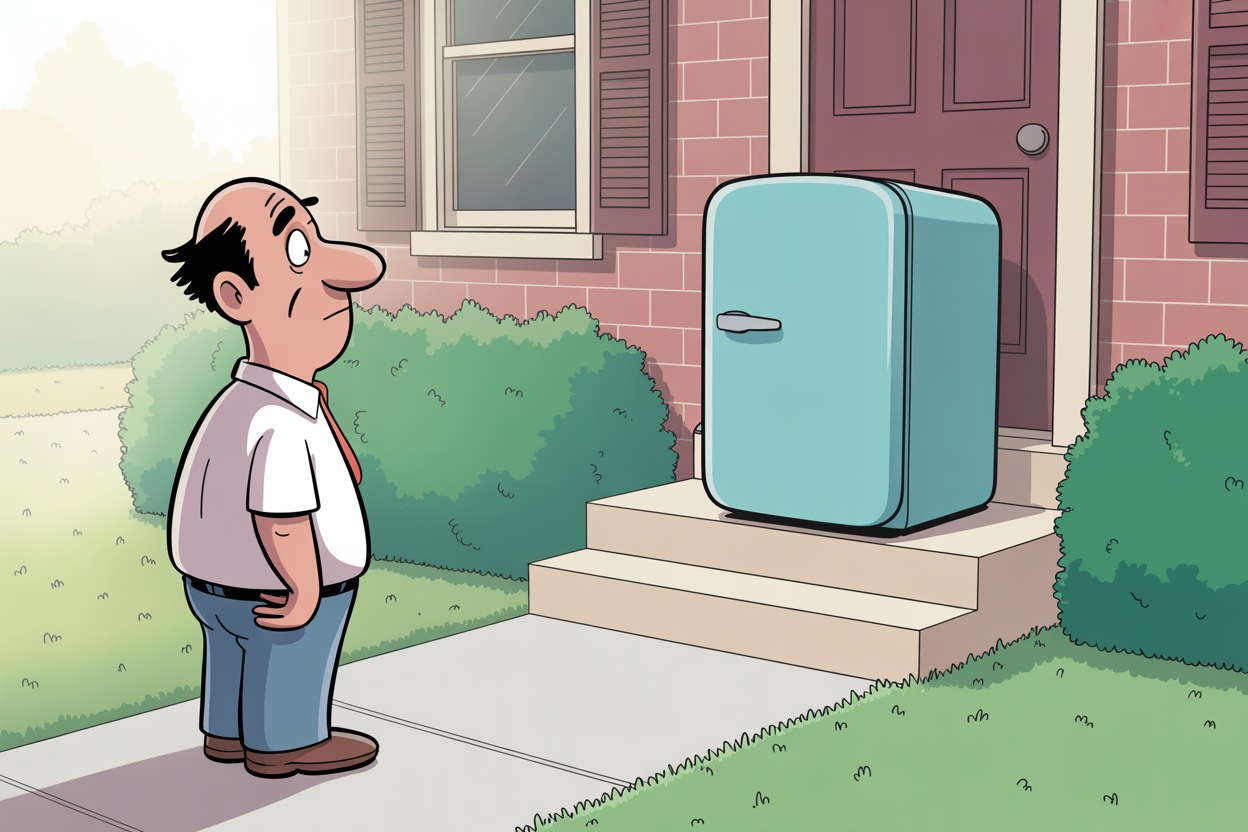
Editorial cartoon showing a confused balding middle-aged man in a white shirt and tie standing on his front lawn looking up at a small light blue mini refrigerator that has been mysteriously returned to his porch steps after being picked up by FedEx, illustrating how third-party seller returns can fail in unexpected ways

Walmart told me to donate my broken refrigerator — then things got strange

Howard Friedman bought a beverage refrigerator from Walmart that did not get cold. After Walmart arranged a return, his replacement came from third-party seller Ca’Lefort and also failed. FedEx picked up the broken refrigerator then mysteriously delivered it back to his porch days later. Ca’Lefort refused returns without original packaging and offered only 50 percent off a replacement. Walmart told him to donate the broken refrigerator to charity and promised a refund that never arrived. Multiple calls produced dropped calls and apologies but no resolution. Federal consumer protections under FTC rules apply even with third-party marketplace sellers.
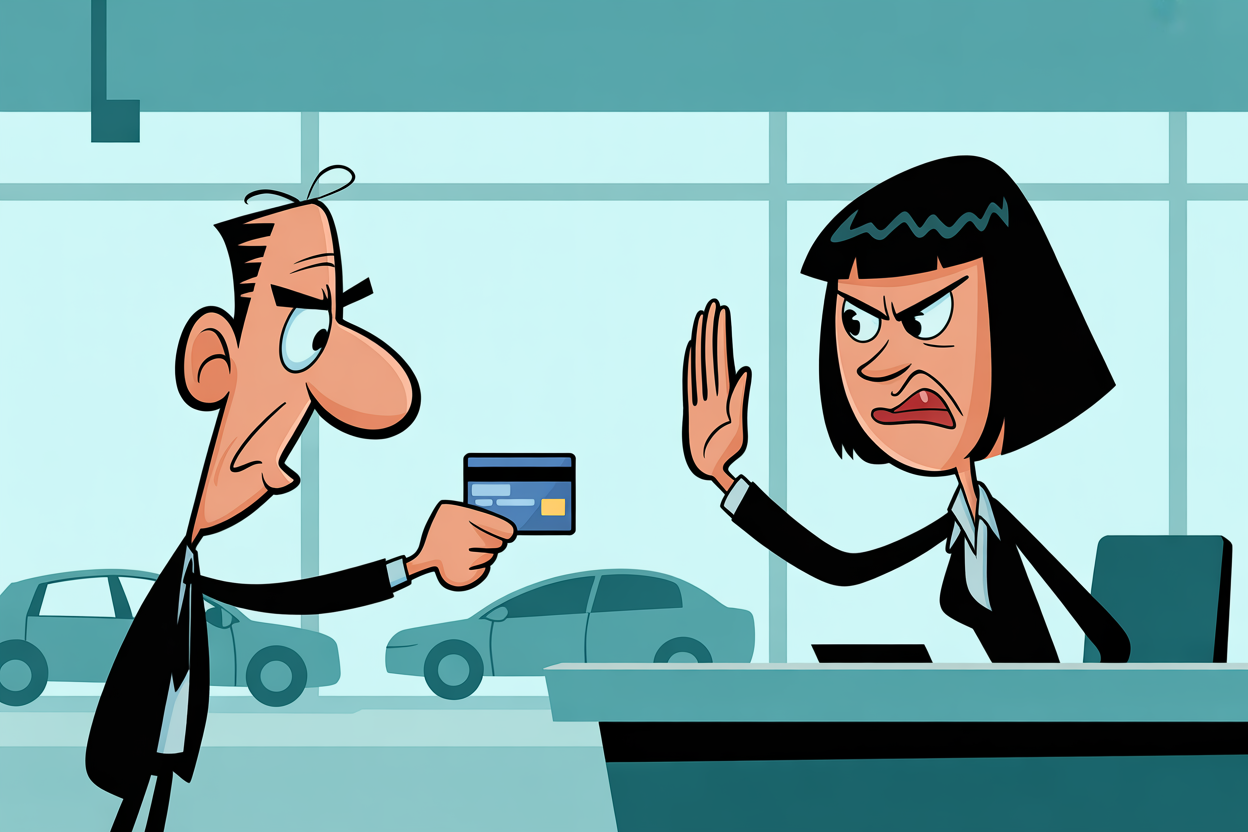
Editorial cartoon showing a confused customer holding out a credit card to a stern rental car counter agent who raises her hand to refuse it, with parked cars visible through the window in the background, depicting how Europcar agents pressure customers into buying duplicate insurance and refuse third-party coverage

Hotels.com and Europcar charged me twice for a one-way rental. Can I get my money back?

Lawrence Signori prepaid Hotels.com $338 for a one-way Europcar rental in Porto, Portugal, with the one-way fee clearly included in his reservation. At pickup, the Europcar counter agent added $155 for the one-way fee, $155 for mandatory Premium Protection insurance, and a $97 Premium Station Surcharge despite his airport reservation. Europcar claimed only $243 of the prepayment was applied to the rental, with the rest going to Hotels.com as commission. Hotels.com initially provided only vague responses about the duplicate charges totaling $407.

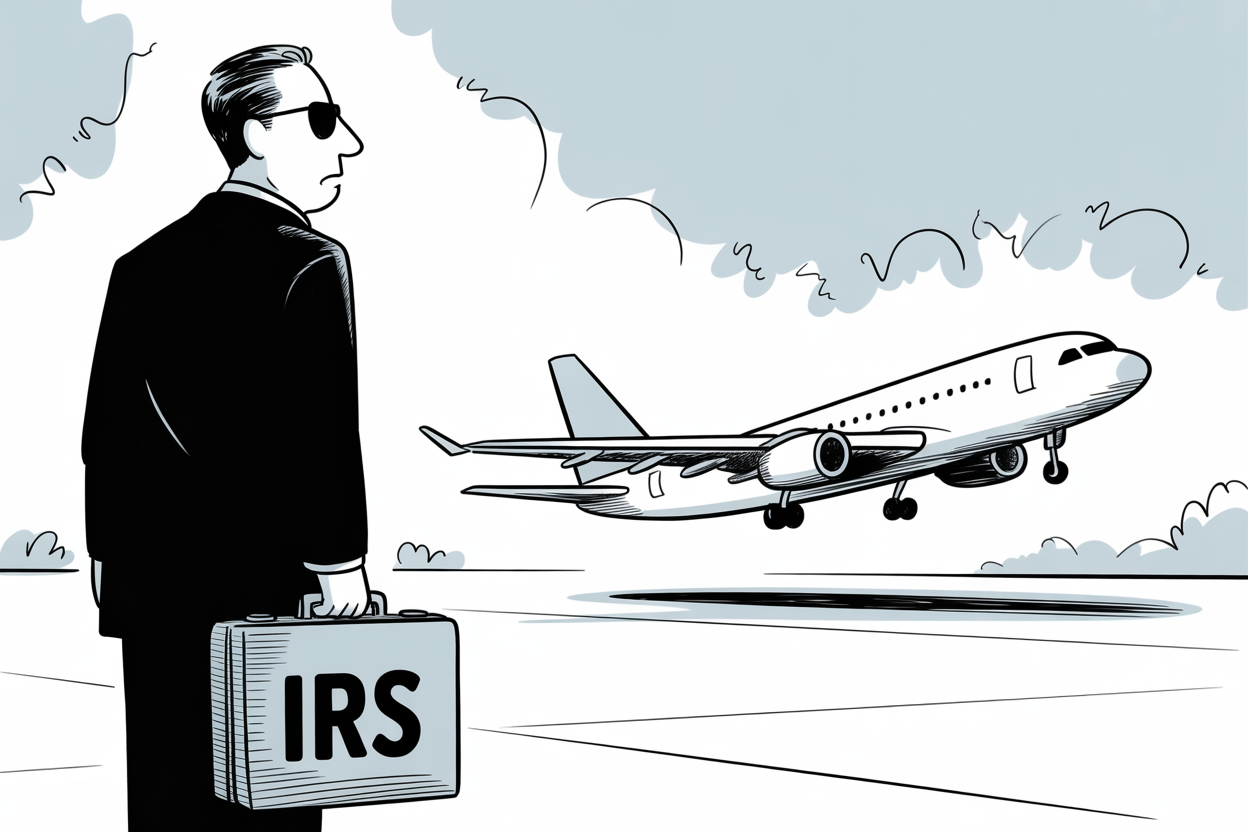
Editorial cartoon showing an IRS official in a dark suit holding a briefcase labeled "IRS" watching a commercial airplane taking off, depicting the tension between tax authorities and budget airlines seeking a tax holiday during the jet fuel crisis

Budget airlines want a tax holiday—but where’s yours?

The Association of Value Airlines, representing Spirit, Frontier, and Allegiant, is asking Congress to suspend the 7.5 percent federal excise tax on domestic tickets and the $5.30 per-segment fee, citing the jet fuel crisis following the Iran war. On a typical $369 roundtrip fare, passengers already pay roughly $47 in mandatory taxes and fees, inflating ticket prices by about 13 percent. Without a requirement to pass savings to consumers, any tax holiday would function as a corporate subsidy rather than traveler relief.

When Bill Chellis's wife was hospitalized with pneumonia on their hotel check-in day, he immediately called Hampton Inn in Great Falls to cancel. The hotel charged him the full $173 anyway, citing late cancellation policy. He called Hilton customer service, wrote to corporate offices, and sent certified letters, but received no response for months. Hotels can legally enforce cancellation policies even for medical emergencies, but state consumer protection laws may require companies to act in good faith when customers provide documentation.

Hampton Inn charged me for a canceled room after my wife was hospitalized. Can I get my money back?

When Bill Chellis’s wife was hospitalized with pneumonia on their hotel check-in day, he immediately called Hampton Inn in Great Falls to cancel. The hotel charged him the full $173 anyway, citing late cancellation policy. He called Hilton customer service, wrote to corporate offices, and sent certified letters, but received no response for months. Hotels can legally enforce cancellation policies even for medical emergencies, but state consumer protection laws may require companies to act in good faith when customers provide documentation.

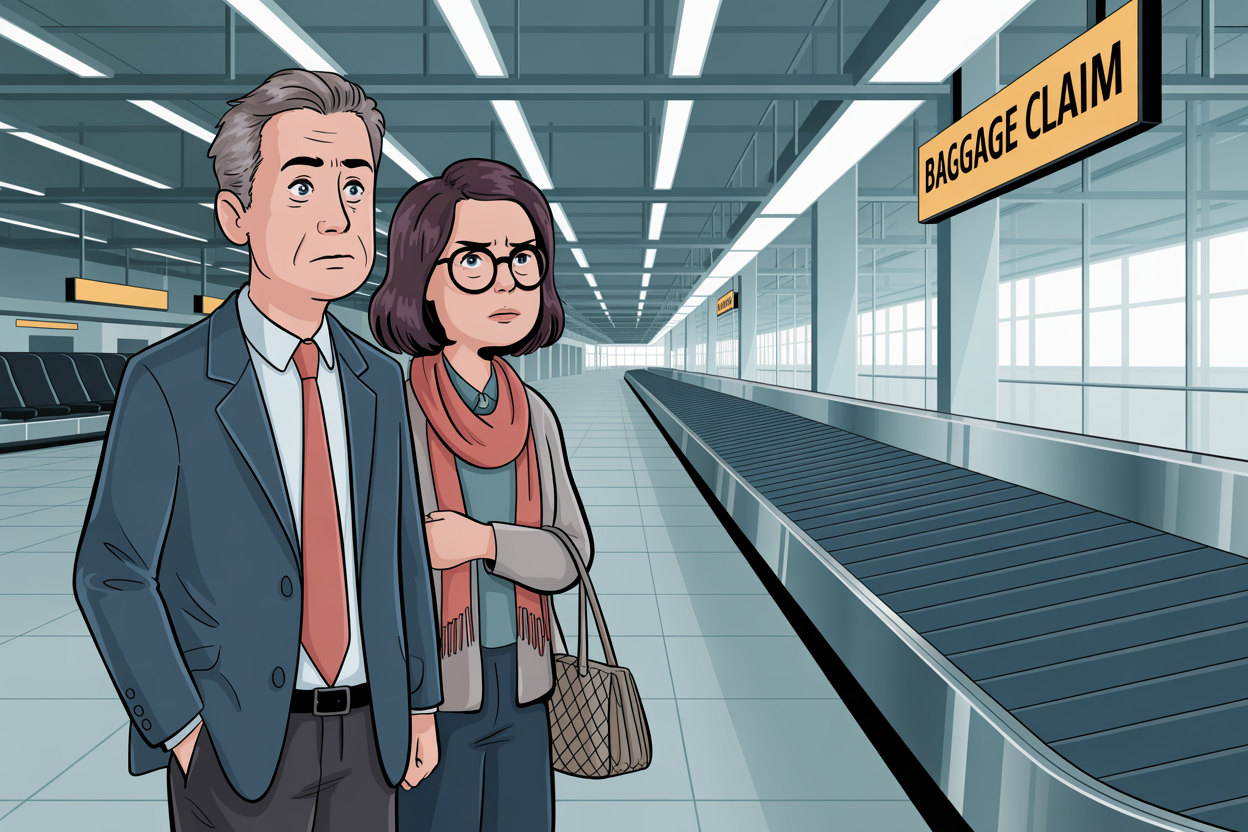
Illustration showing frustrated business class passengers standing next to their luggage while an Aer Lingus airplane flies away in the background, depicting the airline's failure to load priority-tagged baggage onto multiple consecutive flights despite tracking confirmation

Business class baggage disaster! Why is Aer Lingus ghosting us?

Aer Lingus failed to load business class passengers’ priority-tagged luggage onto four consecutive flights despite AirTag tracking showing exact airport locations. The airline then promised $265 baggage delay reimbursement in writing but ghosted the couple for six months before declaring their case closed without payment. Under the Montreal Convention, airlines are liable for baggage delays on international flights and must compensate passengers for reasonable replacement expenses.