The guy Lachlan Brown met in a Tokyo departure lounge thought he had a high travel IQ, but he didn’t.
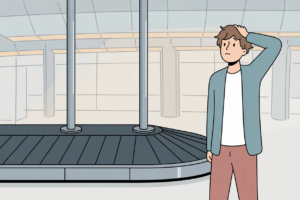
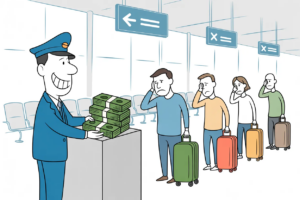
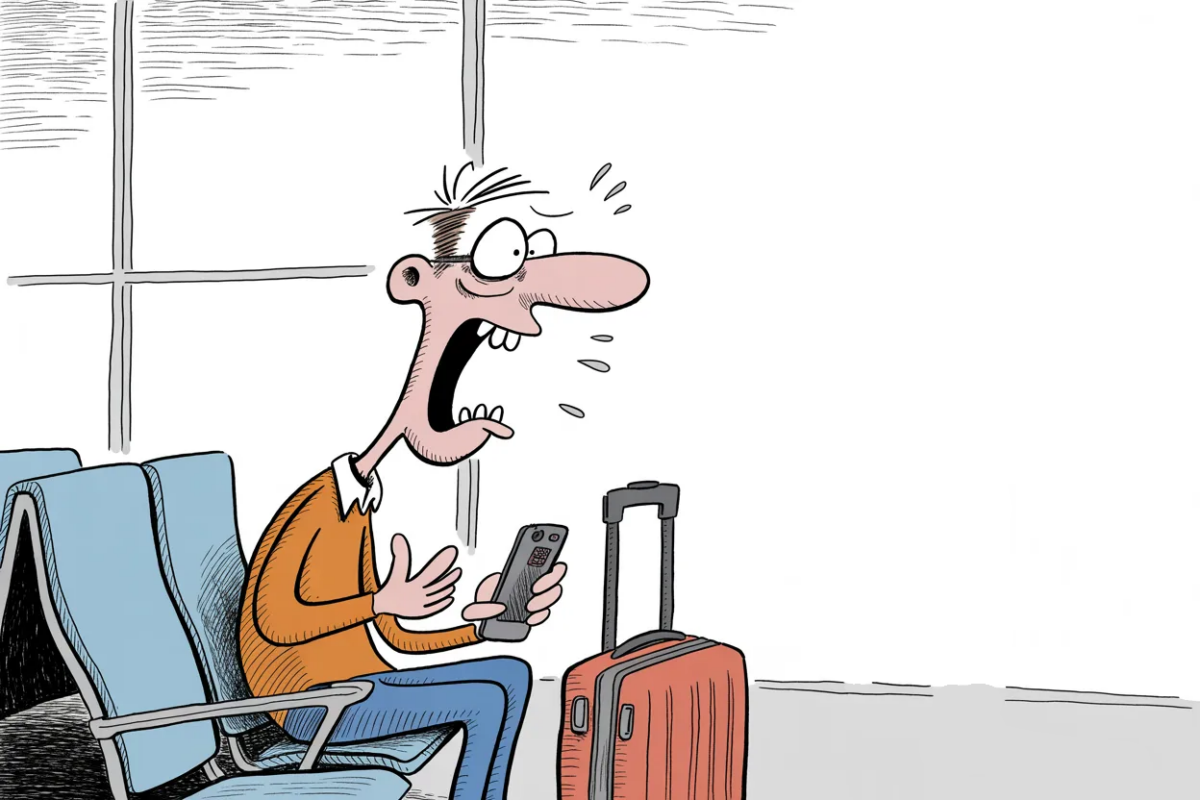
True, he clutched a color-coded itinerary and screenshots of every boarding pass. He wore a pair of noise-canceling headphones and rolled the newest luggage into the waiting area. But when the airport Wi-Fi froze and a gate change flashed on the monitor, Mr. Know-It-All Traveler came apart.
“It was like someone’s operating system crashed,” Brown remembers. “He started arguing with staff in English, louder each time, as if the volume could translate into Japanese. He spiraled into blame and panic over a five-minute problem.”
Brown knows a thing or two about meltdowns: He’s a behavioral psychologist. And he’s spent some time thinking about what separates smart travelers from everyone else.
Turns out, it’s a fine line.
Brown says another passenger handled the problem differently. She simply glanced at the screen, walked to a counter, and asked for directions to the next gate. She was halfway to the new gate before the prepared traveler had finished his first rant.
She had a high travel IQ, says Brown.
What is travel IQ? It’s the gap between what you think you know and how the world works. You might be smart, but if you can’t navigate a simple gate change without a meltdown, your travel IQ is low.
This is the time of year—the waning days of summer—when everyone’s travel IQ is on display, including yours. So how do you know if your travel IQ needs some work? Here are a few signs.
Great article! I would add one more thing to raise Travel IQ: register with STEP for every international trip. The unforeseen happens. Nepal, earthquakes, fires, civil unrest. In these events, having the State Department know where you are can be the difference between having someone looking for you and helping you, or not knowing you are even missing.
You’re not flexible
People with a high travel IQ can roll with the punches. The world doesn’t end when Wi-Fi goes down or their gate changes. Travel is chaos held together by duct tape (believe me, I know). If a five-minute delay feels like a personal attack, trying to control an environment that doesn’t care about your schedule is not that smart.
You fail to read the fine print
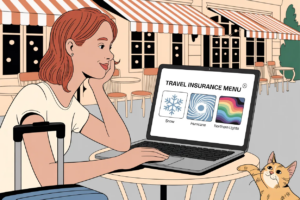
The worst travelers are the ones who are uninformed. They don’t have a clue about what’s in their rental agreement, their airline contract of carriage or their cruise ticket contract. They assume their travel insurance will cover anything that goes wrong on their trip. They can’t be bothered with the details. They end up paying more and getting less because of their ignorance.
You’re oblivious to cultural differences
Here’s a scenario that plays out in places like Paris: Tourists march up to ticket windows and demand to speak to a manager when things don’t go their way. In the U.S., that might get you a voucher. In France, it often gets the window slammed shut. “The employee will just close the counter and walk away,” says branding strategist Yesim Saydan. “Literacy means watching how locals queue and interact before you dive in. If you aren’t observing, you’re just a bull in a china shop.”
You make assumptions you shouldn’t
Berkita Bradford, a professor at North Carolina Central University, once had a student in Havana who lost her passport. Her plan: Just use her North Carolina driver’s license to get home. You can’t do that. “I had to quickly coach her on acceptable travel documents,” Bradford says. You’re flying blind if you don’t know the entry requirements for your destination.
You dress like a tourist
Your travel IQ is visible before you say a word. Walking through a historic cathedral in zip-off cargo pants and a neon-yellow souvenir shirt broadcasts your status as an outsider. “Travel literacy means dressing for the destination instead of just for the airplane,” says Mitesh Jain, a psychologist based in Mumbai who specializes in travel. When you dress like a tourist, you invite the wrong kind of attention. Scammers can spot a low Travel IQ from three blocks away. Literate travelers aim for cultural camouflage by wearing muted colors and modest styles.
You panic easily
Travel coach Becky Livingston recalls a passenger who freaked out the moment his plane landed in Seattle. He was fidgeting impatiently while the plane was taxiing. “This is taking so long,” he muttered from his seat in economy class. She says having a high travel IQ means knowing that it will take a while to get off the plane when you’re in row 25—and not panicking.
You think volume is a translation app
If you’ve ever found yourself shouting “WHERE! IS! THE! TRAIN!” at a confused clerk in Rome, you might need to work on your travel literacy. Shouting doesn’t make someone understand English. It just makes you a loud American. High travel IQ individuals know that a smile, a few local words, and a real translation app—downloaded for offline use—work far better.
If you recognize yourself in those signs, don’t worry. You can raise your Travel IQ with a little effort.
“It is entirely possible for you to have a high IQ and a low travel IQ, particularly if you rarely place yourself in unfamiliar or challenging situations,” says Lisa Pittman, a licensed psychologist and travel coach.
She says practice makes perfect. Gradual exposure to travel can help build your travel IQ. Don’t start with a solo trek through rural India. A weekend trip one state over is better.
You can avoid most of these traps by practicing the “three-second rule.” When something goes wrong, wait three seconds before reacting. If you’re in an unfamiliar place, and run into problems, ask yourself: “How would a local handle this?” (Usually, the answer isn’t “shouting.”)
How to be a smarter traveler
Developing a high travel IQ is about realizing you’re a guest. Whether you’re navigating a luggage mishap or a gate change, or negotiating a ticket error at a train station, you want to play it smart.
Most importantly, stay informed. I know because I wrote a book called “How To Be The World’s Smartest Traveler,” and what they say is true: Information is power. If you do your homework before your next trip and pay attention to the fine print, you’ll avoid the breakdowns and meltdowns on the road.
“To me, high travel literacy looks like emotional regulation plus situational awareness,” says Brown, the psychologist.
Of course, travel isn’t for everyone. If you can’t handle a delay without having a tantrum, you can always stay home. But if you want to see the world, learn to read the signs—especially the ones that aren’t written.

Have a question about this story? Tell us what happened — we read every comment.
Join the conversation