Lloyd Moskowitz thought his bags would fly for free. His airline had other plans.
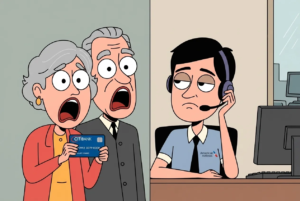
Moskowitz, who works for the New York City Fire Department, booked a JetBlue award ticket from Richmond, Va., to Los Angeles this fall. But JetBlue’s partner, United, operated the flight. It charged him and his wife $200 for their bags. He carries credit cards from both airlines.
His offense? He hadn’t paid with his United credit card. United sent him to JetBlue for a refund. JetBlue bounced them back to United.
“It seems to me that if you list another airline as your ‘partner’ then the same benefits should apply,” he says.
Airlines love to play luggage games with their passengers, and it’s never been worse than now. Your checked bag might be “free.” It might cost $50. It might also cost $70. The answer depends on the card in your wallet and the day you hand over your money.
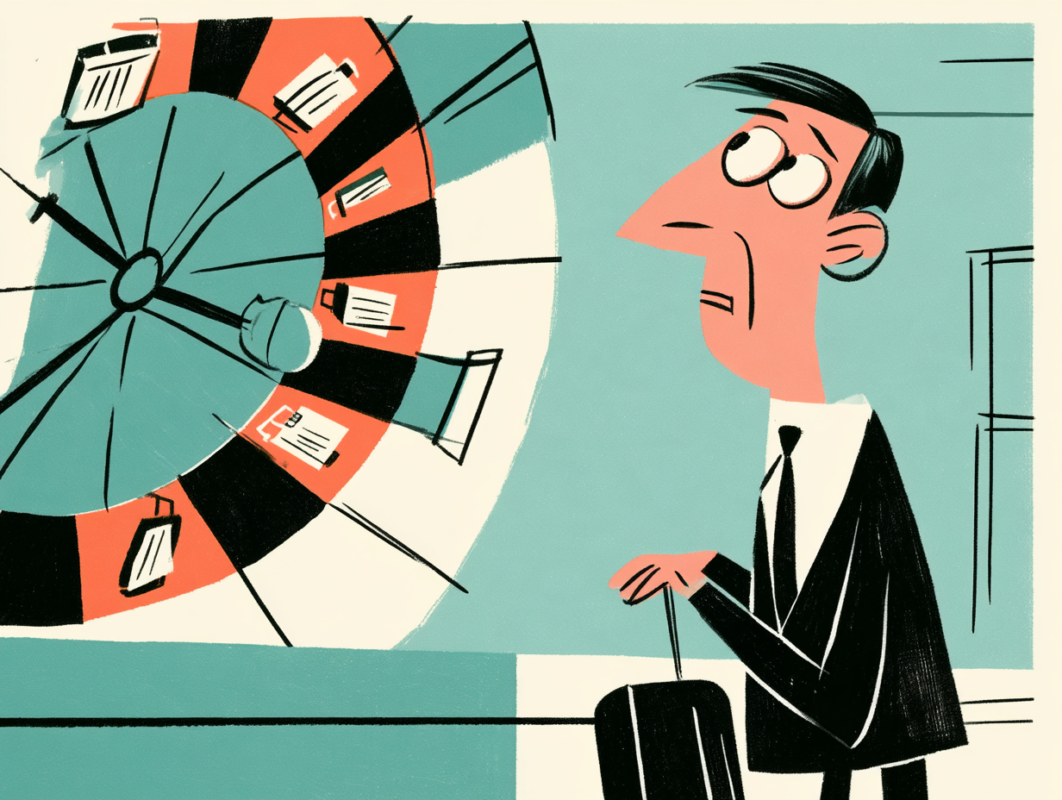
Call it luggage roulette. And this holiday season, JetBlue is spinning the wheel faster than anyone.
JetBlue’s unluckiest spin yet
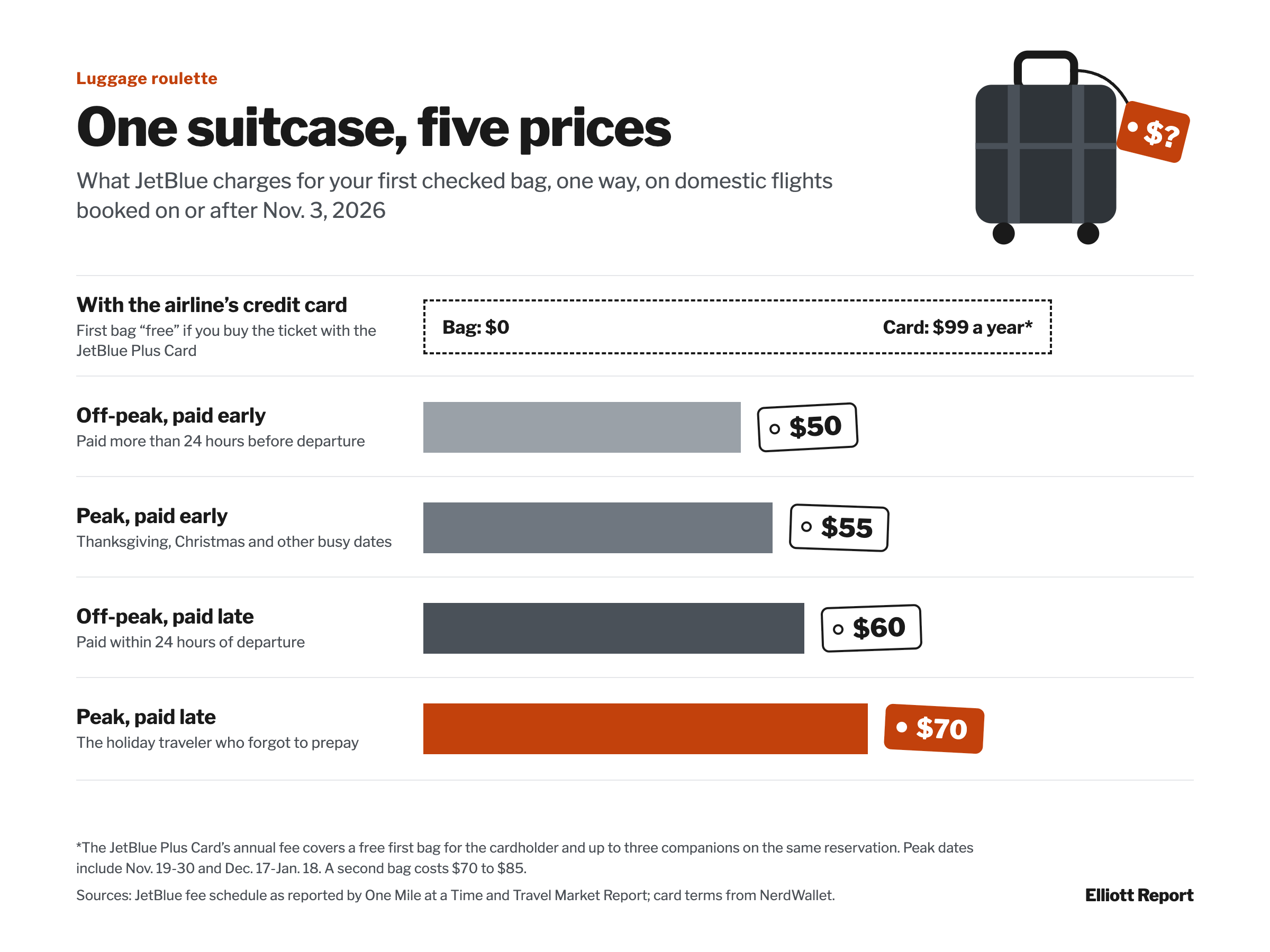
JetBlue, blaming higher fuel prices, raised its checked-bag fees this month, its second increase of 2026. For tickets bought on or after November 3, a first checked bag on a domestic flight costs $50 on an off-peak day if you pay more than 24 hours before departure. Wait until the last minute, and it’s $60.
During “peak” periods, which include November 19 to 30 and December 17 through January 18, the same bag costs $55 in advance. Pay late, and it’s $70. A second bag runs as much as $85. We’re getting uncomfortably close to the $100 suitcase.
Back in March, JetBlue’s peak-season first bag cost $49. The airline blamed fuel then, too. Now a family of four flying over the holidays could pay $440 to $560 round trip in bag fees if you’re checking two bags. That’s before anyone buys an overpriced sandwich at the airport.
Surge pricing makes some sense for a scarce product, like a seat on the day before Thanksgiving. Your suitcase isn’t scarce. It costs JetBlue no more to haul your bag on November 25 than on November 5. The only thing that changes is how badly you need to get home for the holidays. JetBlue knows that, so it charges you for it.
Why JetBlue wants your bag money
Why is JetBlue squeezing passengers so hard? Because it’s bleeding cash. The airline hemorrhaged $257 million in the third quarter, up from $143 million a year earlier, as its average fuel price per gallon jumped 57%. It also carries about $8.5 billion in debt and finance lease obligations, according to its latest quarterly filing with the Securities and Exchange Commission.
In late October, a group of JetBlue’s lenders hired the financial adviser PJT Partners and the law firm Akin Gump. Creditors usually bring in that kind of help when they worry a borrower might not repay on schedule. JetBlue says it has no plans to file for bankruptcy. But it needs cash. Your suitcase is an easy target.
Bag fees offer an airline one more advantage. Unlike your fare, they aren’t subject to the 7.5% federal excise tax on domestic tickets. Every dollar JetBlue shifts from the fare to the bag fee is a dollar it doesn’t have to share with the government.
I understand why a struggling airline wants the money. I don’t understand why holiday travelers should have to bail it out one suitcase at a time.
The “free” bag that isn’t
JetBlue will waive your first-bag fee if you buy your ticket with its Plus card. But that card carries a $99 annual fee.
In fairness, the benefit covers the cardholder and up to three companions on the same reservation. A family that flies JetBlue several times a year can come out ahead. A couple who flies once a year probably won’t. And as Moskowitz learned, a card benefit can vanish when a partner airline operates your flight.
I’ve never been a fan of these cards. They’re designed to make you feel loyal to one airline. They also turn a basic part of air travel into a perk you have to pay for every year, whether you fly or not.
A rule that was supposed to prevent this
The government already decided airlines shouldn’t play this kind of game. A Department of Transportation (DOT) rule bars airlines from raising the price of checking your bags after you’ve bought your ticket. When the agency explained the policy, it said that holding the right to raise bag fees later made it nearly impossible for passengers to make rational decisions about which flight to buy.
JetBlue isn’t breaking that rule. It found a way around it. The airline locks in a fee schedule when you book, and that schedule already includes a $15 penalty for paying late. So technically, the price never went up. You agreed to the higher one when you clicked “purchase,” whether you noticed it or not. That’s a loophole big enough to roll a 737 through.
How to stop the wheel
The fix doesn’t require an act of Congress. The DOT should issue an enforcement notice saying the lowest bag fee an airline quotes when you book is the fee you pay, no matter when you pay it. The agency has used notices to clarify this rule before. It can do it again before the next holiday rush.
Until then, you have some moves. Prepay your bag the moment you book your ticket. Check JetBlue’s peak calendar before you pick your travel dates, because a day’s difference can save you money. If a partner airline operates your flight, ask which carrier’s bag rules apply before you buy, and get the answer in writing.
Better yet, pack light and skip the casino altogether.
I tried to stop the wheel for Moskowitz. I shared his case with United, but it did not respond to my question about his extra luggage fees.
Anyone who’s spent an evening in Las Vegas knows the first rule of roulette: The house always wins. Passengers shouldn’t have to gamble on the price of transporting their belongings. It’s time for the DOT to close the table for good.
Resolve it yourself
Stuck with a complaint? Build your path to a fix.
Answer two quick questions and get a step-by-step plan tailored to your situation.
Your plan

Have a question about this story? Tell us what happened — we read every comment.
Join the conversation