in this commentary
- Travelers are increasingly forgetting essentials like luggage and medication, a phenomenon experts blame on “cognitive overload” and stress.
- “Hurry culture” and constant screen time have eroded situational awareness, putting passengers on autopilot and causing them to leave items behind.
- You can combat absent-mindedness by slowing down, practicing mindfulness during transitions, and keeping physical backups of important documents.
To get an idea of how forgetful travelers have become lately, consider what happened to Ally Murphy and her husband on a recent flight from London to Atlanta.
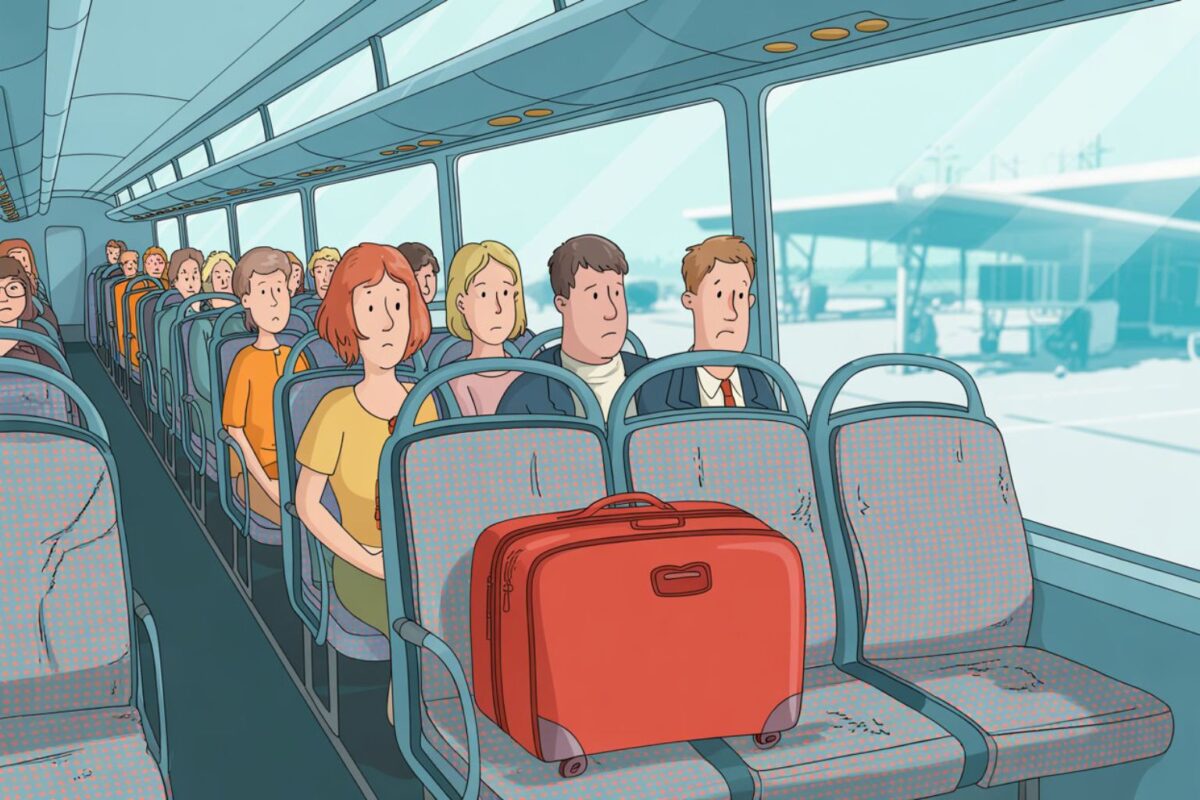
After collecting their luggage, they caught a shuttle to their hotel.
“After boarding the bus, I realized I had forgotten one suitcase,” recalls Murphy, a voiceover artist based in Seattle. She returned to the airport and found her bag — only to notice that she’d left another bag on the bus.
“I promise I am usually an intelligent woman, filled with common sense,” she adds. “I was a flight attendant for 14 years and am used to traveling with suitcases. But sometimes, the stress, the tiredness, or the unfamiliarity of the routine gets to you, I guess.”
True. Travelers are becoming more absent-minded, and experts are struggling to understand why. But while they work on it, there are a few easy steps you can take to make sure you don’t forget something really important the next time you travel.
How careless have travelers become?
A survey conducted by Talker Research suggests travelers are forgetting all kinds of things, ranging from a charger (34 percent), to toiletries and beauty products (32 percent) and even medication (18 percent). Almost all of the respondents – 89 percent — said they were working to be more prepared than ever when traveling.
More recently, I’ve been hearing from travelers who say they’ve forgotten all kinds of things when they’re on the road. I’ve even been forgetful on a recent visit to Taiwan, when I screwed up the dates on a hotel stay. Fortunately, the property had room and accommodated me for the extra night.
Most of their stories have a happy ending, including Murphy’s — she was able to finally retrieve both bags.
But you have to wonder — what’s going on here?
I left an envelope with $300 in it in a hotel room in Guatemala. I must have been repacking my things and carelessly set it on a counter without noticing it didn’t get back in the bag. I didn’t need that cash the next few days, so never noticed it missing, When I got back to the hotel after a week or so around the country, we checked into same hotel where I had left the cash. The desk clerk recognized me. “Here’s something you left behind when you were here before,” she grinned as she handed me the envelope.
Needless to say the cleaning staff got a generous tip.
Read more insightful reader feedback. See all comments.
Has common sense gone out the window for travelers?
Sabrina Romanoff, a psychologist and professor at Yeshiva University, says our collective absentmindedness is a sign of the times.
“Social skills and common sense when it comes to travel have atrophied as more people are living in isolated bubbles,” she explains. “They have more screen time rather than actually being with loved ones and friends. As a result, they’re on autopilot mode when in person too – it’s as if they’re mindlessly scrolling through their in-person interactions as well.”
It’s also the newness of your surroundings, notes Bob Bacheler, a frequent traveler and managing director of a medical transportation service.
“Being in an unfamiliar place means your brain is processing a lot of new stimuli, including languages, sights, sounds,” he says. “This cognitive overload can crowd out short-term memory or make it harder to focus.”
Sheri Kalke, a psychologist in Calgary who specializes in attention and memory, says travelers are also under more stress.
“It’s cognitive overload,” she explains. “Most adults can hold just a few things in their working memory at a time. But modern travel demands much more: boarding logistics, apps, IDs, kids, time zones, and tight deadlines.”
Kalke says when travelers get stressed, their ability to hold items in working memory decreases. The more pressure, the more forgetfulness. That may explain why people abandon their carry-on items when they leave the plane. They’re too stressed. (Here is our best guide to traveling.)
Has anything changed to make this problem worse? Possibly. The pace of travel has accelerated — or what psychologist Wayne Pernell calls the “hurry culture.”
“You’re at the hotel and waiting for the shuttle,” he explains. “Hurry, or you’ll miss it. The plane is landing and everyone is up in the aisles getting their stuff. Hurry, or you’ll be two people back in line, and that would be terrible. We’re distracted by hurrying out the door for the next thing.”
And when you’re rushing, you make mistakes — like leaving your luggage behind or booking the wrong dates for your hotel.
How to avoid being absent-minded when you travel
You don’t have to be scatterbrained when you’re on the road.
Go old school. It’s fine to have your whole itinerary in the cloud, but always keep a backup. I’m talking printouts and manila envelopes. “I recommend screenshots or actual printed copies for things clients might need to retrieve while on the go,” says Liz Squillante, a travel advisor at Springboard Travel. “Having one common place for all relevant information eliminates stress, even if it is an old-school manila folder.”
Take a deep breath. “Practicing mindfulness can significantly reduce absent-mindedness,” says Frank Harrison, regional security director for the Americas at World Travel Protection. “Take a moment to pause and scan your surroundings before moving on to the next activity. This can be particularly helpful during high-stress moments like boarding a plane or disembarking from a cruise ship.”
Check, double-check, triple-check. Experienced travelers assume nothing when they are on the road, so they check repeatedly. For example, Andy Abramson, a frequent traveler, has a routine before he checks out of a hotel. “I have a system,” says Abramson, who runs a communications firm in Las Vegas. He opens the closets, the safe, the drawers. Then he checks them again.
It all comes down to one thing, says Susan Sherren, founder of luxury travel agency Couture Trips.
“With proper organization, you can feel reassured and confident,” she says. “Everything will be in order.”
Reality check: We’re really leaving our brains at home
Look, these suggestions can help you avoid leaving something important — like your passport — in your hotel room when you check out. But it will not necessarily make you a smarter traveler. I’ve seen it more often — people who are otherwise intelligent behave like children when they head to the airport.
None of the psychologists I talked to were willing to go on the record to say that travelers are leaving their brains at home, so I guess I will. Not only have I seen this, but it has also happened to me.
So yes, travel is more stressful than ever, and you can fix some of the problems with careful planning. Make a list — and slow down.
Why are travelers becoming so absent-minded?
The causes of “cognitive overload” and how to stop forgetting your stuff
Why your brain is failing you on the road
How to stop leaving your brain at home
Your voice matters
From forgetting luggage on a shuttle bus to messing up hotel dates, travelers seem to be struggling with the basics. Experts blame “cognitive overload” and the pressure to hurry.
- Have you noticed yourself or other passengers becoming more absent-minded lately?
- Is “hurry culture” the real culprit, or have we just become too reliant on our devices to think for us?
- What is your failsafe method for ensuring you don’t leave anything important behind?
What you’re saying
Readers shared harrowing stories of lost cash and forgotten laptops, confirming that distraction is a major culprit. But they also offered heartwarming examples of honesty and practical, low-tech fixes for our high-tech forgetfulness.
-
The kindness of strangers
KanExplore shared a reassuring story about leaving an envelope with $300 on a hotel counter in Guatemala. A week later, the same desk clerk returned it with a smile—proving that while we may be forgetful, humanity often has our backs.
-
Screens vs. Situational Awareness
Blues Traveler and 737MAXPilot agreed that phones are destroying our focus. They noted that parents struggle to juggle kids while scanning digital passes, and passengers are so glued to screens they walk away from laptops at security checkpoints.
-
Old-school tricks work best
Kelly Red relies on paper copies of documents, which saved the day when technology failed in Korea. AJPeabody uses a simple vocal cue—saying “Key” out loud to his wife—to ensure they never leave the room without it.



Have a question about this story? Tell us what happened — we read every comment.
Join the conversation