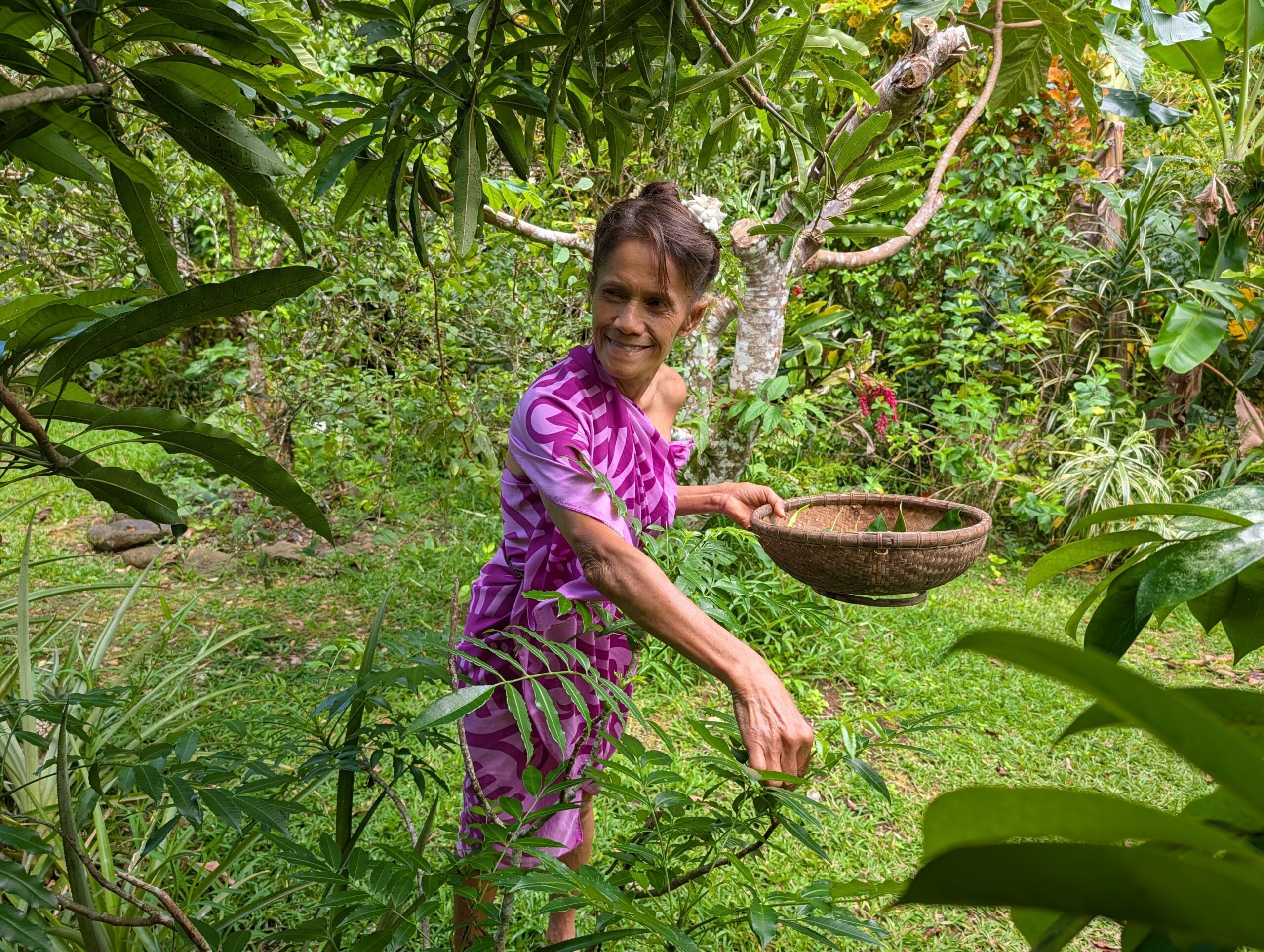
Vicky Tohopu’s quiche defies French tradition. She binds it not with butter and flour but with a grated breadfruit shell harvested steps from her open-air kitchen, filled with coconut, basil, and lime pulled from the valley’s volcanic soil. Under the table, a puppy named Cleopatra chews on a guest’s slipper. Everything here is vegan, and everything is worlds away from the manicured overwater-bungalow fantasy of French Polynesia. This is Raiatea, one of Tahiti’s outer islands, where Tohopu built a mountain refuge to survive after doctors gave her two months to live fifteen years ago. She unplugged from the grid, installed solar panels, pumped water from the river, and healed herself through a radical return to nature. A short ferry away on Huahine, a vanilla farmer works only half a day because the bean refuses to be rushed, and fishermen still let centuries-old stone traps and the tide bring in dinner. On these islands, sustainability is not a slogan but a rhythm, and the currency that buys paradise is one most travelers have forgotten how to spend.