in this commentary
- Seoul’s most opulent hotels are stripping away the excess, swapping plastic key cards for wood and replacing disposable bottles with cartons in a bid to redefine luxury.
- Beyond the lobby, the city transforms concrete overpasses into pedestrian parks and rolls out fleets of electric taxis, plotting a decisive course toward a carbon-free future.
- One property isn’t just going green; it’s going “regenerative,” turning guest stays into community support and setting a new, ambitious standard for urban sustainability.
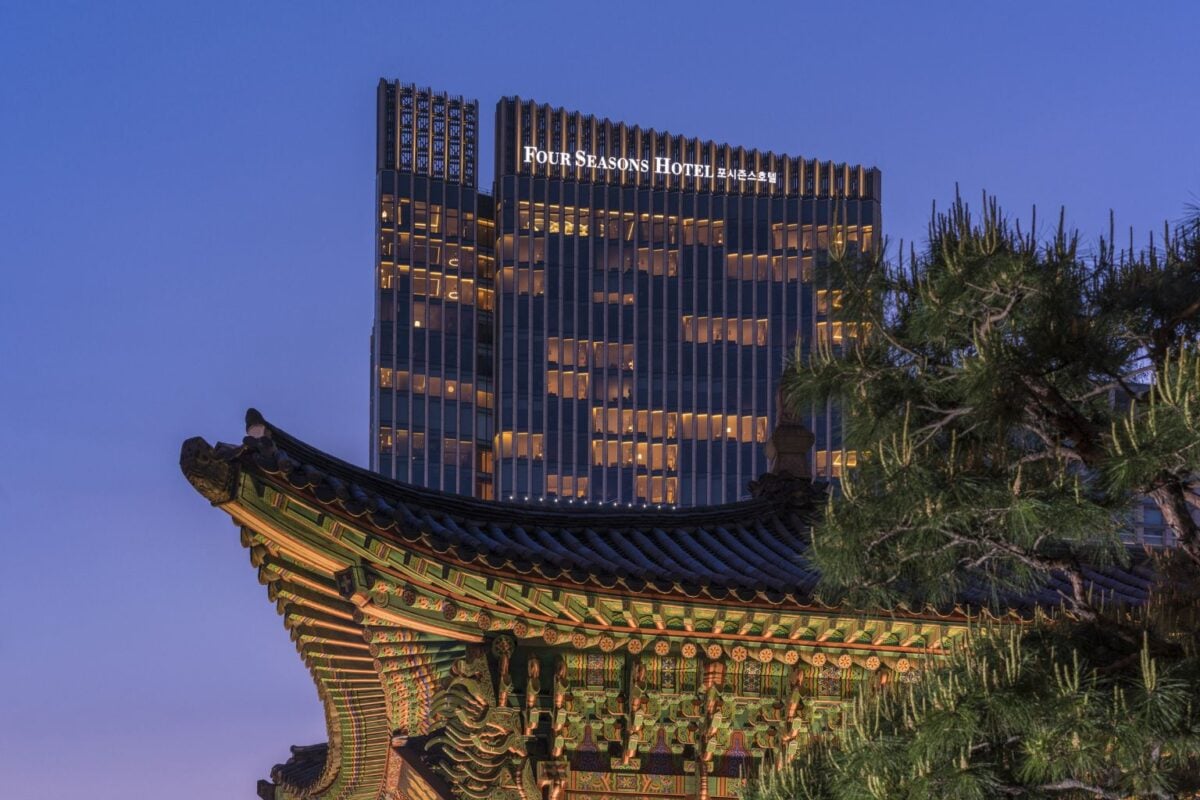
Check into the Four Seasons Seoul and you’ll notice something missing. The tiny shampoo bottles, the disposable water bottles, the single-use key cards — they’re gone. In their place: Tetra Pak water cartons, wooden key cards, and refillable amenities.
“Sustainability isn’t a passing trend,” says In Young Moon, a spokeswoman for the hotel. “It’s a long-term responsibility. We operate a wide range of initiatives designed to positively impact the environment and local community.”
Seoul’s luxury hotels, once temples of excess, are getting serious about sustainability. In South Korea’s capital, green is going mainstream, but it’s a work in progress. The city’s journey toward sustainability is complicated.
“Luxury hotels are trying to switch to renewable energy, manage water smartly, and reduce single-use plastics — all without compromising on luxury or comfort,” says Sangeeta Sadarangani, CEO of Crossing Travel, a luxury travel advisor and a former Seoul resident.

Shampoos and gels in a shower at the Four Seasons Seoul. The hotel focuses on reusable amenities. (Photo courtesy Four Seasons Seoul.)
What is Seoul doing to become sustainable?
Seoul may not be the first city you think of when you hear “green travel.” But maybe it should be. The city’s approach to sustainable tourism is subtle, and often unnoticed.
Take public transportation. Getting to the airport is easy, fast and inexpensive (about $14 for a one-way ticket from the center of town to the airport). A network of fast underground trains and buses crisscrosses the city. “It’s easy to get around,” says Michael Vater, a frequent traveler and attorney. It’s not perfect, though. If you want to refill your subway card, it’s cash only, and Seoul’s traffic jams are still legendary. But the city is plotting a decisive — if a little uneven — course toward a carbon-free future. (Related: How Germany’s Spree Forest is finding its way toward a regenerative future.)
The commitment to sustainability runs deep, according to recent visitors. The city rolled out over 3,500 electric buses in 2025 (40 percent of the fleet), and its newly introduced Climate Card offers unlimited rides across subways, buses, and even public bikes. A five-day pass costs just $11, making it an affordable choice for short-term visitors who want to reduce their carbon footprint.
Seoul’s fleet of electric taxis also has caught the attention of visitors. “They’re clearly marked and available even during peak hours,” says Suraj Kumar, a recent visitor to Seoul. “Its transportation systems are among the cleanest and most efficient I’ve experienced.”
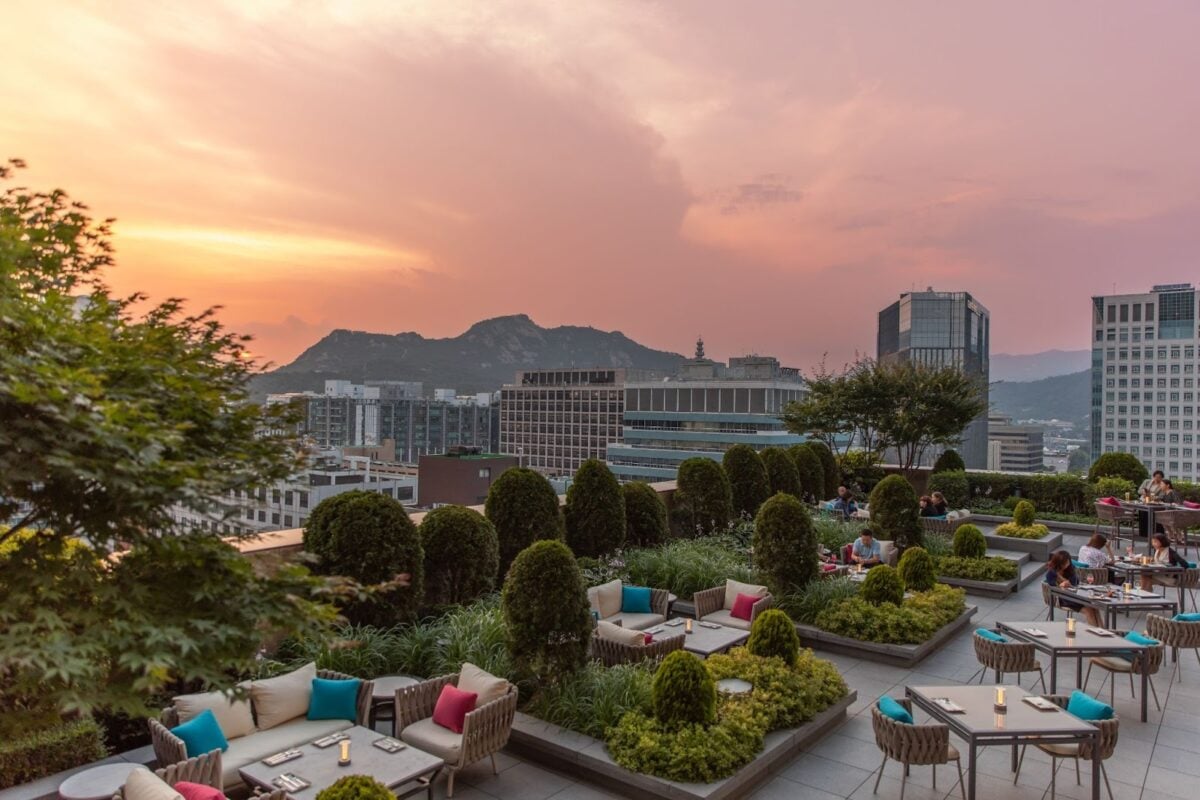
The roof garden at the Four Seasons Seoul. (Photo courtesy Four Seasons Seoul.)
Seoul’s green infrastructure is more than talk
Seoul’s government isn’t shy about its ambitions. It has restored the Cheonggyecheon stream, an 11-kilometer ribbon of water and green space that crosses the city. The Seoullo 7017 Skygarden, once a traffic overpass, is now a pedestrian park. These aren’t just pretty projects. They cool the city, clean the air, and give residents and tourists a good reason to walk.
In Mapo-gu, an eclectic part of Seoul with trendy coffee shops and bakeries, the Gyeongui Line Forest Park is also noteworthy. It was created from a defunct section of the old Gyeongui rail line, and features bike paths, green spaces and a restored river.
Edward White, a business traveler who visits Seoul often, says that between the parks, mass transit systems and EVs, the city makes it easy to be green.
“In Seoul, it’s easier to avoid emissions than to produce them,” he says.
It’s heartening to see major players in the hospitality industry like the Four Seasons Seoul taking tangible steps toward sustainability. Replacing plastic key cards with wood and moving away from single-use plastics shows that luxury and environmental responsibility do not have to be mutually exclusive.
Read more insightful reader feedback. See all comments.

The Josun Palace, a Luxury Collection Hotel, publishes its carbon footprint on its website. (Photo courtesy Josun Palace.)
Hotels are taking sustainability seriously
Seoul’s luxury hotels are also taking a leadership role in the city’s green transformation. At Josun Palace, a Luxury Collection Hotel in trendy Gangnam, sustainability is a serious goal. It earned rigorous LEED Core & Shell Certification, which requires measurable commitments like slashing energy use, conserving water, and ensuring healthier indoor air.
And the hotel publishes its actual carbon footprint on its site. Guests participate directly, sorting waste with in-room recycling bins that fuel a circular economy. Even its parking garage advances the mission, offering EV charging stations to cut transportation emissions.
Another standout: The Hotel Naru Seoul, which has anchored its sustainability commitment by achieving the rigorous Green Key certification for having met a set of strict sustainability criteria. Its sustainability efforts go beyond basic nods to eco-friendliness. For example, the hotel is all about local sourcing, featuring ingredients from nearby farms in its restaurant and bars, and amenities crafted by local social enterprises. Even the physical elements whisper sustainability, with bamboo toothbrushes, recycled glass water bottles replacing plastic, and biodegradable packaging becoming the standard.
The Hotel Naru also champions a community-centric approach. Its Green Heart initiatives foster partnerships with local farms for fresh produce and collaborations with social enterprises providing in-room amenities, ensuring their environmental efforts also deliver positive social results.
How the Four Seasons is becoming a regenerative hotel
There’s more to Four Seasons’ commitment to sustainability than swapping out a few plastic bottles or adding wood key cards. Its goal is to become a regenerative hotel.
“We want to go beyond simply minimizing negative environmental impact,” says Moon, the hotel spokeswoman. “We want to be a regenerative hotel that gives back to both the community and the environment.”
For example, the hotel is slashing single-use plastics through refillable Diptyque amenities and biodegradable takeaway packaging, while unused soaps and amenities are donated to the Jongno-gu Welfare Center, linking environmental action to social good. Menus at its signature Italian restaurant, Boccalino, now focus on seasonal, locally sourced ingredients, with extensive vegan and vegetarian options. And it recently received its Green Key International certification, too.
Social responsibility is at the center of the strategy. The hotel fosters community ties through employee volunteerism, including quarterly lunch box deliveries for seniors living alone in Jongno-gu through a local non-profit. The Four Seasons also hosts annual hospitality career experience programs for children from the Seondeokwon orphanage, offering baking or bartending workshops.
So how do you become a regenerative hotel? Tangible goals include achieving zero plastic use in all guest rooms and implementing innovative systems like ice storage for energy efficiency and grey water water reuse for conservation. Guests are active partners: opting to reuse linens reduces water and energy, choosing plant-based or local dishes supports sustainable food systems, using EV charging stations cuts transport emissions. Even dining over the preserved 16th-century archaeological site in The Market Kitchen embodies a commitment to cultural sustainability.
This systemic approach extends into the community. Guests explore preserved history, like the 600-year-old pathway in the lobby or exclusive tours to the Korea Furniture Museum. Over 100 commissioned works by Korean artists fill the hotel, while the spa boutique spotlights local artists. Employees volunteer in shelters, and donate food. Even purchasing practices reflect the ethos, using eco-certified cleaners and exclusively cage-free eggs.
Seoul has started a long journey toward sustainability
The green transformation of Seoul’s hotel mirrors the city’s own ambitious, somewhat uneven pivot.
The city is shedding its legacy of relentless growth, carving green arteries like Cheonggyecheon from concrete and breathing new life into old rail lines. Its fleets of electric buses and the accessible Climate Card signal measurable progress. Yet, as any visitor stalled in traffic or fumbling for cash to top up a transit card discovers, the old Seoul persists beneath the new. This isn’t a city that’s solved sustainability. It’s a metropolis engaged in the hard, daily work of redefining it.
For travelers, this means encountering a destination where conscious choices, like riding an electric bus, dining on locally sourced menus, or staying at a LEED-certified hotel, are increasingly viable and visible parts of the experience.
Seoul isn’t offering effortless perfection. It demonstrates that meaningful change happens incrementally: through restored streams, recycled key cards, and a collective commitment visible in hotels and on street corners. The path forward is under construction, but the direction is clear.
Seoul is betting big on “regenerative” tourism, removing single-use plastics and turning hotels into community hubs. But in a city known for traffic jams and fast growth, is this green shift real or just good marketing?
Your voice matters
What you’re saying
Readers debated whether “green” amenities are an upgrade or a downgrade. While some appreciated the premium feel of wooden key cards, others suspected hotels are using sustainability as a cover for cost-cutting.
-
The premium feel of sustainability
Blues Traveler and Miles Will Save Us All embraced the shift, noting that wooden key cards and Tetra Paks feel more thoughtful and high-end than standard plastic. They argued that luxury doesn’t require waste.
-
Is it just cost-cutting?
Dangerous Ideas questioned the motive, suggesting hotels save a fortune by eliminating small bottles. They argued these savings should be donated to environmental causes rather than padding profits.
-
The hidden plastic problem
737MAXPilot warned that many “green” dispensers are still encased in non-recyclable plastic, masking the waste problem rather than solving it. Gerri Hether countered that moving to bulk dispensers stops guests from stockpiling single-use bottles, which reduces overall waste.

Have a question about this story? Tell us what happened — we read every comment.
Join the conversation