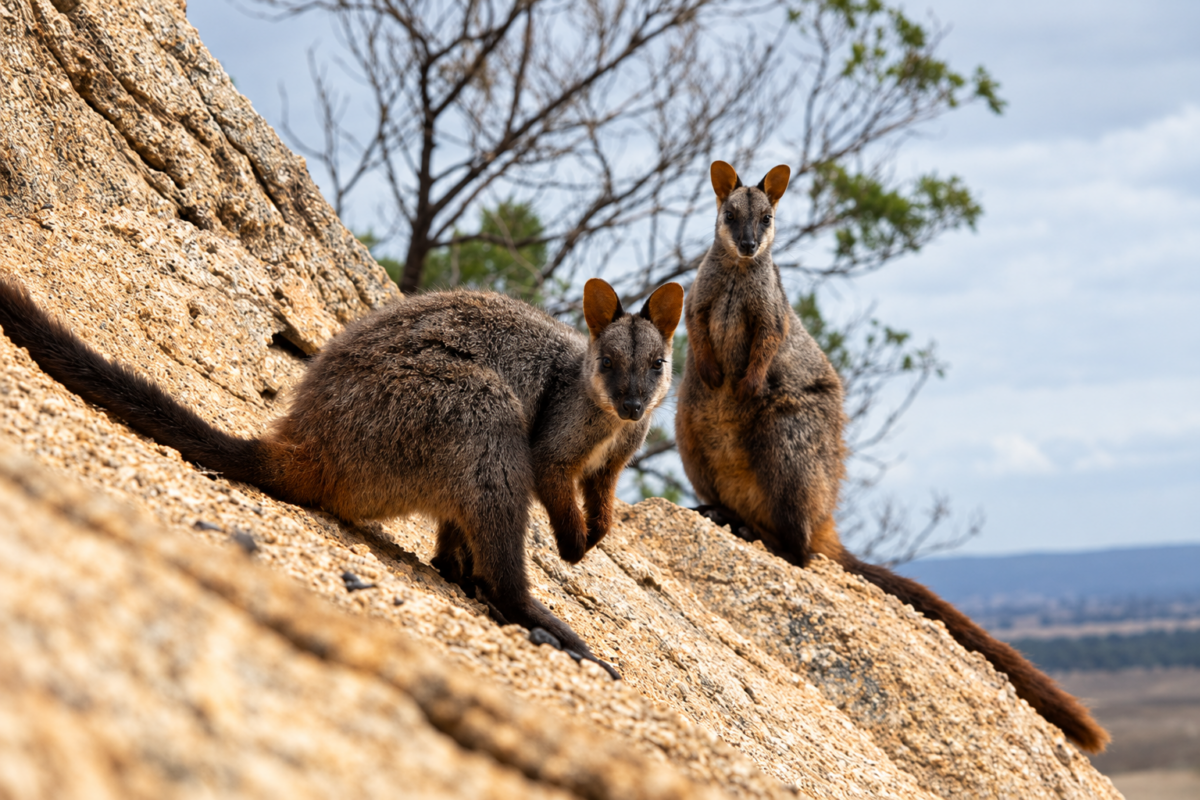
The Southern Brush-tailed Rock-Wallaby is a study in muted texture and nervous grace. It stands barely two feet tall, its fur a dense, grizzled coat of charcoal and russet that blends seamlessly into the dappled shadows of Australia’s wattle trees.
It’s also cute. Very cute.
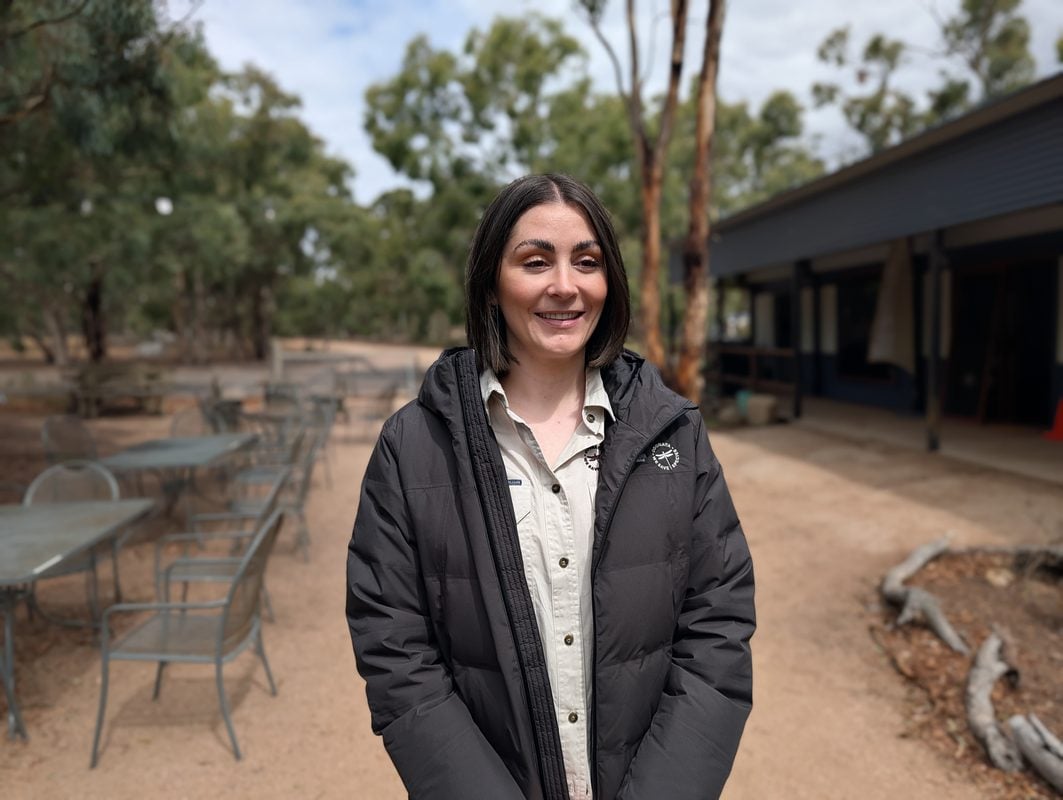
“Whatever you do,” says Steph Swann, the chief executive officer of the Odonata Foundation, which runs this sanctuary at Mt. Rothwell. “Don’t call them that.”
It’s not easy. Behind her, framed by granite outcrops of the You Yang mountains, dozens of these fuzzy creatures are emerging from the early afternoon shadows. They’re curious, peeking over boulders as if they’re posing for a high-fashion shoot.
Swann’s request seems a little strange. After all, these animals are objectively adorable. But she has a good reason for the ban: The problem with labeling these creatures as simply “cute” is that it creates a dangerous mental shortcut.
“We see people look at the animals and say, ‘That’s cute,’ without understanding the importance of their function,” Swann explains.
In other words, when you reduce a species to its aesthetic value, you fail to see them for what they truly are: the linchpins of a functioning ecosystem. When you call them cute, you stop looking at what they mean, and they become a pattern for a stuffed toy.
Melbourne’s real sustainability project
To truly understand sustainability in a place like Melbourne, you have to look past the boardroom carbon pledges and the tourism industry’s talking points. The survival of these wallabies is linked to the health of the soil, the resilience of the climate, and ultimately, the nutritional value of the food on your dinner plate.
There’s a disconnect in how the world views a place like Melbourne and what’s actually happening on the ground. Visitors think of it as a place with a vibrant coffee shop culture, European architecture and culture that happens to have scored respectably on the latest Global Destination Sustainability Index (ranked 11th). But too often, they overlook the systemic conservation work happening in the bushland right outside the city limits.
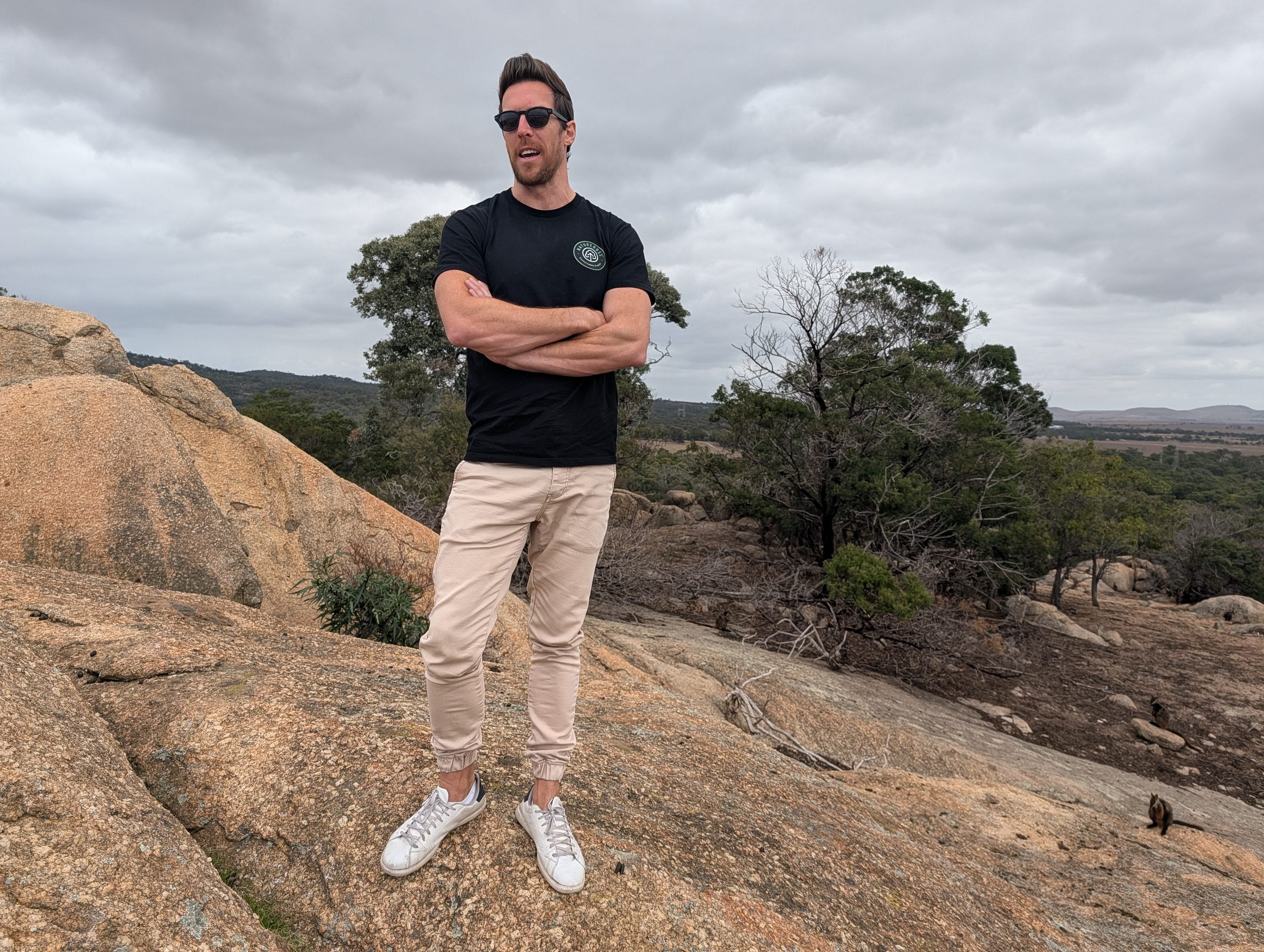
Matthew Boyd, founder of Natureboss, a Melbourne-based corporate business events company, says bringing groups to a sanctuary like Mt. Rothwell creates instant perspective and a lasting connection—not just to the wallabies, but to the concept that being sustainable means much more than eliminating single-use plastics and installing a few solar panels.
When corporate groups come to the sanctuary, the smartphones disappear. They engage in Survivor-style scavenger hunts and meditation. By getting people into the dirt, the sanctuary proves that restoring ecosystems is highly actionable, achievable, and immediate.
“Once they see what’s happening here,” he says, “they understand.”
The business of saving species
The Odonata Foundation is strictly in the business of saving species, and business is booming. The organization is working around the clock to recover nine core species through a national network of sanctuaries.
Mt. Rothwell is a prime example of their high-impact, safe haven model. The 1,100-acre site is entirely enclosed by a specialized predator-proof fence that keeps out the foxes and feral cats that have decimated Australia’s native wildlife. This secure environment allows the foundation to manage 80 percent of the remaining Southern Brush-tailed Rock-wallaby population.
Visitors can transition from observers to active participants through public and private tours, corporate experiences, or the volunteer program. The scale of this engagement is immense. In 2024 alone, volunteers contributed over 10,000 hours to the muddy, essential work of habitat restoration and species care.
“Visitors can play a direct role by moving beyond passive observation,” says Matt Singleton, Odonata’s chief operating officer.
Walking with the soil engineers
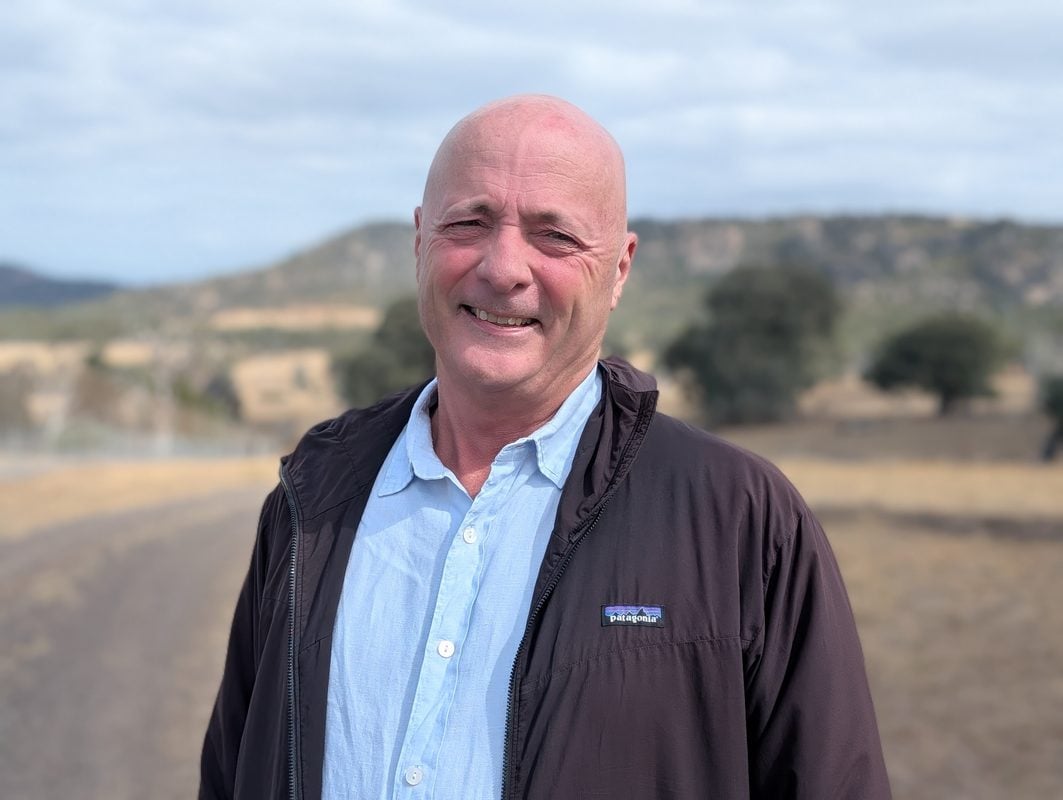
A walk through the bush with Nigel Sharp, Odonata’s founder, shows the value of this sustainability project. He recounts the staggering history of Odonata’s work.
“We’re rescuing species that the rest of the world had essentially written off,” he says.
Take the Eastern Barred Bandicoot, a small, nocturnal marsupial. At one point, the entire mainland population consisted of fewer than 50 animals. Today, through Odonata’s breeding programs and sanctuary network, there are over 4,000 bandicoots.
And as for the Southern Brush-tailed Rock-Wallabies you’re not allowed to call cute? Their population once bottomed out at just 39. Now they’re everywhere.
But Sharp’s most fascinating revelation is the “why” behind the recovery. These animals are soil engineers, he explains. After reintroducing these small mammals, the team watched the soil’s functionality transform. Sharp shares an example of a massive summer rainstorm where the engineered soil—softened and turned over by thousands of tiny paws—held water so effectively that it actually brought a dormant natural spring back to life.
Sharp connects the dots directly to human survival.
“There’s a direct correlation between highly nutritious food produced and the level of soil carbon,” he explains.
Without these animals churning the earth, the soil degrades. When the soil degrades, the vegetables you eat lose their vitamins. In a very literal sense, the wallaby is responsible for the nutrient density of your dinner.
A cuteness compromise
The setting sun casts a long shadow across the granite, and the wallabies are out in force now. One joey peeks out from a pouch, and the impulse to say the forbidden word out loud is almost irresistible.
Steph Swann circles back to the topic of cuteness. She admits the frustration of people seeing a stuffed animal where they should see a critical ecosystem engineer. But she also acknowledges the reality of the world we live in. Protecting these species requires money, corporate volunteering, and global awareness.
She looks at the wallabies with a sense of pride—and slight resignation. If these animals can get visitors through the door—and a philanthropic donation or or two—then so be it, she sighs.
“You can call them cute,” she says. “As long as it helps save them.”

Have a question about this story? Tell us what happened — we read every comment.
Join the conversation