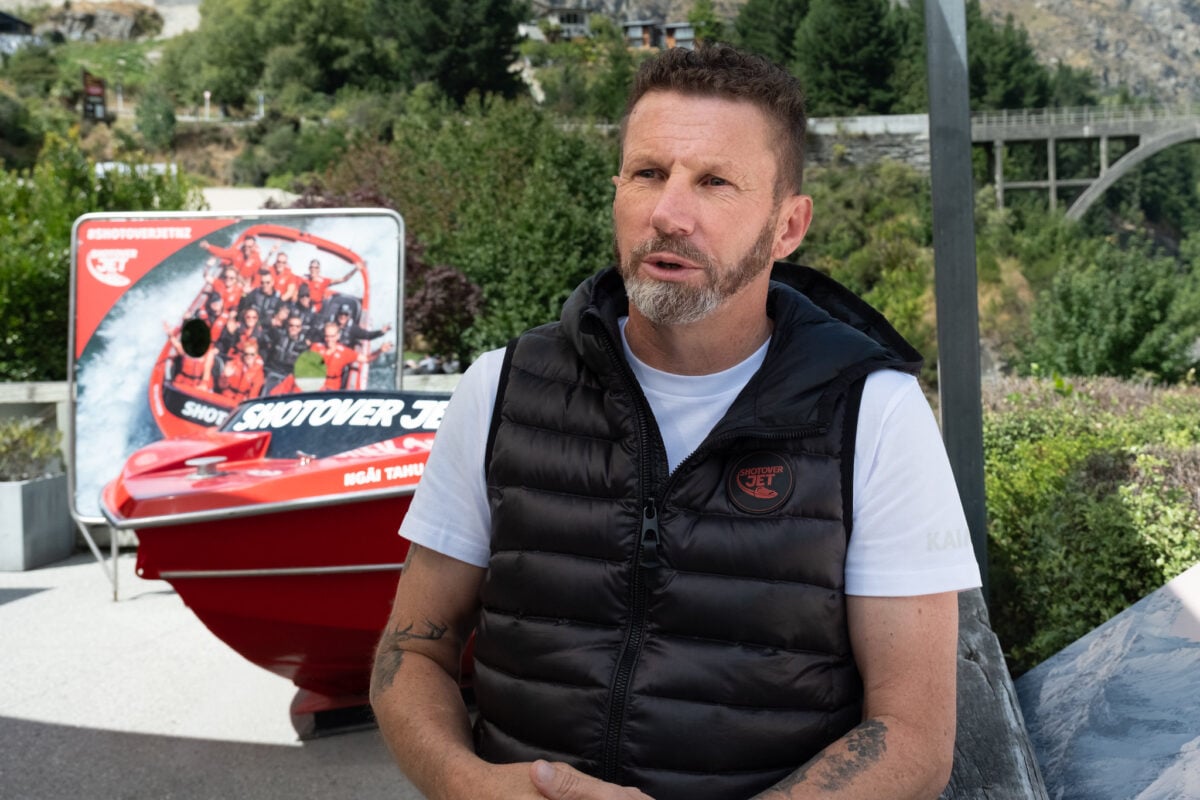
The sun glints off the uneven surface of the Shotover River as Donald Boyer gestures toward the dock below him. It’s a scene of controlled chaos.
Passengers in bright orange life jackets pile into sleek, low-slung vessels that look more like fighter jets than boats. The engines roar to life with a deafening, mechanical scream that echoes off the canyon walls.
In a spray of whitewater, a boat rockets downriver, skimming over shallows that would gut a normal craft. Moments later, it streaks back toward the dock at nearly 60 miles per hour before the driver cranks the wheel. The boat whips into a 360-degree spin, tilting so precariously it looks certain to capsize—and drenching the screaming riders in a wall of glacial water.
Now imagine if that bone-shaking roar disappeared. What if the only sound you heard was the wind and the rushing river?
“What if we could electrify everything?” asks Boyer, business manager for Shotover Jet, which runs high-speed river tours on New Zealand’s South Island.
Queenstown, the Southern Hemisphere’s adventure capital, now wants to add a qualifier to its title: green adventure capital. From boating to bungee jumping, it sees sustainability as its next big adventure.
But it won’t be easy, according to Boyer.
“You don’t realize how high the mountain is until you start climbing it,” he says.
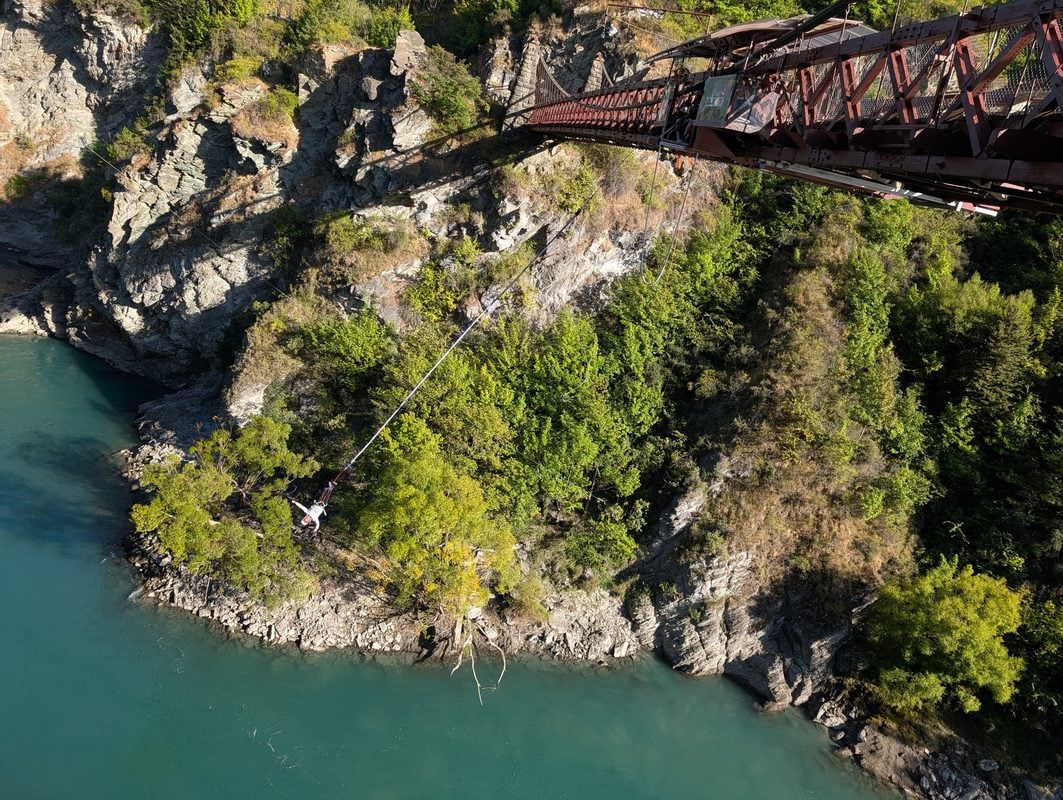
Jumping toward sustainability in Queenstown
Across the gorge, the crew at AJ Hackett Bungy is taking that climb seriously. They aren’t just tossing tourists off bridges anymore. They’re aiming for a carbon-neutral finish line by 2030, along with the rest of Queenstown’s tourism sector.
To get there, the company is slashing emissions and leaning into renewable energy. It has a sustainability committee that meets every quarter to make sure they aren’t just talking trash, but actually reducing it.
AJ Hackett is on a mission to shrink the company’s resource appetite while finding new ways to reuse and recycle what’s left over. It’s a ground-up approach to waste management that takes a discarded soda can as seriously as a frayed bungee cord. It’s also keeping a tight eye on the books, constantly monitoring the company’s performance so it doesn’t drift off course.
There’s a growing realization in places like Queenstown that without a sustainable environment, adventure tourism has no future. Through a partnership with a local nonprofit, AJ Hackett is funding predator-free traps throughout the Southern Lakes region, a move designed to protect native bird populations from the non-native pests.
All of this fits under the Tiaki Promise, a local commitment to act as guardians for New Zealand for the sake of future generations. For the bungee team, that means respecting Māori culture and giving back to the communities that host their adrenaline-fueled adventure. (It turns out you can care about the planet and still scare the living daylights out of people for a living.)
A deep connection to the land
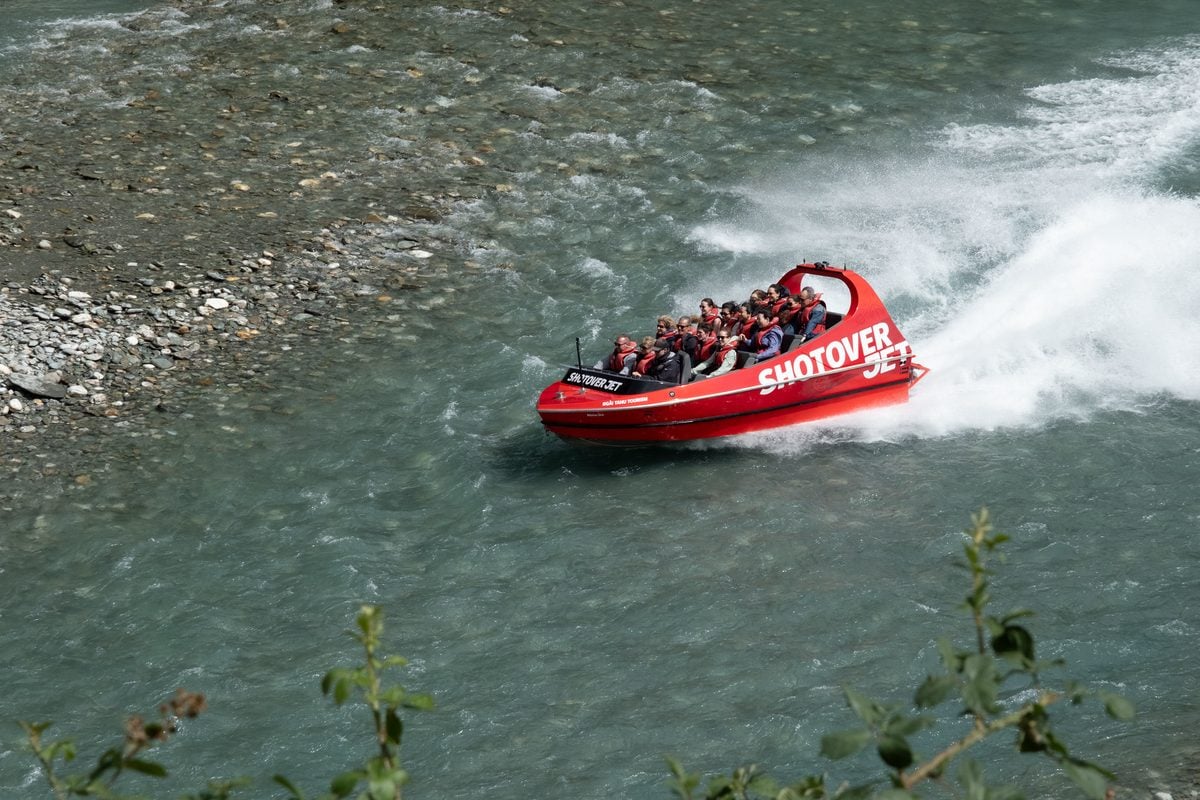
Back at the Shotover, the push for change comes from the top—specifically from the Ngāi Tahu people, the Māori iwi (tribe) that owns the operation.
While Boyer admits they are currently “not shy about admitting we burn a lot of fossil fuel,” the Māori owners have insisted the operators move away from the pump. He says the iwi is willing to shoulder the massive research and development costs of electrification because “burning fuel simply isn’t looking after the land.”
The technical hurdles are steep. Shotover Jet has already built a prototype electric boat, but the challenge remains shedding enough weight to keep those signature 360-degree spins sharp.
“The prototype is about three and a half tons,” Boyer says. “We need to get it down to about two and a half tons to deliver the same experience our customers expect.”
The infrastructure requirements are equally daunting. Charging a fleet of electric boats requires a megawatt of power—enough to make any local utility company blink. Boyer notes that because the river can flood up to 16 times a year, the charging stations must be movable.
“I don’t know how we’re going to do it yet,” Boyer admits. “Maybe it’s a gantry that swings out, or a mobile battery bank in a shipping container.”
The weight of the future
Queenstown’s transition to sustainability is a lesson in patience and persistence. While the electric dream develops, Shotover has already converted its fleet to more modern V-8 engines that use 30 percent less fuel than previous models.
It’s also looking at its terrestrial footprint, with plans to procure an electric shuttle bus by late 2026 or early 2027.
For the Ngāi Tahu, sustainability is an ancestral mandate.
“Values outweigh some of the commercial aspects,” Boyer says. The iwi views itself as a custodian of the Kimiākau (Shotover River), a connection that spans centuries. In its view, the pursuit of profit can’t come at the expense of the awa (river) that defines them.
Queenstown’s shift toward a green adventure model suggests a fundamental change in how New Zealand perceives the great outdoors. For decades, the thrill was about what visitors could take from the landscape—the rush, the photos, the videos of people jumping off a bridge.
Now, the industry is asking more profound questions about its legacy.
The mountain Boyer describes is not a physical peak in the Southern Alps, but the monumental task of preserving the environment. If the world’s adventure capital can show that a heart-pounding 360-degree spin can be powered by the sun and the wind rather than a combustion engine, it will have achieved its greatest thrill yet.

Have a question about this story? Tell us what happened — we read every comment.
Join the conversation